
“What bug is that?”
This is a question I often hear from anglers that I guide. Once I figure out which bug they’re pointing to—there are often multiple bugs and species flying about—I always give them an answer. I also hear the same comment from other guides. Simply put, to take your fly fishing to the next level, you need to know your bugs.
Entomology is the scientific study of insects, a branch of zoology focused on their relationships with humans, the environment, and other organisms. Fish have access to many types of insects, including those that live in water and hatch from it, as well as terrestrial insects that live near water and occasionally fall in. The main insect groups, called “orders” in entomology, relevant to fly fishers are mayflies, caddisflies, and stoneflies.
The first bug lesson to learn as an angler is to understand the differences among insect species—for example, how they fly when landing and how they appear on the water. Every species flies, lands, and behaves differently on the water. In this article, I’ll cover those insect characteristics and introduce you to fly patterns that mimic insects at every stage of their life cycle, helping you better identify and match the hatch (i.e., the imitation fly to the real insect).
The key factors to consider when matching the hatch for a beginner fly fisher are size and color. For instance, if you notice a black bug about half an inch long flying or landing on the water, choose a black fly from your fly box that roughly matches the size of the natural insect. It’s that simple.
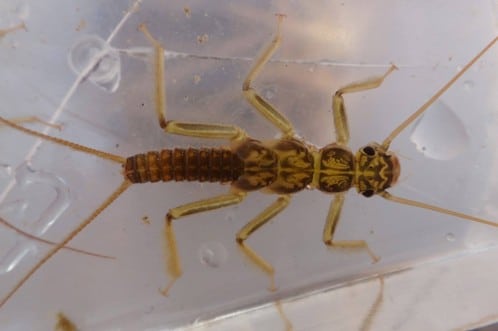
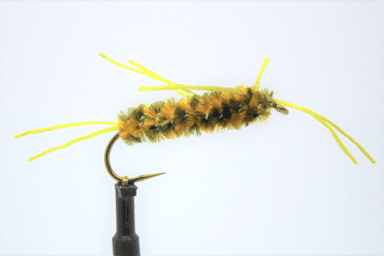
Stonefly Skwala nymph and Stonefly Rubberlegs imitation.
StoneflY—Plecoptera
Stoneflies are available to fish all year long. As with every insect life cycle, there are times during the year when they hatch, procreate, and live for another year, growing in the water until the next generation hatches and procreates. The life cycle of a stonefly involves three key stages: egg, nymph, and adult. When an adult drops an egg into the water during a seasonal hatch, the egg sinks to the bottom where, among the rocks, it grows and then hatches into a small nymph. These small nymphs will grow throughout the year and become mature nymphs in a one- to three-year growth cycle. Then, in the next season, the mature nymphs crawl onto objects such as rocks, logs, or tree branches. There, the stonefly sheds its exoskeleton (outer shell) and emerges as an adult.
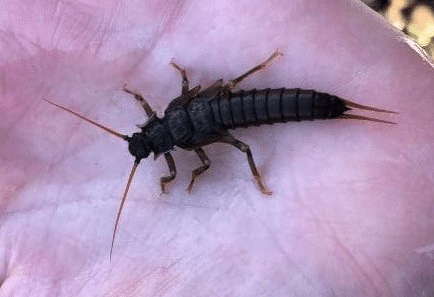
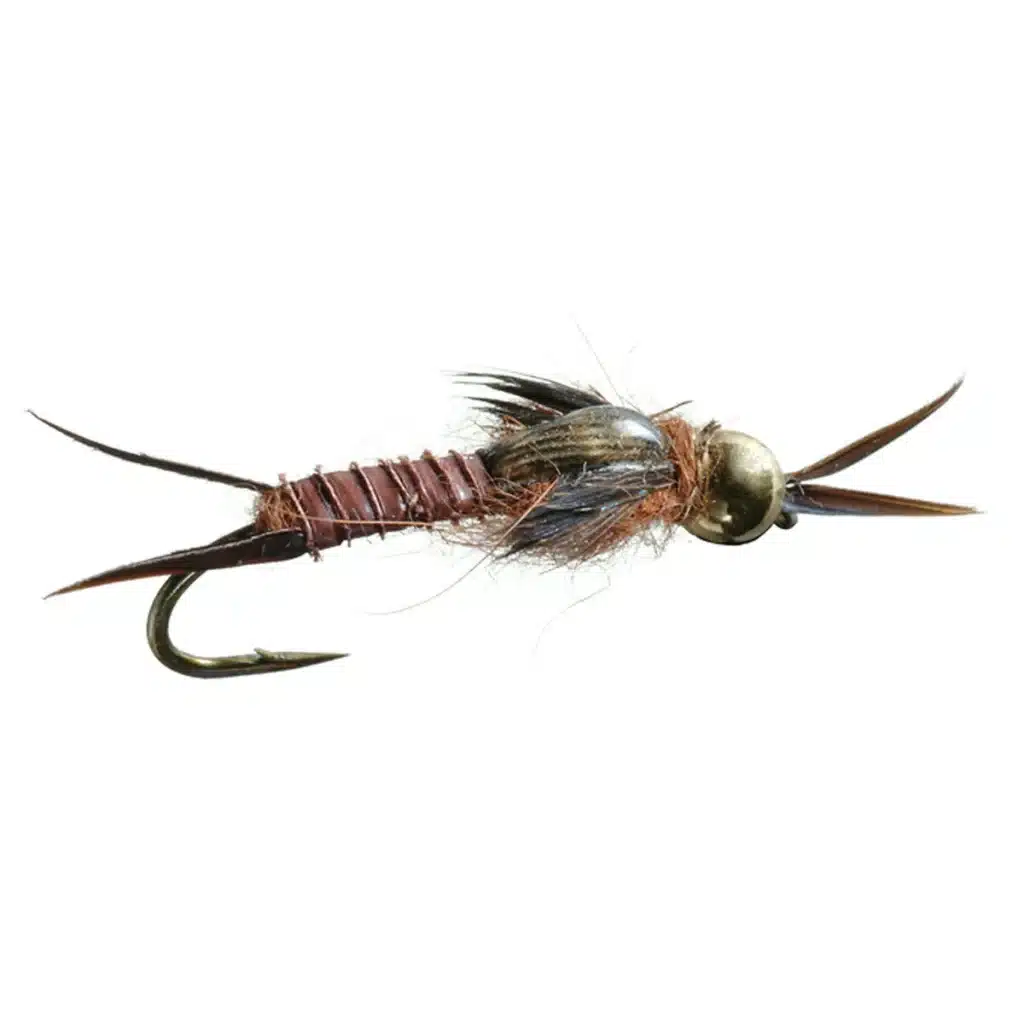
Stonefly salmonfly nymph and Mercer’s Stonefly nymph imitation.
The stonefly nymph is found in highly oxygenated, cold-moving water. The stonefly is Mother Nature’s barometer for gauging clean, pristine water. Many stoneflies are large insects. The largest stonefly is the salmonfly, Pteronarcys californica, at approximately two and a half inches long. There are smaller stoneflies as well, such as the little black, or winter, stonefly, Allocapnia granulata. These small stoneflies are approximately a quarter of an inch long.
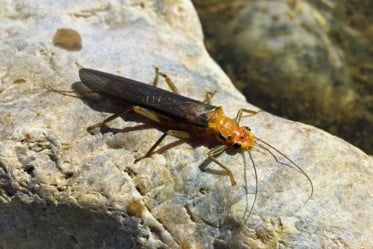
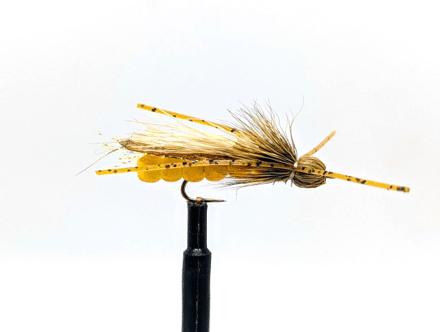
Golden stonefly adult and Rogue Golden Stonefly imitation.
Stonefly nymphs are relatively easy to recognize. They have six legs, three on each side of the body, and two antennae extending from the sides of their head, just in front of their eyes. Their abdomen has two tail-like cerci. The size and color of the nymph vary depending on the species. Adult stoneflies also have six legs, a set of antennae, and cerci similar to the nymphs, but they also have two pairs of wings located on the very top of their bodies. These wings lie flat over the top of the body, leaving only the head and rear visible. During flight, the stonefly angles its head up, with both sets of wings powering it simultaneously, exposing its long body.
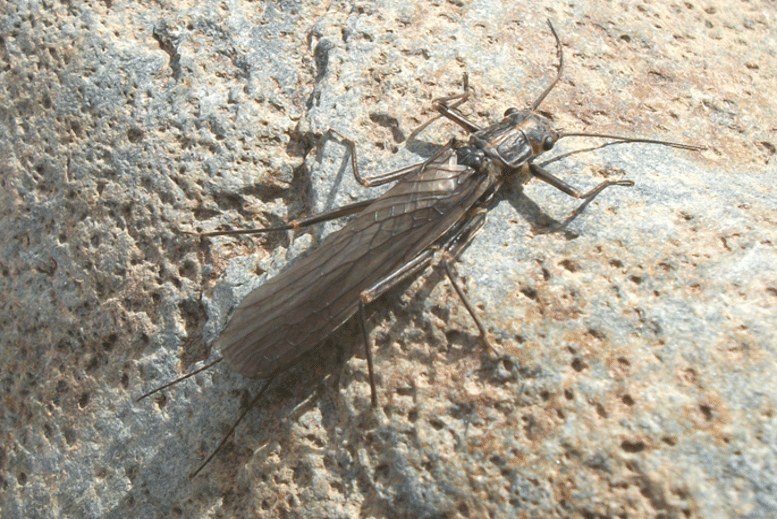
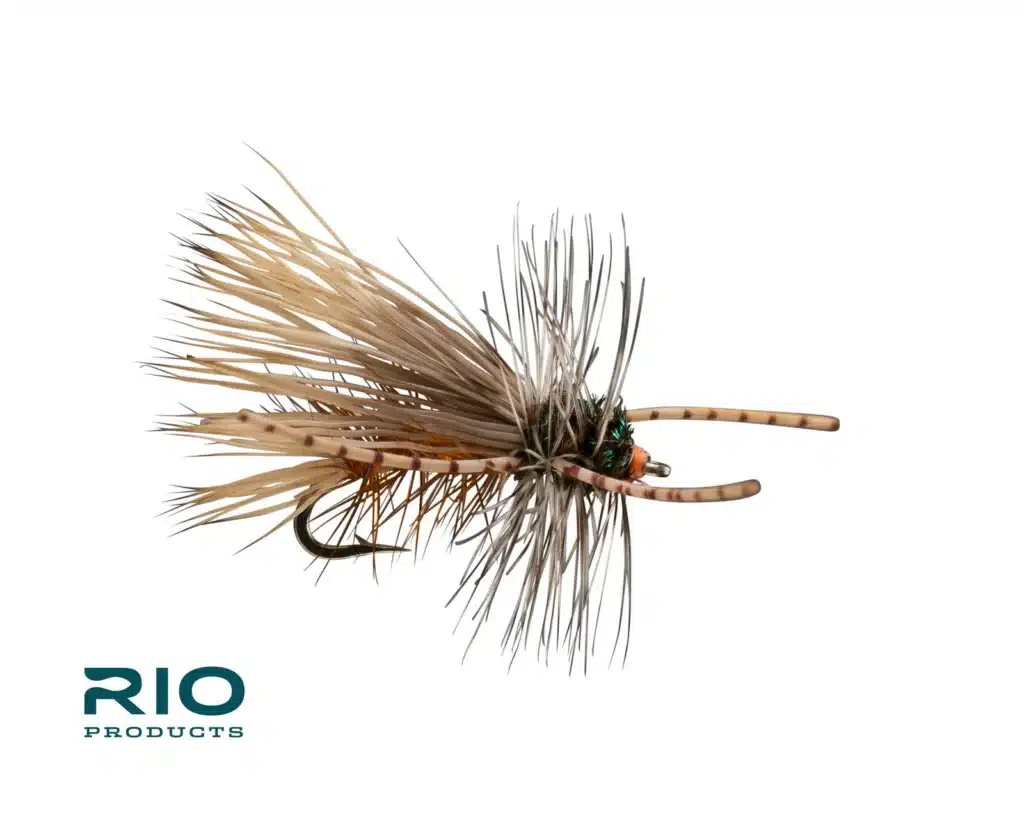
Stonefly Skwala adult and RIO Rubberleg stimulator.
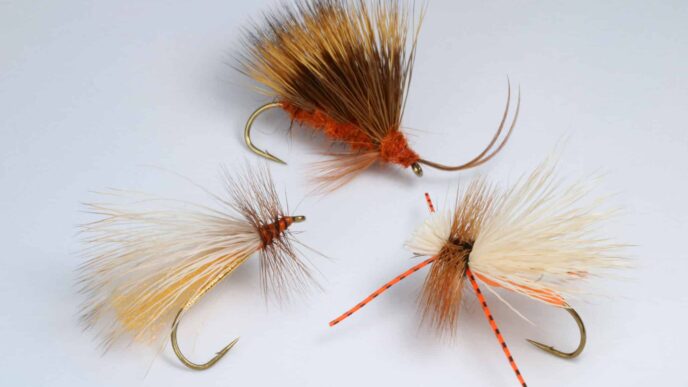
The flies we use to imitate stonefly nymphs and adults (dry flies) range from simple to elaborate patterns. Many use a simple fly called the Rubberlegs Stone to represent the nymph stage. More elaborate and realistic stonefly nymphs include Mike Mercer’s Epoxy Back Stonefly Nymph or a fly called the Twenty Incher. For dries, many use high-floating stonefly imitations like the Rogue Foam Stonefly. Often, many stonefly adults can be represented by Randy Kaufmann’s Stimulator pattern or a simple Elk Hair Caddis. All of these flies come in a variety of colors and sizes to match the hatching stonefly.
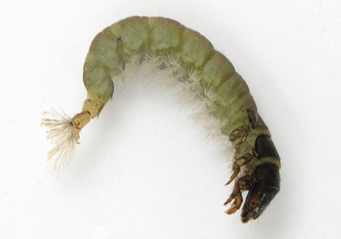
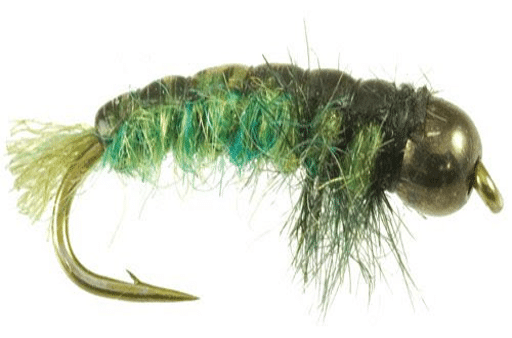
Caddis fly larvae and Barr’s Cased Caddis imitation.
Caddisfly—Trichoptera
Caddisflies are available to fish year-round. The caddisfly life cycle includes four key stages: egg, nymph, pupa, and adult. Some caddisflies hatch throughout the year. Others, like the October caddis, hatch only in the fall. The adult caddisflies drop their egg into the water, where they sink to the bottom. In the rocks, the eggs develop and hatch into small nymphs that grow throughout the year, eventually becoming mature nymphs. Most caddisfly nymphs build huts, or cases, using their mucus and gravel, sticks, or other vegetation; others hold tight to rocks or weeds. When the nymphs hatch, they enter the pupa stage, cut out of their cases, rise to the surface of the water, and emerge as adults. Anglers fish three different caddisfly imitations to match the life stages of the nymph, pupa, and adult.
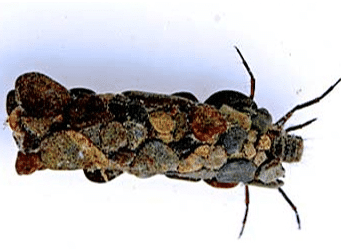
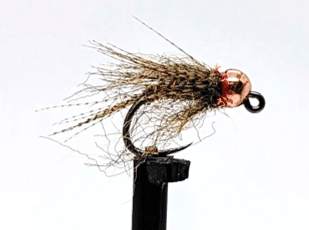
Caddis cased larvae and Thurman’s Jigged Bird’s Nest caddisfly pupa imitation.
Caddisflies, like the stoneflies, come in a variety of sizes. The small “micro” caddisflies (Hydroptilidae) are about a quarter of an inch, and the larger Dicosmoecus gilvipes, October caddis, are one and a half inches. Like stoneflies, they are also found in clean, highly oxygenated water.
A caddisfly’s anatomy differs significantly from that of stoneflies and mayflies. Its larva resembles a legged worm, exhibits various colors, and can be found in different areas of the water. It has a head with eyes and two protruding labia, often in a color that contrasts with its body. It has three legs on each side of the thorax, while the abdomen appears worm-like with fine gills underneath. The tail is called an anal claw.
The pupa’s structure closely resembles the larva, having a head with antennae, three legs on each side, and wings tucked beneath the abdomen.
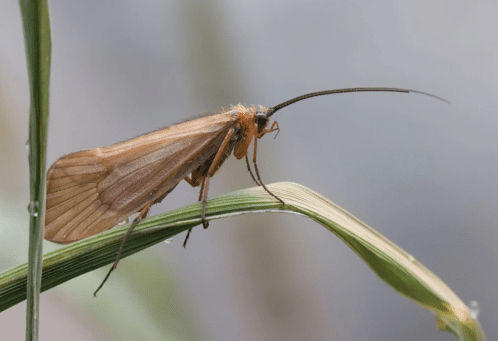
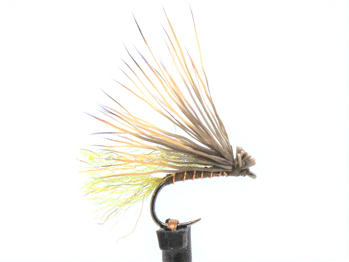
Caddis fly adult and Lance’s Yuba River Caddis adult imitation.
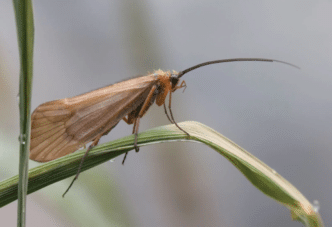
The adult emerges from the pupa, sharing similar features, including a pair of antennae, three legs per side of the thorax, and a slender, segmented body. Its wings rest atop the body, angled backward like a tent when stationary on a branch. During flight, the adult moves erratically, often mistaken for a moth.
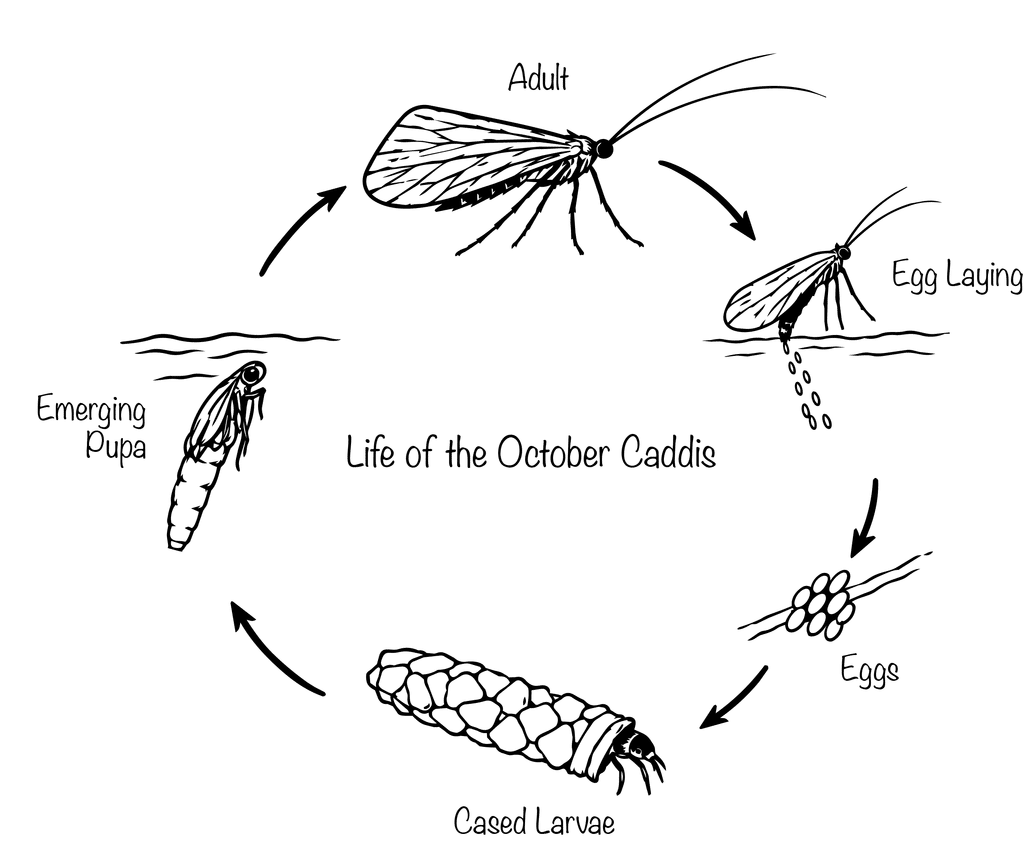
Fly patterns used to imitate the caddisfly larva, or nymph, and adult (dry fly) range from simple to elaborate. Many use a simple fly called Barr’s Cased Caddis for the larval stage. For the pupa, my favorite fly imitation is Fox’s Caddis Poopah. For dries, high-floating caddis imitations, like the iconic Elk Hair Caddis, are a favorite, along with the more elaborate Mercer’s Missing Link. All these flies come in a variety of colors and sizes to match the hatching caddisflies.
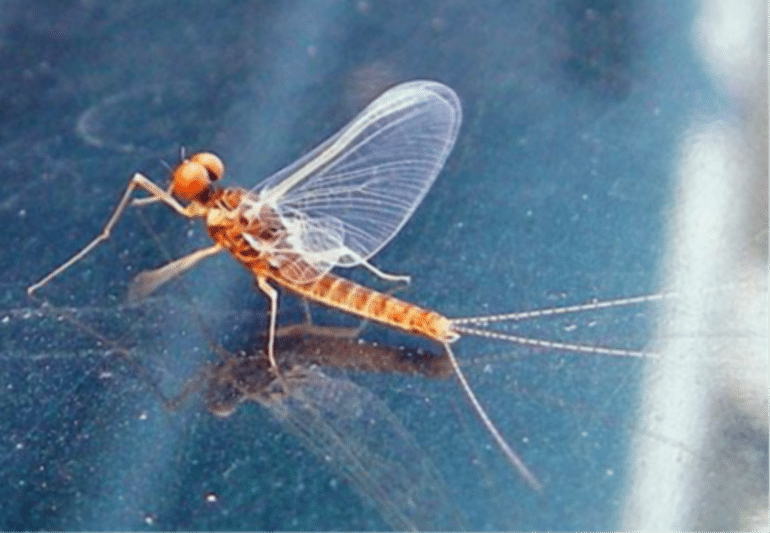
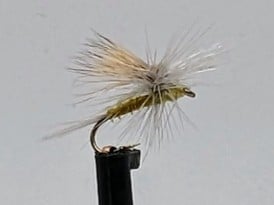
Mayfly adult and a Tilt Wing PMD adult imitation.
Mayfly—Ephemeroptera
Mayflies could be considered at the top of the fly-fishing pyramid. They are the most common insect in many trout streams and a very important food source for trout.
Mayflies are available to fish all year long. The mayfly life cycle has three stages: egg, nymph, and adult. Some mayflies hatch throughout the year; others, like the Hexagenia, or Hex, hatch only in early summer. Like caddisflies, adult mayflies drop their eggs into the water where they sink to the bottom. In the rocks, the eggs grow and then hatch into small nymphs. These small nymphs grow for about a year and become mature nymphs. Depending on the species, mayflies may hatch at the same time of day for several days or hatch sporadically throughout the day for about a month. Water temperature and sunlight provide the cues for when nymphs hatch. When the nymph rises to the top of the water column, they break their exoskeleton and emerge as an adult.
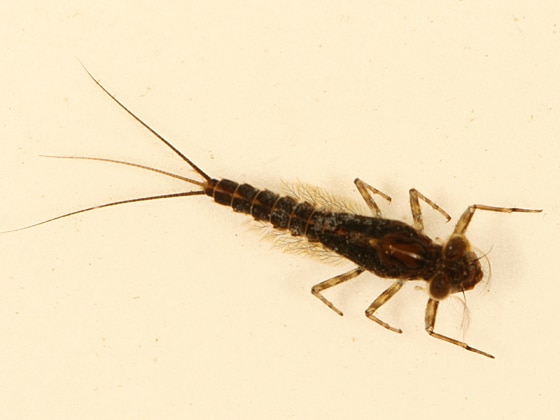
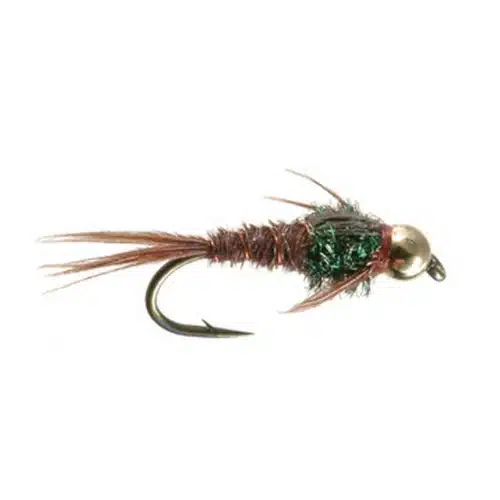
Mayfly nymph and Pheasant Tail imitation.
Mayflies come in a variety of sizes, just like the caddis and stoneflies. The small “micro” mayflies are Tricorythodes, or Tricos. Sizes 20-24 are about a quarter inch, and the larger Hexagenia limbata, or Hex, is around one and a half inches. Mayflies are found in clean, highly oxygenated water. Some mayflies cling to rocks in a river, such as the clinger mayfly (March Brown), while others live in weed beds, such as the swimmer mayfly (Callibaetis), and others are burrowers that make burrows in the mud on the bottom of the river or lake.
Mayfly nymphs look more like stoneflies than caddisflies in their anatomy. They can vary in color and are found in various parts of the water. They feature a head with eyes and a pair of antennae, often in a contrasting color to the body. Each nymph has three legs on each side of the thorax, while the abdomen is worm-like, with fine gills along its sides. The tail, called filaments, typically three in number, varies in appearance among mayfly species.
There are four mayfly types: crawler, clinger, swimmer, and burrower. They generally look similar, with size and color varying by genus. The adult features a pair of short antennae on its head, three legs on each side of the thorax, and a slender, segmented body. Its wings are positioned on top of the body, angled upward, with two pairs: a larger forewing and a smaller hindwing. When resting on a branch, their wings fold upright and often resemble small sailboats on water. In flight, mayflies are skillful and precise flyers.
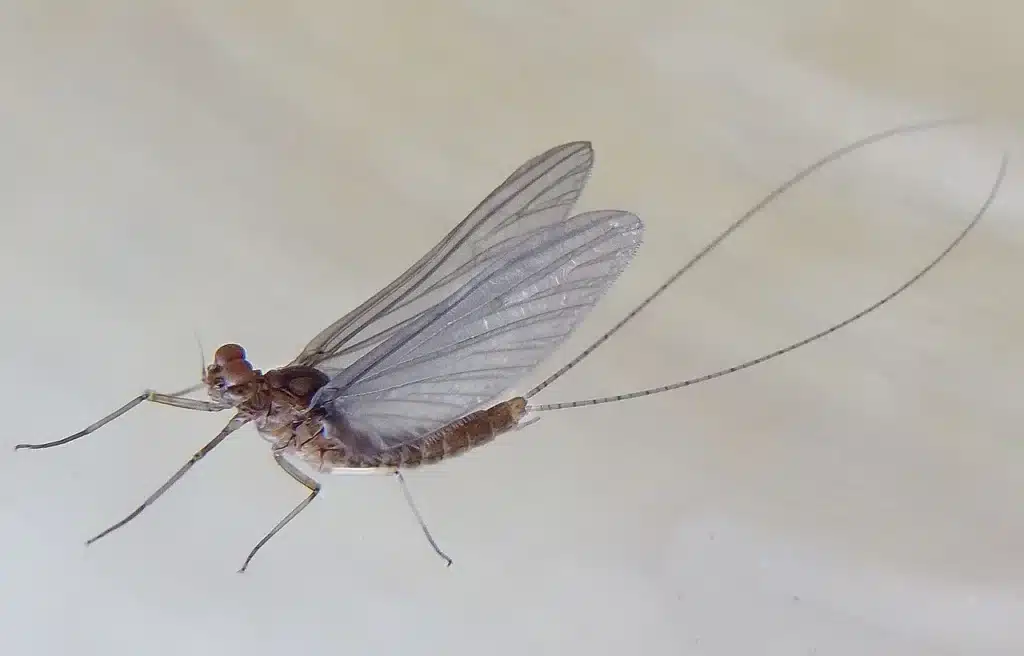
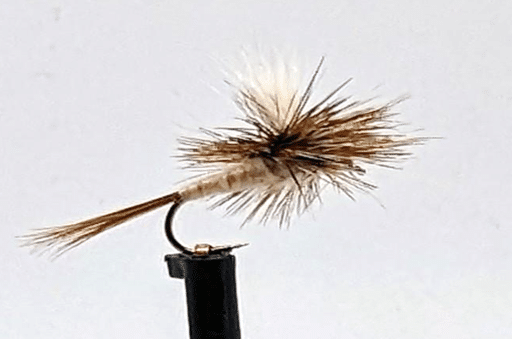
Mayfly adult and March Brown Parachute imitation.
Fly patterns used to imitate the mayfly nymph and adult (dry fly) include popular nymph patterns like the simple Pheasant Tail or more sophisticated patterns like Hogan’s S&M and Lance’s X-May Perdigon. For dries, high-floating mayfly imitations such as the iconic Parachute Adams or a Hi-Vis Parachute are popular.
A complete fly box to carry for any river should consist of a variety of sizes and colors of the stoneflies, mayflies, and caddisflies at each life stage. Being able to identify what’s flying in the air, floating on the water, or clinging to the underside of a rock will help you match the hatch and improve your success in your fly-fishing adventures.