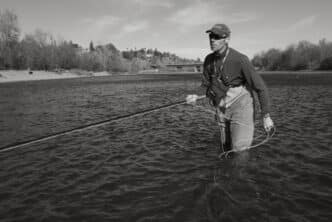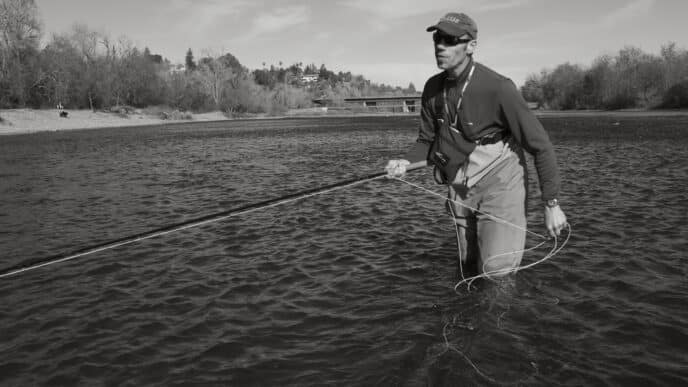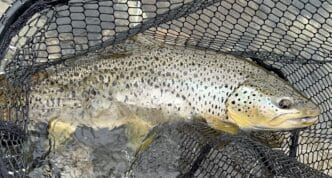
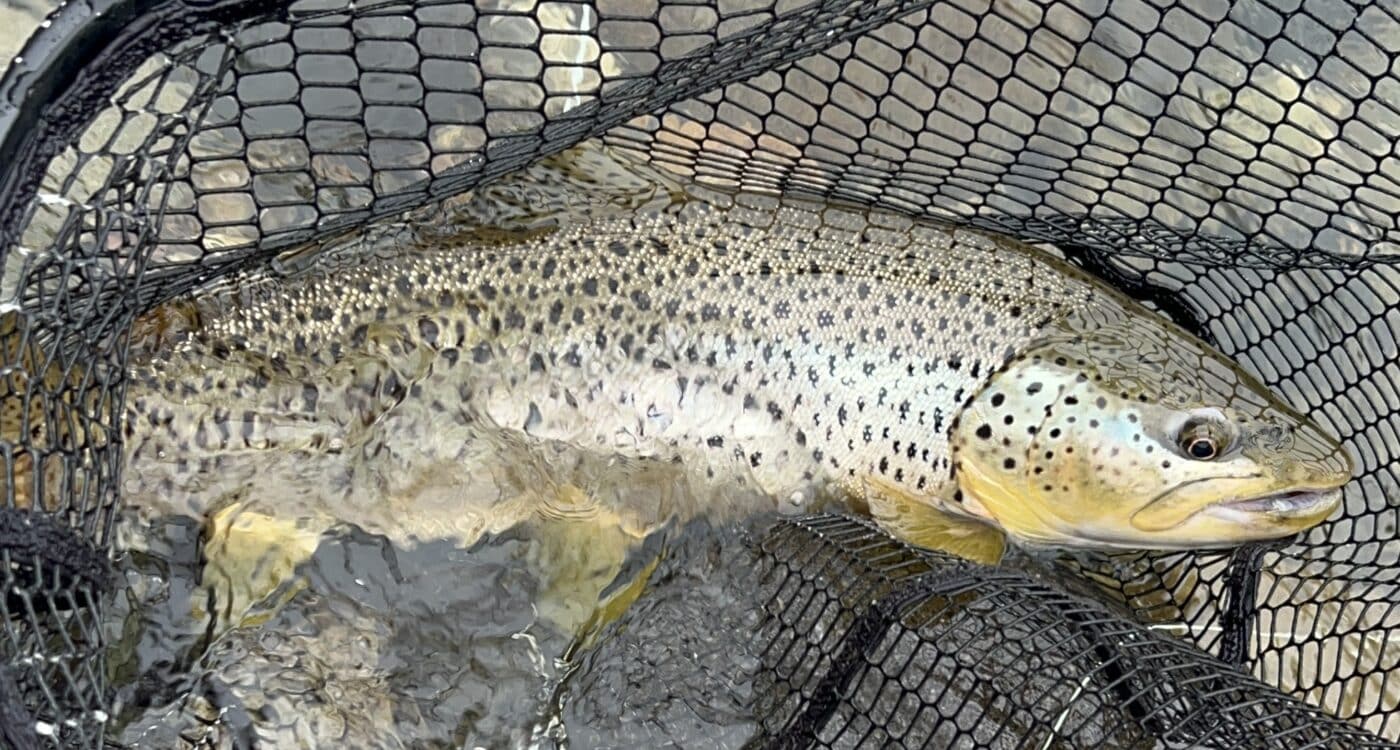

“Over there, under that branch, lives Carolina,” says Francisco as he guides us down the Futaleufú River in Chilean Patagonia. We are casting large articulated streamers using full sinking lines, aiming with pinpoint accuracy at the bank. We strip quickly. I make the cast to where Carolina is supposed to reside and suddenly a large brown trout charges out of her lie and slams my fly. I strip-set on the hit, and the fight is on! Five minutes later, Carolina is in our net. We get a quick picture, and off she goes to grow even bigger. Hopefully, we can meet again on a future trip.
This is streamer fly fishing in rivers. It’s full of action and anticipation for large fish attacking your fly. For many fly fishers, fly fishing is an obsession, almost an addiction. Streamer fly fishing will take your obsession or addiction to a whole new level.
Learning to Fly Fish
I began my fly-fishing journey in Redding, California, in 1992. There was no YouTube channel at the time, only books, magazine articles, and word of mouth. I was a young, fixed-budget teacher who couldn’t afford to hire a guide to teach me the ropes and accelerate my learning curve. I was able to afford a book that introduced me to fly fishing. I can’t remember the name of it, but I remember it introduced me to casting, the basics of dry fly fishing, and nymph fishing. I don’t remember a chapter on streamer fishing. When I joined the local fly club, I can’t remember anyone talking about streamer fishing either, so I developed my early fly-fishing skills using classic dry fly and nymph fishing techniques. The next eight years of fly-fishing growth were dedicated to fishing with dries and nymphs on rivers in Northern California, without giving streamer fishing even the slightest consideration.
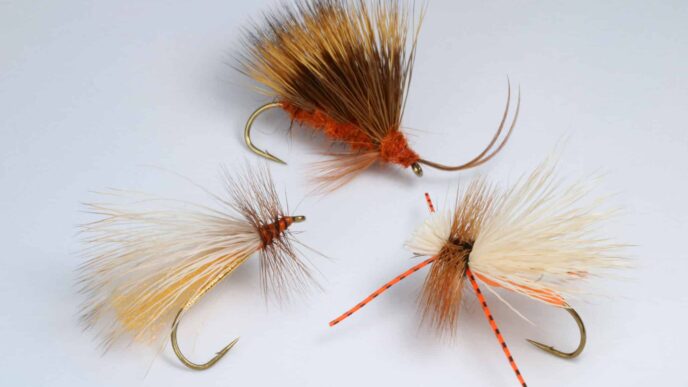
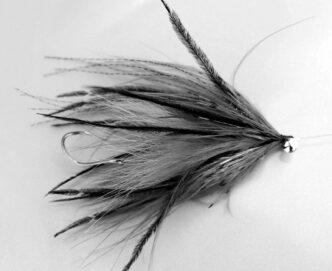
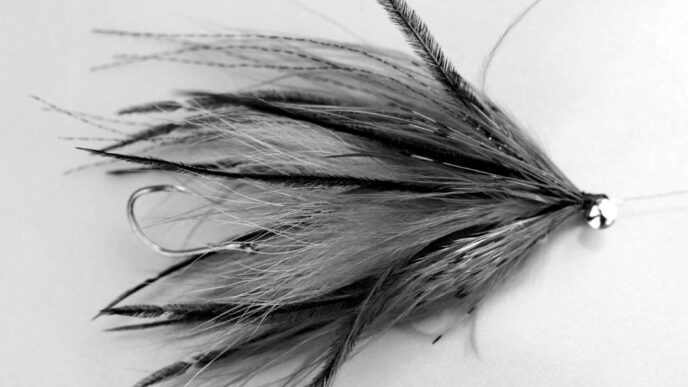
Are these really flies?
My introduction to streamers came in 2000, in the most unique place: La Paz, Mexico, on the Sea of Cortez. The Sea of Cortez has since become one of my most beloved places to fly fish. I had heard about saltwater fly fishing and wanted to give it a try. I organized a group of friends to fish with a well-known Sea of Cortez guide, Gary Bulla, to cast these flies called streamers from kayaks around Isla Espiritu Santo. The learning
curve was steep, but we went on to have three glorious days of chasing boiling fish among diving seagulls with our new favorite fly, the Clouser. Even with the joy and success of throwing streamers in saltwater, for some reason I refrained from using baitfish patterns on local rivers and lakes for trout and other species until very recently. What a missed opportunity!
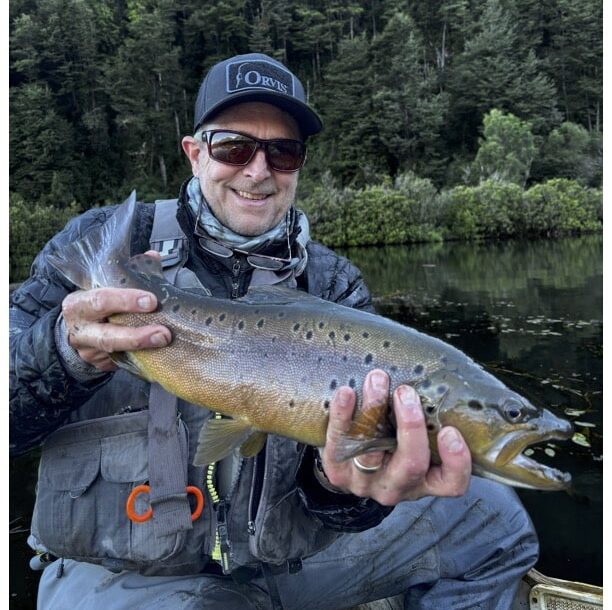
In 2023, I retired from a 32-year career as an educator and found more time to pursue my great passion, fly fishing. I’m the type of person who wants to do and learn everything at once. In fly fishing, there are so many things to get better at—Euro-nymphing, trout Spey, swinging for steelhead, entomology, fly tying, float-n-fly for bass, and yes, STREAMERS! So my slight ADD is both a blessing and a curse. Rather than diving deep into one at a time, I began pursuing them all at once! Lately, during my free time when I am not guiding, I have enjoyed learning from fly-fishing books, articles, and YouTube videos. Along the way, I discovered George Daniel’s Strip-Set, which introduced me more deeply to the streamer game. Let me tell you, this book is an excellent read (and somewhat dense). I enjoyed it, but I was also overwhelmed by the amount of detail it covered.
My first order of business in my pursuit of streamer fly fishing on rivers was to buy some streamers and start testing them out. Ironically, my first streamer success came on a backpacking trip in the deep canyon section of the Middle Fork of the Feather River, using a simple Woolly Bugger. Both my dry fly and nymphing approaches were slow that day, so I decided to try fishing deep in a run by adding split shot to my leader and stripping a Woolly Bugger near some rocks at the bottom of the river that looked fishy. I was rewarded with a feisty 16-inch wild rainbow. I thought, “There might be something to this streamer thing!” After that trip, I committed to learning more about stripping streamers and seeing where that might take me as an angler.
Everything came together for my streamer game in March 2025, when I led my first hosted fly-fishing trip to Chilean Patagonia with Francisco Rivera, owner and operator of Matapiojo Lodge in Patagonia, Chile. Francisco and I hit it off right away. One of his first questions was, “Do you streamer fish?” I said I was just learning. That was music to his ears. Over the next six and a half days of fishing, we spent about half the time streamer fishing from boats and rafts on two wonderful rivers in Chilean Patagonia, the Futaleufú and Palena. Pardon the pun, but after this trip to Patagonia, I was truly hooked on throwing streamers! We caught so many beautiful browns and rainbows it was mind-blowing. My confidence in streamer fly fishing soared, and my next goal was to return to my home waters in Northern California and apply what I learned in Patagonia.
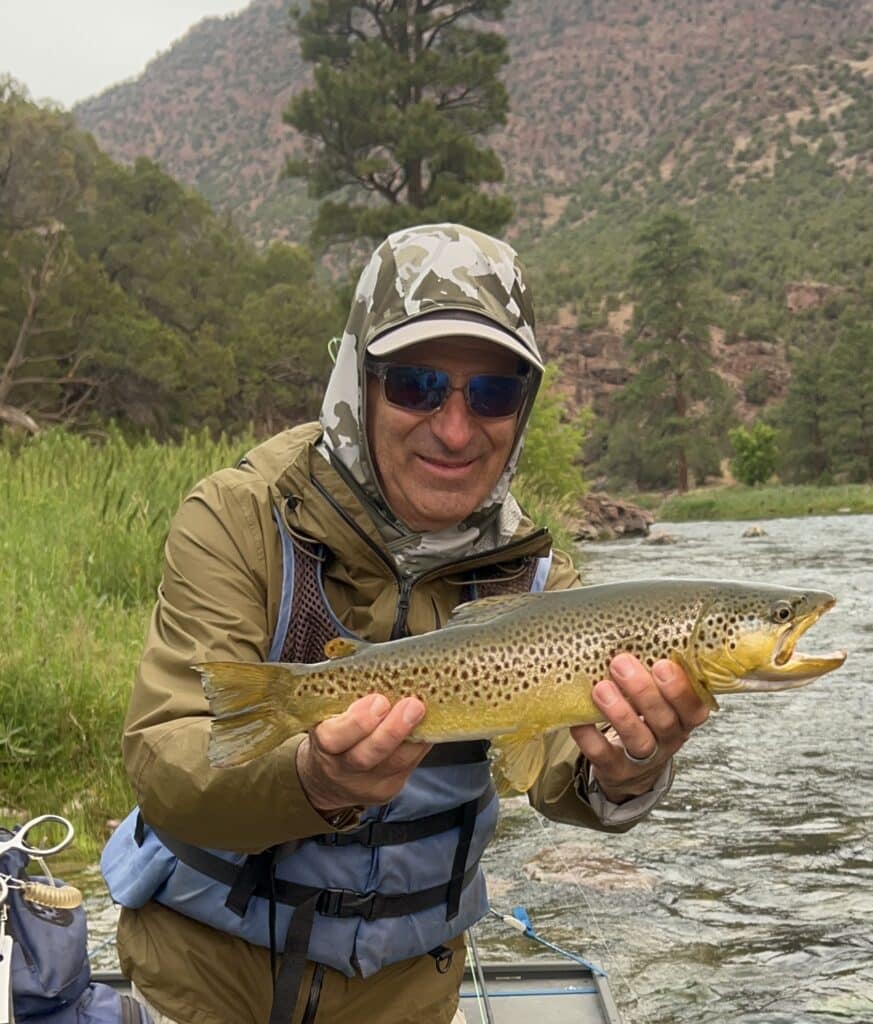
Upon my return to Northern California, it was early April with high runoff, not a typical time for me to guide back then. Fishing is typically slow with non-streamer techniques and it can be difficult to walk and wade that time of year (I have a whole new view of the river now though!). Still, I was excited to use my newly acquired skills from Chile to hunt aggressively feeding trout on the headwaters of the Middle Fork of the Feather River. I only landed one that day, yet it was a respectably thick 17-inch brown that gave me a tough fight. It was more than enough to convince me that streamer fishing was worth pursuing on my home waters and that it needed to be added to my guiding repertoire.
Since my experiences with streamer fly fishing on rivers in Patagonia and Northern California, I have dived even deeper into the streamer game. The rest of this article will share some of my discoveries so far. I hope you find it inspiring enough to give streamer fishing a try on one of your rivers, unless, of course, you are already a streamer junkie like me!
Why Streamers?
Before discussing streamer fishing further, it should be noted that streamer fishing on lakes and, as mentioned earlier, in saltwater, is certainly a thing. For the sake of brevity, the rest of this article will focus on using streamers in rivers and will leave lakes, oceans, bays, and seas for future work.
So why use streamers on rivers? We certainly can catch a lot of fish using dries and nymphs. For me, it opens up more waters to fly fish and gives me a better chance at a big fish. Once trout reach the 12- to 16-inch range, they begin to seek larger, higher-calorie prey. There are long, deep, slow runs I used to skip over, and I now fish them with streamers with great success! It also needs to be said that the sensation of a large trout hitting your fly as you strip it in is a great feeling. As they say, “the tug is the drug!”
What is Streamer Fly Fishing for Trout?
Streamer fishing for trout involves using flies that imitate swimming prey. These flies mimic smaller trout, baitfish such as minnows and sculpins, crayfish, or leeches. We cast these flies and then swing or strip them in a variety of ways to entice an aggressive trout to strike. I have found that certain types of rods and lines can improve your success.
Rods, Lines, and Leaders
Let us begin with equipment. My recommendation for the overall best streamer rod is a medium-to-fast 9.5-foot 6-weight with a fighting butt. Orvis’s Clearwater rod works perfectly. I have used this rod in Chile and in the Lost Sierra with success. A good reel with a disc drag is ideal for targeting bigger, more aggressive fish. If you are in a drift boat, the Orvis Depth Charge full-sinking line works well to get your flies down into the bite zone quickly, especially in big, fast-moving water like the Futaleufú. However, after returning to the Middle Fork of the Feather River and using the same rig, I quickly learned that the full-sinking line doesn’t work well for walk-and-wade because it gets caught in the rocks and on my boot straps very easily. I switched to the Orvis Bankshot Sink Tip line, which is ideal for walk-and-wade. The Bankshot line has a 10-foot sink tip with an integrated floating line. It shoots across the river extremely well and sinks quickly. It works great, even in shallow water, as long as there is a swift current. On any medium-sized river, a 9-foot 5-weight rod also works well for the smaller 1- to 3-inch streamer patterns I often use.
Recently, I experimented with using my 10-foot Orvis Helios 3, 4-weight as an all-around rod for fishing dries, nymphs, and streamers. I caught fish with every method, no problem. When fishing streamers, I simply attach a fast-sinking poly-leader to the floating fly line, which in turn acts as a sink-tip. I personally prefer the feel of my 5-weight and Bank Shot sink-tip line better, yet I was still successful, and it was fun to fish all methods without changing rods or reels.
I have also dabbled in trout Spey during my streamer journey. It’s an exciting and effective way to cover medium- to large-sized rivers for trout with a streamer. I’ve had tons of fun and very successful days fishing the Middle and North Forks of the Feather River, as well as the Lower Yuba. I typically use a Skagit head with heavy sink tips to get the fly down. I’ve used both an 11-foot 4-inch Orvis Clearwater 3-weight and an 11-foot Echo 3-weight, and I love them both. I find trout Spey a relaxing way to methodically work a river downstream. When trees are behind you, trout Spey often covers water more effectively with fewer casting complications.
Regarding leaders, I keep it simple. For most water and sinking line systems, I use two feet of 20-pound fluorocarbon, tied with either a blood knot or a triple surgeon’s knot, then another two feet of 16-pound fluorocarbon. This works well most of the time. If I need to be stealthier, I add another two-foot section of 12-pound fluorocarbon. I like some taper for casting, but with such a short leader at four to six feet, it likely doesn’t matter too much. To attach the leader to the fly line, I tie a perfection loop for a loop-to-loop connection. To attach the fly to the leader, I use a Lefty Kreh loop knot for non-articulated flies to add fly movement. For articulated flies, I make a direct connection with a double Davy knot, since I feel the direct connection will make the articulation work better.
Flies
What size fly should you choose? Matching what trout eat in your river is the key. Along those lines, here are three things to consider: size, color, and weight. Are you going for the trophy trout or are you into the numbers game? Smaller imitative flies like Woolly Buggers and Muddler Minnows will likely catch more fish than larger flies. In a recent interview I listened to with George Daniel, he argues that flies in the 3- to 5-inch range are best. I have great luck on even smaller jig streamers in the 1- to 2-inch range, and I get big fish on these small streamers as well. Yet, if you are after that older and wiser trophy trout, large articulated flies that trigger a reactionary bite might land you that fish you will remember for the rest of your life!
What about fly color? For me, olive is always the answer. All my favorite streamers are olive. A conehead olive Woolly Bugger is one of my favorites. Recently at my fly club, Jon Hubbard, a Northern California native and well-respected guide, gave a streamer presentation and said his favorite patterns are always tan. I recommend experimenting to find your confidence pattern. If your favorite flies aren’t working, some rules of thumb might help you find success. Follow the sky mantra: Use bright flies on bright days and dark flies on dark, low-light, or overcast days. In clear water, try more natural, subtle colors like browns, olives, silvers, and white. In murky water, try black, chartreuse, bright yellow, orange, or hot pink. Consider using the five-minute rule when action gets slow: If you don’t get any grabs in five minutes, switch colors. Once you figure out what works, stick with it.
Weight is another key consideration when choosing flies. Most of my streamers have quite a bit of weight. I love Kelly Galloup’s Peanut Envy, which is articulated and has a conehead to get it down. Kelly also likes the unweighted Zoo Cougar. I haven’t experimented much with the Zoo Cougar yet. If you feel you need to get the fly deeper, you can add split shot to the system. Split shot added closer to the fly will increase its drop rate, while conversely, the fly will not drop as quickly the farther you place the split shot from the fly.
Casting
With a one-handed rod, the standard overhead cast is essential. Casting a sink-tip line is different from casting a floating line and requires some adjustments. I typically stop my rod tip sooner, just past vertical, because the sink-tip tends to fall lower behind my head than a floating line does. Once I feel the tug of the line, I cast forward, but I make an adjustment here as well. I aim high toward my target and open my loop to help prevent tailing loops. It takes some practice to get a feel for this, but once you do, you can cast long distances and be very accurate. Also, a roll cast comes in handy, and my sink-tip line roll casts well.
With my trout Spey, I get by with a roll cast, a snap T, a double Spey, and an occasional single Spey. I still have a lot to learn with my Spey casting, which is one of the things that makes fly fishing so much fun; there is always room to grow and learn.
Retrieving the Fly
Troutbitten is an excellent website and podcast that covers many topics related to the art of fly fishing, including a series on streamer fishing. One thing they emphasize is selling the trout on your fly. There are a variety of ways to animate your fly, making your presentation more attractive to the fish. I typically alternate between three main tactics: hand strips with alternating slow and fast pulls, jerk strips with the rod tip, and letting the fly swing. The current dictates what I do. For example, in faster currents, my strips are shorter, while in slower currents I speed things up. When hand-stripping, I like to keep my rod tip in the water to improve contact with the fly. Be sure to strip set if you get a grab, meaning keep stripping (with your rod tip down!) until the fish is hooked. If the fish hits but isn’t hooked, keep stripping, as the fish often continues to chase the fly and will strike again. Do not lift your rod to set the hook, called trout setting, as this is a recipe for frustration when streamer fishing.
Another tip is that when the water is colder than 50 degrees, a slower retrieve typically works best. I don’t think there is one right way to retrieve a fly, and it’s good to experiment.
When & Where to Fish Streamers
Streamers can be fished anywhere and at any time because they’re so much fun and effective! Streamer fishing is now an essential part of my guide dates and often turns a tough day into a great one. There are conditions when your chances are better with streamer fishing, such as during high runoff or when the water is off-color.
Regarding seasons, fall is typically the best for streamer fishing. Trout are bulking up for winter, and fish are more willing to chase down prey. Next best is spring, yet I have had great days in winter and summer as well.
The ideal water conditions are moderate flows, neither too high nor too low, with clear to slightly murky water. Water temperatures are ideal in the 50- to 60-degree range. Yet one day in winter, the water was 38 degrees, it was snowing, and I hooked eight fish in an hour, so go figure.
Other Tips
Another tip for fishing streamers is to target structure such as logs and undercut banks. Be sure to fish current seams, and remember that foam is home to trout. Low-light conditions, early morning, evening, or cloudy weather, seem to work best. As the water cools, look for long, slow runs. In dirty water, try flies with more hackle and deer hair that push water to attract fish.
CONCLUSION
Learning to fish streamers gives you another tool in your tool belt that will help you catch more fish and BIGGER fish. Get some gear, buy or tie a few flies, and get out there and play around with streamers. I know you will be happy you did.
A Streamer Story from the Green River, Utah
In July 2025, I was invited to the Green River in Utah for a guided fly-fishing trip with a close friend. While there, because of my new streamer addiction, I wanted to fish streamers. The day before the guided trip, we fished around the boat ramps, and my streamer was killing it! I asked my buddy to let the guide know that the streamers were working, but he felt uncomfortable telling the guide how to fish. As a guide, I always want to know everything that might work, yet my buddy didn’t take my advice.
The next day, the guide wanted to indicator nymph using balloons as indicators. I didn’t want to step on his toes, so I said no problem, but I told him that at some point I would like to streamer fish since it had been so successful the prior day. After landing a few beautiful, big trout using indicators, the guide acquiesced and said that if we wanted to streamer fish, he would now be okay with it. My buddy, who is one of my fly-tying mentors and an expert tyer, didn’t bring any streamers, so I gave him one of mine. He looked at it and said, “That’s an ugly tie.” I responded, “That’s a really gutsy thing to say for a guy who didn’t bring any streamers.” He immediately caught two big browns, and the guide’s eyes were as large as silver dollars. The guide said, “We never fish streamers here in July.” The guide ended up keeping that streamer of mine, and I’ll bet he’s now fishing streamers in July on the Green River.