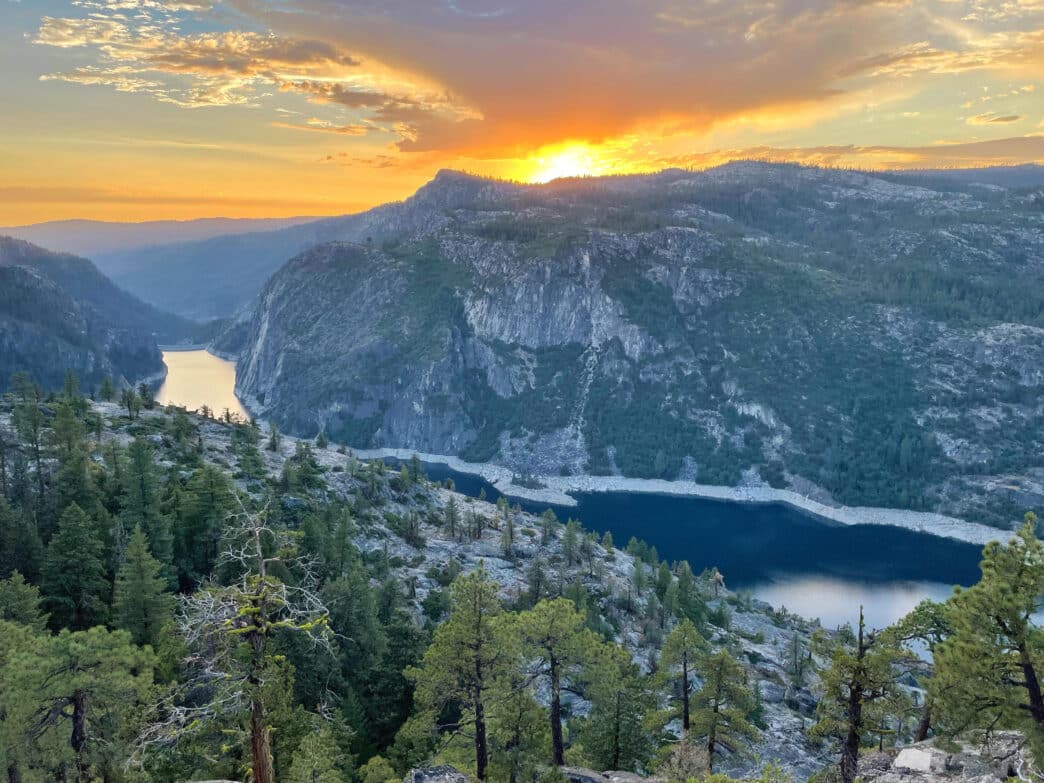
When I first experienced the Middle Fork of the Stanislaus River, I was a newbie fluff chucker.
The bankside willows saw more of my dry flies than the rainbows I was trying to entice. As you start to understand and appreciate the Stanislaus, you soak in the beauty of the place: the deep granite pools, the lush incense cedars, the cool mountain water. The Middle Fork instantly captured my attention and my heart
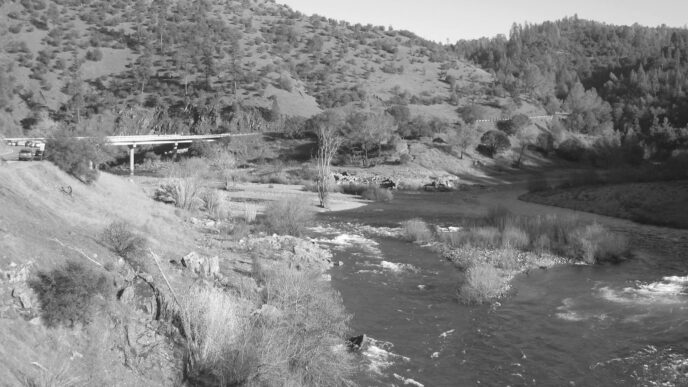
Locally known as “The Stan,” the Middle Fork of the Stanislaus River has earned a reputation as one of the west slope of the Sierra Nevada’s outstanding trout fisheries. This comes as no surprise to fly-fishing enthusiasts because this section of the river is chock-full of nutrient-rich water for eager, hungry trout. The Stanislaus is a destination for rafters, hikers, backpackers, and fly-fishing devotees of all skill levels.
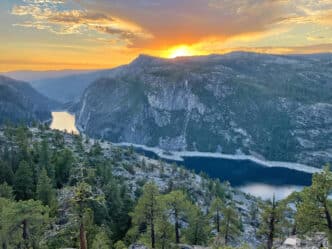
The Middle Fork drains a 332-square-mile watershed in Tuolumne County. It originates at the confluence of Kennedy and Summit Creeks in the serene Emigrant Wilderness. The river’s upper alpine regions consist of rough, narrow canyons that are not easily accessible. Those willing to put in the work can be rewarded with high-quality specimens of trout—like little jewels in the hand. The higher elevations of the watershed are primarily federal Forest Service land and protected wilderness.
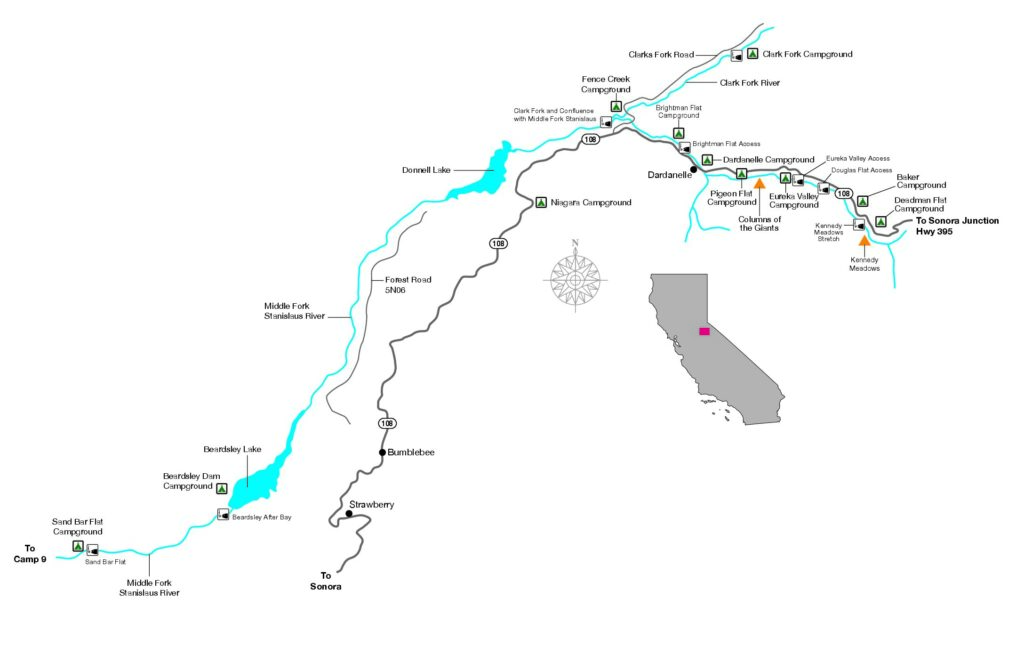
The Middle Fork’s designated Wild Trout Water extends from Beardsley Afterbay downriver to the Sand Bar Diversion Dam, a 4.4-mile stretch. The rainbows and browns are small yet plentiful, keen for a feathery snack. Eventually, the Middle Fork converges with the North Fork near Camp Nine east of Murphys to form the mainstem Stanislaus River, where it meanders into New Melones Reservoir. The river’s geographical diversity and technicality are what make it unique and breathtaking.
A Mini History Lesson
Rich in beauty. Rich in history. The Middle Fork is a complete mini history lesson, spanning from the first Native American inhabitants to the production of hydroelectric power.
The first humans arrived in the Sierra Nevada roughly 10,000 years ago. In historic times, the Middle Fork lay within the traditional territory of the Central Sierra Miwok, predominantly a hunter-and-gatherer society. They established main settlements in the lower foothills and Central Valley during the winter. In summer, when the heat became unbearable, they ventured to the Middle Fork of the Stanislaus to harvest food in the cooler, higher elevations.
Spanish exploration and colonization of California began in earnest in the late 1700s. The area was later explored by Gabriel Moraga in 1806, who named the river Rio de Nuestra Señora Guadalupe (River of Our Lady Guadalupe). Native Americans strongly resisted the Spanish occupation and often revolted against it. After Mexico gained independence from Spain in 1821, resistance continued.
What’s in a Name?
In 1828, Estanislao Cucunuchi, a Northern Yokuts, led a group of Native people who resisted efforts by Mexican authorities to force them back to the missions. Mexican troops fought Estanislao and his followers along the river in 1829. Because of Estanislao’s efforts to preserve Native culture, the river became known as Rio Estanislao in honor of his bravery and was later renamed Stanislaus.
During the 1850s, the Middle Stanislaus area, like much of Northern California, experienced an influx of miners seeking wealth in the form of gold. Miners made the treacherous crossing over the Sonora Pass, ransacking the river’s gravel and banks in search of the elusive element. Remnants of ditches, rock pilings, walls, and mining artifacts can still be found along the river. Many miners and their families settled the land in the lower reaches of the Stanislaus River.
As the population in Northern California grew, reliable electricity was needed to support residential and commercial infrastructure. Hydroelectric development began on the Middle Fork in the early 1900s, when the Stanislaus Electric Power Company constructed Relief Dam and the original Stanislaus Powerhouse. Over the following decades, an increasingly complex system of dams, diversions, reservoirs, and powerhouses was developed throughout the watershed by power companies and irrigation districts. Donnells and Beardsley dams, completed in 1957 as part of the Tri-Dam Project, further transformed the Middle Fork by providing water storage, irrigation for Central Valley agriculture, and hydroelectric power. Together, these dams, diversions, and hydroelectric projects have altered the geography of the once-free Middle Fork, shaping the river we know today.
On August 1, 2018, Tuolumne County and the Stanislaus National Forest suffered greatly when the Donnell Fire rapidly spread throughout the forest, burning over 36,000 acres. The fire was started by an unattended illegal campfire near Donnell Reservoir. Numerous
campgrounds, service roads, cabins, and wilderness areas were destroyed by the wildfire, including land around the Middle Fork. The Donnell Fire significantly altered the area’s vegetation, wildlife habitat, ecology, and watershed conditions throughout portions of the upper Middle Fork area.
Tuolumne County’s history has greatly shaped the land and lives of the area. Sometimes, when I take a pause while fishing the Stan, I close my eyes and try to imagine what the river looked like 200 years ago. I am always appreciative of the historical context of the many breathtaking places I come across during those quiet pauses.
FISH SPECIES
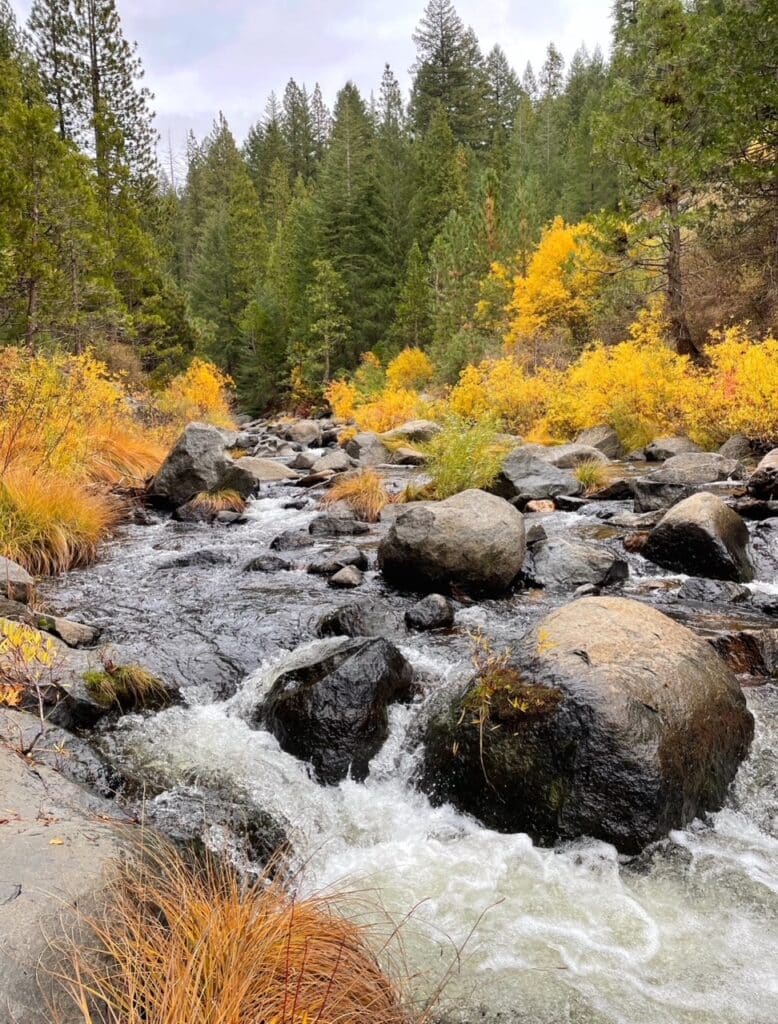
Three main species of trout are ready to be fooled by your best fly presentation. Various sections of the Middle Stanislaus offer opportunities to catch different trout species depending on elevation, presentation, technique, and hatch.
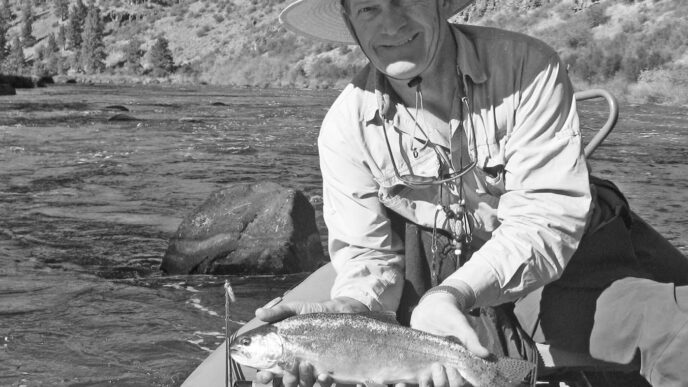
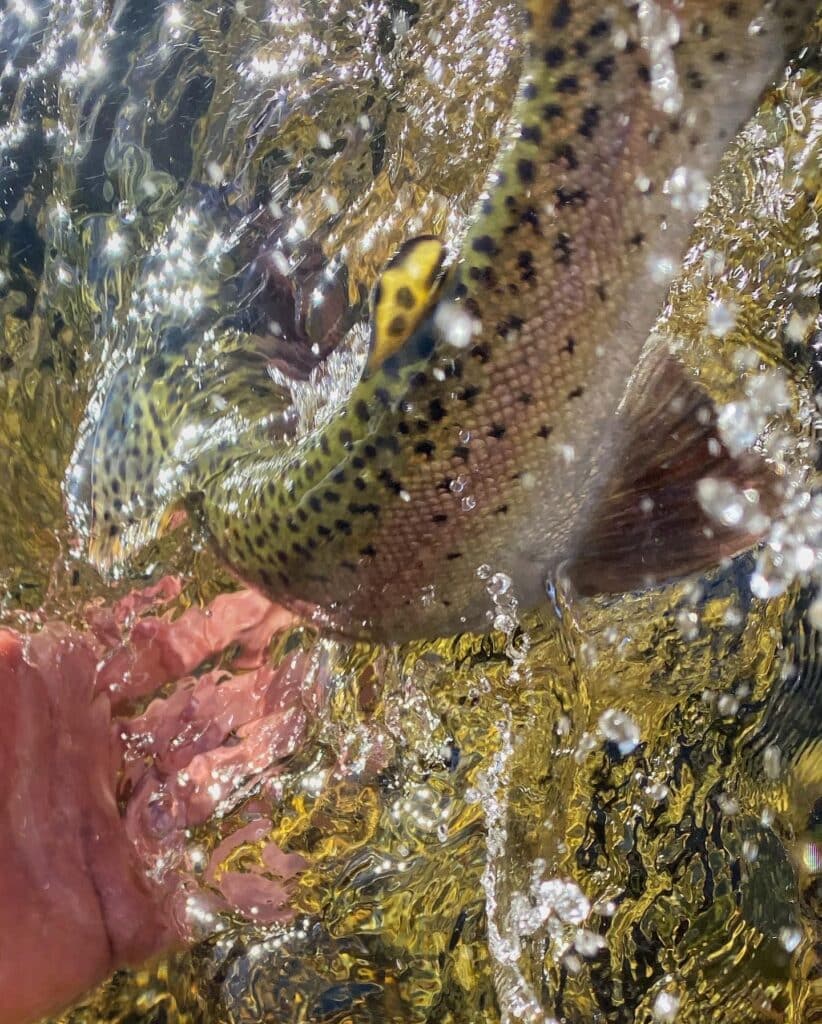
Wild rainbows are the predominant species caught in the river system. Their territory generally ranges from Kennedy Meadows downstream through the designated Wild Trout section below Beardsley. Typically, these bows range from 6 to 14 inches in length, and at times up to 18 inches. These wild bows are strong and solid and have the most beautiful jewel-colored patterns. I always admire the dark parr marks found on this species. California Department of Fish and Wildlife (CDFW) also stocks trout at access points near Kennedy Meadows and downstream throughout the season. Though still entertaining to catch, stocked bows lack the stunning coloration and parr marks of the wild trout.
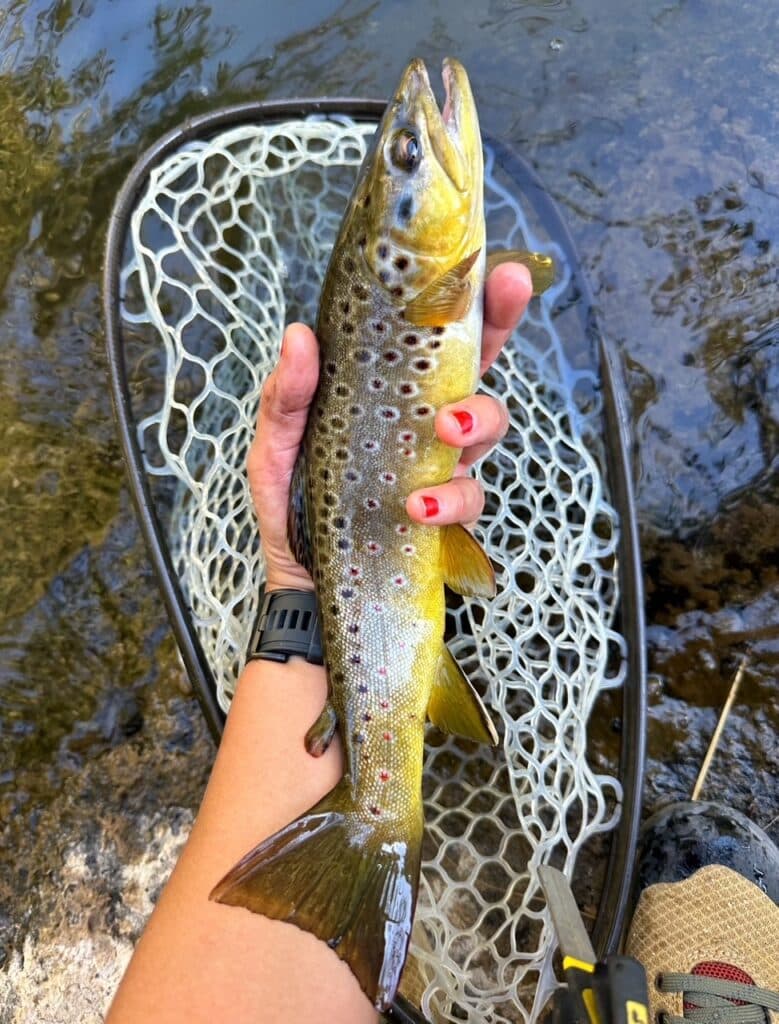
German browns are found all throughout the Middle Fork, but mainly near the Dardanelle stretch and downstream. Personally, these guys are my favored catch because of their feistiness and the technique required to catch them. Wild browns vary widely in size, but are generally between 10 and 14 inches long. The Sand Bar Flat area has earned its reputation as a brown trout Mecca. The area is characterized by large boulders and deeper pools; those brave enough can track the fading trail along the river, as this section is less accessible than others.
Brook trout in the range of 6 to 10 inches can occasionally be caught in the high-elevation headwaters and smaller tributary streams of the Middle Fork.
LET’S TALK ABOUT HATCHES
The Stan rewards anglers with a variety of hatches throughout the year. I believe what makes the Stanislaus so special is the abundance of insect activity, driven by the ecology of the Middle Fork.
Roads down to the Middle Fork are typically closed due to snow until mid-April; access to the river is very limited before then. Early in the season in May, golden stoneflies begin to emerge. Stonefly nymphs can be used but are most effective in late spring through early summer. Adult stonefly patterns are best used at dusk. Try stonefly patterns in sizes 8–12. In particular, I found the TJ Hookers to be productive stoneflies along the Dardanelle stretch and at the confluence with Clarks Fork, especially in the deeper granite pools. They are heavy tungsten jigs that cross a Pat’s Rubber Legs with a Woolly Bugger. Trout. Eat. Them. Up.
There is a significant caddis hatch during the summer months. Most of these hatches occur from late morning to early afternoon.
Effective patterns during the midday hours include Elk Hair Caddis and the Goddard Caddis. The Hare’s Ear (or Golden-Ribbed Hare’s Ear) can mimic a caddis larva or pupa rising to the surface. This is due to the fly’s shaggy body, which hungry trout devour.
Mayfly hatches are also noticeable during the summer months and are highly effective for catching rainbows mid-morning. Flies like the Pheasant Tail Nymph, Hare’s Ear, and the trusted Copper John fool fish by mimicking an actively swimming or crawling mayfly. Emerger mayflies are found sub-surface and copy an insect trying to break the surface of the water. Flies with soft hackles, like the Blue-Winged Olive (BWO) patterns in sizes 14-18, are like trout candy. Parachute Adams and the Pale Morning Dun (PMD) are widely used during mayfly hatches, representing newly emerged adults rising high on the water’s surface.
In addition to the summer caddis hatch, the Middle Fork experiences an autumn caddis hatch that can bring about some superb fly fishing. This hatch typically begins in mid-September and peaks in October. It is prime time to be outside because the weather is much more enjoyable than in the hotter summer months. The fish also respond actively to the cooler evenings. Use larger Elk Hair Caddis patterns, stimulators, or other
orange/tan dry patterns to mimic a surface hatch. Some of my most prized browns have been caught on these reliable patterns late in the fall.
Let’s not forget about the year-round midge hatch along the Stan. This hatch is often overlooked and underappreciated. The midges provide a reliable food source for trout throughout the doldrums of winter and during the early morning hours of summer. Along the Middle Fork, the most productive midge hatch occurs on the tailwater sections or in slower pools. I recommend using red and black Zebra Midges sizes
18–22, as well as the Griffith’s Gnat in sizes 16–20, to mimic midge pupa and emerger patterns.
TECHNIQUE
Both traditional and Euro nymphing seem to be the most effective way to catch hungry trout, though there are a variety of ways to fish the Middle Fork. I have found that traditional nymphing with a strike indicator is simple, as I have yet to learn the Euro-nymphing method. Indicator fishing tends to have its benefits during the warmer hours of the day along the Stan, when the trout are holding deeper to escape the summer’s heat.
I am always a tad jealous when I see my friends’ success with Euro nymphing. I kick myself for not knowing the technique, or maybe because I do not want to travel down the rabbit hole of buying more gear. Regardless, Euro nymphing is ideal for the Middle Stan and yields a heck of a lot of fish. This technique does not use an indicator; rather, strikes are felt through the line or watched via a colored monofilament sighter section in the leader. Depth is changed simply by raising or lowering the rod tip or by adjusting how much leader is in the water.
Personally, I find dry-fly fishing to be the most exciting technique along the Middle Fork and can be used by everyone from the greenest of greenhorns to the fly-fishing expert. Dry flies are best used in late summer and early fall, when water flows have dropped. Look for riffles, runs, and pocket water for the most success. Parachute Adams, Elk Hair Caddis, ants, and the Chubby Chernobyl make a summer trout snack; the trout can’t resist a bite. Focus on areas like Fraser Flat and the Kennedy Meadows run for the best dry fly fishing.
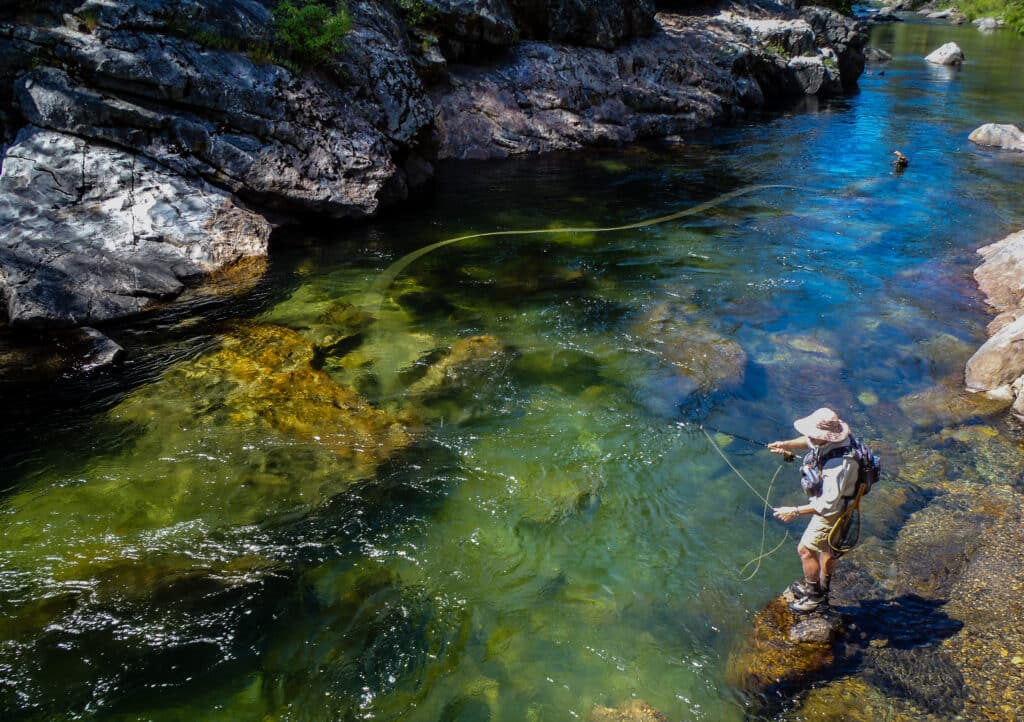
Hopper-dropper setups are a unique way to fish the deeper granite pools of the Middle Fork, and the rewards are incredible when done properly. This versatile rig combines a buoyant foam fly (your hopper) with a subsurface wet fly or nymph (your dropper). This allows you to entice fish feeding on the surface as well as down in the water column. The trout essentially have two choices! This has been a favored technique of mine, especially below Beardsley and in the Clarks Fork area. In the summer evenings, drop the dropper and fish with just the hopper. Use hoppers like a Chubby Chernobyl, a foam ant, or a large stimulator. These flies are the most visible and buoyant. Effective droppers include Blowtorches, Perdigons, and Frenchies, which use tungsten beadheads that sink quickly.
A NOTE ABOUT FISHING CLARKS FORK
Clarks Fork is a small tributary of the Middle Fork of the Stanislaus River and is often overlooked by anglers eager to venture to the more popular Kennedy Meadows. One can typically find a private place to fish along the falls, pools, and riffles. Clarks Fork Road is seasonal and depends on snow and road conditions; check with the Summit Ranger District before traveling early or late in the season. Clarks Fork converges with the Middle Fork of the Stanislaus, making it another outstanding location to fish.
For anglers seeking more solitude and a challenge, park at the end of Clarks Fork Road and hike up Iceberg Meadow towards Saint Mary’s Pass. The route climbs a steep knoll, and the trail rejoins the river about a mile ahead. This section of Clarks Fork sees fewer anglers and can be quite productive. This area is also popular with backpackers and hikers heading into the Carson-Iceberg Wilderness and the Sonora Pass area.
The section where Clarks Fork Road dead-ends at Iceberg Meadow and the mile or so downriver offers excellent fishing as well. Two prominent creeks, Arnot Creek and Disaster Creek, enter this section of the river.
Much of this stretch is accessible by staying along the worn path. However, below this point, the Fork can become potentially dangerous and challenging as it meanders through dense evergreen forests and shrubs. The river eventually steepens with waterfalls and slippery granite boulders, especially during the spring runoff. I do not recommend fishing in this area.
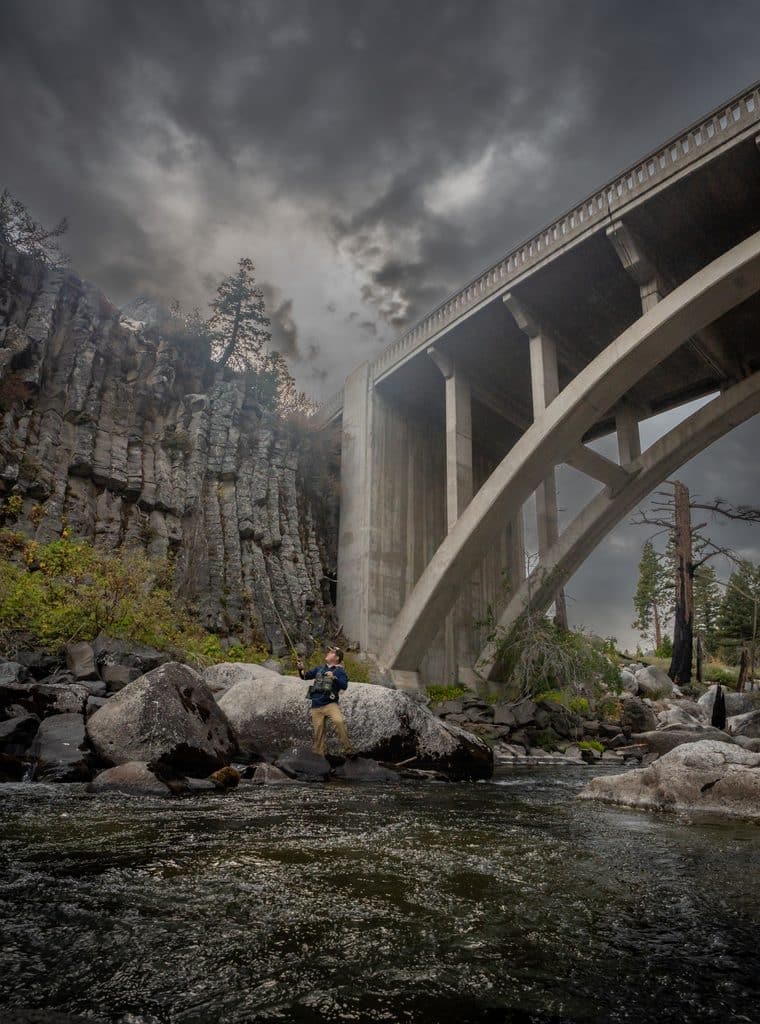
The bridge on Clarks Fork Road and upstream offers decent fishing and is quite different geographically from the water upriver. The evergreen trees are less prominent, and the Fork is more spacious for wading and casting.
The same gear and techniques used on the Middle Fork can also be applied to the Clarks Fork area. I recommend using a shorter rod than a typical nine-footer to make it easier to maneuver through bushes and shrubbery. The following are my recommended flies and setups:
Dry Flies: Use lighter leader/tippet material in 5X-6X. Elk Hair Caddis, Parachute Adams, stimulators, and terrestrials (black ants and hoppers) are the go-to patterns.
Nymphs and Droppers: All can be used solo under an indicator or as the dropper of the hopper-dropper setup. Fish with Hare’s Ear, Pheasant Tails, small stonefly nymphs, Perdigons, and Frenchies.
Like the Middle Fork, Clarks Fork has a population of wild and planted rainbows and browns, with the occasional brook trout. Rainbows are the most common catch in the system; the wild bows are smaller and more vibrant in color. Brown trout hold in deeper, slower-moving pools and devour small streamers, nymphs, and terrestrials. The elusive brook trout are known to live farther up the Fork; they often make their way to the system via other higher-elevation creeks.
WHEN YOU GO
The Middle Fork fishing regulations have changed in recent years. Anglers can fish Sand Bar Flat to the North Fork confluence all year. There are no gear restrictions. Access points are not as abundant as upstream locations. From Spring Gap upstream to Beardsley Dam, the season is open all year as well. Pinch those barbs! Only barbless hooks are allowed on this section of Wild Trout Water. Always check current CDFW regulations before fishing.
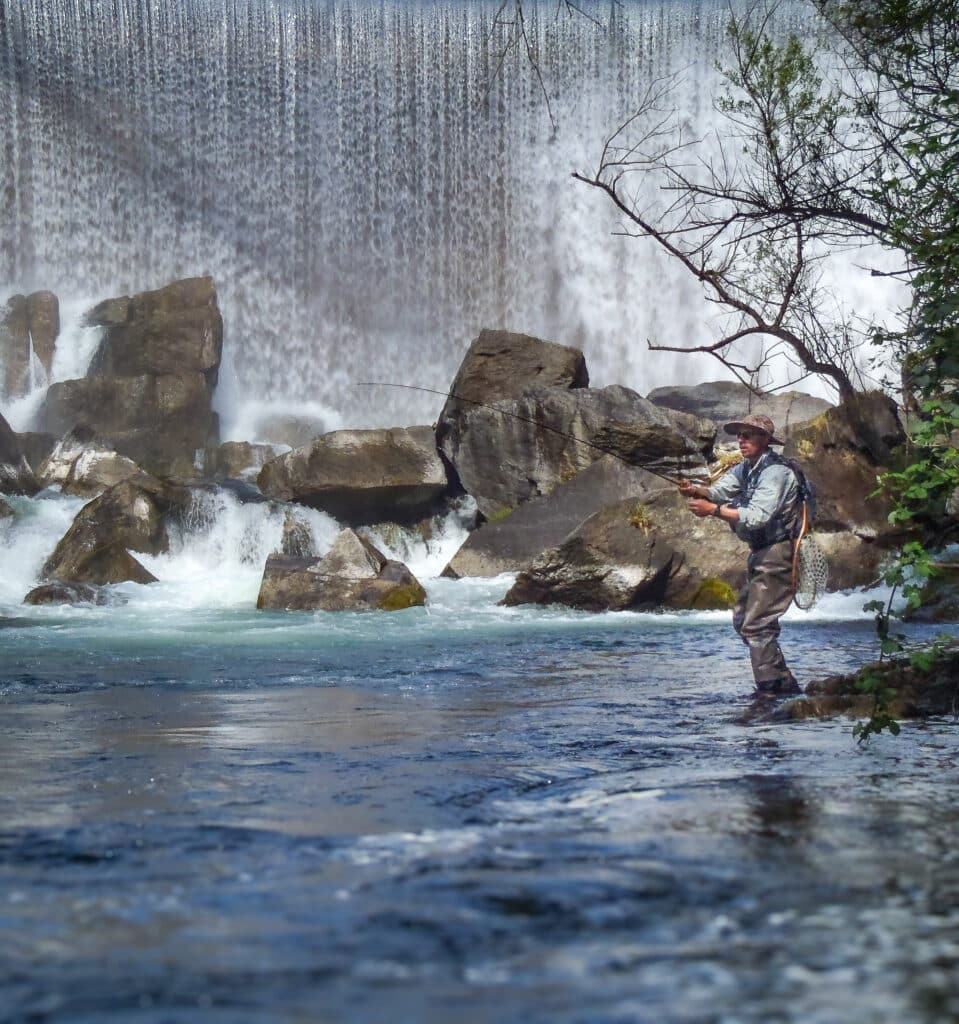
Check flows before any trip. Donnell and Beardsley dams often fluctuate water levels at a moment’s notice in spring and summer to regulate high-elevation snowmelt. Do not underestimate the power of water; fish with a buddy, use a wading staff, and have a plan to escape rising water.
The 48-mile stretch of the Middle Fork offers so much to those new to the sport and to seasoned anglers: solitude, beautiful wild trout, and a rich history. With both easy access and challenging hikes, it is clear why this river has become a popular destination for honing fly-fishing skills. Like many others, I learned to fine-tune my fly-fishing skills on the Middle Fork; it is a place that offers grace and forgiveness. These days, I do not lose as many flies to the bushes. I am truly grateful to have this fishery in my own backyard.
Middle Fork Stanislaus Quick Guide
The Middle Fork of the Stanislaus travels along Highway 108 and through the Stanislaus National Forest for much of its run. As such, there are limited commercial establishments in the area but plenty of wilderness and nature!
Maps
Fly Fishing the Sierra’s West Side Sierra Region 1 map has detailed segments showing trails, campgrounds, and tributaries.
Season and Regulations
Fishing on MF Stan is open year-round but Sonora Pass is seasonal. Only flies with barbless hooks and artificial lures are allowed on the Spring Gap to Beardsley Afterbay section. Always check the California Department of Fish and Wildlife for any updates.
Lodging
The towns along Hwy 108 offer a few lodging options but camping is your best bet with plenty of sites to choose from.
Kennedy Meadows Resort & Packstation–This seasonal resort is located 10 miles west of Sonora Pass. Rustic cabins with private bath. Pet friendly. Resort has a casual restaurant, saloon, and general store.
Strawberry Inn–Riverfront resort with 15 guest rooms, full restaurant and bar.
31880 Hwy 108, Strawberry
Camping
There are many campgrounds along Hwy 108, managed by the U.S. Forest Service. They are first-come, first-served and have established sites with picnic tables, fire pits, pit toilets, and potable water.
From west to east, campgrounds to consider include:
Camp 9, Sand Bar, Beardsley Dam, Niagara, Fence Creek, Brightman Flat, Dardanelle, Pigeon Flat, Eureka Valley, Baker, Deadman Flat, Kennedy Meadows, Clark Fork
Dining
Mia’s Brick Oven Pizza–A favorite of both locals and visitors, their specialty pizzas are a favorite and fish & chips are the Friday special.
30040 Hwy 108, Cold Springs.
Pinecone Cafe–Stop in for breakfast before hitting the water. It doesn’t disappoint. 24556 Hwy 108, Mi-Wuk Village
Fly Shops
Sonora Fly Shop, on the west end of Hwy 108, your local Stanislaus River experts. They carry everything you need for your fly-fishing or outdoor adventure. Has guide services and weekly fishing reports. 78 South Washington St., Sonora, 209-297-9393. Open 9:30 a.m. to 5:00 p.m. every day.
Ken’s Sporting Goods, located in Bridgeport, has fly fishing, camping, and outdoor gear to meet your needs. 258 Main St., Bridgeport, 760-932-7707. Open 8 a.m. to 5 p.m. every day.