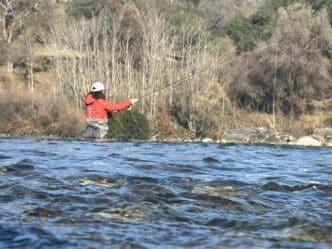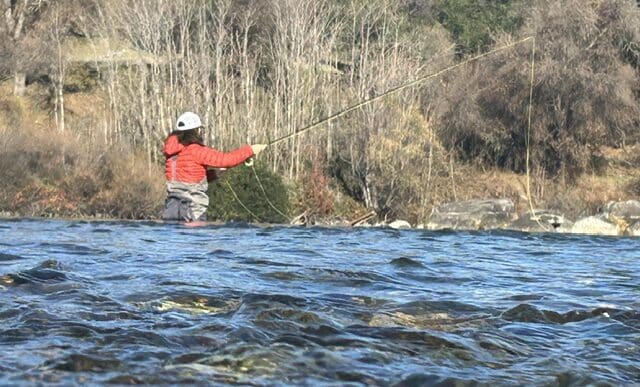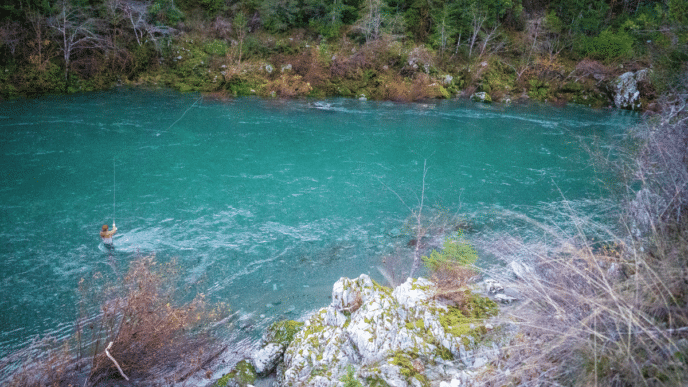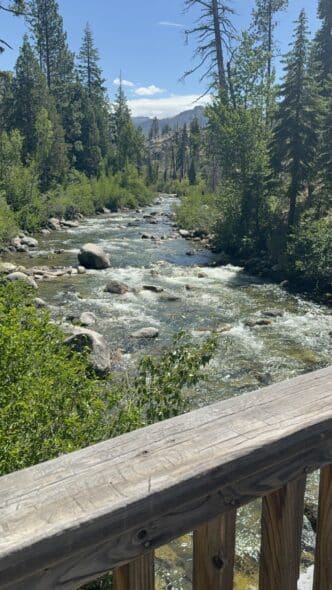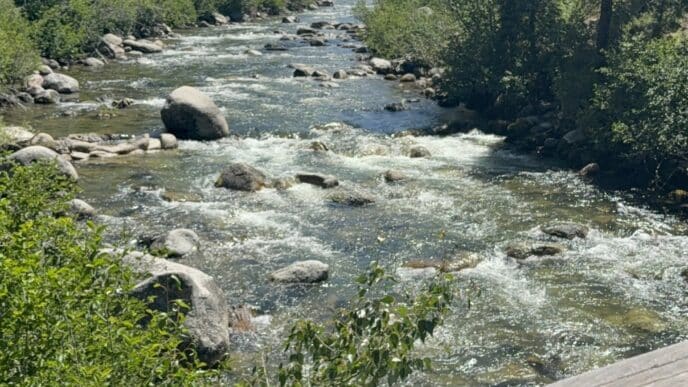
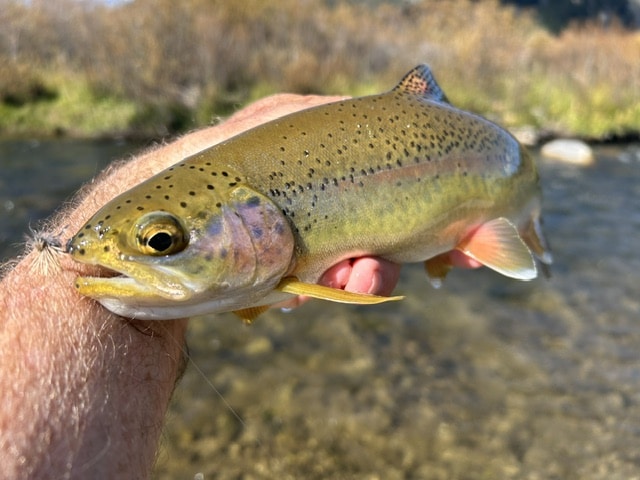
It was a glorious autumn afternoon on one of my favorite creeks; sunny but not too warm, a slight breeze, flows low but still cool and healthy. Streamside vegetation was a vibrant mix of greens, yellows, and oranges, and the water wonderfully chilly on my wet-wading legs. I could not imagine a place I would rather be. Typical for this place, a few scattered mayflies were hatching, though not enough to bring the fish predictably to the surface. The smart money would be on a dry/dropper rig, but I was in the mood for the simplicity of fishing a single dry fly and worked the water with my favorite #16 Missing Link.
It had been a productive day, with the obvious riffle drops and inside seams producing just enough feisty, 10-12-inch rainbows, fish that deliberately rose to the fly and went ballistic when they felt the hook. Perfect action on my little Winston 4-weight. I’d been walking past many bank-side slots that were productive in spring’s higher flows but were clearly now too shallow and slow to hold fish. As I waded up through a shallow riffle, my eyes lingered on a small bush that hung out over the bank, and I realized the water was slightly deeper there. The slot was small, probably only three feet long and maybe twelve inches wide, but I could see the current was swift and might have carved out a slight undercut bank. My mind wanted to dismiss the spot’s potential—it was just a slight depression surrounded by absolutely no holding water. No way would a fish choose to live there, with deep holding water just 50 feet in either direction. But still…
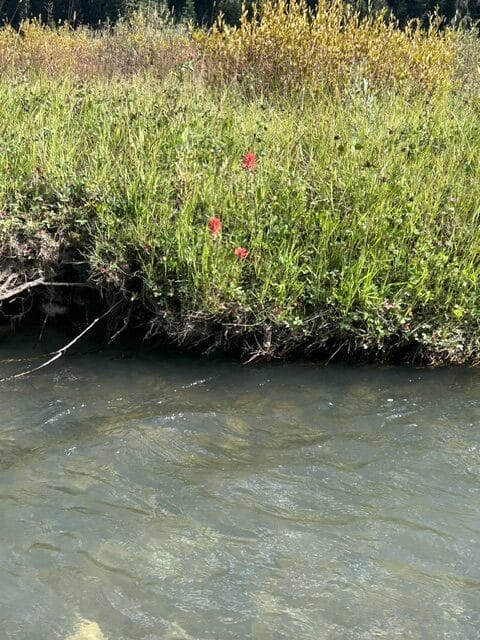
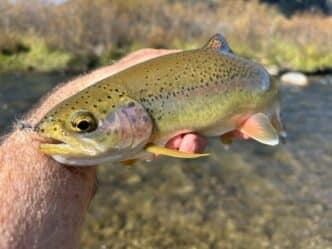
My first presentations fell short of the mark as I was nervous about hooking the overhanging bush. Several more casts neared the bank but were swept quickly away by the rushing current. Finally, I got the fly into the soft pillow of water just above the branch and watched it dance momentarily against the bank. Nothing. Predictably, the fly snagged on the bush, and as I yanked a few times hoping to free it, something strange happened; instead of the static tension of being hung up, my fly line began pulling out through my fingers. It took a moment to realize I was not hooked on the bush but on something very much alive! That fish obviously knew its home well, and for the next couple of minutes I had my hands full as it repeatedly bored back into the undercut, which went far deeper into the bank than I had suspected. Finally gaining the upper hand, I felt my heart jump as I slid 17 inches of gorgeously marked wild trout into my hand. Admiring it briefly, then slipping the dry from its mouth, I watched it power back into the riffle… and wondered, what just happened?
Few things in fishing give me as much satisfaction as reading water well and discovering a fish holding in areas I’m sure most people never even cast to. And it’s even sweeter when that fish turns out to be larger than anticipated. Certainly, it is important to recognize prime holding water in a stream, which often involves the deepest flows, preferably with a medium-to-fast current and scattered sunken boulders. The depth affords trout safety from the searching eyes of birds of prey—particularly if the surface is broken—and the faster current delivers a steady supply of food to the fish. The underwater boulders act as current blockers, allowing fish to hold effortlessly behind them and take advantage of the best of all features. Often, the largest trout will commandeer the deepest, fastest, most rock-strewn water available.
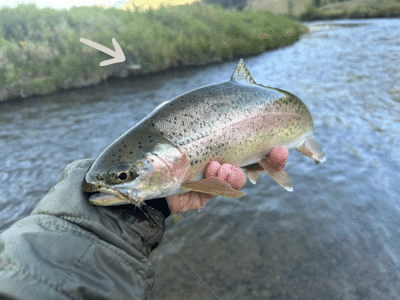
Yet choosing to focus only on this obvious holding water—while being generally productive—robs you of the satisfaction of learning more nuanced water-reading skills. And in some streams, particularly those that get a lot of angling pressure, some of the largest trout can be found in out-of-the-way, “sneaky” spots most anglers would not deem worth a second look. Often, these places are surrounded by shallow, fast-moving water that, in fact, does not hold fish.
Nearly without exception, these overlooked trout abodes share a consistent theme—depth near cover. The key is to recognize even a slight increase in depth near what might otherwise be a visually unimpressive piece of cover. Often, this will be a slight depression adjacent to an undercut bank. Sometimes the depth and water type will both serve as cover, such as a small-but-deep bucket in the middle of a shallow, broken riffle. In any case, it is worth recognizing that there is a fine line between a productive sneaky spot and a piece of water that doesn’t quite have what it takes to hold fish. Only time spent on the water will refine your ability to “see” the difference, and even then, you can be surprised. And should you cover such a spot with your dry fly with no results, consider dropping a small, beaded nymph a foot beneath the floater…you might just find the best fish of the day!