


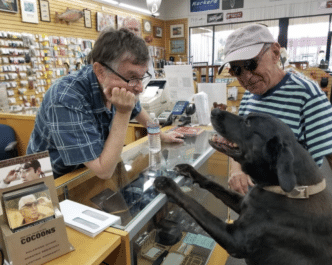
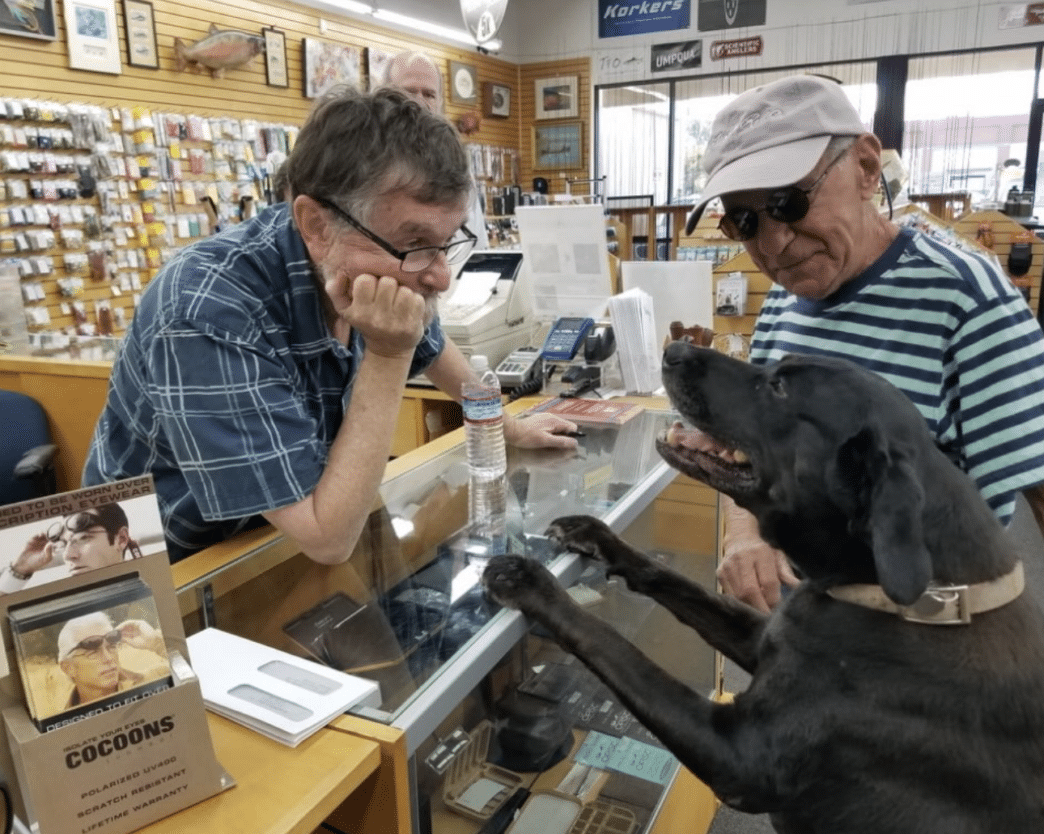
“And that was the last time I wore a tie,” said Steve Ellis with a smug, triumphant smile.
Steve had just regaled me with his “origin” story about Fishermen’s Spot. As a young man from the Valley, he walked into the first day of pharmacy school at USC wearing a tie, went home, and dropped out the next day. I remember staring at him in shock, thinking, “How many kids today would kill to get into USC’s pharmacy school, and here’s this guy who dropped out to sell flies.”
Steve’s passing in July 2026 shocked us at the shop. The timing was impossible to ignore. Just two days earlier, the shop’s younger co-owner had committed to modernizing the shop by digitizing the inventory, rebuilding our online presence, and rethinking how an old-school fly shop operates in the modern world. Then, suddenly, the man who shaped the shop for fifty-plus years passed away.
As we were looking to the future, Steve’s passing forced us to look back. What was worth preserving?
Answering that question began with stories.
At Steve’s funeral, we heard Steve Fernandez, a renowned fly tyer, describe Steve’s delight in hiring him as a kid over the summer. Steve had found the perfect, inexpensive workforce for the incredibly unglamorous job of packaging endless bags of tiny hooks, a.k.a. teenagers. Apparently, he wasn’t the only Gen X teenager who spent summers counting hooks.
We also remembered how he was like a friendly, humorous Scrooge McDuck: thoroughly capitalistic yet unexpectedly generous. We saw this in his quips, such as “O please stay longer! The longer you stay, the more you spend! Hooray!” If someone told him they had intended to spend only $40 but actually spent over $100, he would smile and deliver his standard response: “We did our job.”
Yet, Steve was a man who recognized where he needed to be generous, especially toward local casting clubs and longtime friends of the shop.
I experienced Steve’s generosity when I bought materials for a Women’s Fly Tying night at the Pasadena Casting Club. Steve essentially gave me half the materials for free and a deep discount on a pack of dumbbell eyes because “we gotta support our clubs.”
At the time, I was secretly happy that Dave, our general manager, wasn’t there to stop this extremely generous discount. (Granted, it was like 3 packs of chenille and Eggstacy, plus those eyes.) But this was very Steve: he loved selling you gear and he loved supporting the pillars of fly fishing in Southern California.
My favorite memory of Steve is him sharing a photograph of his wife. It’s an overly saturated film photo of his wife smiling, standing next to a guide holding her trophy brown trout in New Zealand. He said, “This is my favorite photo of all time. Look at how happy she is! Isn’t her smile precious?” Judging by the bent corners of the photo, he had probably shown it to hundreds of people over the years with equal enthusiasm.
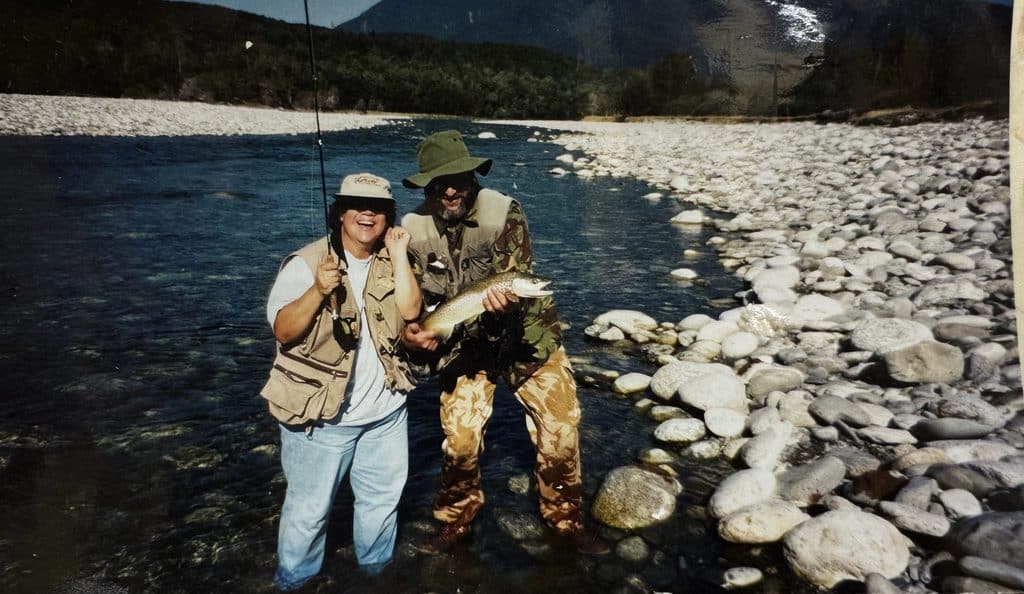
He just loved this memory of his wife, a woman he still saw every day. And the giant brown trout in the picture? He hardly seemed to notice.
In that moment, I saw how he loved people more than he could ever love trout.
Steve’s natural ability to connect with people helped the shop grow early and build a more “old-school” reputation.
Unfortunately, “old-school” can mean two different things.
There’s one definition that means remembering someone and asking how their flats fishing trip went. It can mean an experienced angler helping a complete beginner choose their first flies. It can also mean someone coming in for a spool of 5x tippet and then spending an hour chatting about hatches in the Eastern Sierras.
But “old-school” can also mean taking excess time to find a fly line on the shelf. It can mean taking out a magnifying glass to view our website on a typical mobile device. It can mean writing down a customer request on a piece of paper, which floats around the shop until it ends up permanently taped to a wall next to hundreds of other paper requests.
That type of “old-school” can sometimes make things more difficult than they need to be. Every moment we spend looking for a fly line or a lost order is a moment not doing the thing that fly shops do better than a website: getting strangers to share secrets about the perfect corbina fly or to realize they have oddly strong opinions about their favorite barbeque stop on Highway 395, floating lines, or rabbit strip jigs.
It’s important to remember that this was simply how retail operated for much of Steve’s career. By the time retail was fully in the digital age, he was in his late 60s. For a man who did business by shaking hands and punching daily totals into a calculator, he had already fought his battles as an entrepreneur in a different era.
This next battle was always meant for the next generation to face. It was only a matter of when.
The other day, I found myself at the fly shop, late at night, staring into the abyss of a misformatted Excel spreadsheet, thinking, Darn it! I’m spending more time on Excel than out fishing.
Well, we’re fighting that battle piece by piece right now.
Get a POS system up and running. Build a website that doesn’t force readers to squint at tiny text. Create an online presence that tells the shop’s story and welcomes everyone willing to step through our doors. Heck, this blog article is part of that battle.
Led by a younger co-owner who’s been behind the scenes and is now taking a more active role, this motley crew would rather be fishing, but we know why we need to do this work.
Depending on how far people are willing to drive, Southern California is a strange and wonderful place for fly fishing. One fly angler can have a daily morning ritual of hunting for corbina and then head to the mountains for coastal rainbow trout. There is an almost endless selection of urban ponds and rivers, beaches, mountains, islands, reefs, and jetties that make up an incredibly diverse fishery, each with its own techniques, flies, and peculiarities.
A lot of experience in those fisheries has passed through Fishermen’s Spot. Staying “old school” means risking the loss of a place where this knowledge accumulates, is built upon, and, most importantly, shared.
And that brings us back to hook counting.
Years ago, teenagers counted hooks to make a few bucks over the summer. Soon, computers will count every rod, reel, and more that enters and leaves the shop.
But keeping count of things was never the important part.
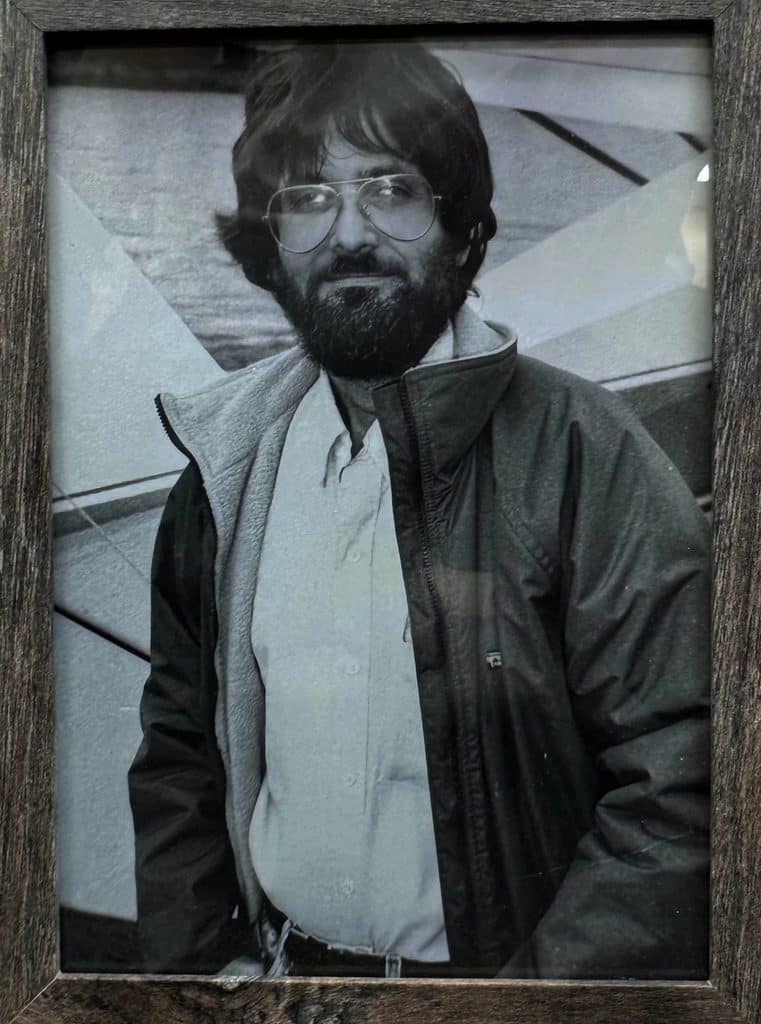
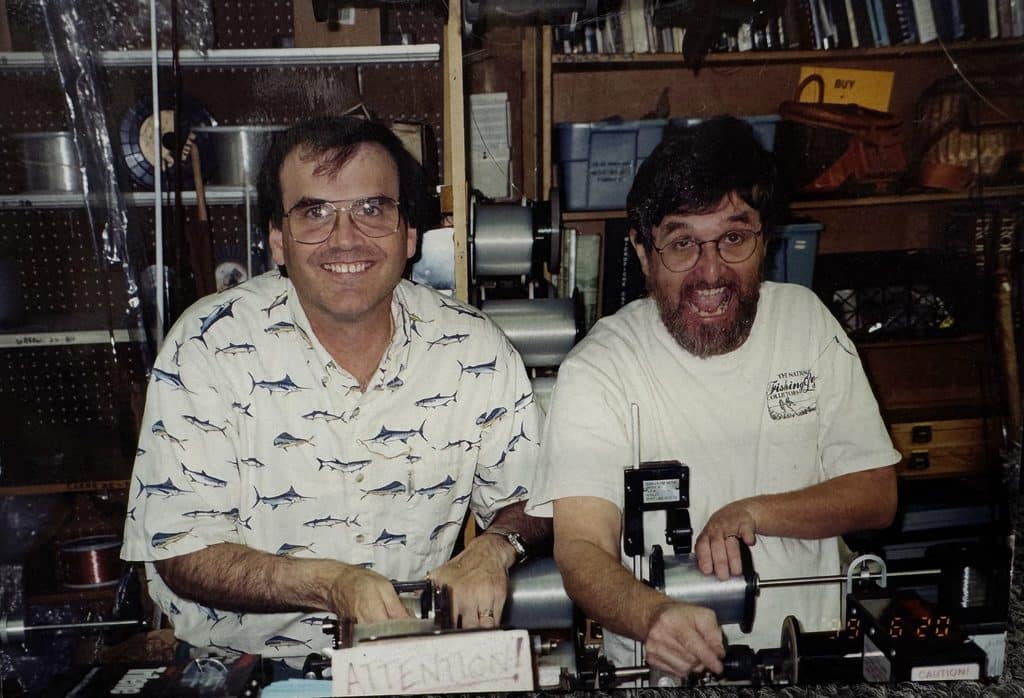
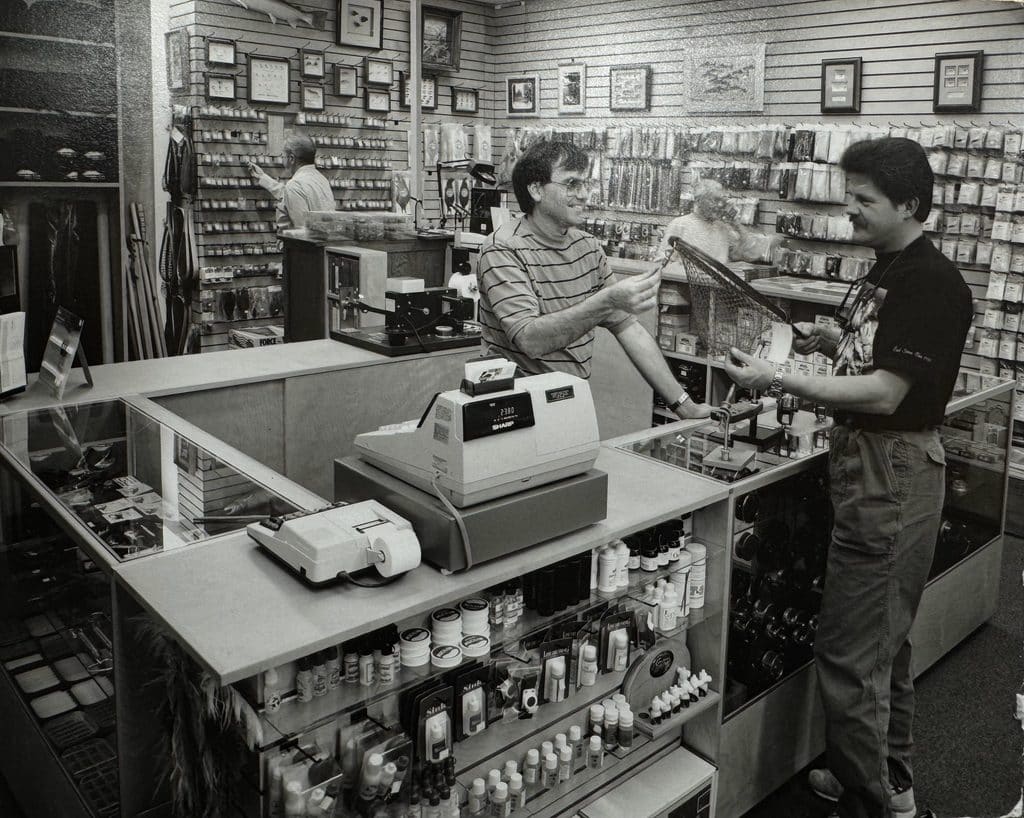
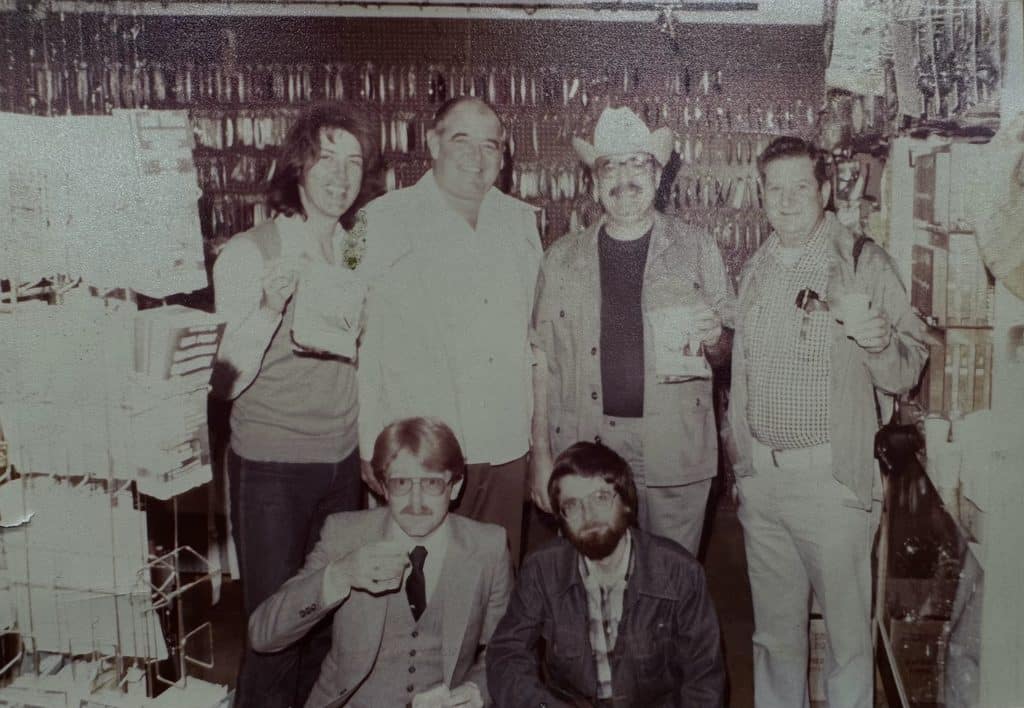
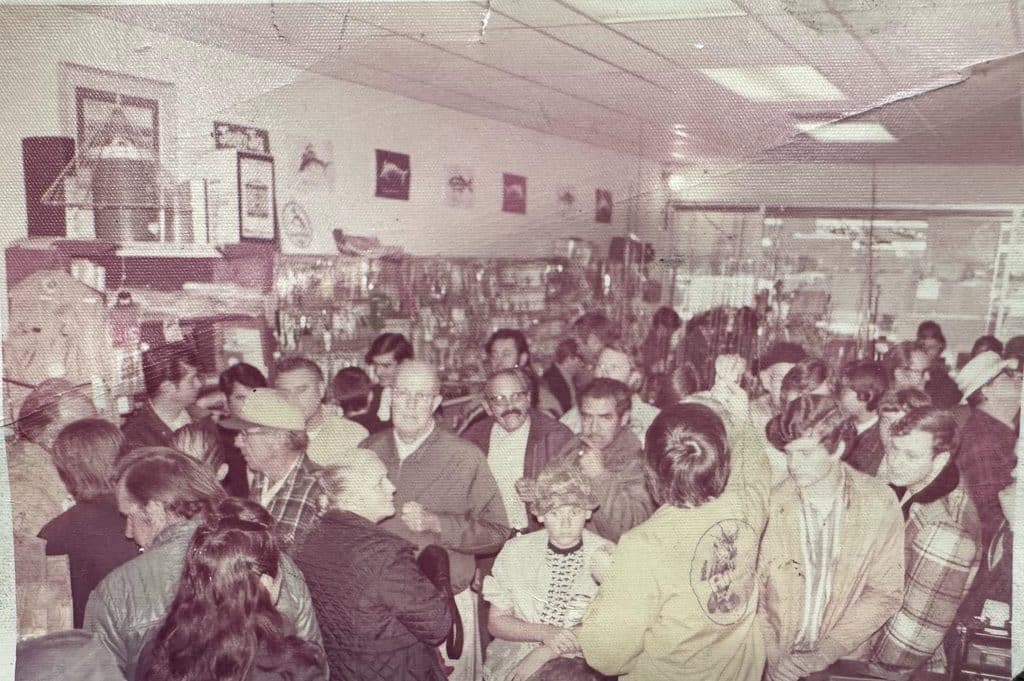
The important part was the kid who walked into the fly shop for the first time, expecting to buy worms but never left because they had a million questions. It was the generosity and recognition shown by guides and local club volunteers who keep the sport going. It was the angler who ended up working at the shop, sharing wisdom with customers just as they had received it before. It was the fly tyer who came in for just a few spools of thread and ended up buying three times as much material as they had planned.
Who knows if the shop will be around for another fifty years? We can’t predict that.
But we’re happy to let the computer do the counting if that means the rest of us get a little more time. Time to obsess over a customer with the soothing click of a clickpawl, nerd out on fly tying, or listen to a crazy story like the one about a guy who walked into the first day of pharmacy school with a tie on, only to quit the next day.
And he never wore a tie again.





I was fortunate to meet Steve when he hosted Davie McPhail fly tying session, a wonderful person and extremely knowledgeable of the industry. This is the only fly shop in Southern California! I wish you all the best in keeping the shop open.