
There was a time before smartphones when every self-respecting bar kept a small library of reference works to settle disputes between customers. The World Almanac, the Guinness Book of World Records, that sort of thing. The disputes could be quite heated in the late hours, focusing on obscure factoids. I once watched two guys almost come to blows over whether Benjamin Harrison, our 23rd president, was a Republican or a Democrat.
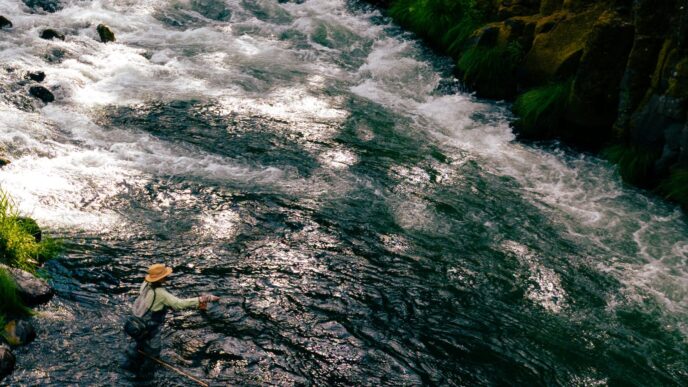
The fly-fishing arguments I’ve witnessed could be brutal, too. I recall an evening at a Markleeville bar when a fellow rolled in off the East Carson. He’d caught some fine wild browns and began bragging about the fight they put up. That earned a dismissive snort from another customer, who claimed he’d heard that nonsense about wild browns so often he wished he’d been born without any ears.
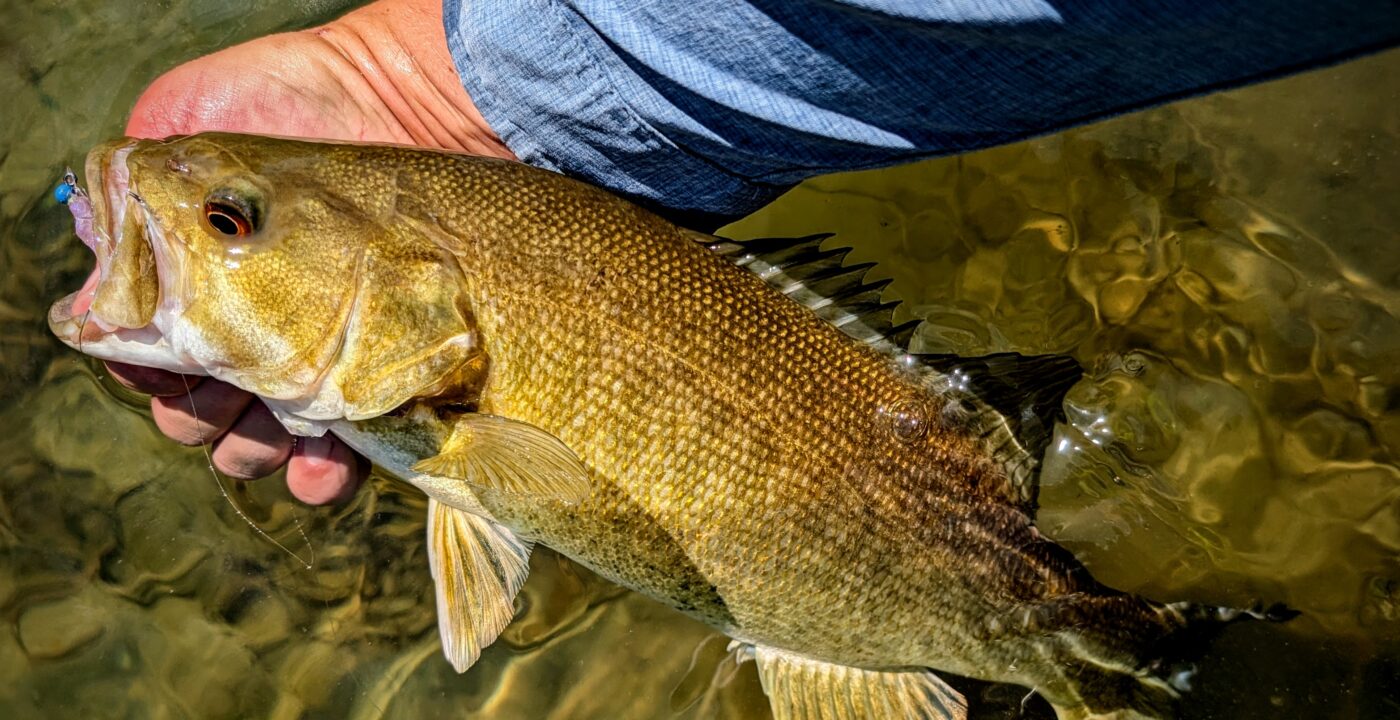
“Pound-for-pound, there’s no freshwater fish that fights as hard as a smallmouth bass,” he declared. “Hook one of those babies with a fly rod, and you’ll know whereof I speak.” His archaic locution impressed us all. It’s possible he read a lot of Shakespeare.
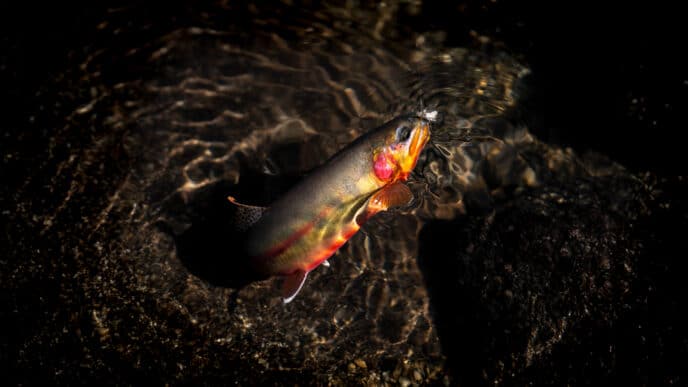
The debate went back and forth until the anglers ran out of steam. I tended to side with the smallmouth faction, though I didn’t add my two cents for fear of being called a flatlander and denied my turn at the shuffleboard table. But I understood why the trout fancier looked down on bass. It was a matter of aesthetics. Trout are sleek and elegant, born to feature in selfies, while smallmouths are like character actors who lack the good looks to land a starring role. If they were boxers, they’d indulge in headbutts and kidney punches.
The bar’s reference library wasn’t much help that night, but it would be a different story today. Someone would whip out a phone, consult Google AI, and deliver this verdict: “Smallmouths are generally considered better, harder fighters than trout, having more raw power and stamina.” Their “strong chaotic battles” often feature spectacular aerial displays. “They have a bad attitude,” one angling writer commented, “toward anything that gets in their way.”
My own enthusiasm for smallies began on the Russian River. It was a morning in late spring, and I hoped to pick up a last steelhead straggler before the season ended. While I cast idly into a pool, I noticed some aggressive surface feeding going on. I’d heard about bass in the river, but I never bothered to fish for them. When the straggler failed to show up, I decided to give the smallmouths a go.
I came back the next morning with a 6-weight rod and a few poppers and streamers. The feeding frenzy hadn’t let up. The smallies were about to spawn and were in a nasty mood. They attacked any fly I cast, the bigger the better, especially a #4 yellow popper they tore apart. I caught and released at least 20 fish before noon—no trophies, although even an 8-incher felt like one, leaping, diving, and thrashing to avoid its fate.
My experience wasn’t unusual. The smallies went into a frenzy every spring, I learned. I’d chosen an excellent stretch of the river, too, between Healdsburg and Alexander Valley, where I could wade and cast. Toward Guerneville, the Russian is much wider, and you’d need a boat to fish it properly. I had my best outings on sunny days. The bass hid beneath or behind structure, ready to ambush their prey, which made them easier to find.
Smallmouths often travel in groups, another plus for a fly fisher. They derive their power from being such active predators, developing thick, muscular bodies and larger tails than largemouths, who are notorious for playing dead when hooked. You might feel as if you’re reeling in an old boot while smallies rise up and shake their heads like crazy to try to free themselves.
They’re not particular about flies. Leeches, Clouser Minnows, crayfish patterns, and Woolly Buggers all work well. Brown and orange are popular colors. It helps if your fly makes a little noise—a Muddler Minnow, for instance, retrieved with quick jerks to suggest it’s distressed and vulnerable. Flies in the #4 to #12 range produce the best results.
Those feeding frenzies didn’t last long on the Russian. As soon as the scorching heat of early summer arrived, the bass dove to the cooler depths. They might take a nymph or a lead-eyed bottom-crawling streamer, but I was too lazy and spoiled to try. Instead, I waited until mid- to late fall, when the smallies fed heavily again, packing on the pounds for winter.
There are other rivers where smallmouth fishing is good all summer. A friend in Grass Valley swears by the North Fork American between Folsom Lake and Colfax, though some of the trails to the river can be tricky and demanding. The smallies are bigger than average, he says. Since he’s a former Boy Scout, I’m inclined to believe him. The North Fork Feather along Highway 70 reliably produces bass, and you can’t beat the canyon scenery.
Or you could take a drive to the gold rush town of Knight’s Ferry and admire the famous covered bridge. Built in 1863, it’s the longest such bridge (330 feet) west of the Mississippi. Underneath it flows the Stanislaus, a classic configuration of riffles and pools full of smallmouths, but you have to get an early start if you want to catch a few. The rafters and kayakers take over the river by mid-morning.
All those streams will deliver ample fun, but if it’s a trophy bruiser you’re after, you’ll have to visit a lake like Trinity, Almanor, or Pardee, where a 9.83-pound smallie set a new state record in 2007. The lucky angler was Stockton’s Harold Hardin, who’d fished Pardee once a week for almost 40 years. I’d like to tell you that Harold used a Clouser Minnow or another fly, but he’s a spin fisher and scored with a six-inch rubber Castaic lure in a rainbow pattern.
“My brothers and I catch a lot of big bass up there,” Harold told the Stockton Record, bear-hugging his record smallie for a press photo. “The week before, we caught a 6-pound smallmouth. We know the lake pretty well.” He usually catches and releases any bass, he said, but when he’s hungry for a fish dinner, he concentrates on catfish and— get this— trout!
There’s little doubt where Harold might stand in the great debate. As for the two cents I failed to contribute in Markleeville, I’d have argued that smallies seldom benefit from the help of a strong current when they go toe-to-toe with an angler, whereas trout can ordinarily count on a fast-flowing stream to bolster their resistance. The Russian’s just a lowly trickle in late autumn, but the bass are no less spirited. As a bystander remarked about Harold Harkin’s catch, “I held it and it was a hog, just as solid as a rock.”
As much as I admire smallies and concede they may be the piscine equivalent of Oleksandr Usyk, the world’s best boxer pound-for-pound, I’d rather fish for trout.
It’s a matter of aesthetics again. I’ve caught smallmouths in sloughs and other low-rent bodies of water, but the landscape where browns, rainbows, and brookies live never fails to inspire me and to prompt lofty thoughts about the glories of a state blessed with so many natural wonders.
In the end, the great Markleeville debate doesn’t reach the heights of historic set-tos like Lincoln vs. Douglas or Nixon vs. Krushchev. Most fly fishers are happy enough to be out in the open air, casting to any likely species, so it’s best to close with a few obscure factoids concerning Benjamin Harrison, a Republican born on a farm on the Ohio River. As a boy, he loved to fish and hunt waterfowl, so it’s likely he had the pleasure of catching smallmouths in the mainstem Ohio and trout in the river’s tributaries.