HABITAT Cold spring-fed tributaries of the upper McCloud River
SIZE Typically under 8 inches
SPAWNING May–June
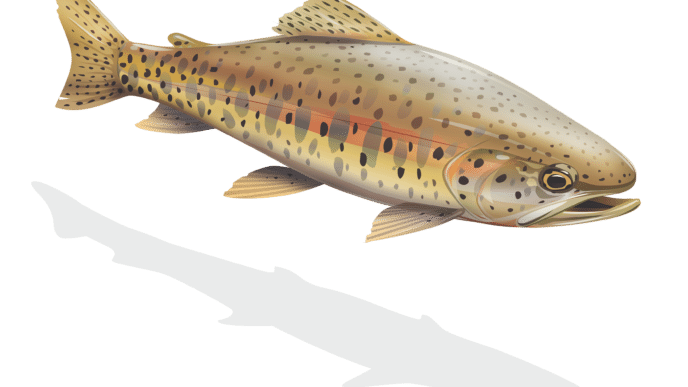
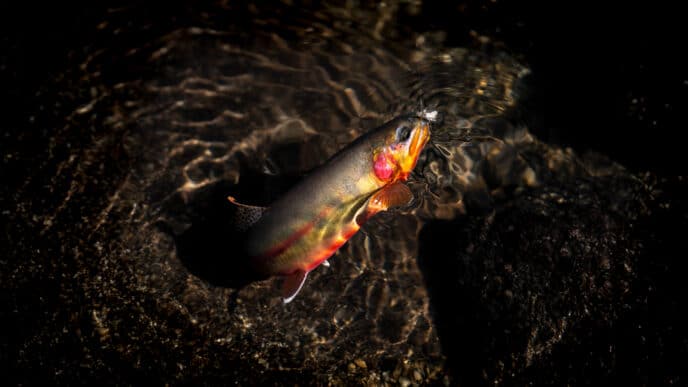
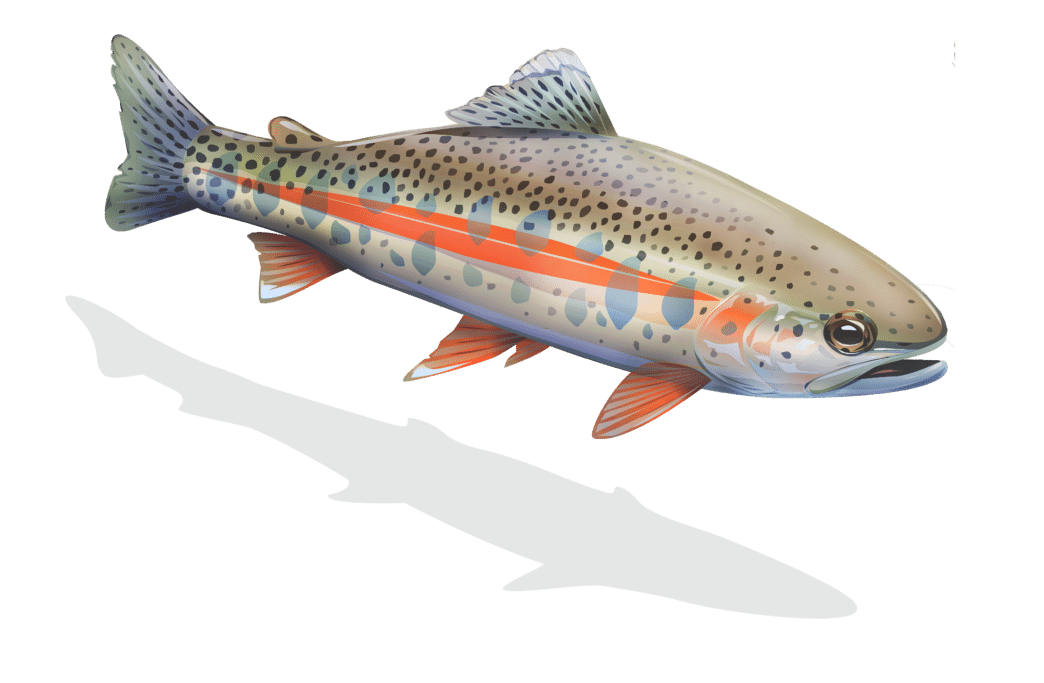
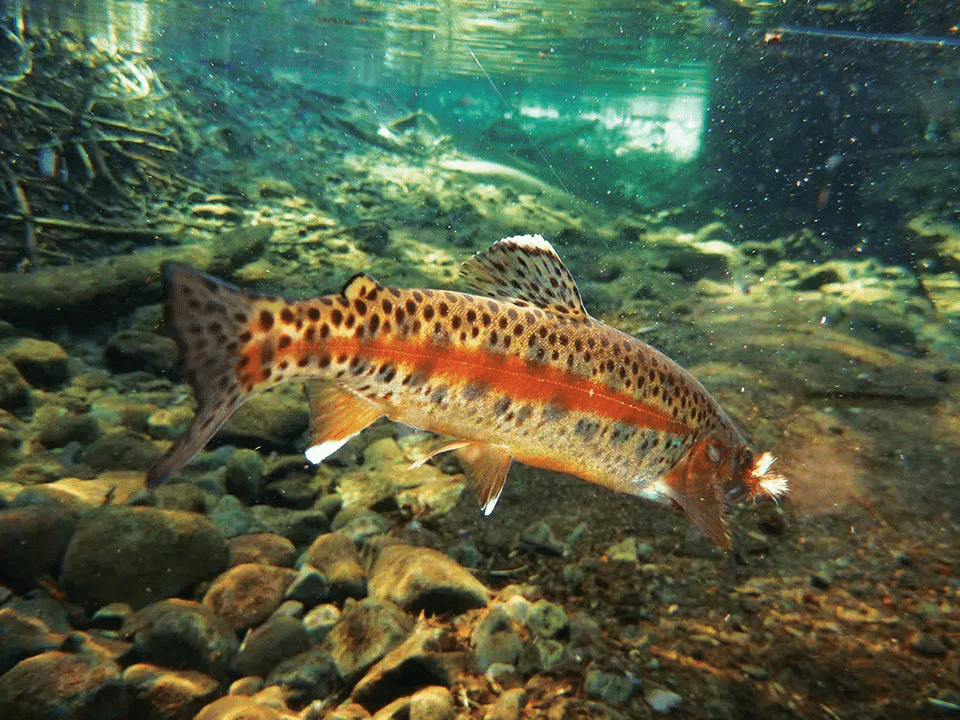
DISTINQUISHING FEATURES Brick-red stripe on their sides, similar to the California golden trout, dark oval parr marks, and white-tipped fins
A Global Trout
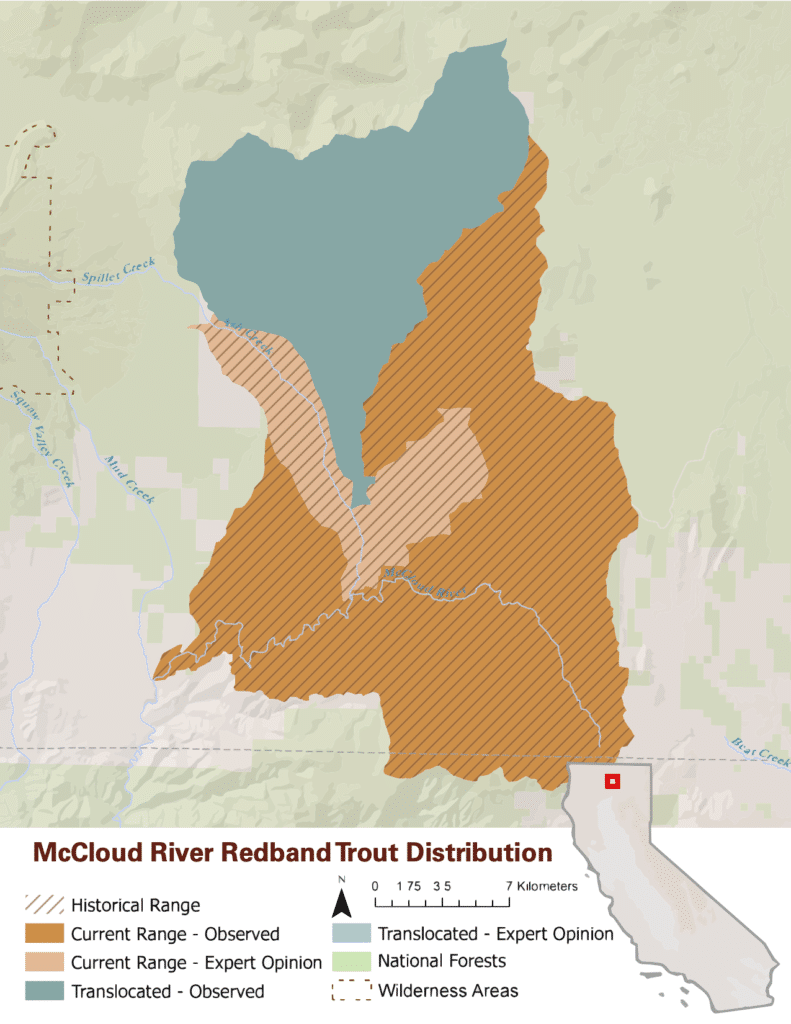
Often called the “Rainbow of the World,” McCloud River redband’s eggs have been used to populate trout stocks around the United States and countries across the globe. Japan, Australia, New Zealand, Argentina, Chile, Peru and western Europe. But, while it’s genetics have been spread across six continents, its habitat at home has diminished.
Conservation efforts have included the CDFW effort during the historic drought to rescue McCloud River redband trout from edson, Swamp, Sheephaven, and Moosehead creek and place them in the Mt. Shasta Hatchery to prevent their local extirpation. Most were released back into the wild after the drought but some were kept in the hatchery and cross-bred to enhance life-history diversity. Those fish are being released into McCloud Reservoir and McCloud River.
More recently, California Trout constructed instream pools on two McCloud River tributaries to serve as refuges during periods of low stream flow, enhancing resiliency during periods of drought. And CDFW is currently restoring the fish barrier on Trout Creek to protect the genetic integrity of the McCloud River redband trout upstream from the barrier.
fishing tips & techniques
Given the critical status of the McCloud River redband trout, care and consideration should be given when pursuing them for recreational fishing or for the Heritage Trout Challenge. While the gentically-pure redband reside in four small streams, for protection, three are closed to fishing year-round. Only one, Swamp Creek, is open to catch-and-release during the traditional trout season.
Ash Creek and Trout Creek are also open for fishing and may have some hybridization but are still redband-type trout within their native drainage.
LOCATION: Swamp Creek, Ash Creek, Trout Creek
ACCESSIBILITY: The creeks are easily accessible by road and Trout Creek campground is a good access point for that creek. Poison oak, rattlesnakes, bears, and mountain lions are common in the area.
GEAR: Standard dry and nymph flies are effective.
FUN FACT: Given it’s “Rainbow of the World” status, the McCloud River redband trout is the most prolific acquatic freshwater invasive species on earth.
My mccloud river redband: A personal account
By Mark Erickson
My experience catching McCloud River redbands for the Heritage Trout Challenge in 2020 was just that—a challenge. The McCloud River headwaters that are the native range of the McCloud River redband trout lie in forested volcanic tablelands that extend southeast of Mount Shasta. The area is a checkerboard of national forest and timber company land with gently rolling hills, volcanic scarps, and big trees. Most of the isolated headwater creeks that hold pure strain redbands are closed to fishing, but a couple are open and available to anglers chasing them. Driving the dirt logging roads that criss-cross the land to access the creeks reveals occasional glimpses of Mount Shasta looming to the west.
When I went to one of the creeks I found it running very low and the fish spooked super easy. Casting attractor dries served more to scare them than entice them to eat. I did catch one on a dry but I missed the picture required for the Challenge. I switched to pulling a beadhead nymph through holding spots like a streamer and got grabs. I caught a tiny little McCloud River redband, and photographed it. It was without a doubt the smallest fish I submitted over two different Heritage Trout Challenge applications, but the CDFW counted it, size didn’t matter.