


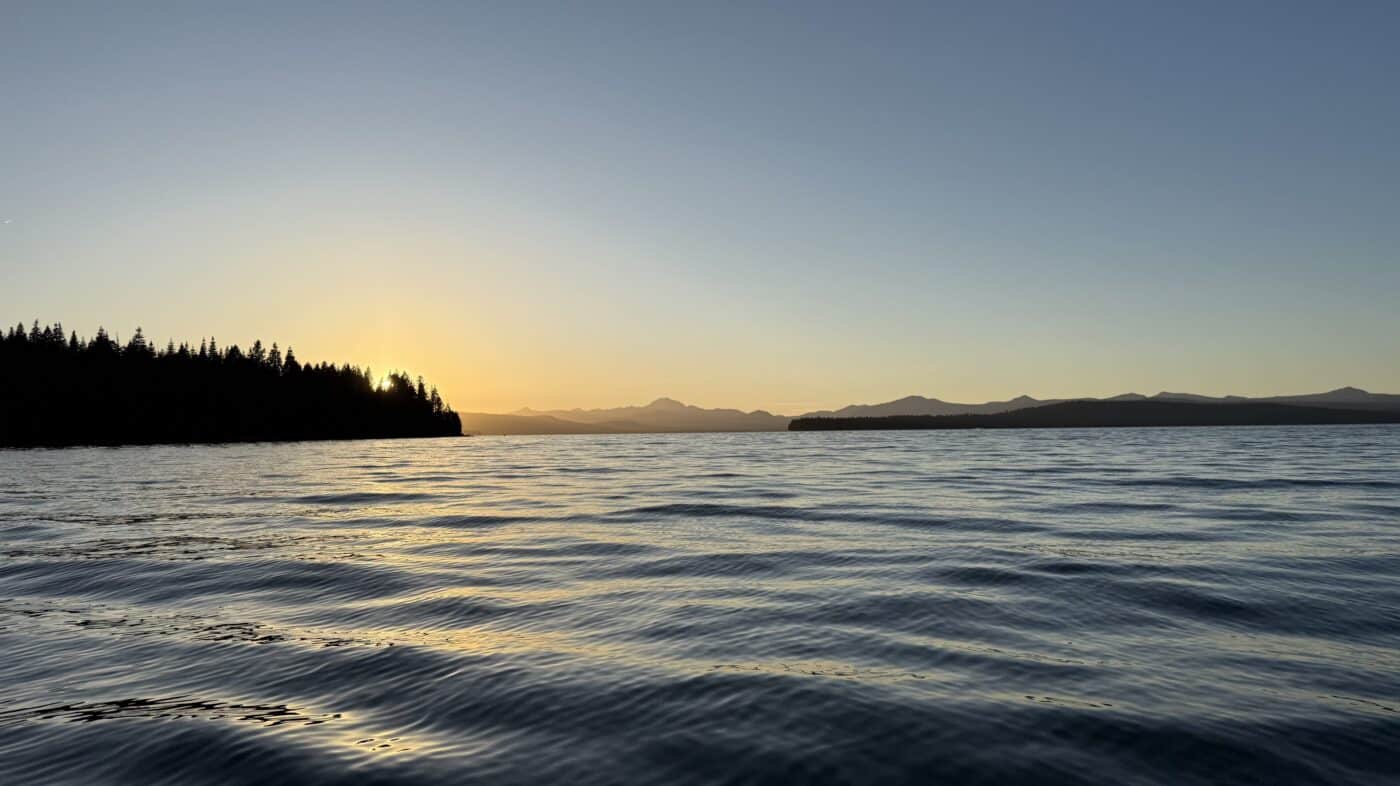

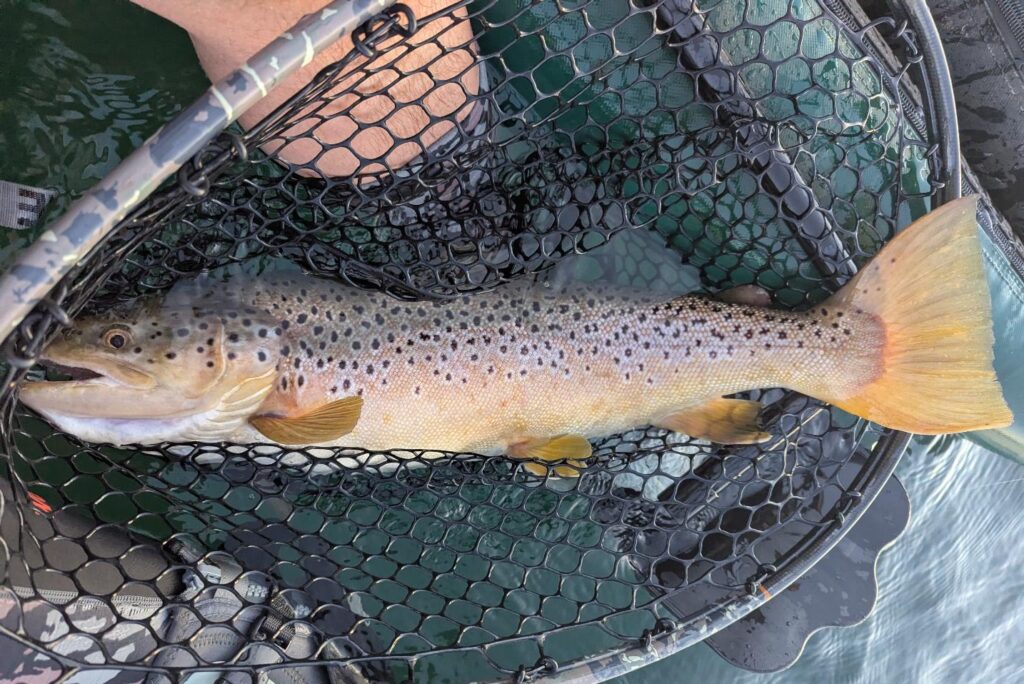
Last year, during the Hexagenia hatch, I guided a client who had a superb night. He landed five fish and was now casting to fish rising on a large size 6 Hexagenia dry fly. After hooking a fish, he turned back to me and said, “I love this place!” with a huge smile on his face. After a 10-minute battle, he landed a 7-pound brown trout. That’s what makes Lake Almanor special!
The Lake
The history of Lake Almanor dates back to the early twentieth century when the Great Western Power Company built a dam on the North Fork of the Feather River at what is now Canyon Dam. The original dam was completed in 1926, flooding the Hamilton Branch Creek canyon and the area the Maidu Indigenous people called ‘Nakam-Koyo’ or Big Meadows. Today, the reservoir is owned and operated by Pacific Gas & Electric Company (PG&E) and spans approximately 43.75 square miles (about 28,000 acres). It is 13 miles long and seven miles wide, lying between Highways 36, 89, and 147, just south of the small mountain town of Chester.
Multiple creeks and springs nourish the lake. The primary creeks are the North Fork of the Feather River on the north side and the Hamilton Branch on the southeastern side. Big Springs, the largest spring, is located in the northeastern part of the lake and releases about 400–500 cfs of water. Many other springs also contribute to the impoundment. With a wide variety of aquatic insects, minnows, crayfish, and other food sources, Lake Almanor is a paradise for fish. Did I mention that Lake Almanor is heavily stocked by the California Department of Fish and Wildlife (CDFW) and has its own fishing group, the Lake Almanor Fishing Association, which raises another 70,000 fish per year? As Arby’s says, “We have the meat—” fish!
Large lakes are influenced by two main factors: cold water and available food sources. Lake Almanor has both. For trout, Lake Almanor is like a vacation spa. Follow the cold water, and you will find the fish. Rainbow trout tend to bug out when water temperatures reach 56–57°F, while brown trout can tolerate slightly higher temperatures, around 61–62°F, sometimes higher. But there must be a substantial food source or nearby springs. If you’re catching only smallmouth bass during a great hatch, the water is likely too warm for trout. Conversely, if rainbow trout are your catch, you’re in a cold-water zone.
Accessing the Lake
Accessing Lake Almanor is easy, especially on its west shore, which is mainly owned by PG&E and the Plumas National Forest. There are only three small communities: Almanor West on the northwest side, also known as Goose Bay; Almanor near the National Forest’s South, North, and Legacy Campgrounds; and Prattville, situated in the middle of the west shore. The area offers several day-use areas and two free public boat ramps at North Almanor Campground and Canyon Dam. Much of the lake’s shoreline remains private property. Several resorts provide lake access for a small fee.
Trout
From December to February, the lake typically freezes at the north end near Chester and in many coves around the lake. In harsh winters, the majority of the lake freezes. The trout are usually hunkered down in thermal areas—places where water forms distinct temperature layers, mostly in summer. During a warmer winter like 2025-2026, you’ll see open water, and fish will cruise the shoals looking for anything to eat. Trout aren’t picky about what they eat during this time. Their metabolic rate is low, and they aren’t eating quickly; fishing flies slowly is the ticket during this time of year. Fishing the coves and inlets is a good way to start in the winter months.
From late February to late May, the Blood Midge serves as the trout’s main diet. The midges will be found in all water 25 feet or shallower. Shallow areas tend to produce food first because the sun warms them more quickly than deeper waters. Many anglers fish the Blood Midge around Canyon Dam or Goose Bay, which feature shallow, muddy-bottomed waters. During the peak of the midge hatch, there can be five to six emergence cycles daily. Using a rig with three flies beneath an indicator that can be fished at various depths is ideal. Fish can be just inches above the bottom or feeding on emergers and surface dries. Dry fly-fishing for midges can be very rewarding. Long leaders are essential; I typically use a leader about 14 to 15 feet long, tapered to 4X tippet.
In June and early July, fish shift to the next major food source, the Hexagenia limbata, known as the Hex! This time of year, fish tend to stay in cooler waters near shoals with mud bottoms that host nightly Hex hatches. The main hatch occurs on the lake’s west shore, but Hexes are present wherever mud is available. Fish begin their feeding in early afternoon, entering the shoals to eat Hex nymphs, then return in the early evening to consume more. They move between deeper water and shoals, feeding throughout the day. Once the sun comes off the water, the fish will travel into the shoals and feed intensively, often gorging to the point of regurgitating their meal when caught. They continue until full or the last Hex dry is eaten. The fly fisher starts around 5:00 pm., using balanced and standard Hex nymphs on the bottom, either under an indicator or with heavy sinking lines (Type 3 or heavier). The 25-foot-deep transition zone between the deep water and shoals is an excellent fishing spot.
Once the sun drops below the water, many fly fishers move into shallow water and fish the same way, or they shorten their line to continue fishing in deeper water. Around 8:40 p.m., the Hexes begin hatching. Fish feed on them from the bottom, while birds feed on the surface. At this point, you can switch to a dry fly or wait until fish start rising on the surface. As the hatch ends, thousands of bats come down and clean the plate. The bats eat everything. In the early morning, between about 1:00 a.m. and 3:00 a.m., females return from the trees where they mated to lay their eggs on the water’s surface. The Hex hatch usually peaks about two weeks before and after the summer solstice (the 2026 summer solstice is June 21). I like to use a deepwater indicator system that I can shorten if needed when fishing the balanced Hex nymphs. A Type 3 sinking line is suitable for deeper fishing or trolling. An intermediate line is also effective for fishing shallower in the water column without sinking too fast. Short leaders—about six feet of 2X–3X tippet—work well. For dry fly fishing, I like nine-foot tapered monofilament leaders, tapered to 2X–3X. These fish aren’t leader shy.
From July through August, trout seek cooler waters. They often stay in cold thermal zones near springs or travel upstream to find relief from the heat. Many are found around the Hamilton Branch area, where they cool off and feed as food washes down the creek. The Hamilton Branch Fishing Access Day Use area provides access between the A13 bridge and the lake. It has a steep trail leading to the water. Fish here are typically targeted with nymphs under an indicator, similar to creek and river fishing, or by casting a sinking line and stripping Woolly Buggers that imitate leeches. Back casting is difficult at this spot, and the lake becomes very crowded during this season. A great damsel fly hatch occurs near weed beds near a cold-water source. These weed beds are accessible only to large boats or to those willing to travel half a mile or more. The nearest accessible weed bed for personal watercraft is at Geritol Cove on the south side, just west of the dam. Fly fishers should fish between the weed bed, the south 5 mph buoy, and the deep water near the dam. In the mornings, fish feed heavily on damsel flies. Damsels, pond smelt, and juvenile Sacramento perch often congregate in the same area, attracting big fish that hunt among the weed beds. These fish are highly aggressive and love to grab a stripped or balanced fly.
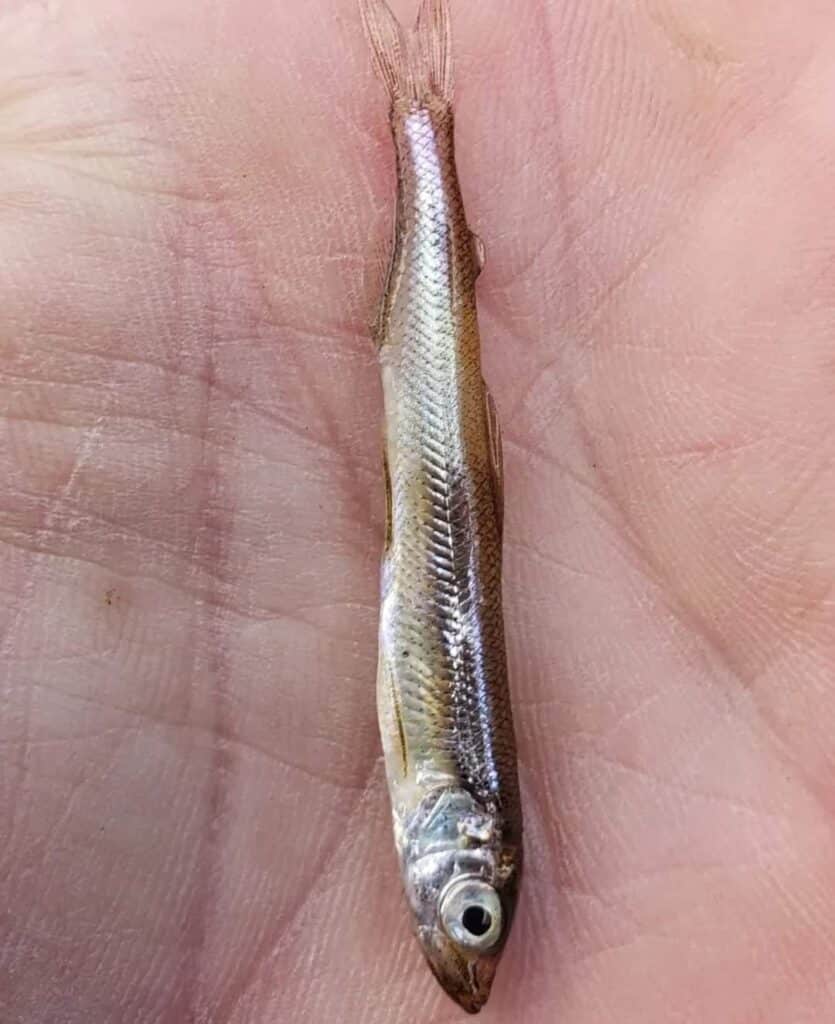
September and early October mark the “Pond Smelt Hatch” at the lake. Pond smelt, also called Wakasagi, are Japanese baitfish that spawn during this period. They are “free spawners,” meaning females release eggs into the water and males fertilize them with sperm. They do not build beds or nests; fertilized eggs sink to the bottom. Pond smelt spawn in water about 12–15 feet deep over muddy bottoms, where midges and Hexagenia are also found. When scouting fishing spots, I start by observing birds (grebes), as they indicate the presence of pond smelt. Next, I investigate further. I target the edges-of-the-pond smelt schools with an indicator system and a balanced pond smelt imitation. If many fish are feeding on pond smelt, I cast and strip pond smelt imitations, using both an intermediate and a Type 3 full-sinking line ready to go. When trout push pond smelt to the surface, I switch to a floating line with a long 14-foot 2X-3X monofilament leader and continue casting and stripping a pond smelt imitation.
In November, trout are scattered throughout the lake and forage on whatever they can find. This period also marks the migration of lake salmon and trout to creek inlets for spawning. Good fishing locations include the Hamilton Branch area, the coves, and the mouth of the North Fork of the Feather River.
Bass
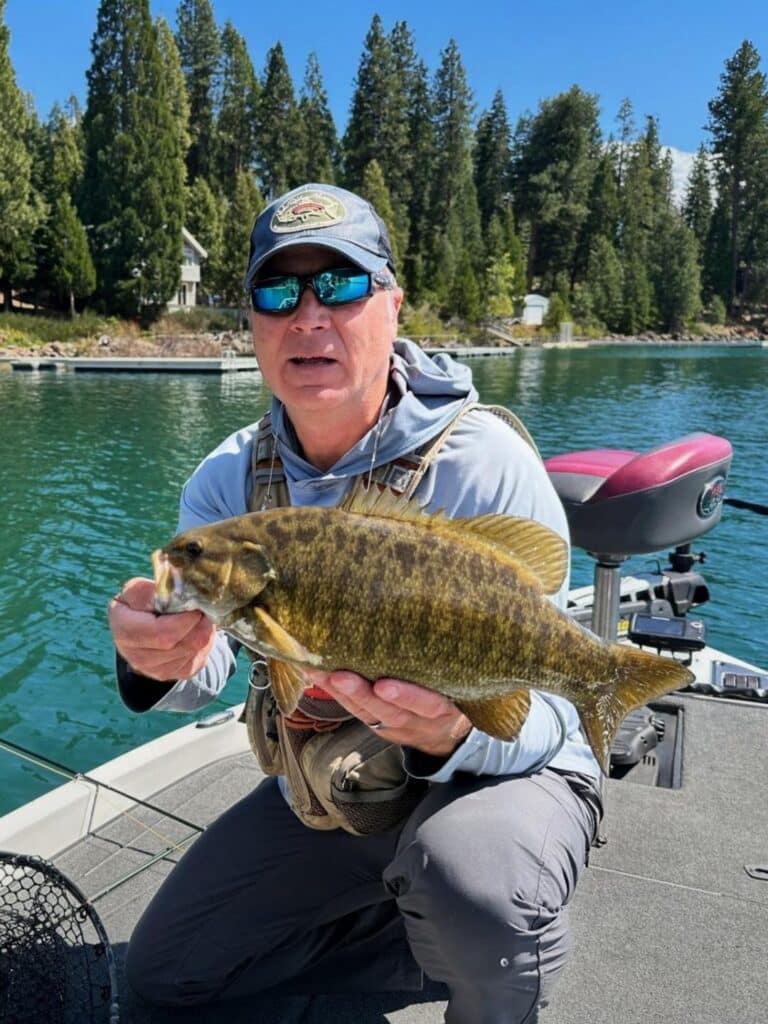
The smallmouth bass follows a different early routine. Although they don’t shy away from warmer water like trout do, they typically don’t feed as much during this period. From late March to early May, they begin making their redds to spawn, starting to gather around spawning beds in March. Fly fishers can target them in these areas, usually found in 10–12 feet of water along points and long, rocky shorelines with rocky, muddy, or sandy lake bottoms. These places are found all over the lake, especially on the west side. I prefer using the float-and-fly method, which is easy to adjust, and I usually fish minnow imitations of shad, Sacramento perch, pond smelt, as well as balanced flies. These fish are willing to eat. Once the bass go on spawn, I like to use a Pond Smelt Fly in both pearl and silver colors. An all-white or white-and-gray Clouser Minnow also works well, as does a large crayfish imitation. I cast these flies close to the bass beds and strip them back. Since bass are very protective of their beds and eggs, they tend to attack these flies aggressively.
Once the bass finish spawning, they move throughout the lake during summer. You can find them around the boulders on the south side, stumps in coves near the Hamilton Branch, and scattered rock piles on the lake bottom. They also frequent boat slips and marinas. Some of my best bass fishing come with a silver pencil popper near boats. The takes are violent. The bass will also break off a small pod of pond smelt toward a structure like boulder shorelines or drop-offs on points, then attack through them, similar to stripers in the bay. Like all bass, they prefer low light or overcast days. They are fantastic fighters.
EXPERT ADVICE
I spoke with a few fly-fishing guides at Lake Almanor to get their expert advice. I asked Joe Garza from JAG Fly Fishing about his preferred season for fishing at Lake Almanor. Joe said he favors fall because he loves chasing big trout during the pond smelt spawning season. His go-to fly is a size 6 Milt’s Floating Pond Smelt. Joe also prefers to fish pond smelt using a 12-foot 3X tapered monofilament leader. When asked for advice, Joe emphasized that stillwater fly fishers need watercraft to fish the lake effectively.
Dean Growdon (Blue Line Fly Fishing) says spring is his favorite season for fishing Lake Almanor. He loves fishing areas where water flows into the lake. He focuses on balanced leeches and midges under indicators. He favors size 16 midges in various colors, fishing them at depths of 4 to12 feet. Balanced leeches are fished shallower, at 2 to 4 feet, also beneath an indicator. His go-to fly is the “Green Weenie,” which resembles the rubber bass worm of the same name he fished as a kid. Dean ties them on Umpqua XC450BL hooks in sizes 12 or 14. The tail is a Fulling Mill olive grizzly black-barred micro Zonker strip, accented with a strip of chartreuse Krystal Flash. Its body is made from Reno Fly Shop’s “Custom Leech Dub” in green, with a size 2.8 mm tungsten chartreuse bead, tied balanced.
Mark Antaramian (Mark Antaramian Flyfishing) enjoys April through early June, focusing on the Chironomid hatch. He appreciates the challenge and satisfaction of the technical deep-water game. Mark’s favorite midge pattern is the 49er Midge, which he uses to mimic rising pupae; it has just the right amount of flash. By August, his focus shifts entirely to the damsel hatch, where he prefers a more aggressive, visually stimulating style of fishing. Mark typically ties his own custom damsel pattern, similar to a Hail Bop Leech, designed to have just the right movement to provoke strikes along weed lines.
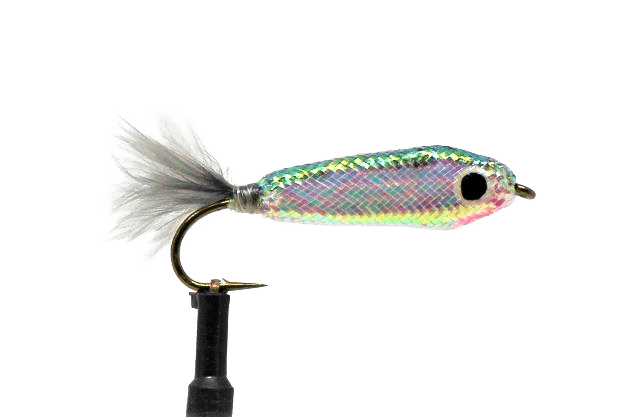
Milt’s Floating Smelt
Hook – TMC 300 size 4-10
Thread – Danville Monocord white
Body – White 2mm foam
Over Body – Pearl Mylar tubing
Tail – Gray marabou
Markings – Gray and red/orange permanent marker
Eyes – Painted black/pearl
Finish – 24-hour epoxy
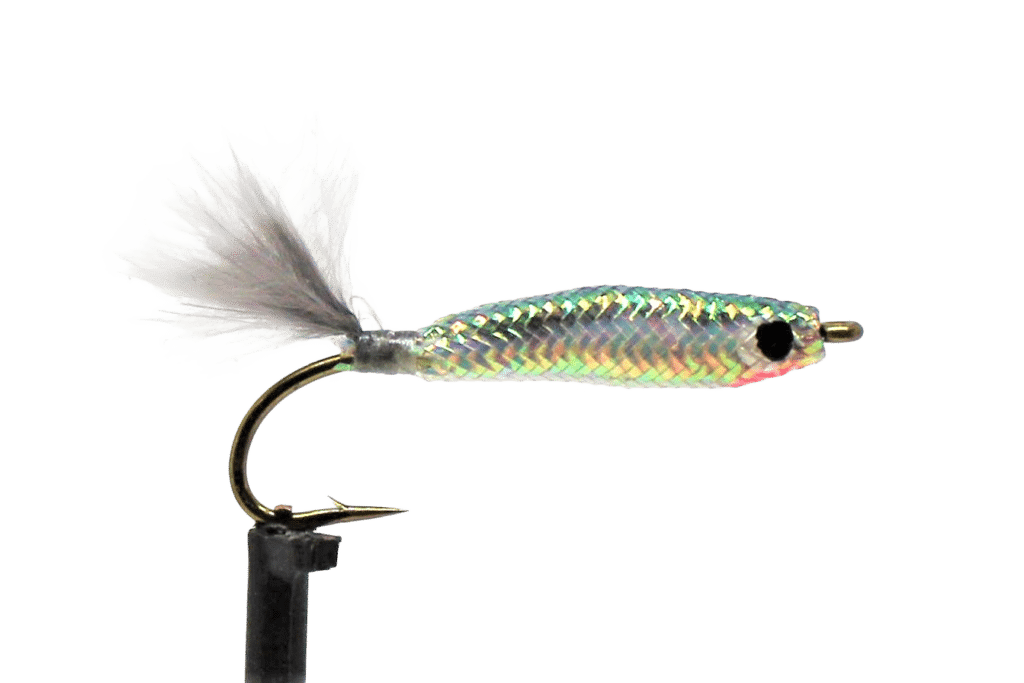
Milt’s Sinking Smelt
Hook – TMC 9394 size 4-6
Weight – 20 turns .020 lead-free wire
Thread – Danville Monocord white
Body – White 2mm foam
Over Body – Pearl Mylar tubing
Tail – Gray marabou
Markings – Gray and red/orange permanent marker
Eyes – Painted black/pearl
Finish – 24-hour epoxy
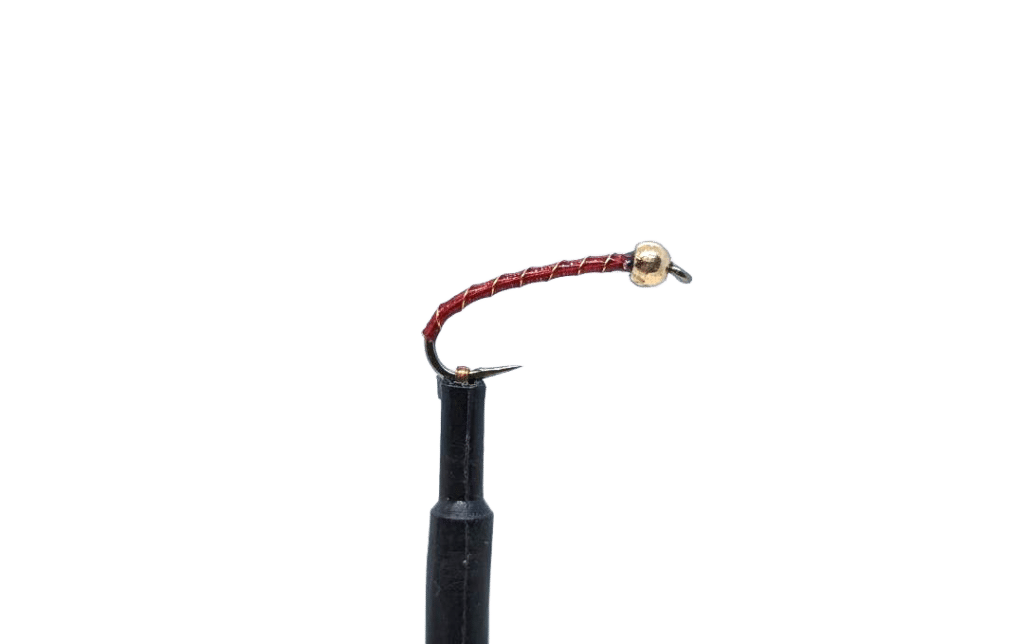
49er Midge
Hook – Daiichi 1710 size 10-18
Bead – Tungsten gold size to match hook
Thread – Danville Flymaster 6/0 red
Rib – Gold wire BR or SM size to match
Finish – Solaraz Bone Cure UV clear
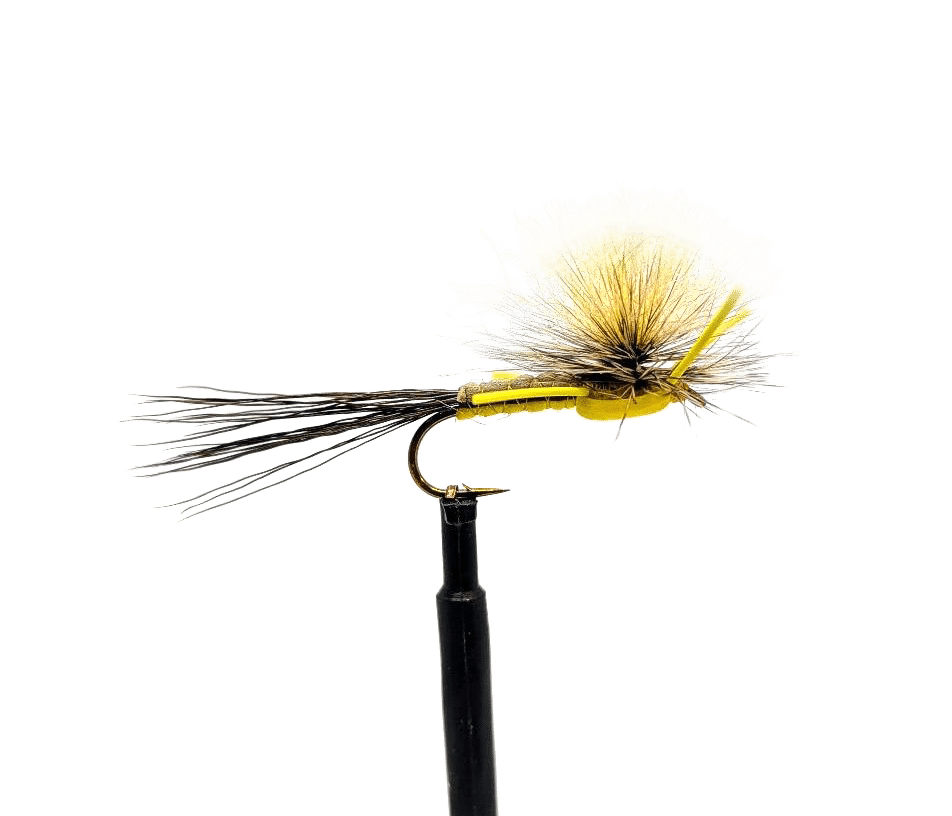
Lance’s Hex Dun
Hook – TMC 5262 size 6
Thread – Danville Flymaster 6/0 yellow
Tail – Moose body hair
Body – Yellow and tan razor foam
Underwing – Yellow razor foam
Legs – Yellow medium round rubber
Wing – EP Fibers sand
Hackle – Grizzly Neck Hackle tan
Nice summary of a fantastic fishery, Lance.
Hands down, my favorite is the Fall smelt bash. Dry fly on steroids!
Cheers,
Rob