
“Why is my pack so heavy?”
That’s how most conversations with myself begin on these backpacking trips.
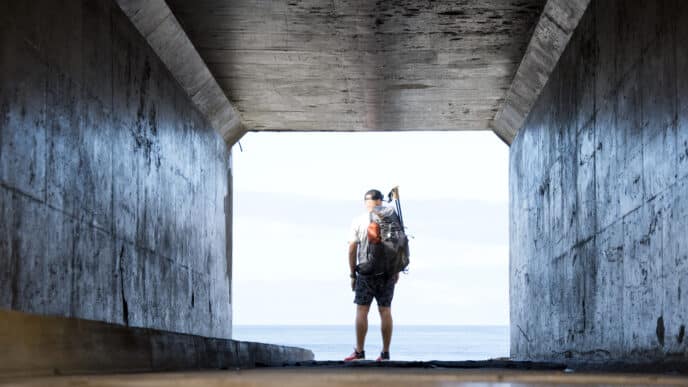
No matter how hard I try to be a minimalist and lighten my pack, that goal usually escapes me. I overpack. Chilly mornings, two to three hours before sunrise is my preferred departure time. During the quiet drive up the hill, I envision what this adventure will become while running through my mental checklist of things I hope I didn’t leave at home. I arrive at the parking lot, lock my truck, close the tailgate, grab my pack, and I’m off!
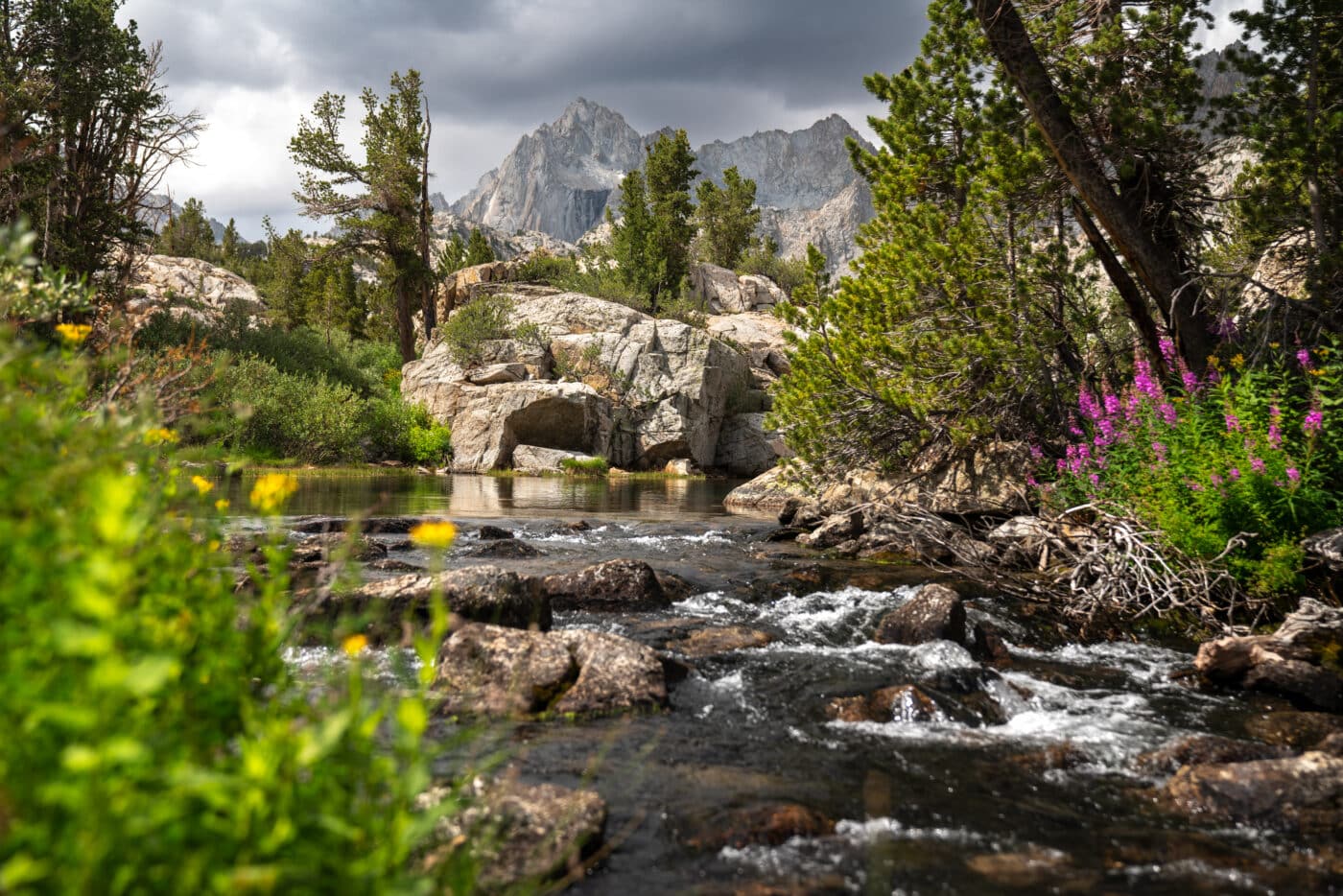
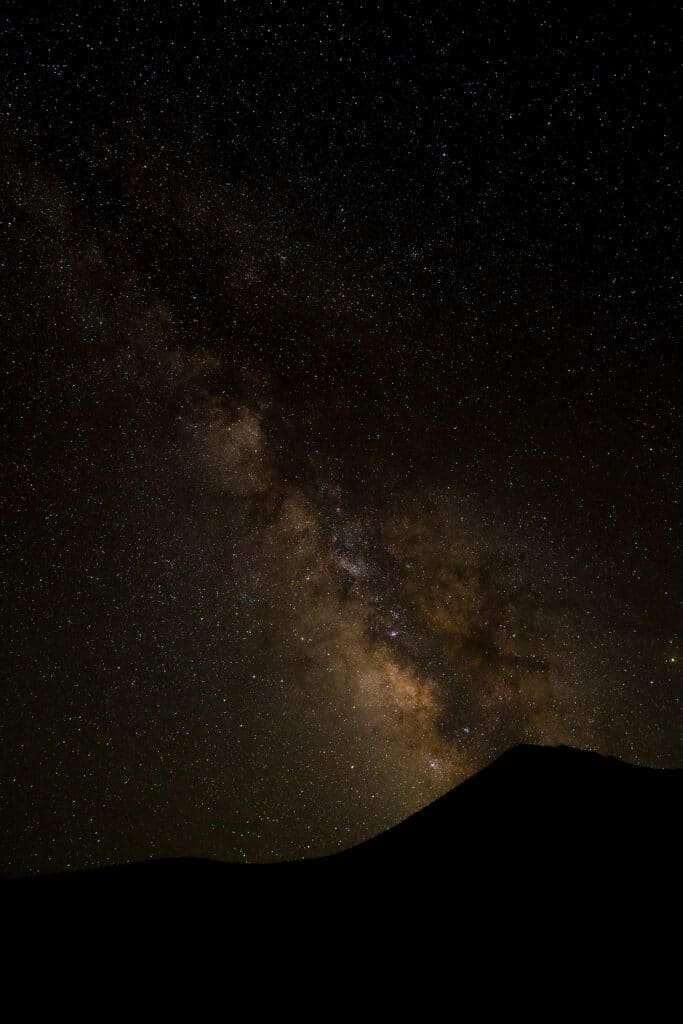
The trailhead is as quiet as the night is dark. Guided by headlamp, I slowly feel the trail’s elevation rise. With each step further into the backcountry, I settle into a steady rhythm of breathing. My body starts to warm up, and soon I’m peeling off my gloves and jacket. This moment is quite soothing and therapeutic; dark, quiet, alone, with stars sprinkling the night sky, the smell of fresh pine trees in the thin mountain air, a small creek trickling nearby, and the anticipation of the journey ahead … in these moments, I can have reflective conversations with myself, creative thoughts, and become the author of my own storybook adventure.
On the trail, I begin to zone out and lose track of time. Before I know it, I’m four miles along and 2,000 vertical feet up, making good time as the sun’s alpine glow creeps down the ridgeline above me. Where am I headed? Two more miles up the trail, cresting at nearly 12,000 feet in the heart of the Eastern Sierra Nevada Mountains, in pursuit of the state’s official freshwater fish, the California golden trout. Truly a bucket-list fish for most fly anglers across the country, this species just happens to be in my backyard and a summertime favorite of mine to pursue.
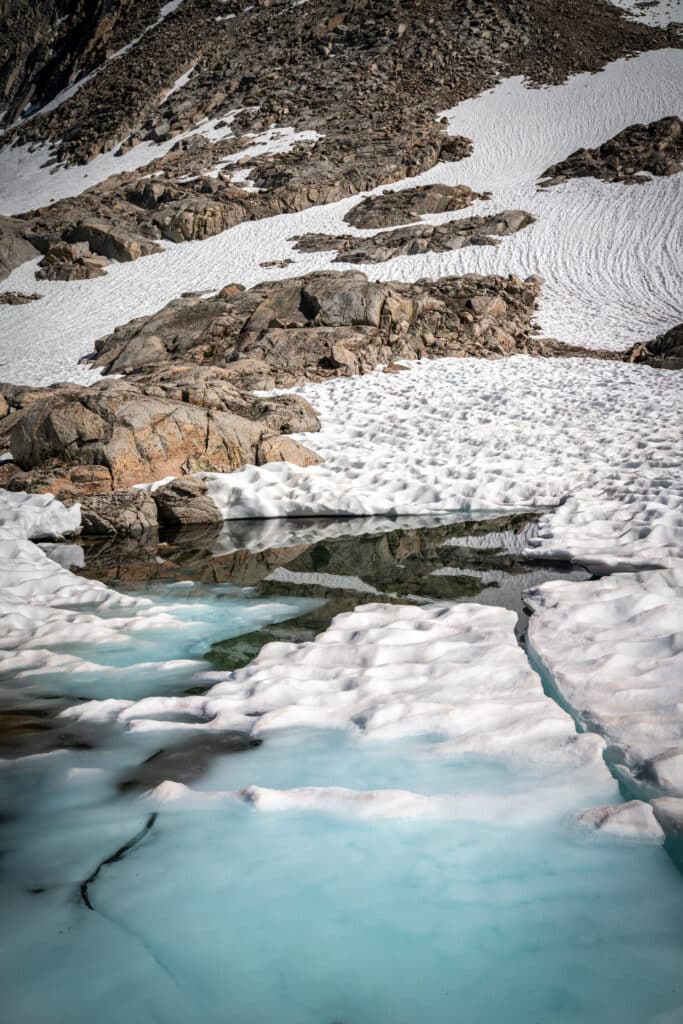
This early-season expedition might have summer-like conditions down in the valley at 4,000 feet, but winter and spring are still battling it out on the mighty Sierra Nevada crest. Snowfields remain and are scattered about, with knee-deep sun cups slowing my pace. Carefully, I cross these fields to avoid post-holing through the deeper snow sheets, sometimes up to my groin. Sections under the snow and ice can be hollow and quite dangerous. As the day warms and the sun begins to soften the snow, these fields will become increasingly difficult to navigate, so it’s best to cross these precarious sections early in the day, when the top layers of ice refreeze in the previous night’s low temperatures. Out here, help is far away, and safety must be at the forefront while adventuring in this country; one wrong step could result in injury, and one bad injury can turn into a problem real quick.
Continuing uphill, my lungs burn as my legs climb the steep terrain, earning each step forward. Few hikers have crossed this section of the trail before me, so I need to consult my paper map to confirm my route. At this high elevation, the tree line is almost nonexistent, and so is shelter. Any vegetation is short and sparse, stubbornly surviving the elements. Large granite boulders and giant talus fields dominate the scene, resembling an endless battlefield of rock that lies in defeat. Ancient rock, cracked and carved by ice long ago.
As I crest the mountain pass, I reach the precipice of my journey. Snow flurries from a distant cloud begin to greet me. This wasn’t in the summer forecast, but a 12,000-foot mountain pass rarely inspires much confidence in forecasts. Weather here is unforgiving and ever-changing. A place where mysterious forces from both sides of the Sierra collide and can humble even the most seasoned adventurers. I stop for a brief rest and pull a warm layer of clothing from my pack as the cold wind tries to rob me of any comfort. The views are nothing short of heavenly. An untouched world as far as the eye can see. Snow-capped mountain peaks in every direction, a wintry mix of clouds forming almost at eye level, basins stretching thousands of feet below me, lined with numerous streams fed by centuries-old glaciers. I imagine this view hasn’t changed much since the first time a human laid eyes on this scene.
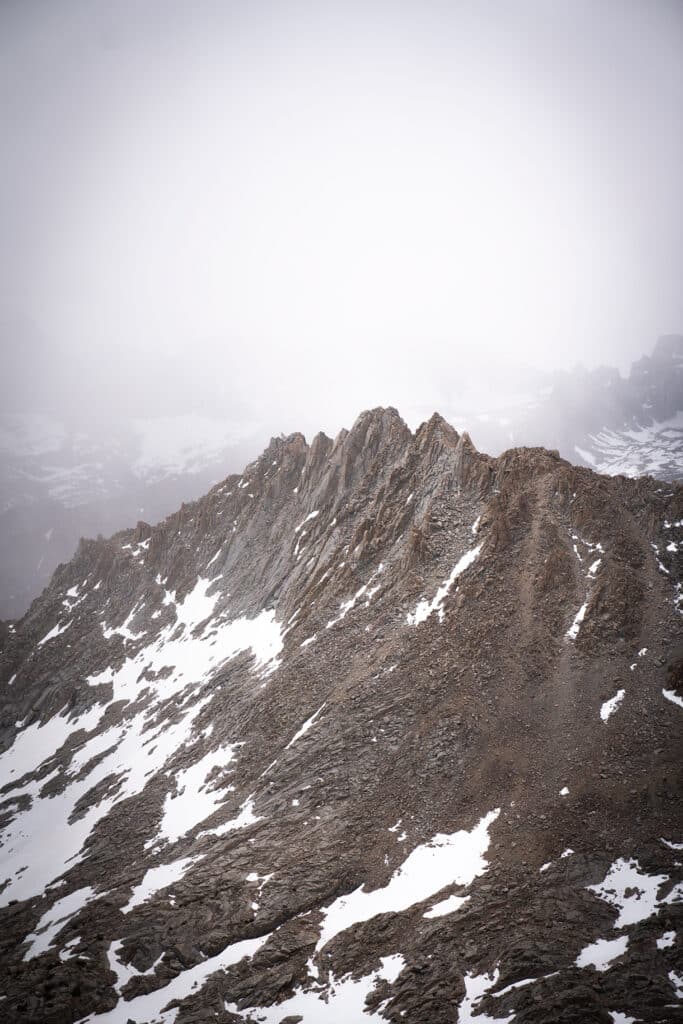
Ahead of me, I begin to see thick, large clouds building on the other side of the mountain, in the direction I am heading. In this moment, I regret leaving my tent at home and, in its place, justifying another heavy camera lens. (Insert frustrated exhale, expressing disappointment with myself, because I know better). But if you’re like me and roll the dice enough, the mountain will eventually win. Overconfidence from a seasoned backcountry hiker can bring a strong humbling. Maybe I was due for one. I shrug, grab a quick shot of water and a snack to boost my energy, and push onward.
“It’s time to get moving,” I tell myself on top of the pass. In the deep basin below me, I see a couple of north-facing lakes, and to my surprise, they still appear to be covered in winter’s cold ice … was I too early? Would there be any open water to fish? I have made this mistake before, since lakes thaw at different times each season. Deep winter snowpacks can push ice-outs back by a month or more, but hot temperatures in March and April can quickly destroy all of winter’s hard work. As I scan farther down the slope, my gaze falls on a series of south-facing lakes that receive more direct sunlight. I begin to see open water. My hopes are renewed, and my target is in sight.
“Quick, but don’t hurry,” I tell myself. “No injuries.” I study my downhill route, zigging and zagging, letting the terrain guide me, hyper-focused on my next step. Boulders to navigate around, some to climb over. The route turns into a series of switchbacks as the elevation drops quickly. At this point, I’m not following a trail but making my own, since much of my route is now covered in a fresh dusting of snow. My mind contemplates the night ahead and the struggle to keep warm.
I reach the basin bottom and think, “It’s no use stopping to fish right now,” as I pass the shoreline of the first lake, where the water is partially open. The winds are too strong and chaotic; fishing would be miserable. I need to find a camp that shields me from the south wind. I scan the granite stadium around me and locate a few sparse patches of smaller pinyon trees on a bench slightly above the lake, hoping for shelter. I scramble up and quickly find what I’m looking for. Here I’ll be able to tuck in and find relief from the elements.
Preparing for a long night, I find some downed tree branches and gather them up. I have a small tarp, roughly 3 x 6 feet, that I use underneath my air mattress when I’m cowboy camping on the ground. With some cordage from my pack, I make a small one-sided lean-tent. At least that’ll be enough to keep some of the snow off my sleeping area. To keep things dry, I’ll wait until bedtime to pull out my sleeping bag. For now, my minimalist camp is set up. But my fingers went numb some time ago, so I’m in need of a hot cup of coffee, a major morale booster on any cold fishing trip. I pull out my small MSR Pocket Rocket and fire up a flame, quickly boiling water. I packed freshly ground coffee beans just for moments like this. I use my filter, my grounds, and an old tin coffee cup passed down from my grandpa. It’s dented and scratched and truly a special heirloom for me. I can attest that, in fact, this cup makes the coffee taste much better … whether that be fancy coffee grounds or a cheap instant coffee mix.
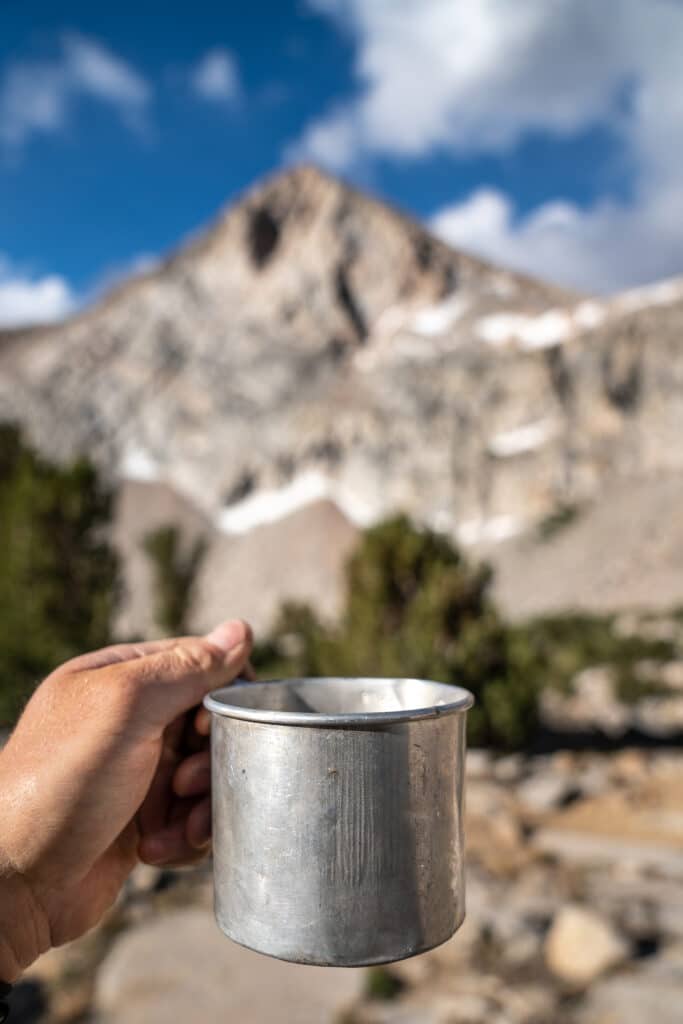
But let’s be honest, everything tastes better in the backcountry. Out here, you aren’t surrounded by an endless pantry of snacks or food options, and when I do eat, it’s usually in smaller amounts. Every bite of a Clif Bar, a handful of trail mix, a strip of beef jerky, and, in this case, hot coffee, tastes like I deserve it. The appreciation of these simplicities is truly magnified in the backcountry.
Just as I finish my cup of coffee, to my excitement, the winds begin to subside, the clouds part, and the snow stops falling. Rays of sunlight begin to peek through and instantly warm my hands, my face, the ground around me, everything. In a blink of an eye, spring begins to show through as winter releases its frigid grip. I love this mystery of the Sierra, how this world can display all the seasons in one day, challenging you to persevere and embrace its unforgiving nature. Now it’s time to fish.
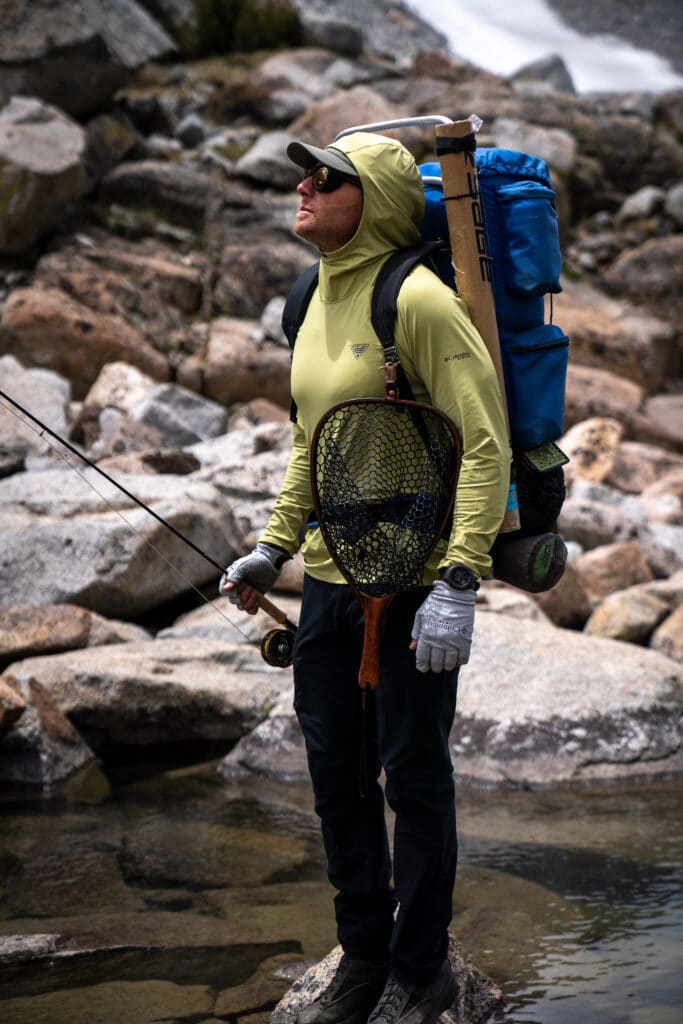
I grab my gear and head toward the closest lake, a hundred yards from the campsite. Time isn’t on my side; I have only an hour before sunset. I have my slower-action 9-foot, 4-weight fly rod in hand, the R8 Classic from Sage Fly Fishing, paired with the Technical Trout Fly Line from Rio. It’s my preferred backcountry setup for subtle presentations with a dry fly or a dry-dropper rig, both ideal for these crystal-clear lakes.
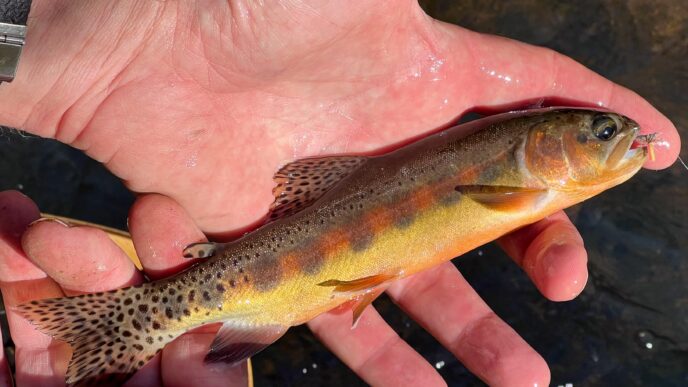
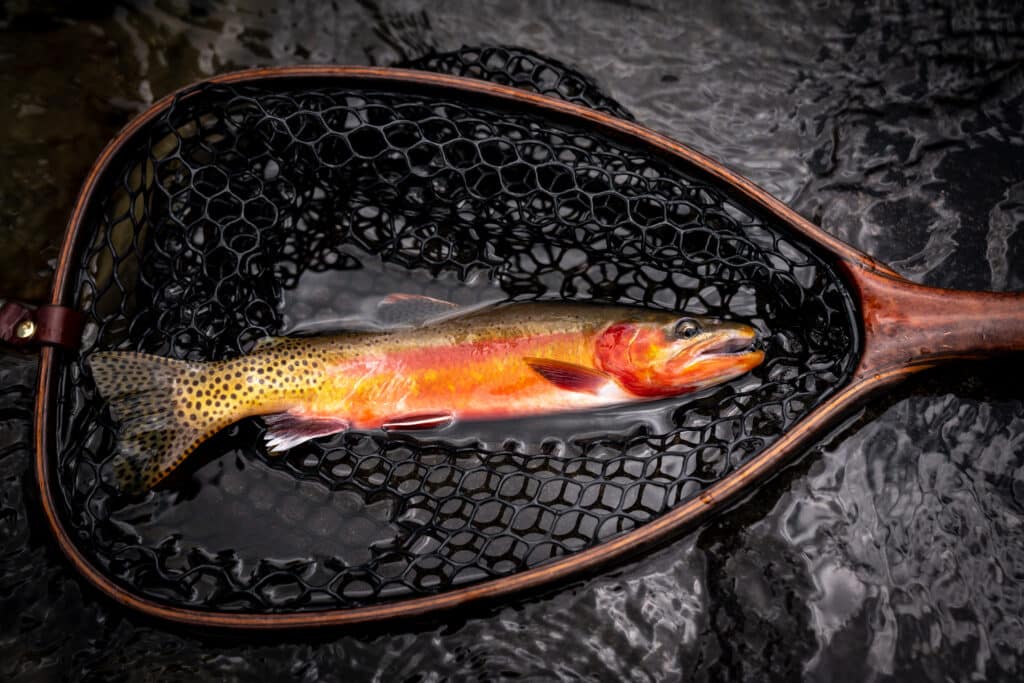
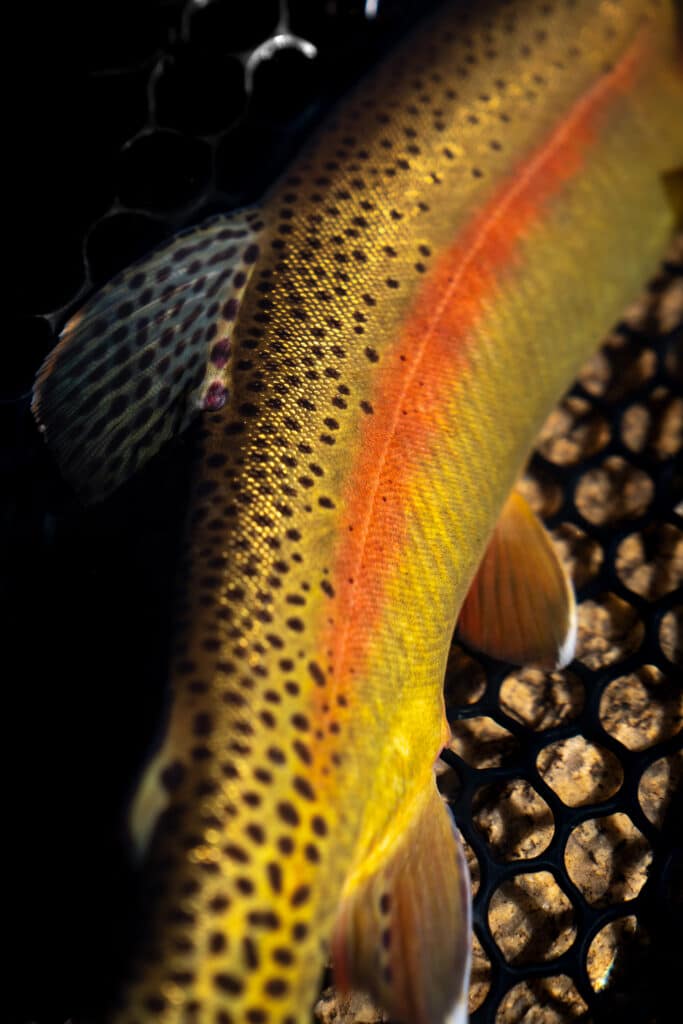
Sight fishing these backcountry goldens is a real treat, and if conditions allow, these trout can be very opportunistic. Walking the banks in search of fish feels more like a spot-and-stalk of an animal while hunting. Senses heighten, and sight sharpens at longer distances, spotting fish even in low light. I quietly creep toward the bank, locating my quarry. Patiently, I strip out fly line to my feet and wait until the fish is within casting distance. Slowly lifting my rod as fly line slides through the guides, I false cast back and forth, feeling the rod load with each change of direction. When ready, I lay down a delicate cast, careful not to spook the fish as it works down the shoreline toward me. The trout curiously turns toward my imitation, inspects it, and, ever so nonchalantly, takes the surface dry fly. “Pause, wait for the head turn” … and set! A smaller model trout, fire red and bright orange, with parr marks down the lateral line and white tips on each fin, truly a fish worthy of gold. A foam-body caddis dry fly, size 16, fooled this fish. The barbless fly falls out of the trout’s lip as soon as it lands in the net. Pausing for a moment, I exhale in relief, and my mind recounts the long day building up to this fish; the dark early-morning departure, heavy backpack, a headlamp-guided hike, Mother Nature’s weather fury, finding base camp in sparse country, enduring the elements, and the hustle to get one cast in before the day’s end;
all these moments came together to make
this fish, well, more than just a fish. This was an
entire experience, a golden adventure.
As I release the fish, watching this mythical creature dance back to the darkened depths, I turn south and see the day’s grand finale: a Sierra sunset. Pink and purple paint the sky, reflecting off the water’s surface and gently kissing the snowbanks in the background, while spring flowers punch small patches of color into the granite shoreline. I look around, behind me, in every direction … am I the only person here? Without a doubt, yes. There’s nothing quite like seeing a new backcountry lake for the first time, dressed in all its splendor while being the only soul on scene. To me, this beats most fishing days elsewhere. There’s a quiet mysticism to this untouched world that is unmatched and that continually calls to me. My curiosity pleads with me to keep exploring and to see what lies beyond the next horizon. But for now, it’s time to pull out that sleeping bag and accept the day’s end.
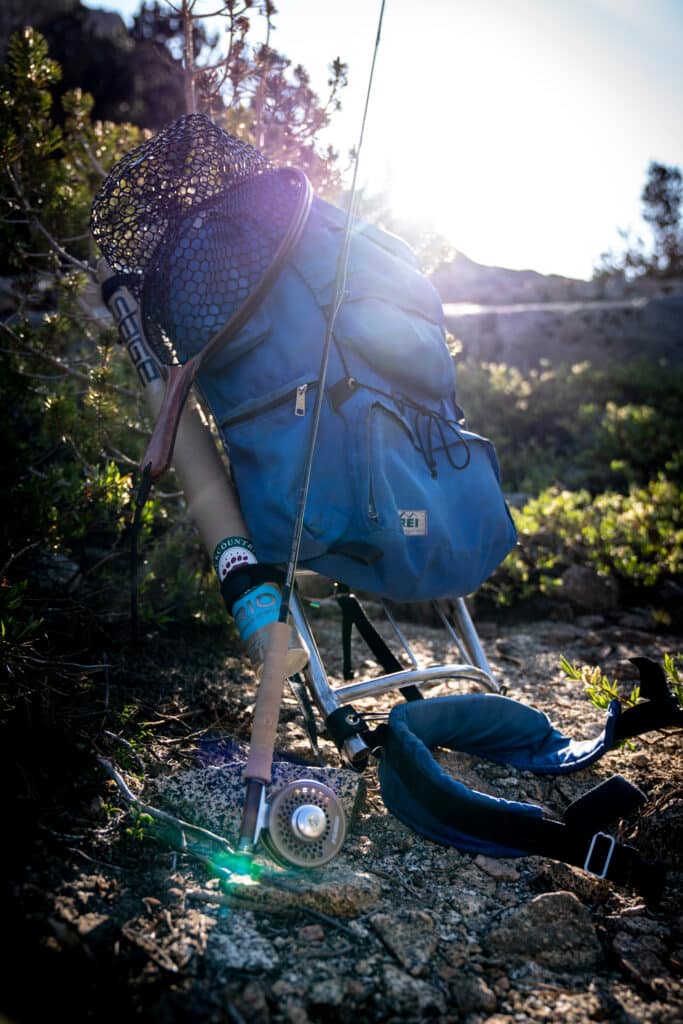
As morning rises, so do the birds and their joyous chorus. The colder morning calls for sleeping in, at least until sunrise is near. I crawl out of my sleeping bag and fire up a hot cup of coffee and a hot bowl of oatmeal. I turn and look down at my backpack. This old, dusty external frame has seen a number of seasons in the backcountry. In fact, most of the zippers have worn out and failed, and instead of getting a new pack, I’ve replaced the old zippers with new ones. I’ve patched a couple of tears, and well, I’m just trying to get as many miles as I can with it. Along with my old tin coffee cup, my grandpa passed down this backpack many years ago. I never was too close to grandpa, as he lived a private life. But we stayed in touch, and I would see him when he visited us occasionally, and he never missed sending a birthday card. When together, I’d listen to his old stories, and as a kid, I’d run around his ranch-style property or play on his old tractors or tease his horses. When I was old enough to drive, I’d occasionally visit him and take him out to breakfast in his small, quaint mountain town. He was a man who loved the western world, the outdoors, and horses, and he was an artist. I’ve never seen him without cowboy boots, suspenders, denim jeans, and a pearl-snapped collared shirt. This old coffee cup and backpack are pieces that keep him connected to me. Pieces that remind me where I come from and continue to give me inspiration. And now I realize I may be more like him than either of us planned.
I finish my breakfast and begin to break down camp. I lay my damp gear out in the morning sunlight to dry. Today I will fish my way home, targeting a series of lakes and tributaries along my route, moving fast and fishing as much water as the day will allow, hopefully landing a few more goldens.
Author’s Disclaimer:
The mountains and backcountry are dangerous; go at your own risk and know your physical limitations. It’s best to travel with a partner. Altitude sickness is possible if you’re not acclimated. A “Wilderness Permit” from the USFS is required for each person traveling into the wilderness zones for an overnight stay. Get these permits and more information from a ranger station or online through the USFS. No campfires above 10,000 feet; always check fire regulations specific to the area you’re visiting. Pack out all your trash and leave no trace of your presence in this country. This place is ours to use and ours to protect. Do your part. When fishing, please use proper catch-and-release etiquette for these fragile backcountry fisheries, as most fish populations are self-sustaining and require successful spawning of healthy, mature trout.
Trout
We have five species of trout here in our neck of the Sierra: rainbows, browns, brookies, cutthroat, and goldens. Above all, the quintessential California golden trout is our freshwater “State Fish,” native to the Southern Sierra, specifically the headwaters of the Kern River. For the last 100 years, these treasures have been widely distributed to many remote, high-altitude lakes and streams throughout much of the Sierra Nevada Mountain Range. They need cold, clean water and will not survive in just any average trout fishery. For this reason, you must hike in or pack in on mules or horses to target these fiery beauties. Some hikes are longer and more difficult than others, which is common for many of the better golden trout waters, and much of the challenge of catching a golden is “just getting to them.” But if these fish were so easily accessible, in a stream or lake alongside Highway 395, would they be as desirable to target? Would they be as satisfying to admire once held in the net? Or would this easily reached species lose its grandeur and essence? I’d like to think these rugged mountains and the difficult access add great value to the lure of a golden trout.
What makes this place even more special: These are all public lands. Difficult to access, yes, but open to all of us, here, just waiting for the willing individual to strap on their boots and accept the challenge. A chance to step into a steep world untouched by man’s enterprise and pursue these fabled fish in the granite stadiums they call home. I often tell people it will take multiple lifetimes to see all that the Sierra has to offer, and these places don’t show themselves. You must search them out, with purposeful intent. Time continues to roll by us, and as it does, so do the opportunities for adventure. But I’m still here. And I’m still curious about what’s on the other side. What’s calling you?