


HABITAT Cold headwater streams, rivers, alpine lakes, and alkaline desert lakes
SIZE Stream fish are generally small; lake-dwelling fish can exceed 20 pounds
SPAWNING April–July, depending on streamflow, elevation, and water temperature
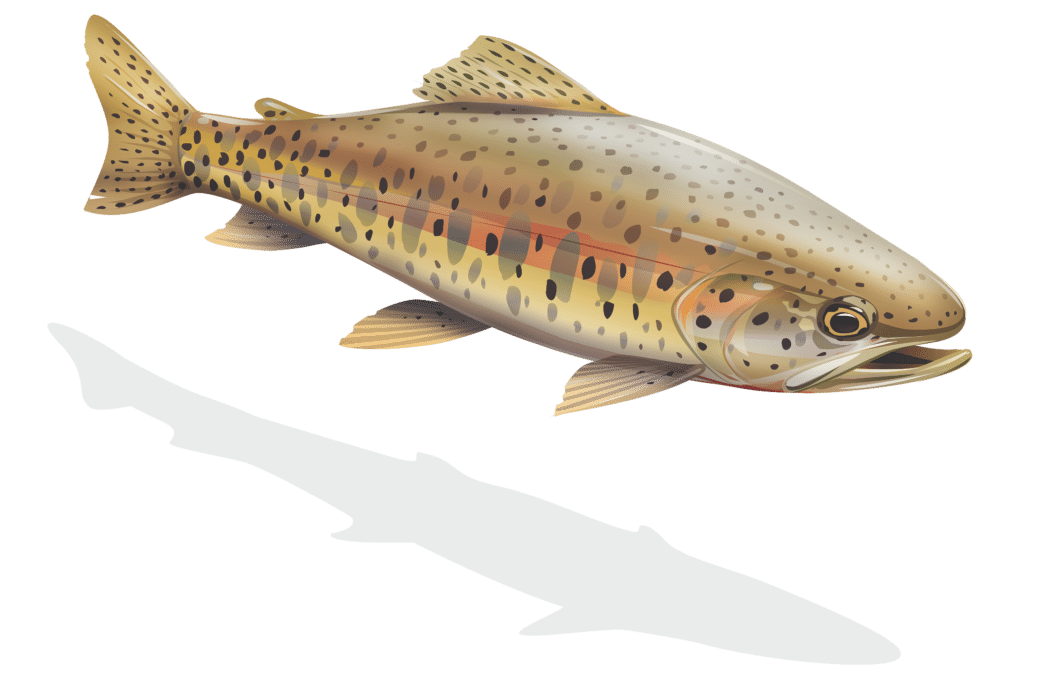
DISTINGUISHING FEATURES Heavy black spotting; yellow-to-red “cutthroat” slashes beneath the lower jaw; coloration ranging from silver and pale gold in lake fish to copper, olive, purple, or blue hues in stream fish.
giants and survivors
Lahontan cutthroat trout can seem like two very different fish. Isolated headwater populations may spend their entire lives in small streams, remaining relatively small. Their lake-dwelling cousins evolved a very different strategy—growing to enormous size and, in places such as Pyramid Lake, becoming formidable predators of other fish.
Pyramid Lake illustrates the difference particularly well. After its original giant LCT disappeared in the 1940s, the lake was stocked with the Summit strain, a pure Lahontan cutthroat developed largely from Summit Lake fish. The Summits produced a successful fishery but rarely approached the size of the original Pyramid giants.
Then came the Pilot Peak strain. Discovered in an isolated stream near the Nevada-Utah border, these fish were eventually shown through genetic comparisons with historic museum specimens to match the original Pyramid Lake population. Returned to Pyramid beginning in 2006, Pilot Peak fish retained the fish-eating characteristics that allow LCT to grow exceptionally large. Today, fish exceeding 20 pounds once again swim the lake.
fishing tips & techniques
Lahontan cutthroat offer dramatically different fishing experiences depending on where you find them. In California headwater streams, these generally small fish respond to standard trout tactics, including dry flies and nymphs. Their limited populations make careful catch-and-release especially important.
Lake-dwelling LCT are another fish entirely. At Pyramid Lake, anglers target powerful trout that can reach double-digit weights. Effective techniques include suspending chironomids and balanced leeches beneath an indicator, or stripping beetles, buggers, and baitfish patterns on sinking lines.
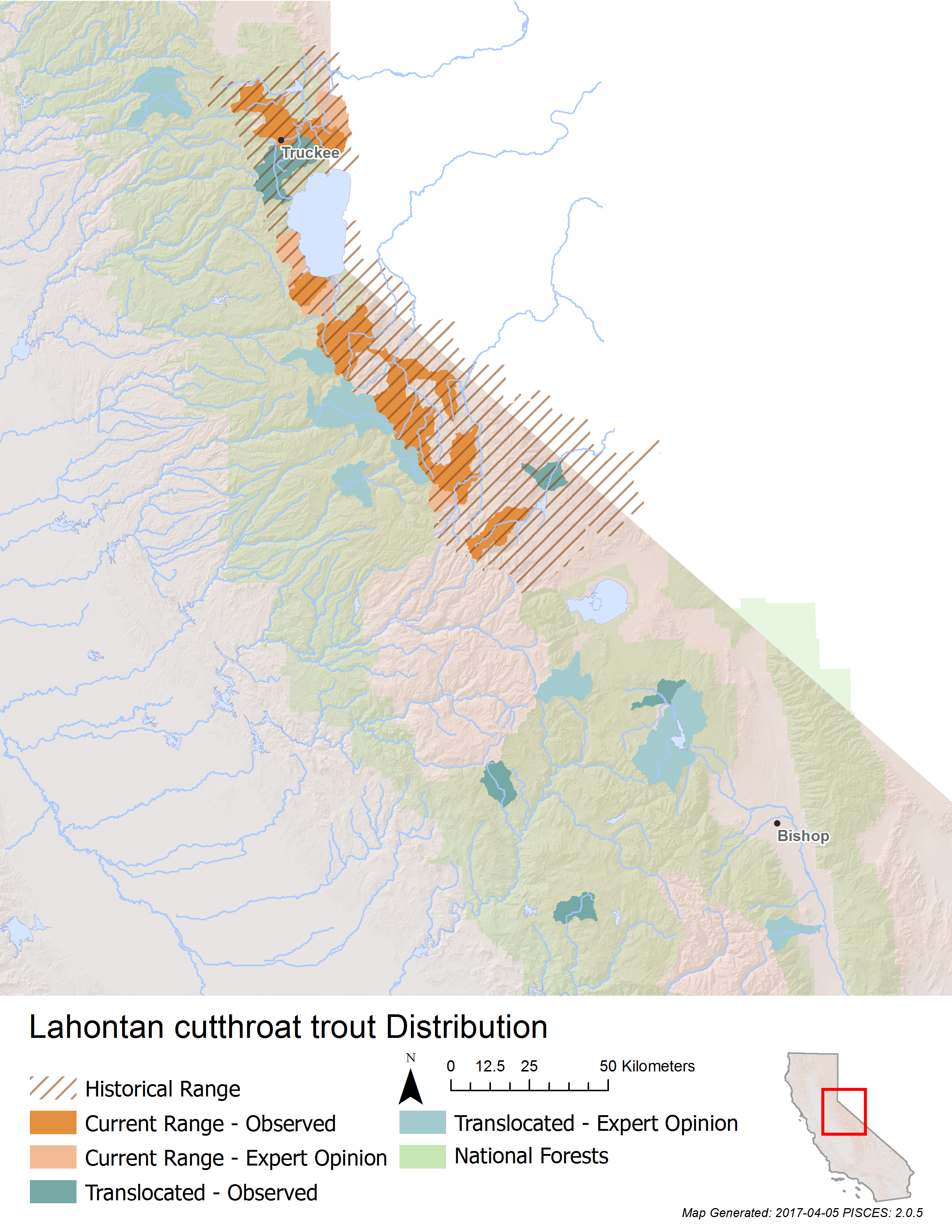
LOCATION: Eastern Sierra and Lahontan Basin waters, including portions of the Truckee, Carson, and Walker drainages.
GEAR: Light trout tackle for small streams; heavier 7- to 8-weight tackle and sinking lines for trophy lake fish.
FUN FACT: The world-record Lahontan cutthroat, caught at Pyramid Lake in 1925, weighed 41.5 pounds.
hooked on the challenge
By Phil Reedy
I had never heard of the Heritage Trout Challenge—or Lahontan cutthroat trout—until I saw a class offered by Roger Bloom in 2005. Roger planned to take participants to the Upper Truckee River to catch a Lahontan. Six people signed up, but only my friend and I showed, so we essentially had a guided day with Roger.
The Lahontans had only recently been restored to this stretch of river, and those first fish were tiny, mostly 4 to 6 inches. But I was hooked on the Challenge. I returned to the Upper Truckee every year and was amazed to watch the fish become larger and more plentiful. Eventually, stealthy anglers could find cutthroats approaching 12 inches among the meadow’s willow-lined pools.
Since that first trip, I’ve caught nine of the Heritage Trout species—many times—as I’ve guided friends and family to places where they could complete their own Challenges. What started as a class about a trout I’d never heard of became something I’ve enjoyed sharing with others for more than 20 years.