This post was originally published on BishopVisitor.com. Reposted with permission.
There’s a new threat in the Eastern Sierra that ONLY YOU can prevent! And it demands the same mindset from every single person who touches a lake, river, or reservoir in Inyo or Mono County.
Golden mussels (Limnoperna fortunei) are here in California—and they’re moving fast. First detected in the Sacramento–San Joaquin Delta in October 2024, they’ve already spread more than 250 miles south in under a year. Read more about the mussels, the spread, the outreach, and sign up for email updates at the California Department of Fish and Wildlife (CDFW) golden mussel webpage here.
They haven’t reached the Eastern Sierra yet. But they could. And if they do, there is no going back. Once golden mussels arrive, they cannot be removed.
Prevention is the Only Solution
A Tiny Mussel with a Massive Problem
Golden mussels spread one primary way: they hitchhike. Microscopic larvae, called veligers, are invisible to the naked eye and survive in the smallest amounts of standing water or moisture left in a boat hull, bilge, bait well, ballast tank, waders, kayak, paddleboard, or any gear that’s been in an infested waterway.
You could carry them from a contaminated lake to a pristine one without ever knowing it.
Here’s what makes the golden mussel especially dangerous for the Eastern Sierra: unlike quagga or zebra mussels, golden mussels are adapted to survive in low-calcium, cooler, higher-elevation waters — exactly the conditions found in our alpine lakes and reservoirs. Many waters that were previously considered lower risk for invasive mussels are perfect breeding grounds for golden mussels.
All lakes in the Eastern Sierra are considered vulnerable, including higher elevation lakes.
Once established, golden mussels form dense colonies that devour the microscopic plankton that trout and other native fish depend on for food. They clog pipes, foul boat motors, choke docks, and drive up the cost of maintaining water delivery systems for the communities that depend on them. The downstream consequences for fishing, boating, tourism, and water supply would be severe and permanent.
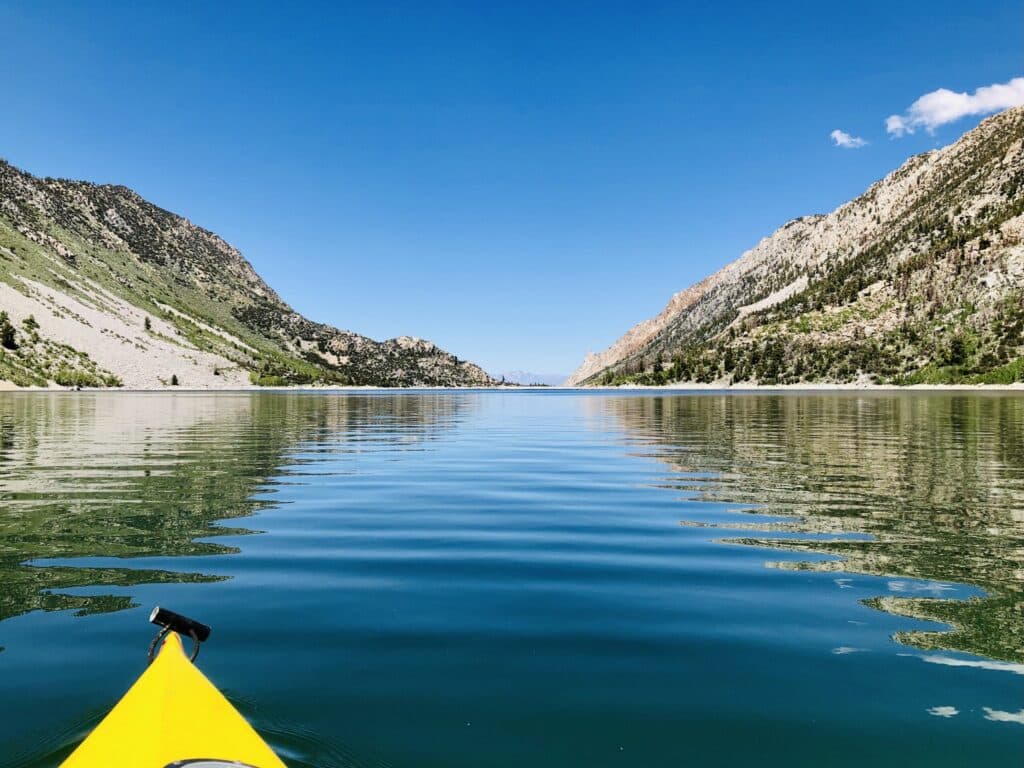
Clean. Drain. Dry.
Every. Single. Time.
The good news!! You have the power to stop this. Three steps. Every time. No exceptions.
Before entering any waterbody:
- Clean your boat, trailer, and all gear — remove any visible plants, mud, or debris
- Drain all water from your hull, bilge, bait wells, ballast tanks, buckets, and any equipment that holds water
- Dry everything thoroughly before you arrive — if it’s still wet, wait
These steps apply to every angler, paddler, and water enthusiast — kayaks, SUPs, float tubes, waders, and fishing gear included. While formal inspections are only legally required for trailered watercraft, everyone who enters a waterbody carries the potential to transport invasive species. Clean, drain, and dry everything, every time. And never release live bait or bait water into any Eastern Sierra waterway.
Get Your Sticker — It’s Free, and It’s the Law
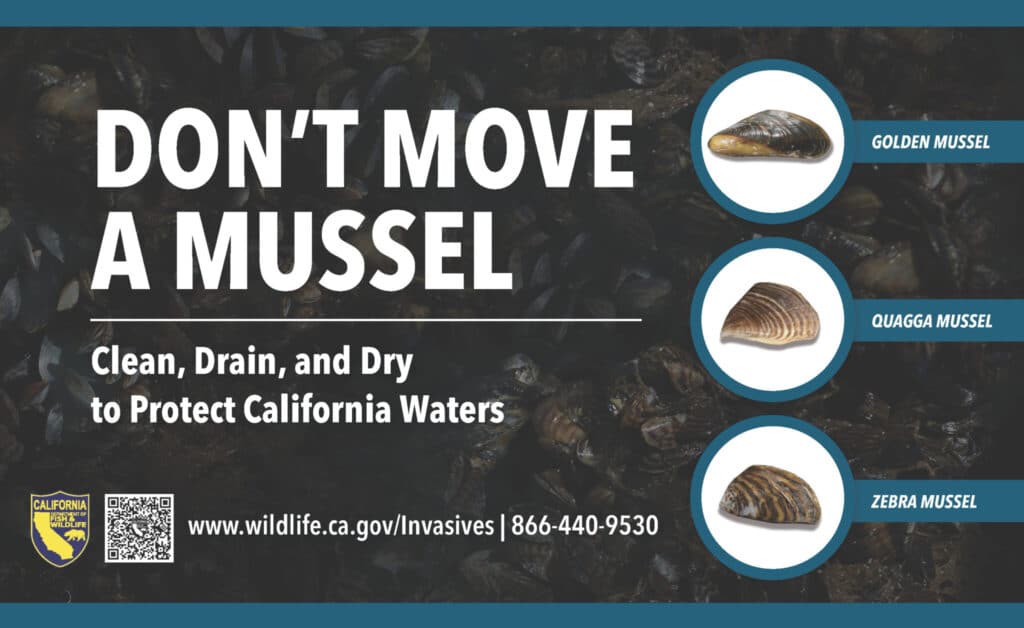
NO STICKER, NO LAUNCH: Launching without an inspection can result in fines, misdemeanor charges, and boat impoundment.
Inyo and Mono Counties have adopted new ordinances requiring all trailered watercraft — motorboats, jet skis, float planes, any watercraft transported on a trailer, and the trailer — to be inspected at an official Watercraft Inspection and Decontamination (WID) station and, if necessary power-cleaned, to receive an Eastern Sierra Mussel Sticker before launching into any local waterway.
Here’s what to know:
- Visitors: Get inspected upon arrival in the area — and again each time you come back from somewhere else.
- Residents (Inyo and Mono County): Get inspected before your first launch of the season, and again any time your boat has been used outside the counties.
- A sticker issued in one county is valid in the other for the same month.
Here’s where to go:
- Please check the official Watercraft Inspection and Decontamination (WID) station for specific dates and times and possible updates or changes to station operating hours.
The entire process — inspection, decontamination if needed, and stickers for both watercraft and trailer — is completely free.
What happens at the station?
- An inspector asks a few questions about where your boat has recently been
- They check your hull, motor, bilge, bait wells, and trailer for water, mud, or signs of invasive species
- If you’re clean, drained, and dry — you get your sticker and you’re good to go
- If not, a trained inspector will perform a high-temperature, high-pressure decontamination wash before you launch
The process is quick and free! The protection it provides is invaluable.
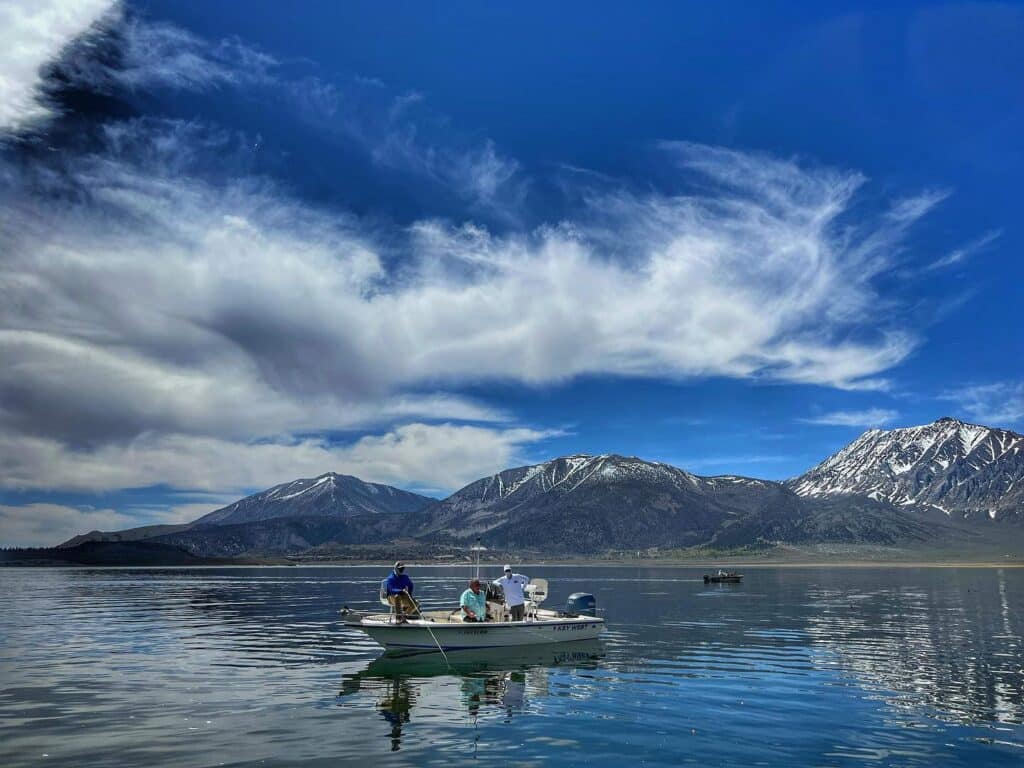
Get inspected. It’s the Law! Help prevent golden mussel invasion in the Eastern Sierra. Photo courtesy BishopVisitor.com
The Stakes Are Too High to Ignore
The Eastern Sierra is world-class precisely because its waters remain pristine. Our blue-ribbon trout fisheries, our clear alpine lakes, our wild rivers aren’t just beautiful, they drive the regional economy, define the culture, and make this place unlike anywhere else on earth.
Golden mussels put all of it at risk. If they get into our waterways, fishing could be severely restricted. Boating could be curtailed. Water activities we take for granted could be prohibited entirely. The cost to manage infestations — if management were even possible — would fall on every taxpayer and water user in the region.
The stakes are real. The solution is simple.
- Clean your gear.
- Drain your boat.
- Dry everything.
- Stop at the inspection station.
- Get your free sticker, it’s the law.
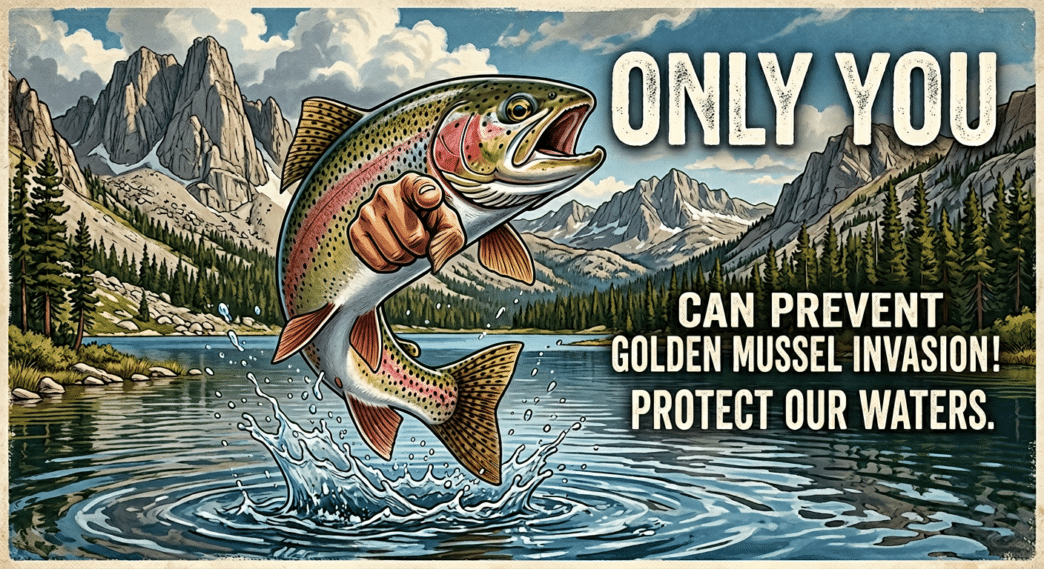
Only YOU Can Prevent Golden Mussel Invasion.
Let’s keep it that way.

For more information visit: easternsierrawid.com or wildlife.ca.gov/Conservation/Invasives/Species/Golden-Mussel. To report a golden mussel sighting, call (866) 440-9530 or email Invasives@wildlife.ca.gov.

Written by Gigi de Jong
Gigi is “crazy mad in love with Bishop.” Since moving here in 2006 she has made it her mission to participate in as many of the outdoor activities as possible. She learned to snowboard, improved upon her very average climbing skills, took long hikes, has driven up and down innumerable mountain roads and 4×4 tracks, cycled and occasionally tumbled down mountain bike trails, taken to the roads on a bicycle or motorcycle – sometimes for fun and sometimes to commute, and successfully completed her first attempt at a triathlon. She spent 10 months touring the western US and Canada on a bicycle and after 4,000 plus miles returned to Bishop – for the beauty of the place and the spirit of the community. “My soul belongs here,” she says.