Trout season opens just around
– T14 CCR §5.85(a)(2)
the bend on Saturday, April 25.
“I think my favorite thing about seasons changing is the opportunity to look different,” quoth the much-celebrated composer and modern-day poet Taylor Swift. As spring chugs along, I find myself caught between looking cold and wet during winter steelhead season and looking hot and sweaty in the “flip-flops and tube tops” season of summer wet-wading. It’s gonna be a Hot Fly Fisher Summer.
But it’s spring, and the trout season opener is just around the corner. As a lifetime Californian, I’ll confess I never paid fanatical attention to the trout season opener, mostly because we’re lucky to have much of our water open year-round. Our state’s fisheries are so vast and diverse that it doesn’t always have to be about trout.
But when it is all about trout, there are some blue lines on my fishing map where I pay attention to the season. Eastern Sierra, small tributaries, and one particular spot where I used to find landlocked trout in a place that, if I told you its name, you’d gasp and sputter, “You can’t fish there!”
Oh, but yes, you can. The spot is a short stretch of water that, due to some mostly unadvertised land ownership creating a funky loophole in the regs, is open to fishing during trout season, even though the rest of that “shall not be named here” body of water is off-limits to fishing. I found a fishing spot hiding in the CDFW regs. This is what happens when you use a law degree for good. I’m like the ACLU of fly fishing.
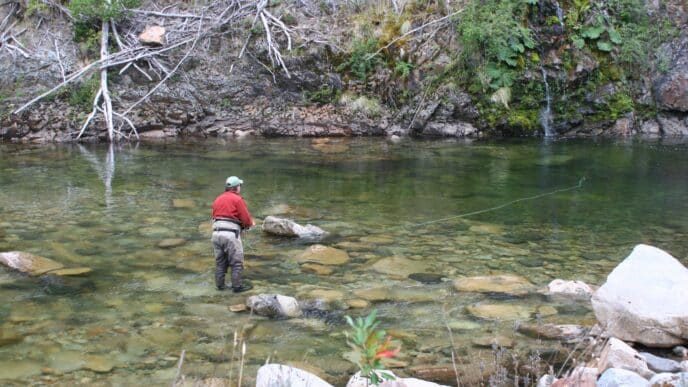
When I discovered it decades ago, I used to hit one pool that was maybe only about 1,500 square feet. Like the size of a modest McDonald’s—assuming you ever go in one anymore instead of circling it via the drive-thru like a McNuggets-drunk seagull. I explored the whole system with very little to show for it. But that one pool … it was full of hungry little fish eager enough to make me think (then in my early fly-fishing days) I might actually know what I was doing.
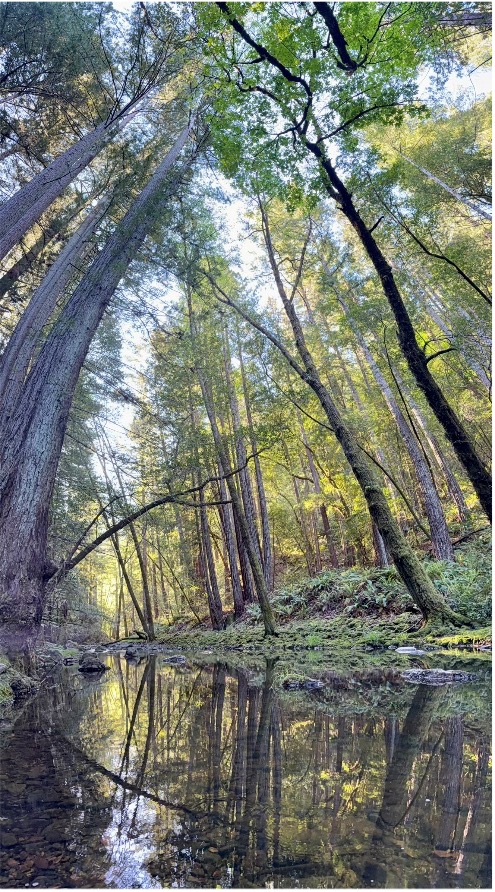
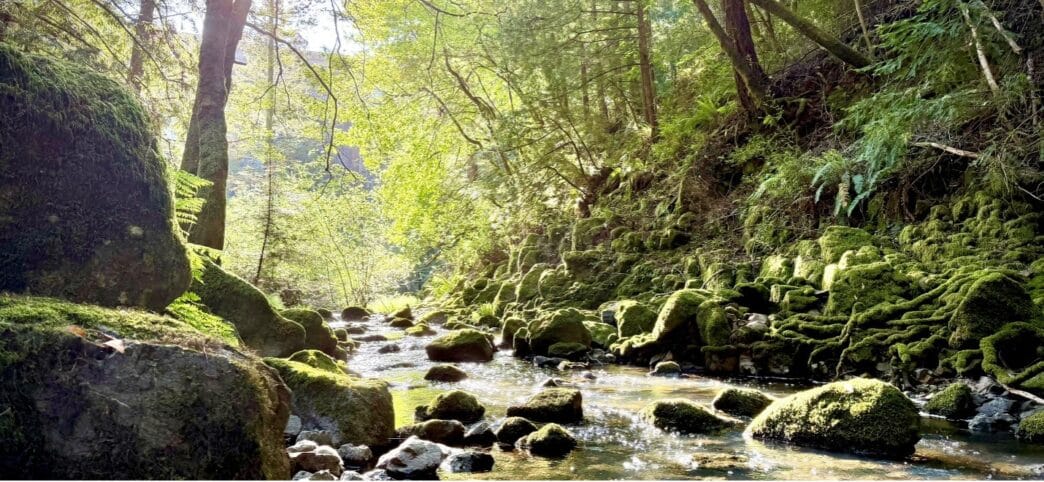
The spot felt magical—like I had discovered an ancient secret that only old-timer locals might talk about in loud, cranky “There used to be…” terms before chasing a kid off their lawn with the hose. I’d park my car near a trailhead to look like a hiker. Then I’d double back and scramble to that pool.
As a complete beginner in the sport back then, still cutting my teeth on my self-taught fly fishing, this spot felt like taking a graduate-level college course after being home-schooled, reading articles in fly-fishing magazines from the ‘70s (seriously—that’s how I first learned this awesome sport). There were three perches from which to fish the pool, and none of them allowed for much of a backcast. That’s how I taught myself the steeple cast. It’s also where I learned how to unsnag from, and swear at, H.R. Pufnstuf-like grabby trees.
I fished it with a dry-dropper—I didn’t own any bobbers, nor did I know how to use my yarn indicators. My rig was to tie a BWO dry onto some 6X tippet with an overhand knot(!), leaving a 16–18-inch tag, then clinch-knot a Prince nymph onto that tag. A little Gink on the dry—and behind the ears—and I was in business.
At this point, it’s fair to question my fly selection: “Were there even blue-wing olives, stoneflies, or mayflies at this spot?” I was so new to the sport and so hopelessly clueless that my answer then would’ve been “Bluestone wha?”
And now, decades later, my answer is, quite simply, “No.” But it didn’t seem to matter. Those eager fish would’ve inhaled a Mike and Ike stuck on a safety pin.
That first season, I went to the spot at least a dozen times and caught fish every time. The largest fish was maybe 10 inches long. But catching a bunch of adorable little fish in an hour-ish session before showing up late to work made for a pretty good start to the day.
On more than one occasion, I’d find myself in the utter chaos of a double hook-up on my line. Total bedlam for a new fly fisher. Like running up a hill of greased yams—stoked the whole way.
In my second season at that pool, I decided to play a hunch that a decent-sized fish lived there. A small tree hung over the far side of the pool, and occasionally I’d catch a glimpse of something taking gentle sips beneath it. Reaching that fish meant knowing how to cast under a low-hanging tree—a cast I wouldn’t learn until at least 20 years later. So I flogged the water around the tree’s low-hanging branches until, finally, on a slow retrieve, something hammered the BWO.
My rod had never been bent to that extreme in that pool. The little guys were easily stripped in—even on double hook-ups. But this fish? He was definitely “big fish in a little pond.” When that fish hit the net, he made me feel like I was the Jason Giambi of fly fishing (‘cuz it was the early 2000s and Go A’s!).
After releasing the lunker back into the ink-black depths of the pool, I never went after that alpha fish again. Once was enough for me. In hindsight, I treated that fish like a Giambi walk-off homer and didn’t return to that pool that season.
The holidays came and went, and I started mentally escaping to that spot. I made a plan to return on Opening Day. I never fished it on a weekend, but I figured it was unknown enough that I wouldn’t encounter anyone there.
But as I approached the tableau at my magical spot, I discovered that maybe word had gotten out…
What I found when I popped out onto the pool was an abomination. A six-pack of drained beer cans, some spent Eagle Claw snell hook packages, and the unmistakable chartreuse stain of PowerBait smeared on a rock. It looked like Shrek had been there on a Modelo bender while fighting a sinus infection. All of it was fresh enough to suggest the detritus had been there for only a day or two. A day or two before the trout season opener.
Poachers had found my spot and trashed it. Despite my dejection, I rigged up and started fishing. But what used to be a multiple-fish day—replete with double hookups—became skunk city. I tried different flies. I even threw a Woolly Bugger for the first time, as a last resort (no Squirmies or Mop flies back then). Nothing.
Not only was my spot burned, but it was burned by poaching litterbugs who clearly didn’t care about this beautiful little spot. I didn’t catch or even see a single fish, so the poachers must’ve kept every tiny fish they caught, too. There’s a special place reserved for people who do this. I think it’s somewhere off I-15.
Trout seasons help manage the fishery
as a renewable resource.
And so I’m reminded of why there’s a trout season. It helps manage the fishery as a renewable resource. It gives the trout a chance to spawn in peace. A chance to look different, Ms. Swift. A “reset,” if you will, where the trout can put on some Velvet Funk, mix up some cocktails, and take a favorite partner to the redd.
But despite being a seasonal spot, my sweet little pool, full of adorable, wild, landlocked trout, was hit by poachers. I hate to think this is why we can’t have nice things, when we, the abiding anglers, patiently wait for the season to open and respect the resource. Shoot, we’re even careful how we handle our fish before we put ‘em back! Having a designated season and practicing good stewardship are exactly why we can have nice things.