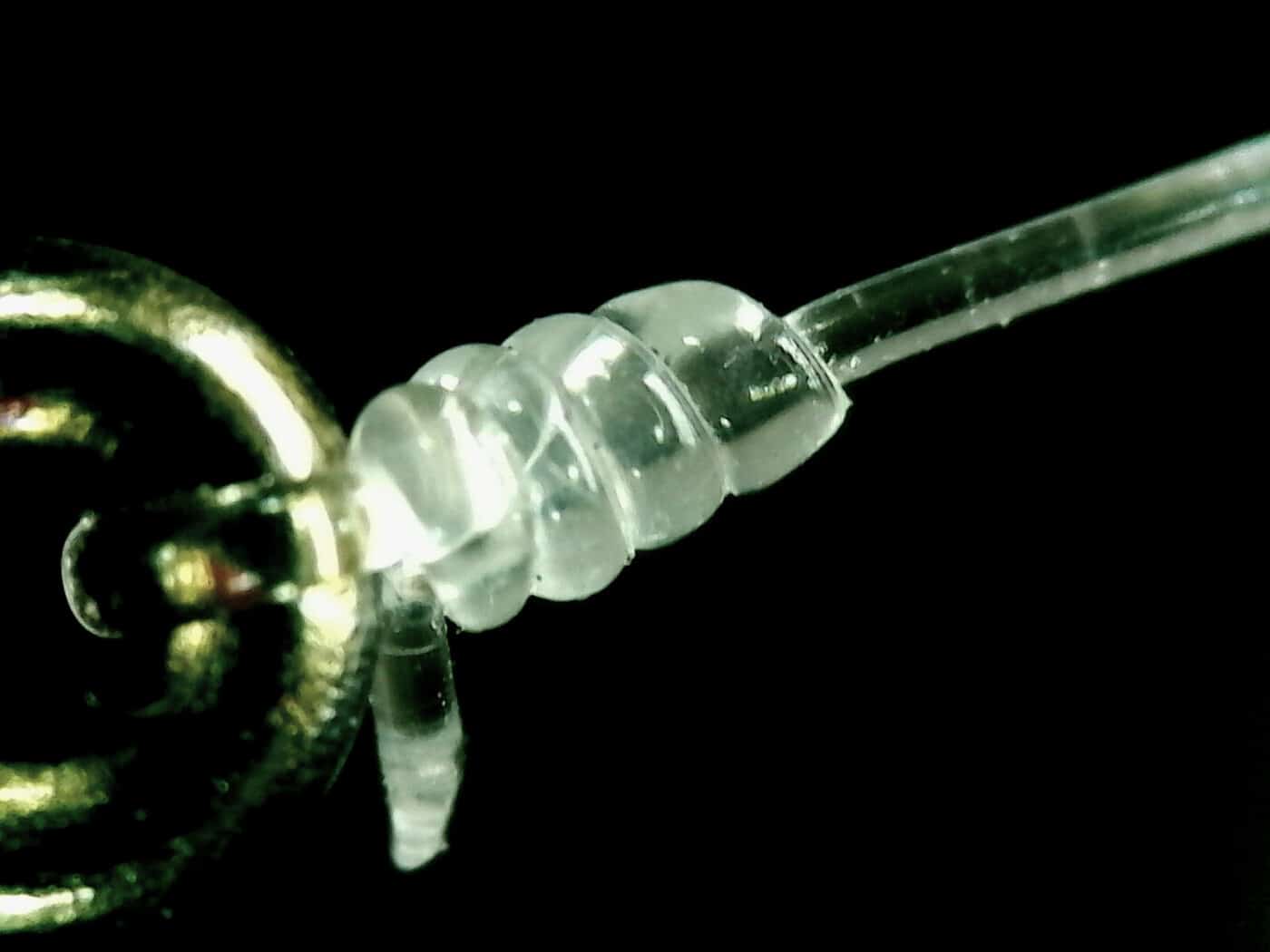

Go online, and you’ll find plenty of posts, articles, and videos telling you which knot is the strongest. Some folks boldly claim that a particular type of knot will fail at a specific percentage of a tippet’s rated break strength. This sounds reassuring, but as anyone who has measured the strength of more than a few dozen knots knows, it’s bogus. When you tie a knot, you create a complex, three-dimensional structure. Small variations in how you form and tighten the knot will inevitably affect its strength. So how do we tie stronger knots and avoid weak ones?
Field Test Fifty
Poor knots are unlikely to lose small trout in a mountain stream, but failure is a real concern when chucking flies at larger fish, especially on light tippets. For example, places like Fall River, Hat Creek, and the Truckee have large, leader-shy trout that often ignore a fly presented on anything thicker than 5X. And the state has plenty of lakes where trout, bass, and carp grow large enough to snap poorly tied knots in 2X tippet. What we need is a reliable way to field-test knots.
Most of us were taught to give the tippet a firm pull and check for uneven twists or a slipping tag. The problem with this approach is that “firm” is subjective. How much tension is needed to break bad knots without breaking good ones? Run hundreds of knot tests, and you’ll find that they typically snap at 60 to 80 percent of the tippet’s rated strength. As such, pulling on the knot at half the tippet’s rated strength is a logical way to eliminate any weaklings.
So how does it feel to pull at half the break strength? Let’s assume you are using 5X tippet with a rated strength of six pounds. A bottle of wine weighs about three pounds, so pulling at half strength should feel like lifting a bottle of Two Buck Chuck from the fridge. Right? Unfortunately, that perception of force is way off. If you don’t believe me, try this: Tie two pieces of tippet to the ends of a spring scale, knot one piece to a fly, and leave the other bare. Hold the fly and the bare tippet as you would when testing a hook knot on the water. Close your eyes, apply what feels like three pounds of force, then look at the scale.
I ran this test a while back. The target was five pounds, which is about right for the 10-pound (2X) tippet I often use in lakes. My average was 3.2 pounds, and the maximum was just 4.04 pounds. At three pounds, the tippet dug uncomfortably into my skin, and at four pounds, it was painful. Do the math, and you’ll find that pulling with three pounds of force on a 5X tippet creates over 1,000 pounds per square inch of pressure on your finger. For comparison, when the same force is applied to a typical anchor rope, it’s about 20 pounds per square inch. This is why we have such difficulty guesstimating how hard to pull on a knot.
I’m not suggesting you put a digital scale in your fishing vest, but having a good sense of how hard you need to pull is a good way to spot weak knots before the fish does. And for anyone using tippets over 10 pounds, I seriously recommend gloves.
Skinny Jeans
Tippet behaves like a rubber band; it stretches under tension. You have likely noticed this when straightening a leader. Stretching the tippet also makes it thinner. As long as the tension does not exceed the tippet’s elastic limit, it returns to its original length and diameter when the tension is removed. Importantly, this stretch-and-contract response isn’t instantaneous; it takes several seconds.
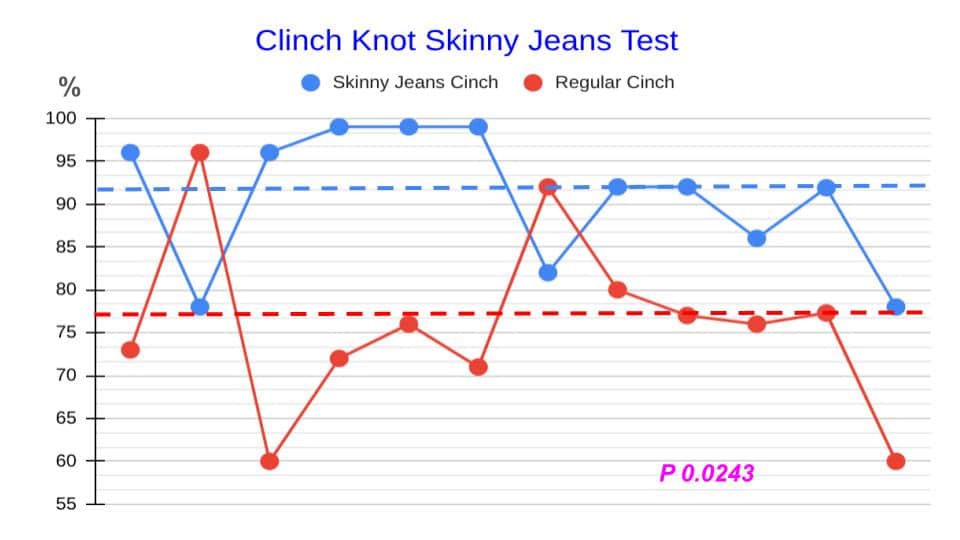
It occurred to me that these changes in diameter could have important implications for knot strength. Getting into a pair of skinny jeans provides a useful analogy. Think about someone sucking in their stomach to get into tight jeans. When they relax their stomach muscles, the jeans will have a very snug fit. The same thing should happen inside a knot when the tension is removed from the stretched tippet. This should increase the knot’s internal pressure and friction, making it stronger.
To test this hunch, two knot-tying techniques were compared: The test (skinny jeans) clinch knots were cinched down just as you’d do on the water, then subjected to a pull of half the tippet’s listed break strength for five seconds, followed by five seconds of gradually releasing the line tension. The control clinch knots were cinched down normally at half the break strength. The skinny jeans technique produced a statistically significant difference in knot strength. What stood out was that even the weakest skinny jeans knot was stronger than the average conventionally tied clinch knot. When you are pursuing big fish with light tippets, this is a very real advantage.
Interestingly, the technique did not produce a statistically significant difference in the strength of the Orvis knot. Presumably, it is the tightening of the clinch knot’s twists that provides the extra strength.
Sunburn
You have probably heard that tippet weakens with age, and this degradation accelerates with exposure to heat and ultraviolet (UV) light. I’m not sure heat is a problem for fishing, since most nylon polymers don’t undergo significant chemical changes until temperatures exceed 180 degrees Fahrenheit. The only place you might find those temps is on your car’s dashboard in summer.
However, UV is an obvious concern because the planet is bathed in it every day. UV is powerful enough to break chemical bonds, making the tippet brittle and weaker. Research shows that this damage starts at the surface and progresses inward, suggesting that thinner tippet materials will show the fastest reduction in strength. To assess the effect of UV exposure, some factory-fresh 5X tippet was split between two spools. One spool was stored in a dark closet, and the other was left outside for 14 days.
Both spools were tested with an Orvis knot. As the test ran, the data looked the same, and the statistics confirmed it. Apparently, two weeks of sun exposure is not enough to cause measurable degradation of 5X tippet. Given that most spools of tippet probably don’t get that much exposure in a year, it seems safe to conclude that you don’t need to worry about UV tippet damage during a typical fishing season.
Another test used some 5X (6 lb) tippet that had been stored in a fishing bag for three years. I do not know the knot strength of this material when it was new, but both the regular clinch and Orvis knots had a minimum knot strength of barely two pounds. That’s just one third of the tippet’s original rated strength.
Based on these tests, it seems prudent to replace your thinner tippet materials every couple of years.
Twisting
How many twists do you need to make the strongest clinch knot? Numerous online sources
recommend five to seven twists, depending on the line’s diameter. To see if there was an ideal number, knots with five, six, and seven twists were tested with factory-fresh 5X. Each knot was tightened using the skinny-jeans technique to ensure optimal, consistent tightening. The test found no statistically significant difference in knot strength, so go ahead and use five to seven twists as you please.
Wet or Dry
Tippet absorbs water, increasing its flexibility but reducing its strength. How much does this affect knot strength, and should we compensate for it in certain situations? To find out, 10 Orvis knots were tied in tippet soaked in water for 60 minutes. Ten control Orvis knots were tied in dry tippet. The results were statistically the same. Perhaps the increased flexibility of wet tippet improves knot seating and offsets the reduced tensile strength? Whatever the case, it’s good news. Fully hydrated tippet isn’t more likely to lose you fish.
Super Strong
While knots tied in tippet usually break below the number listed on the spool, some brands break at higher strain. I’ve tested monofilaments that exceeded their rated strength by several pounds. Most of these were heavier lines, often designed for catfish or saltwater fishing. Presumably, manufacturers do this to ensure their line is “super strong.”
For regular fly fishers, this over-testing isn’t really an issue. As long as the tippet meets other requirements, such as diameter and flexibility, that extra strength is simply a bonus. However, a line that breaks above the stated test is a very real problem for anyone chasing world records. The IGFA requires you to send the fly and tippet before they will consider your record-sized guppy. If your tippet strength exceeds the line class, the application will be rejected. If you are in any doubt, get a digital scale and run at least half a dozen tests.
Not The Knot
One of the things my father hammered into my head when I started fly fishing was to retie hook knots after fighting a big fish. He argued that the knot had been under considerable strain and might have weakened. As a successful competition fly fisher, he tended to focus on such details. When the difference between winning and second place was often one fish, this kind of attention to detail made sense.
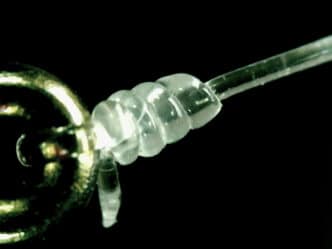
I was reminded of this paternal maxim while knot testing. As others have found, tippets occasionally snap above the knot. These breaks do not occur at a specific distance from the knot or at a consistent tension. They seem purely random. I examined some snapped tippets under a microscope and found small white marks inside the monofilament. This is a sign of damage called crazing. Presumably, these weak spots stem from minor variations in the tippet’s molecular structure. Unfortunately, they are invisible to the naked eye, so there’s no way to detect them on the water. Based on this, it seems prudent to replace the entire tippet after you fight a large fish or break off on a snag.
Will this information help you make every knot perfect? No. What it will do is help you stay connected to fish that send your heart pounding, your voice falsetto, and your grin so wide it almost hurts. Need I say more?