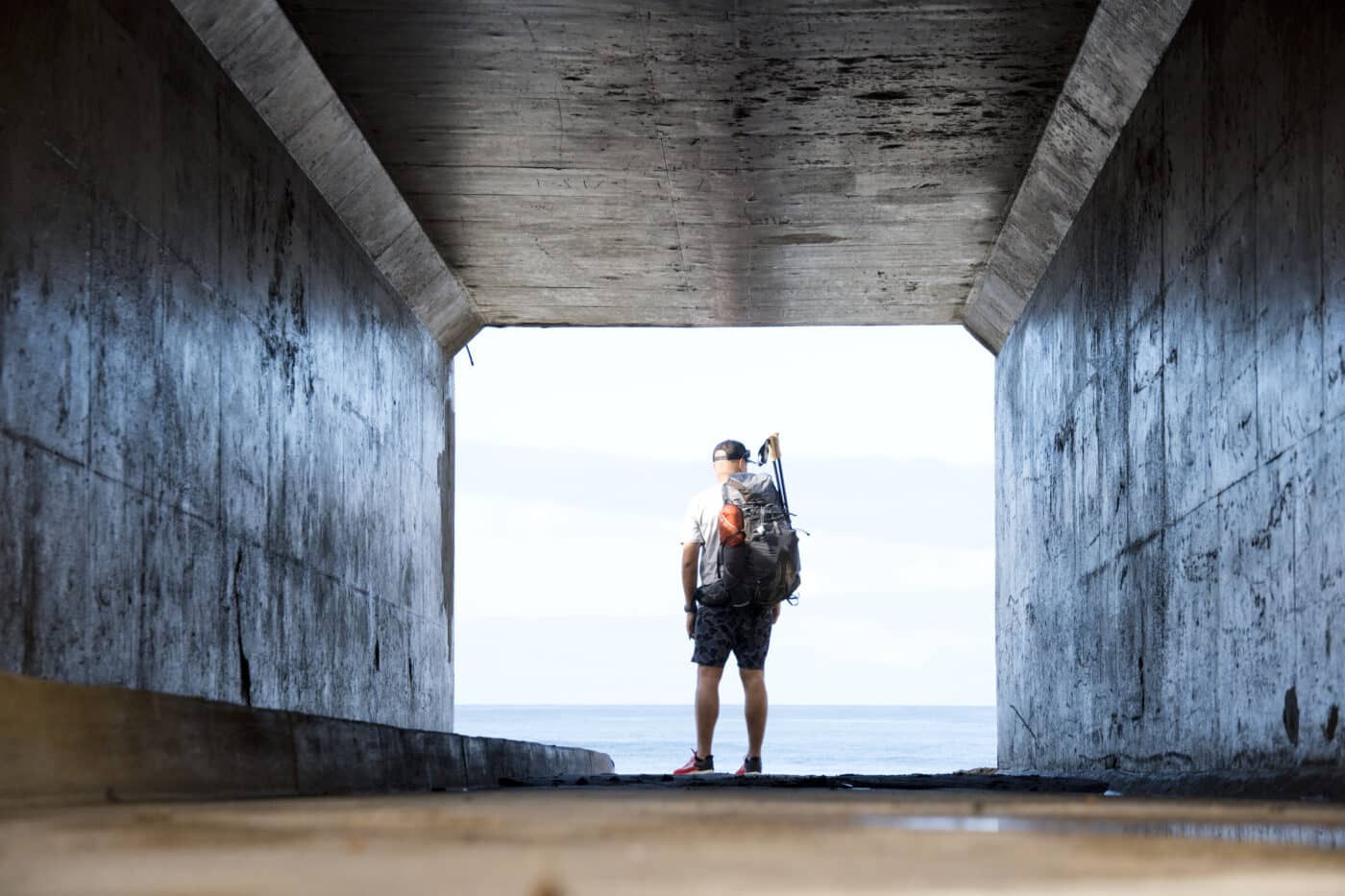

Photos by Sean Jansen
Southern California is hardly a freshwater angling destination. When most people think of the area, they conjure images of surfing, Hollywood, mansions, and sunny weather. Rivers, snow-capped peaks, trout streams, and even animals like bears rarely come to mind.
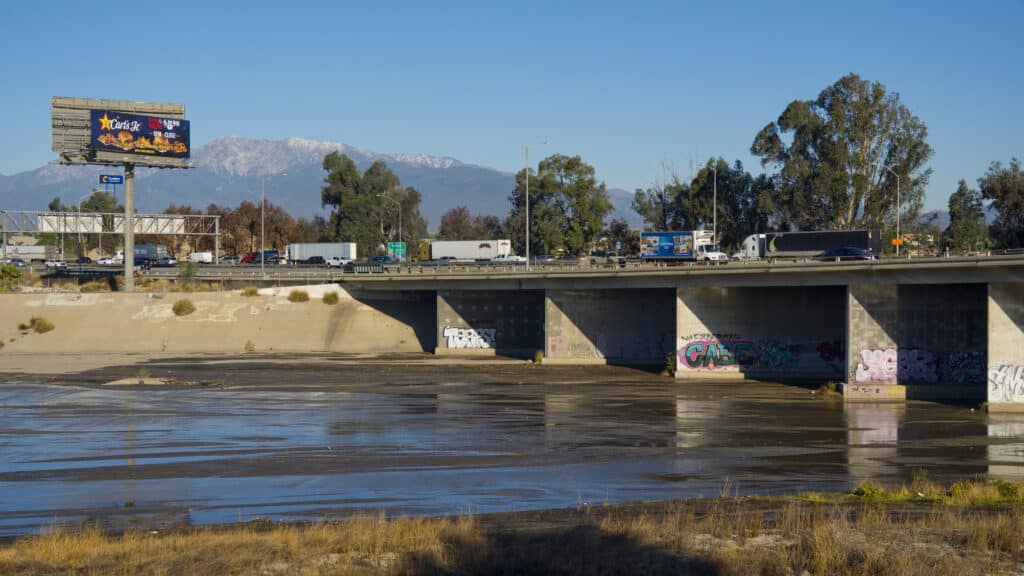
There are roughly 40 million people living in the state, and more than 60 percent of them live in the southern part. With people come infrastructure: traffic, highways, buildings, homes, pollution, smog, and concrete. If there are rivers, they are dammed. If there are wilderness areas, they are limited. And if there are animals, they are extinct, endangered, or introduced. Humans dominate the area, and it’s hard to fathom a sense of wild when landing at Los Angeles International Airport.
But 100 years ago, this wasn’t the case. The area was lush with free-flowing rivers and megafauna such as grizzly bears, elk, and even bison. The current smog and polluted valleys were pristine and clear, showcasing views of the snow-capped peaks—which melt and feed rivers that flow to the sea. And any angler knowledgeable about rivers that flow to the sea knows what kind of fish would live there.
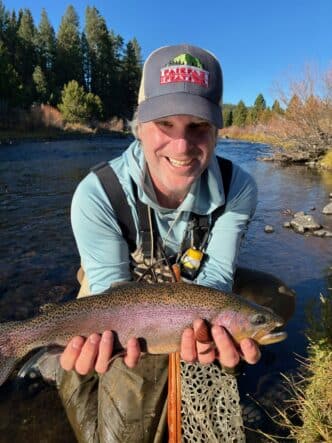
Steelhead trout inhabit much of the waters along the western coast of North America. But few know—myself included, as a native of Southern California—that they also live in the rivers of SoCal. A hundred years ago, before the area’s industrial development, steelhead spawned in numbers comparable to those seen in other rivers along the West Coast, such as the Eel, the Klamath, and the Smith—rivers known to host steelhead in great numbers (at least historically). That was also what was remembered about the fish in Southern California. Celebrities in the 1930s and ’40s have photographs of themselves holding stringers of steelhead caught at places like Malibu, Ventura, and Santa Barbara—places now known only for extreme wealth and a healthy surfing population. Despite the historic numbers and the rapid development of Southern California in the 20th century, the resilience of Southern California steelhead, or Southern steelhead, persisted.
Southern steelhead were federally protected in 1997 and state-protected in 2024. The southern steelhead is a genetically diverse population of salmonids that differs from its cousins elsewhere along the California coast, or even farther north in the Pacific Northwest. Different in that it can survive in far warmer stream systems. It can persist through pollution and extreme drought. What were once counted in the tens of thousands of fish in the early 20th century precipitously dropped to a low of 170 in 2024 according to the nonprofit California Trout (CalTrout).
It wasn’t until 2023 that I first heard about these fish. I was born and raised in a coastal surf community in Orange County called San Clemente. I grew up as a stereotypical SoCal kid with blue eyes, blond hair, and a surfboard always under my arm. My dad taught me to fly fish when I was 11, and we religiously went up to the Sierra to fish the Owens or Hot Creek almost every other weekend. We did so because my dad taught me that there were no trout in Southern California. He was wrong.
It wasn’t until one day in 2023, when I was walking to my local surfing spot, that it dawned on me I had to pass a stream-fed lagoon to get there. For years, this lagoon was filthy—filled with brown water, trash, diapers, and a dead-animal smell that made you walk by faster. But little did I know, this lagoon was special. I sat at the mouth of the lagoon one day and looked at the stagnant water, then followed it inland as far as the eye could see. Inland, there was no urbanization, no road, and no smog. It was pristine. A lush environment with hillslopes covered in greenery and birds flying in the distance. The creek was called San Mateo.
I went home after my surf and decided to Google the creek. It turned out the creek was free-flowing and began its life at nearly 4,000 feet up in a wilderness area of its namesake. As I scrolled down the Wikipedia page, I learned that steelhead called the creek home. A wave of guilt washed over me like the tides over the boulders that came from the creek onto the beach. The wave I grew up surfing was formed by the creek, and that creek had steelhead. I began researching these fish like an investigative journalist who had discovered a key piece of evidence in a murder case.
It turned out that throughout SoCal, every stream, at least historically, held populations of steelhead. CalTrout released a preliminary report on the fish and mapped every stream. They listed the barriers and blockages these streams face and are actively working toward their removal. The murder case I was investigating? The removal of all barriers and diversions from the streams. The prosecutor of these crimes? Me. I felt compelled to do something. The action? I found a map of the historical range that showed the extent of their territory and scrolled out on Google to see what, if anything, could be done within my realm of expertise. I was leaning back in my office chair, staring at the map, when I saw a shape and a connection around their historical range that were familiar to me.
I figured I could walk the Pacific Coast Highway up from my hometown of San Clemente, connecting all the lagoons and creeks as they meet the sea, then backpack the inland mountains where these rivers began—eventually looping back to my hometown. Creating a giant loop around the steelhead’s historic range, circumnavigating all the creeks where these fish live—on foot.
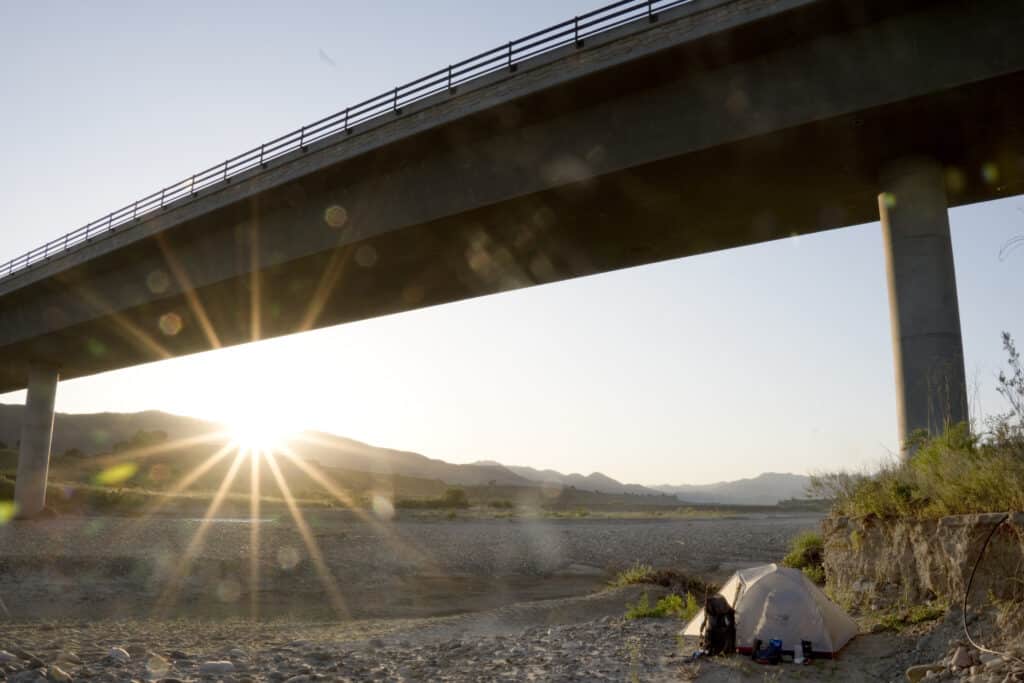
One spring day, with a backpack full of everything I needed, I headed to the coast and began my trek north. I walked about 300 miles over 21 days and made it to the northernmost river in the historic range, the Santa Maria. It was painful and arduous, but it was stunning. I connected with and saw my home region of Southern California in a way I never thought I would. By car, I only saw traffic, million-dollar homes, trash, and heard loud music from fellow drivers. But on foot, the sound of crashing waves, the smell of salt, seagulls and pelicans flying by, and even a smile from the local rollerblade girl painted the picture. The real star of the show, however, was the creeks.
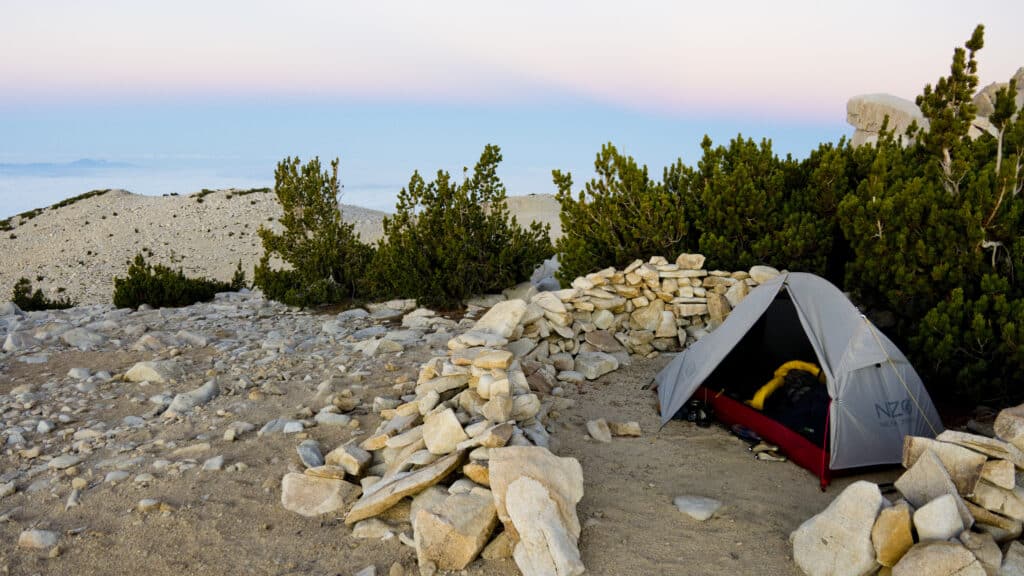
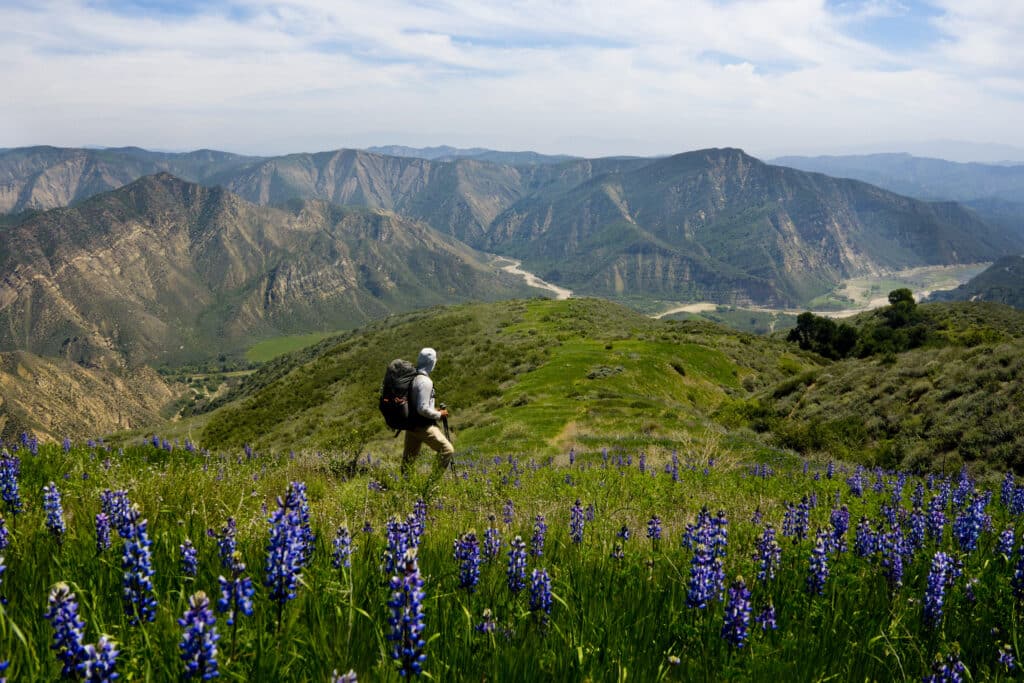
After three weeks, I was jonesing for the mountains, so I headed southeast from Santa Maria, climbing in elevation. Long gone were the days of concrete, crosswalks, and convenience—now the smell of pine, the vision of prosperity, and the feeling of pain took over. My body was revolting. The pack was heavier, the days were harder, and the effort was exponential—but the views were worth it. The stars took over at night, and the air temperature dropped, like I did, into my tent after a long day of hiking. I started connecting the river systems I encountered at the sea to their headwaters in the mountains and was astounded by their pristine nature. What I saw on the coast, with concrete-lined shores and smog-riddled air, was replaced by cold, clear water cascading down from elevation, with aquatic insects and plant life all thriving in its quiet, untouched serenity. And with that came others.
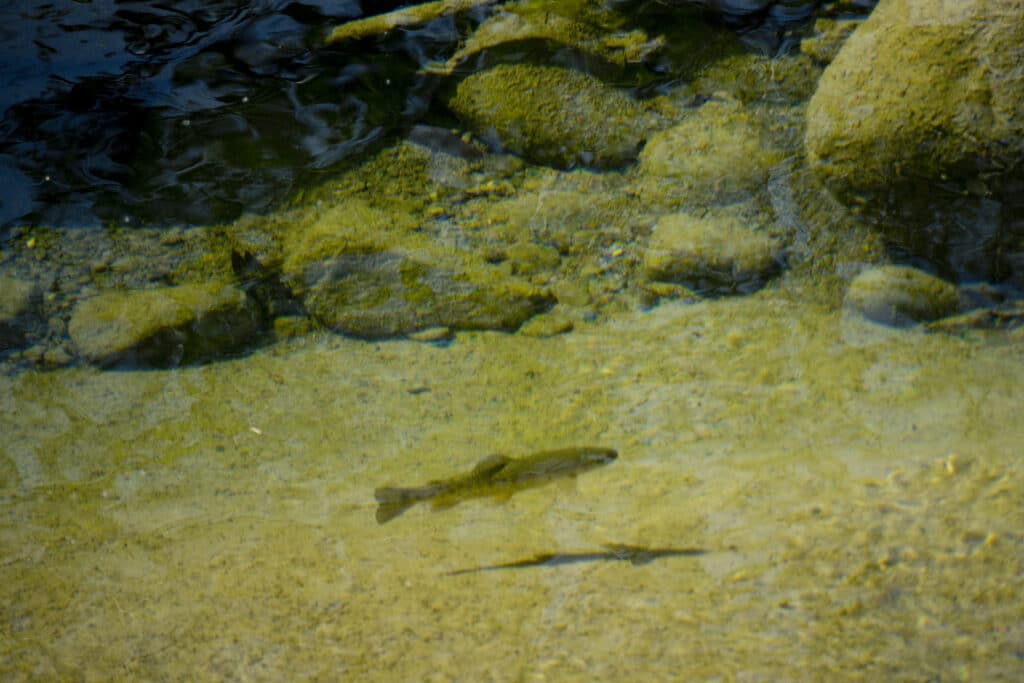
I was walking along a creek system and wasn’t expecting much until I scanned closer and saw the silhouette of a large fish, swimming unbothered.
I had to blink and rub my eyes, because I had gone eight days without seeing a human. Right in front of me was a large 24-inch fish, swimming as if I weren’t even there.
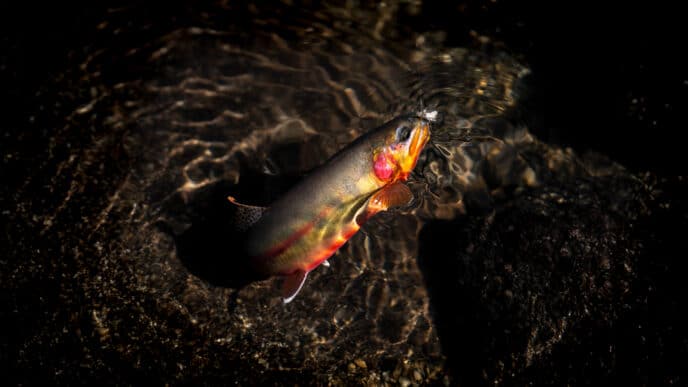
I hadn’t expected to see a steelhead, as there were so few, but right in front of me, in a creek no wider than I was tall, 30 miles from the sea, a 2-foot-long trout swam in the cold and clear water.
As I trekked south through the mountains on the Pacific Crest Trail toward the international border, I often followed the tracks of bears and mountain lions. But I never expected to see one. One day, walking along another creek, I heard the famous chirps of a mountain lion calling to another, only about 20 yards away. One night, finishing my journaling near the famous ski and mountain town of Big Bear, a 300-pound black bear waddled into my camp. And on a sunny day, after about 600 miles of backpacking, a rattlesnake struck my hiking pole as I stepped past it.
After nearly 80 days and over 1,000 miles, I finally reached the Mexican border and followed the Tijuana River from its binational headwaters to the river mouth, where it met the sea. From there, I knew I had only a couple of days left before I walked north along the coast back to my hometown of San Clemente.
I wasn’t emotional; I wasn’t sad. I was content. I set out and accomplished what I had initially wanted to, and because of that, I was proud. On my last day walking into my hometown, I prepared myself for what I was going to see.
I woke that morning and started walking through the gray of thick fog. But as I kept walking, the fog began to lift, almost as if I had a shield. With each step I took, the fog lifted. That continued all day until I reached my hometown water, San Mateo, where the fog decided to stay, despite my metaphorical shield. The lagoon was clear, and birds were frolicking in the water.
I had made it home, dropped my pack, and sat at my dining room table after 86 days. I looked at my pack, which had rips and scars and had faded in color since I bought it, then glanced up and out the window at the fog still holding its grip on the coast. I smiled, knowing I had finished the trip and that the fish gods had granted me permission to do so, but the fog lingered to remind me that, at least metaphorically, the fish were still very imperiled.
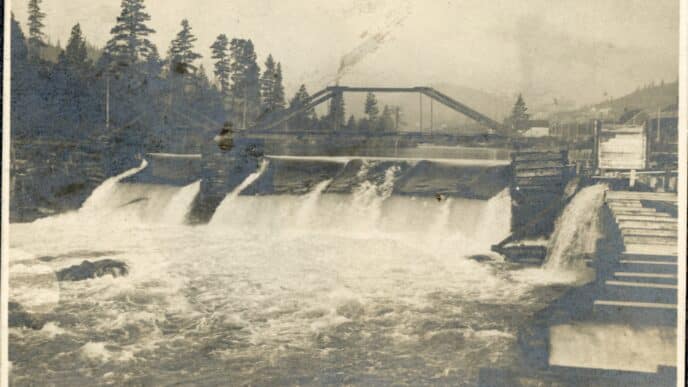
I saw dams; I saw pollution. I witnessed smog, concrete, and dehydrated river and creek systems. I walked through urbanization, congestion, traffic, and convenience.
Looking back on the trip, what stayed with me was the sheer magnitude of the historic range and the remoteness of the headwaters. The solution to bring these fish back from the brink is to get them to the headwaters so they can spawn in peace, but that’s the dilemma. Between the sea and the mountains, 30 million people live, with all of the above. So my initial goal had always been to bring attention to the fish. Despite what these rivers may look like, with concrete-laden shores and trash, it doesn’t mean fish couldn’t live there. And once we accept that and notice the potential for life, despite the urbanization, these fish will return. We just have to let them.
Stats:
- 1,196.39 miles walked
- 86 days to complete
- 2,610,706 steps taken
- 165,745 calories burned
- 478 crosswalks crossed
- 26 railroad crossings crossed
- 29 showers taken
- 4 days of rain encountered
- 2 days of snow encountered
- 13 Ferraris passed
- 12 piers walked
- 10 times hitchhiked
- 10 times rattled by rattlesnakes
- 1 steelhead witnessed
- 1 helluva trip had!
Sean has written a book about the journey, titled Tideline to Alpine. He is seeking a publisher and will donate 100 percent of the book’s proceeds to CalTrout. The goal is to help fund dam-removal and fish-passage barrier-removal projects so that southern steelhead can once again return to their natal waters.