


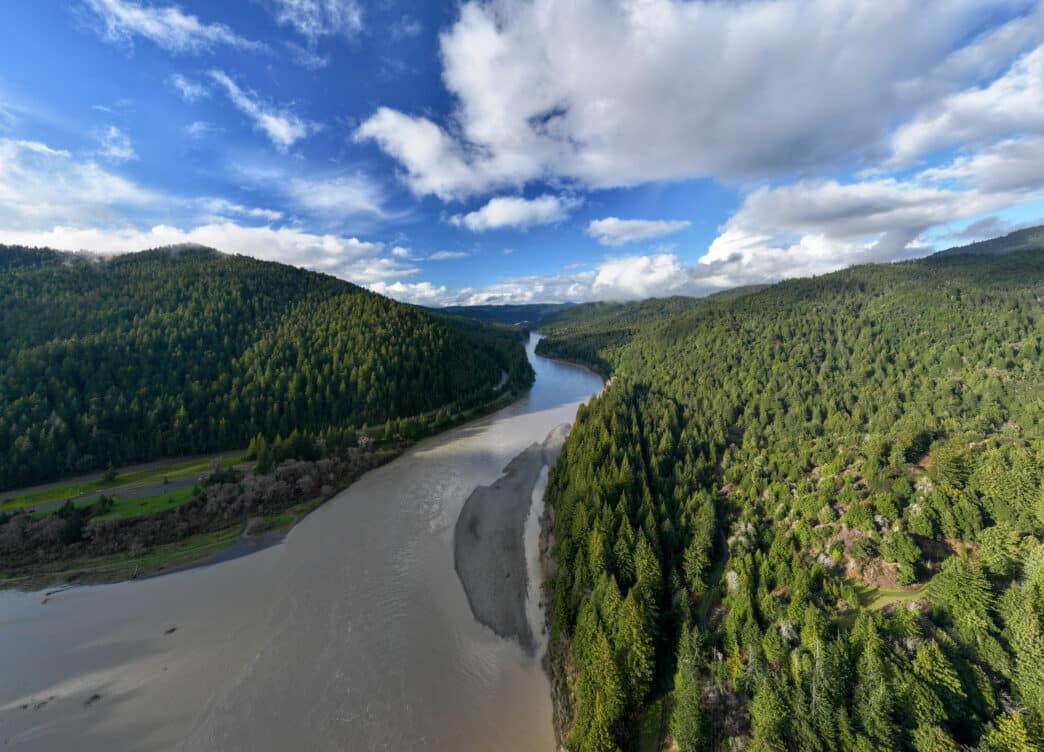
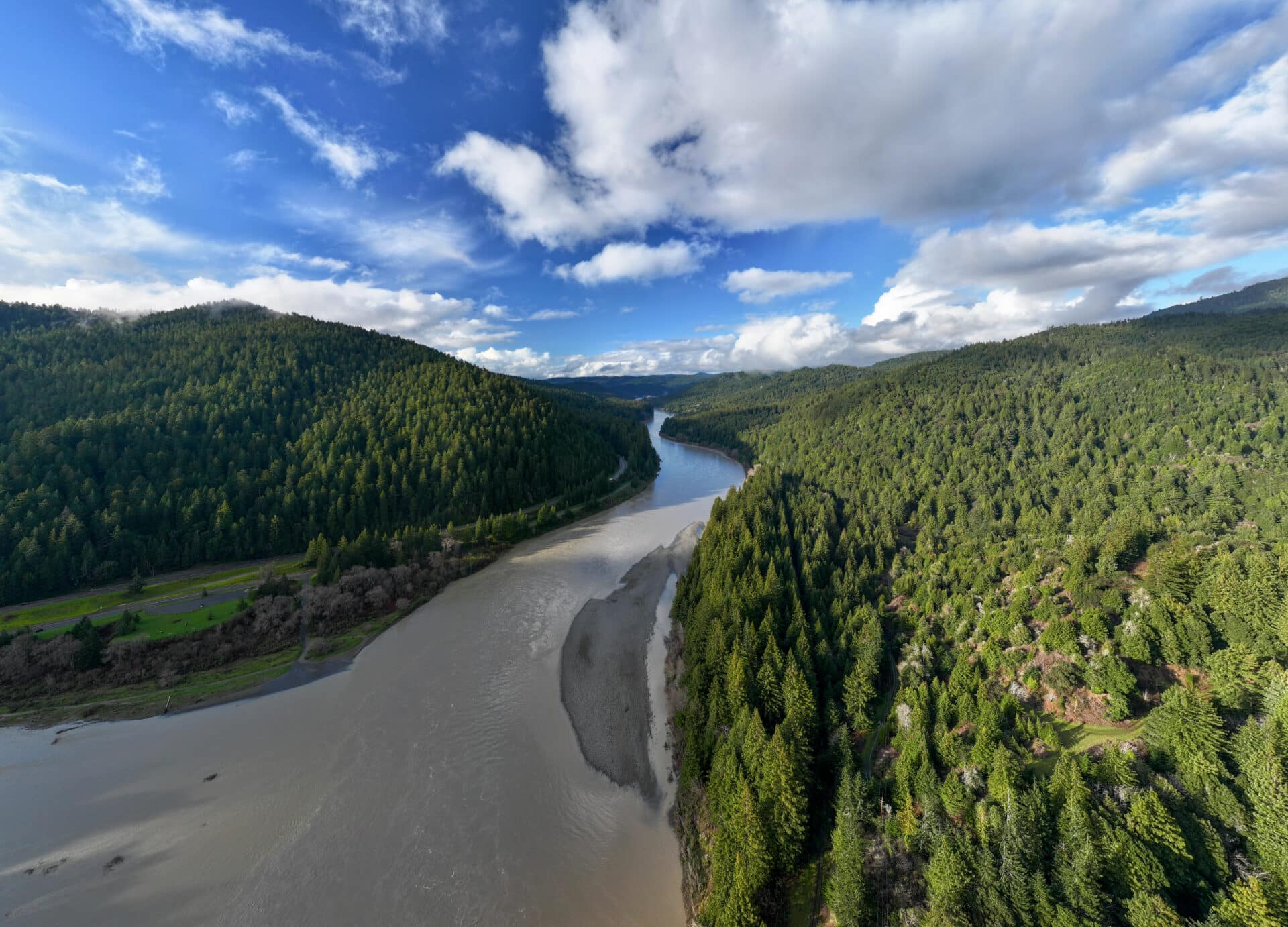

There is something about the Eel River that feels raw. Not in the raging river sense, but unfinished, in a state of flux.
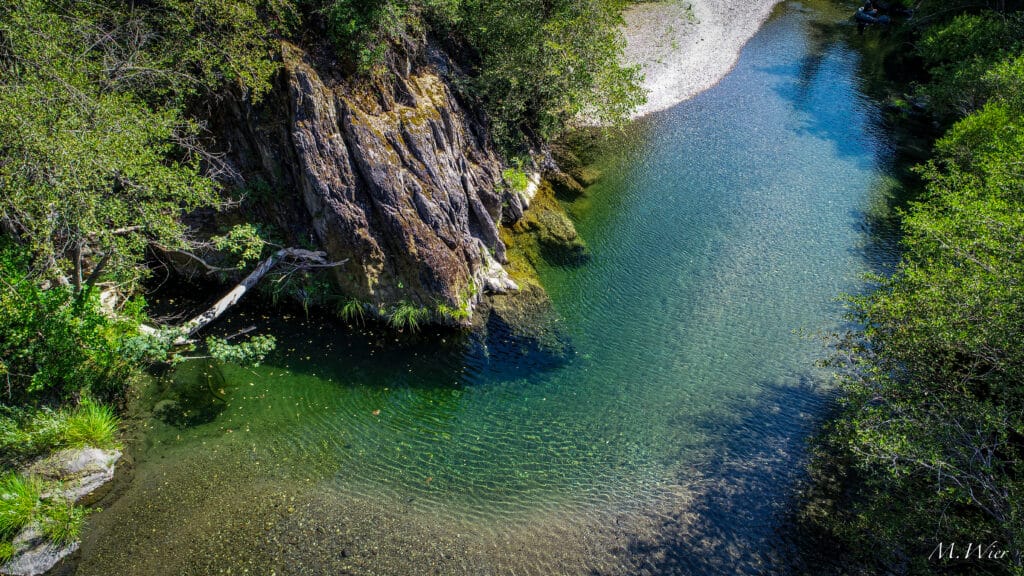
The water pushes wide and brown after winter storms. Gravel bars braid and reform. Trees are tipped over, dragged downstream, stripped of their limbs and bark, pushed, rolled, and pushed again. Between storms and in spring, the water clears to green as flows drop. In summer, the river recedes into long riffles and bedrock pools. Ever changing.
For anglers, part of the joy of visiting a river for a lifetime is embracing those changes. A log in your favorite pool (shit!), a run now too shallow and fast to bother swinging through (or is it?), and the willows, there, then gone, then back again, somehow already head high. What’s around the next bend?
Anglers often know the mainstem of rivers like the Eel best, but adult fish are on the move to spawn upstream, often into smaller tributaries and headwaters. You can fish the lower river for years without ever seeing what lies above.
For a species like steelhead, with over 30 life histories, the entire watershed is essential. Being adaptable and opportunistic is what has enabled O. mykiss to inhabit every continent on the planet, save Antarctica (so far). It’s no surprise, then, that the highest-jumping Pacific salmon ends up in the headwaters of rivers like the Eel.
The Eel River drains California’s third-largest watershed. Its headwaters originate in the Coast Range, flowing through steep canyons, forests, and broad valleys before meeting the Pacific. In a tectonically active region; the land rises, and the Eel saws through the mountains. Despite a history of intensive logging, catastrophic floods, and illicit cannabis, much of the basin remains wild relative to other salmon rivers in the state.
The fish in the Eel basin still carry genetics shaped by the river over thousands of years. They’ve persisted through droughts, floods, and now, decades of decline. What they have lacked for generations is the ability to move freely into the upper watershed.
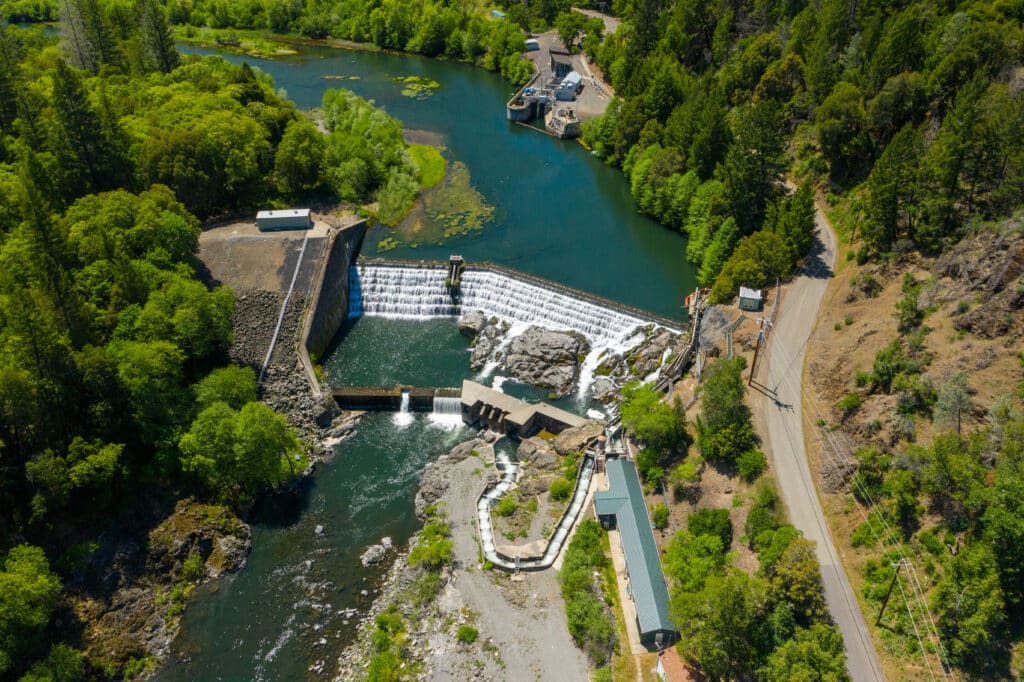
Over a hundred years ago, two dams were constructed on the upper Eel River as part of the Potter Valley Hydroelectric Project. Scott Dam completely blocks fish passage, preventing salmon and steelhead from accessing a 300-square-mile basin, roughly 10 percent of the watershed. Cape Horn Dam, located 12 miles downstream, diverts water from the Eel River into a mile-long tunnel and releases it into the East Branch of the Russian River, above Lake Mendocino, supplementing water supplies in the Russian River Basin. Owned by Pacific Gas and Electric Company, the Potter Valley Project is no longer viable as a business enterprise, and PG&E has decided to surrender its license to operate the Project and to decommission it. The Project has not generated electricity since 2021.
It’s the opportunity of a lifetime to reconnect one of California’s great salmon and steelhead rivers.
Above Scott Dam, high-quality spawning and rearing habitat remains largely intact. Tributaries that once supported robust salmon and steelhead populations still have the flows, gradients, and cover that fish evolved with. These are not marginal headwaters. They are prime habitat—lost not to degradation, but to inaccessibility.
The potential of the Eel River headwaters had largely been forgotten over time. No one alive today remembers a time before the dams. However, historical accounts, cannery records, and recent research suggest the headwaters hold enormous potential to support recovery. Run sizes throughout the basin and all salmon species may have once exceeded one million fish in good years and around half that in average years. A recent study by NOAA Fisheries indicates that the dam-blocked headwaters still hold significant salmonid capacity compared to the rest of the watershed and could serve as an important cold-water refuge during warm years and as protection from predators, enhancing the long-term productivity of multiple populations.
Recent genetic research has shown that resident rainbow trout living above Scott Dam still carry the same genetic markers linked to migration and “summer-run” behavior that characterize anadromous (sea-run) steelhead. This means that even after nearly a century of isolation, the resident fish above the dam have kept the genetic potential to resume anadromous life cycles—a fact that strongly supports the possibility of natural recolonization when passage is restored.
Dams don’t just stop fish. They change how rivers work.
Below dams, altered flows impact temperature and timing. Reservoirs smooth natural flow pulses and release water on a set schedule. Gravels stabilize when they should move, simplifying channels. Sediment builds up behind dams instead of replenishing downstream reaches.
Removing the Eel River dams would restore access to hundreds of miles of high-quality habitat. This includes cold tributaries, complex headwaters, and reaches shaped by natural flow and sediment regimes rather than reservoir operations. Fish passage alone would alter population dynamics throughout the basin. Salmon and steelhead would gain access to thermal refuges and spawning areas, potentially reestablishing life history strategies that promote greater resilience, increase survival rates under changing conditions, and create more stable fish populations over time.
But dam removal and change are challenging. PG&E’s plan to remove the dams, like those on the Klamath, has faced skepticism from some and opposition from others. Those who directly benefit from the externalities provided by the dams—such as reservoir-based recreation and supplemental water supply for the Russian River—would much prefer to keep things as they are, with PG&E bearing the costs to maintain increasingly expensive facilities that provide no direct benefit to electric customers.
The Eel River story reflects a broader reckoning happening across California and the West. Dams throughout the region have played a key role in water management for decades, providing power, flood control, and recreation. However, many dams were built over a hundred years ago for purposes that no longer apply. Some are maintained carefully, while others are aging, costly to repair, and becoming more risky to operate. As these structures age, dam owners face difficult decisions—whether to invest heavily on upgrades or accept that, in some cases, removing the barrier might be the best long-term option for their liability and bottom line.
How the externalities of dam removal are managed is a key societal concern. Removal often shifts impacts among interest groups. Those who have benefited from a dam may see those benefits change, while communities and ecosystems that have borne the costs for decades begin to recover. Managing those transitions fairly—through planning, collaboration, and realistic alternatives—is what transforms dam removal from a disruption into a durable solution.
For the Eel River, dam removal does not mean ignoring downstream communities or water users. Through what’s known as the Two-Basin Solution, local interests from both the Eel and Russian River watersheds have spent years developing a plan that restores fish access while still meeting essential water needs. The approach supports PG&E’s removal of the aging Eel River dams and the creation of a new local entity building a modern, smaller diversion facility designed to move water more efficiently with fewer ecological impacts. In practice, this means providing year-round fish passage on the Eel, improving river health, and establishing a more reliable, climate-resilient water supply for the Russian River—demonstrating that restoration and water security can go hand in hand.
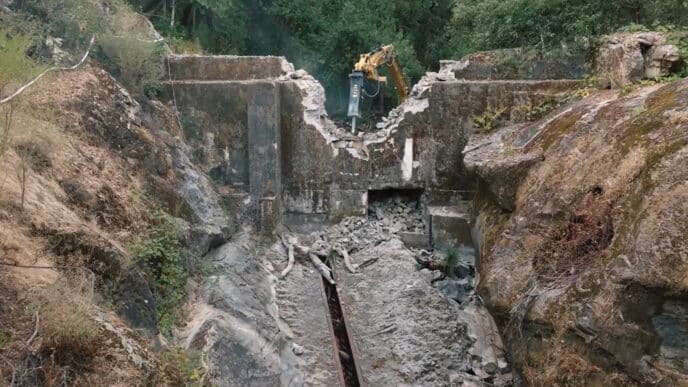
If dam removal seems risky, there is a growing body of evidence that supports river and fisheries recovery post-removal. The Klamath River offers a recent example.
Following the removal of four dams on the Klamath, salmon started returning upstream almost immediately. Adult fish moved into areas they had been blocked from for over a century. Spawning occurred in habitats untouched for generations. Fish responded as soon as the barrier was gone. The habitat was still there, and salmon and steelhead are skilled at finding and using it. The Klamath isn’t exactly like the Eel, but the lesson applies to other large dam removals in western salmon rivers. The fish know what to do.
If the mountains are any indication, given enough time, the river would eventually cut through the dams, just as it carved its way through the Coast Range. But for Chinook salmon and steelhead in the Eel River, time is the one thing they don’t have. The river now stands at a pivotal moment. As PG&E moves forward with dam removal in the coming years, there is a rare opportunity to restore access to the Eel’s headwaters and allow wild fish to begin reclaiming the habitat that shaped them.
Removing barriers alone won’t guarantee abundance. Rivers remain wild systems, shaped by climate and chance, always unfinished. But by reconnecting the Eel, we restore possibility and take the most significant step forward toward recovery.
Why Anglers Matter in This Moment
Anglers understand rivers on a scale where these changes matter. We notice when timing shifts, when water warms earlier, and when fish distributions change.
Historically, anglers have played a central role in conservation by sharing their experiences. The Eel River presents an opportunity to do so again—supporting watershed-wide restoration instead of managing decline one reach at a time.
For more information visit FreeTheEel.org or watch the film by documentarian Shane Anderson, A River’s Last Chance, streaming on Amazon Prime Video.






The numbers of returning steelhead up the Russian River to the hatchery at Lake Mendocino is at triple last year’s return; and that was double the previous year. I hope that the final dam removal project can provide enough water to allow the Russian to continue its recovery.