Lessons From a Broken Foot
About seven weeks ago, while pulling the cover over my 22-foot center-console aluminum boat with a 225hp motor—which sits on a full aluminum double-axle trailer—the trailer jack gave way and the trailer tongue crushed my right foot. I lay out the boat’s details to provide context for the injury that followed. This accident was caused by pure negligence on my part. I did not double-check that the trailer jack had clicked into place and locked. After a trip to the emergency room, I learned that I had broken my right foot in three places, which put a serious damper on what had been a great day of fishing with my two boys and completely changed the course of my life for at least a few months.
Being in a boot, unable to put any weight on my foot for an undetermined amount of time, and unable to drive while hobbling around on crutches and a knee scooter changes a person’s plans. Guide trips get canceled, family trips get canceled, figuring out how to carry your morning coffee to the couch on crutches becomes a daily challenge. And getting up and down the stairs in your house becomes something you have to think about. Scooting up and down the stairs on your butt is a humbling experience I do not recommend.
In almost all things in life, I have found that perspective is key. The past seven weeks, and likely the next few (optimistically), have been and will continue to be very different from what I imagined, but it is still just a broken foot that does not require surgery and will heal.
In a year, there will be lessons learned, perspectives gained, and what now feels overwhelming will likely look like nothing more than a speed bump in the rearview mirror.
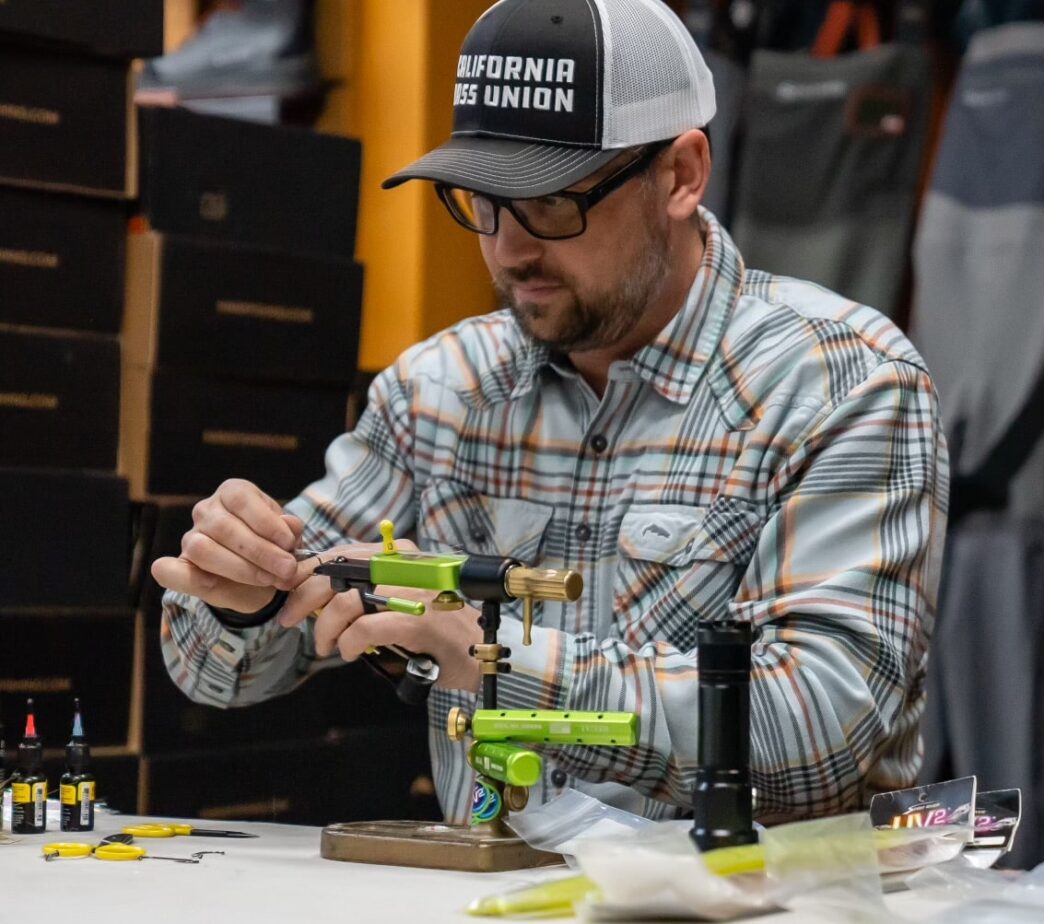
I’ve worked hard not to feel sorry for myself, to avoid frustration, or, worse, to become angry about the reality my mistake has created. Instead, I’ve tried to focus on things I’ve neglected in my life because I was “too busy” or life was moving too fast. Fly tying is one of those things. Even in the busy life I was living, I tied flies most mornings while drinking my coffee. That said, it was usually just a few flies each morning, and they were typically for guiding that day or to fill a box for an approaching guide season. For the most part, it was pretty mindless tying, cranking out flies I’ve tied thousands of times in an efficient, production-style manner. Honestly, the coffee and music I was listening to were more enjoyable than the tying most mornings.
Well, a broken foot lets one sit at the fly-tying bench a lot longer as the calendar opens up. Granted, the first few weeks I had to keep my foot elevated because the throbbing and pain from having it below my heart were unbearable. The last few weeks, though, I have been able to tie for hours, which has been a real blessing. My boxes are full for summer guiding, and I have been working on new ideas and even trying to learn new techniques.
Like most things in fishing, I can get stuck in a rut. I’ve realized that while I feel I can tie most of my flies well, I tend to repeat the same patterns. I traditionally stick with techniques I’m comfortable with and patterns I know work. With more time at the bench, I’ve been able to take off the blinders and try some new things: biot bodies for some mayfly nymphs, dubbing and composite loops for “soft hackle” collars, some Midwest changer-style flies, and yes, even some dry flies.
Through this simple exercise of trying new things at the fly-tying bench, I have come to realize that I use the excuses “I just don’t have time” or “I am going to stick with what works” in many aspects of my tying. I don’t have time to tie a new color or a new pattern to try because I need to fill my boxes with what works.
Trying new things is a conscious choice we have to make. Most of the time at the bench, I stick with what works because I don’t want to tie a fly that doesn’t work. I have to remind myself that, at some point in my guiding and fishing career, every fly I fished or tied fell into the category of “not knowing if it worked.”
Simply changing the material used on a mayfly tail, adding a flashback, or using a different-colored bead could be the ticket to success on a given pattern. Most people don’t think much about the small details of flies, whether they are tying them or buying them, but think of flies in scale. If you looked at your In-N-Out burger and the bun was a slightly different color or had sesame seeds, you might think twice about eating it or question its origins. Well, a fly can be the same way to a fish. A slight change in color or appearance can change their appetite really quickly.
Whether you are tying flies to fill summer boxes or looking through the fly bins at your local fly shop for your next trip, don’t rush. Obviously, make sure you have the staples and flies that work. But don’t be afraid to tweak a pattern or two at the vise or take an extra minute or two to look over the bins for a new pattern or a variation of an old one.