


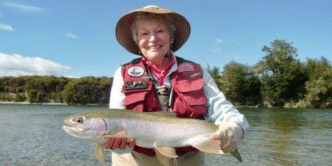
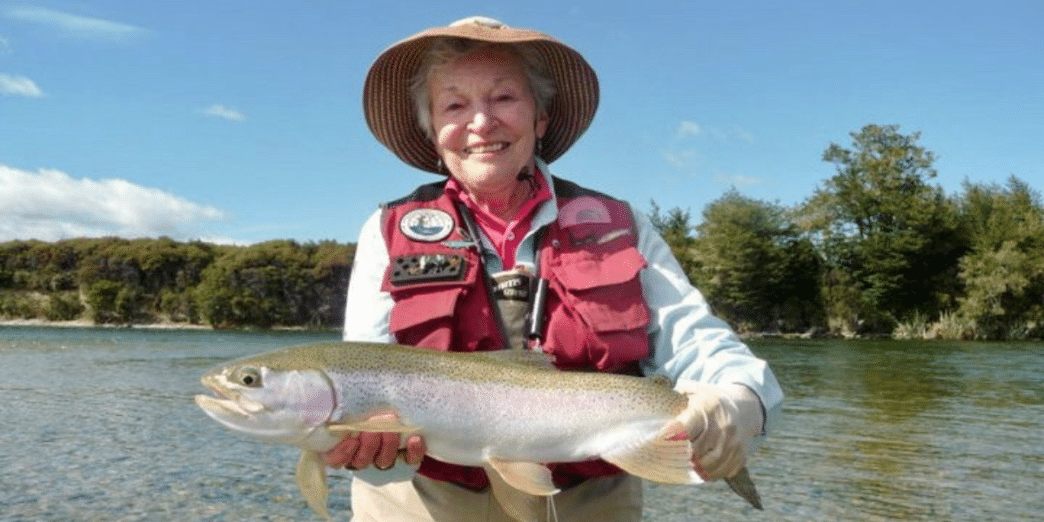
Fishing, Friendship, and a Life Fully Lived
When I was first deciding whether fly fishing would become more than a passing hobby, I did what many curious beginners do—I went looking for people who seemed to know what they were doing.
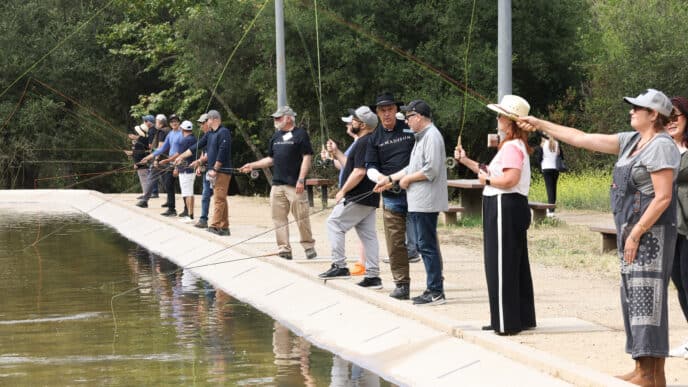
I’d heard about the casting ponds in Golden Gate Park and figured it was as good a place as any to learn. So there I was on a cool, foggy San Francisco day, standing with my rod and doing my poor best, when a gentleman named Nelson walked up and asked if I was there for the Fly Fishing and Travel talk he and Fanny Krieger were hosting in the lodge.
Fly fishing and travel? Two things that are so interesting, and together? How could I not!
I followed Nelson into the Golden Gate Angling and Casting Club (GGACC) lodge, was introduced to Fanny and the group, and before long she was off—sharing photos from around the world and telling stories about places she had fished and the adventures she had experienced. What struck me immediately was how accessible she made it all feel. There was no gatekeeping, no making people feel inexperienced—just enthusiasm and an invitation to join in.
That was about travel and fly fishing. Now, about the tech she was using … well … In the presentation, she opened and closed photo files one by one. During the break, I helped her set up slideshow mode. It was a small thing, but after some fairly unimpressive casting outside, being able to contribute made me feel surprisingly capable. Fanny was delighted to have the easier setup, and that small interaction became the start of a friendship.
During that meeting, I found not only Fanny but also the remarkable community of women anglers she had built through Golden West Women Flyfishers. Once you learn more about Fanny’s life, you realize that creating community was one of her greatest gifts.
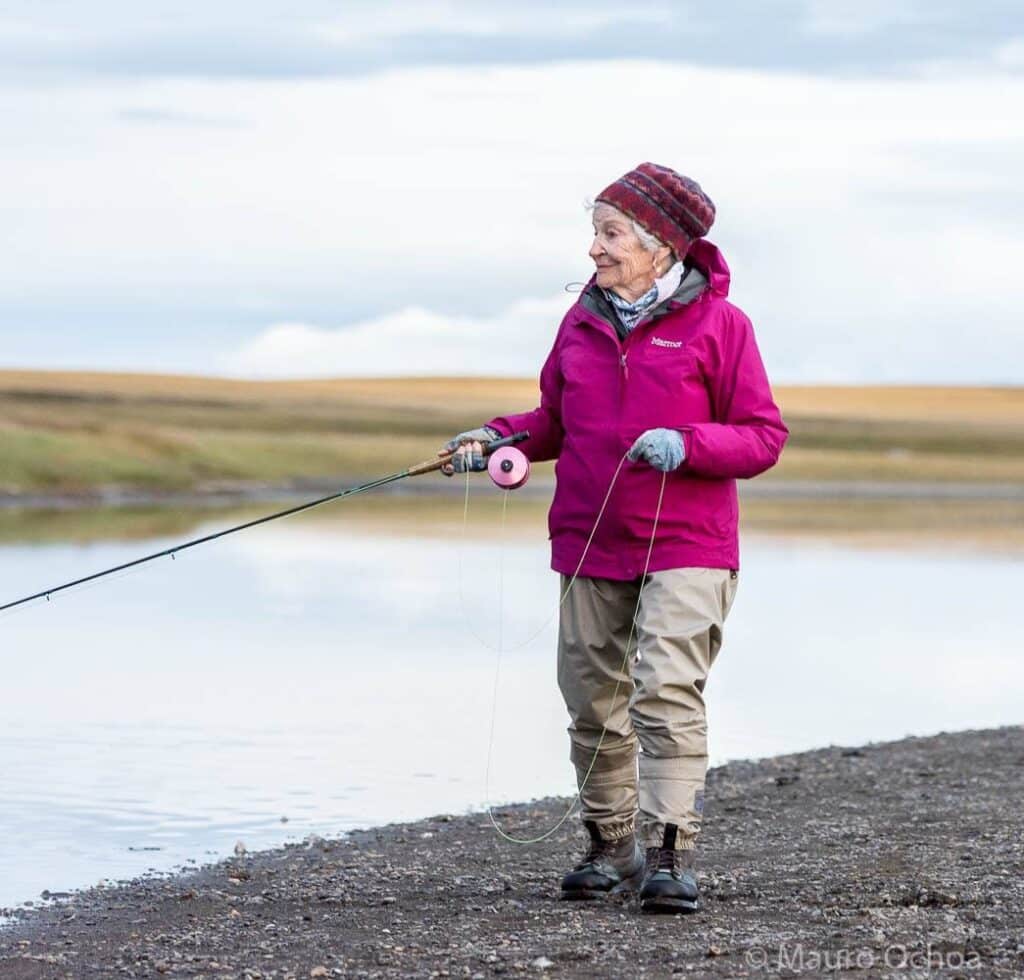
Founded in 1983, Golden West Women Flyfishers (GWWF) began with 21 members and has existed for more than four decades. Under Fanny’s leadership and energy, these women traveled widely—to Iceland, Patagonia, the Big Horn, the Williamson, and countless other destinations. But the group wasn’t only about fishing. It was about friendship, adventure, mentorship, and making space for women in a sport that was often insular.
GWWF also invested in future generations. Through the Jo Clark Youth Scholarship—created in memory of a beloved member—the group sent young anglers to Fish Camp for years. Those scholarships gave kids opportunities they might not otherwise have had, and the thank-you letters they sent afterward spoke volumes about the impact the experience had on their lives.
Fanny believed fishing should be shared.
Fanny married Mel Krieger, whose influence on fly casting and reputation as a tenacious angler were well known. Fanny persisted in learning to fly fish and carried that spirit forward. In a 2014 article in California Fly Fisher, she reflects on persevering at GGACC to learn to cast and on how she and Susan Williams started GWWF. What struck me about Fanny was her generosity with instruction and encouragement—and yes, she always had advice for my casting. She also connected with youth by creating the learning video Tomorrow’s Fly Fishers and starting the Jo Clark Youth Scholarship to help youth attend Fishcamp. Fanny closely managed and supported these efforts until just a few years ago.
To fully understand Fanny, it feels important to acknowledge where her story began.
Fanny’s childhood was marked by extraordinary loss. As a young Jewish girl in France during the German occupation, she was at school when authorities came to her home. Her parents and sister were taken away, and she never saw them again.
She survived because she was hidden. Three years later, after coming out of hiding and on her way to the US, she learned that her mother, father, and sister had not survived.
That history doesn’t explain everything about who Fanny became—but it feels impossible not to see a connection between surviving unimaginable loss and choosing to live with such energy, determination, curiosity, and joy. Fanny built family and friendships, traveled widely, created opportunities for others, and poured herself into communities that welcomed people in.
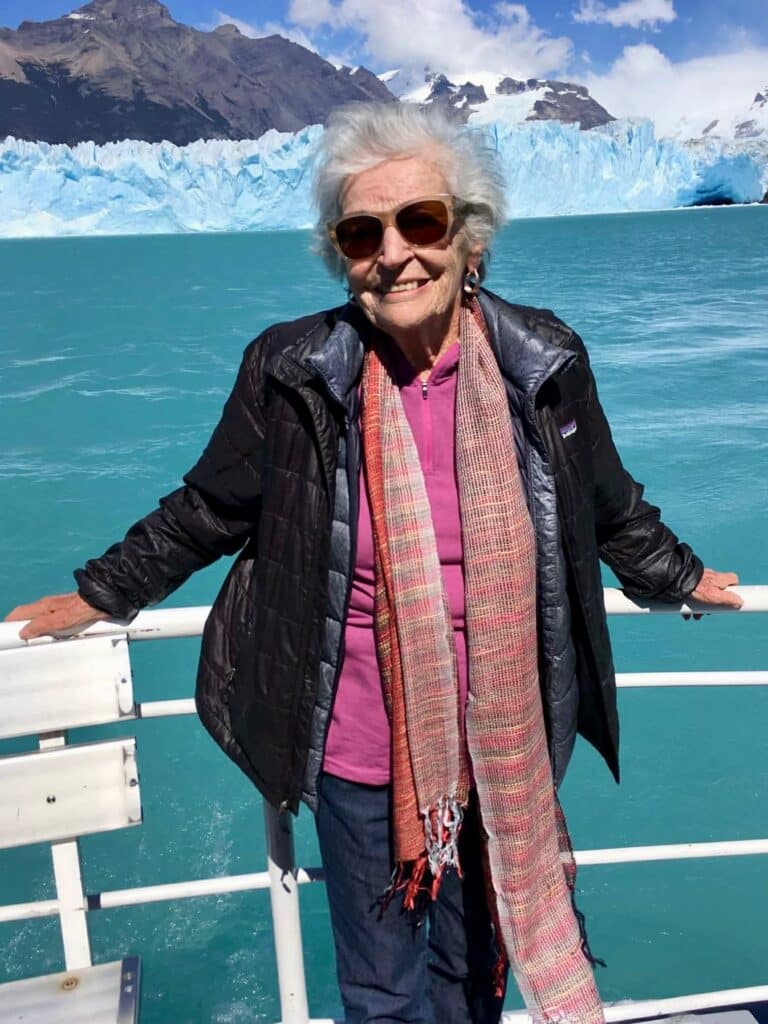
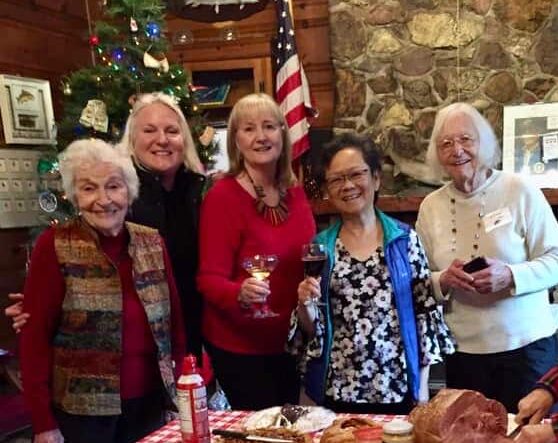
This past weekend, the GWWF group and Fanny’s daughter, Sharon, gathered for what may have been our final meeting—a tribute to Fanny.
We raised our glasses, shared stories, remembered, and, with Fanny’s spirit pushing us on, discussed the future of GWWF. She would have wanted that, and we have some work to do. Someone talked about Mike from Henry’s Fork and the tribute he had written about how Fanny influenced him as a guide. That opened the floodgates.
Stories followed: Fanny pushing for one more adventure, heading into remote places to fish, the big fish caught and the fish missed, and how she encouraged people to try things they weren’t sure they could do or that had never been done before. We laughed and used words like fierce and fiesty to describe her because they too fit who she was.
Sharon talked about a family friend, the well-known writer Marilyn Sachs, who wrote a children’s book called A Pocket Full of Seeds. It is a story told through a child’s eyes about being a Jewish child in France during the Nazi occupation. There is a follow-up story, Lost in America, based on Fanny’s real-life experience of trying to become a ‘real American’.
Others have shared their stories with me, such as Christine Fong, a longtime friend of Fanny’s. In the 1990s, Fanny and Mel sent Christine and her husband, Mike, to New Zealand and Cuba so they could help promote travel there through fly club presentations back home in California and with articles in their newsletter, Inside Angler. Christine also recounted the many accolades Fanny received. In 1994, Fanny was inducted into the California Council of International Fly Fishers, and in 1996, she launched the first International Festival of Women Fly Fishers, which brought together guides, artists, instructors, writers, and other industry leaders from around the world.
“She was inspiring women on a global scale in a way that had not been done before.”
Christine Fong
Fanny lived a long and wildly interesting life.
She raised a family, helped shape generations of anglers—especially women anglers—and created spaces where people felt welcome and capable. What stays with me most was realizing how many lives she touched—not just through fishing itself, but because of who she was.
I came to the casting ponds in 2014, wondering whether I wanted to learn fly fishing. I left with so much more; I was lucky enough to have met and known Fanny Krieger.
Franny Krieger, ¡presente! Thank you for sharing her life and story. I am glad to know and celebrate her through your words!