
Materials and methods for irresistible flies
Photos by Peter Butler
“I just pull them off.” My fishing buddy gestured at the rubber legs flanking the Woolly Bugger in my hand.
“Huh?” I replied.
“Yeah, they’re too buggy sometimes so I just pull them off the fly and it fishes better that way,” he expanded.
I stood there dumbfounded. Did he just say too buggy? Fair play to him for thinking up a subtle change to the fly’s profile on his feet, but too buggy? Until that moment I’d never considered the addition of a movement-enhancing material such as silicone legs to be a drawback but he had a point: Buggy doesn’t necessarily mean fishy and what’s appealing from behind my vise (or in the shop bin) might actually not help me on the water. So what does help and what makes a fly buggy in the first place?
Before answering that, let me state up front that there are many patterns that go down in history as incredible fish catchers that are not buggy. I hear the Copper John is one of, if not the best-selling fly of all time. However, I would not characterize it as buggy. Fishy, yes. Buggy, no. In my opinion, a Clouser Minnow is about as buggy as a glow bug, but both are prodigious fish catchers. Similarly, when analyzing factors that contribute to bugginess, let’s set aside realism. A pattern that closely imitates nature can absolutely be buggy, but realism (to me) doesn’t necessarily equal bugginess.
What I’m talking about is chaos. Movement, texture, contrast—suggestion. These are the qualities that get trout—and anglers—to respond, so I think it’s worth taking a minute to talk through a handful of principles that show up time and again in effective flies, as well as some of my favorite bugginess-enhancing materials and tying methods that accentuate them.
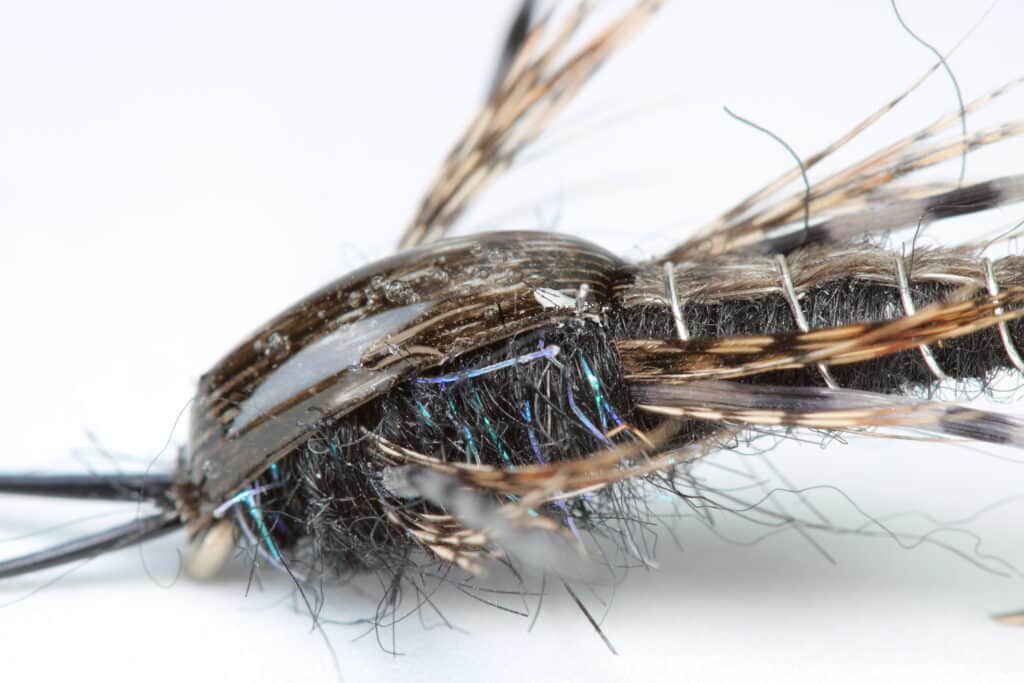
FIBERS, FUZZ, AND WISPINESS
Bugs aren’t smooth. They’re alive, breathing, shedding, moving trout-snacks with texture that catches light and moves water in ways that rigid materials simply can’t replicate. The secret lies in materials that create natural asymmetry and unpredictable movement.
Modern blended dubbing exemplifies this principle perfectly. The extra guard hairs and coarse fibers combined into the mix give it that essential spiky look that screams, “I’m alive.” The blend of natural and synthetic materials creates subtle translucency in the water, adding to the buggy appeal. The key technique here is aggressive brushing. When you brush out tight wraps of dubbing, the fibers elongate, creating the chaotic texture that fish associate with living insects. Loose wraps with less or no brushing can achieve the same look. Just be careful when brushing loose dubbing noodles—you risk exposing the materials beneath, which kills the illusion. Fulling Mill’s Euro Nymph Thorax Dubbing and Arizona Simi Seal are two of my favorites to work with.
CDC (Cul de Canard), a duck feather near the preening gland usually reserved for dry flies, represents the pinnacle of wispy bugginess. Each fiber has multiple barb offshoots of varying lengths, creating natural asymmetry that’s impossible to replicate with synthetic materials. The varying barb lengths mean the material moves differently in every current and every drift. It’s this unpredictability that triggers strikes.
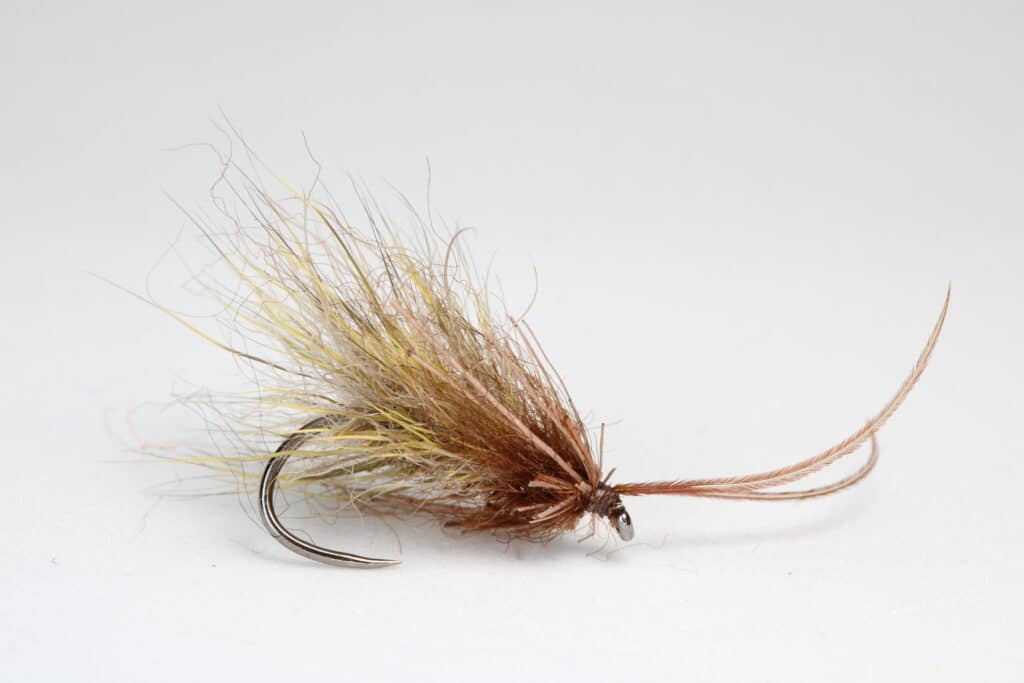
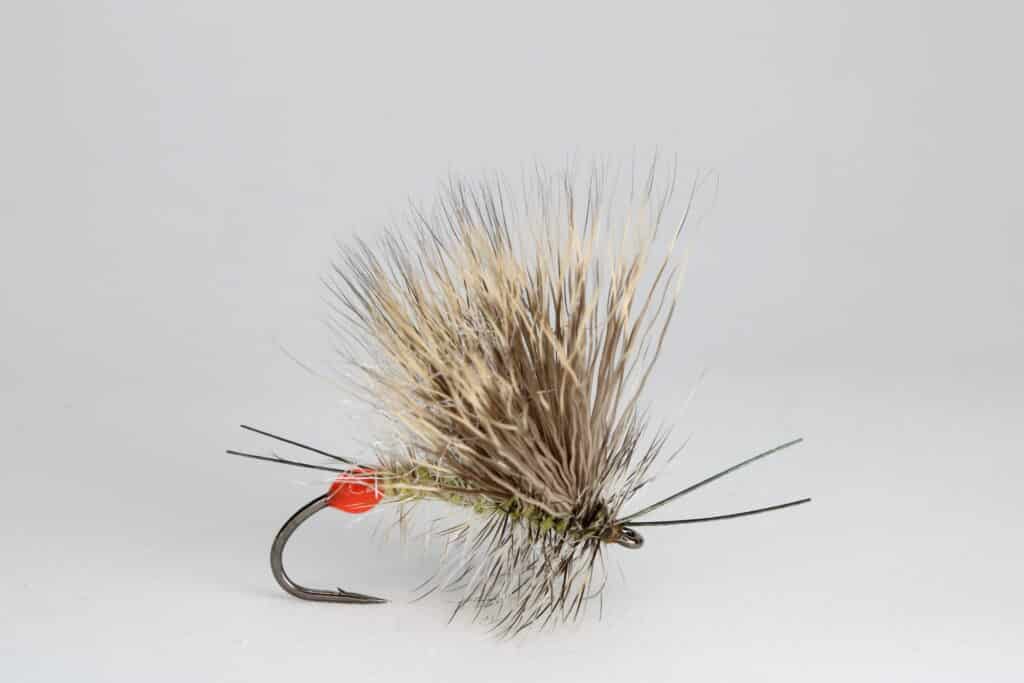
For dry flies, snowshoe rabbit brings a unique woolen texture to the game. Those wiry fibers don’t just add insane flotation—they create visual chaos on the surface film. But here’s where I think it gets interesting: Combine snowshoe rabbit with contrasting materials like deer hair in a composite loop, and you’ve got something special. The Caddisfaction Caddis demonstrates this perfectly, mixing the soft, fibrous appeal of snowshoe with the stiffer structure of deer hair. Antennae never hurt the bugginess rating either.
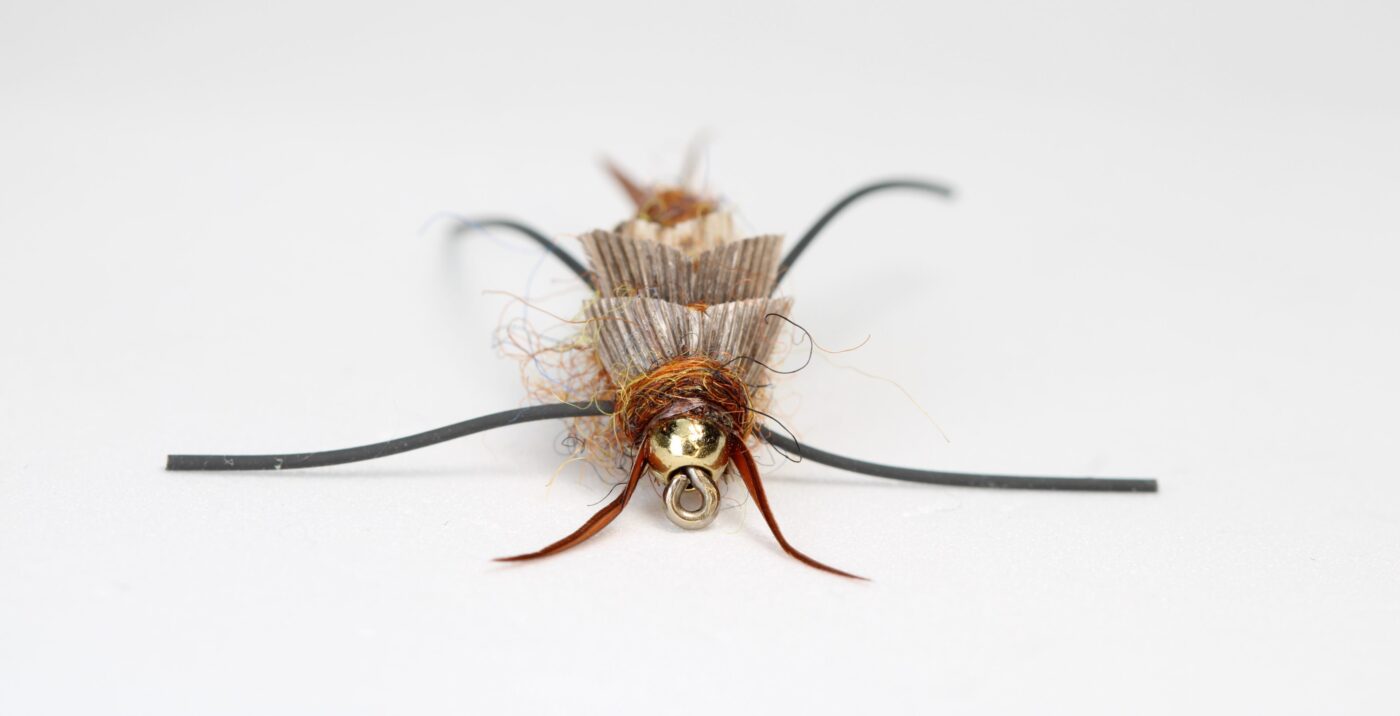
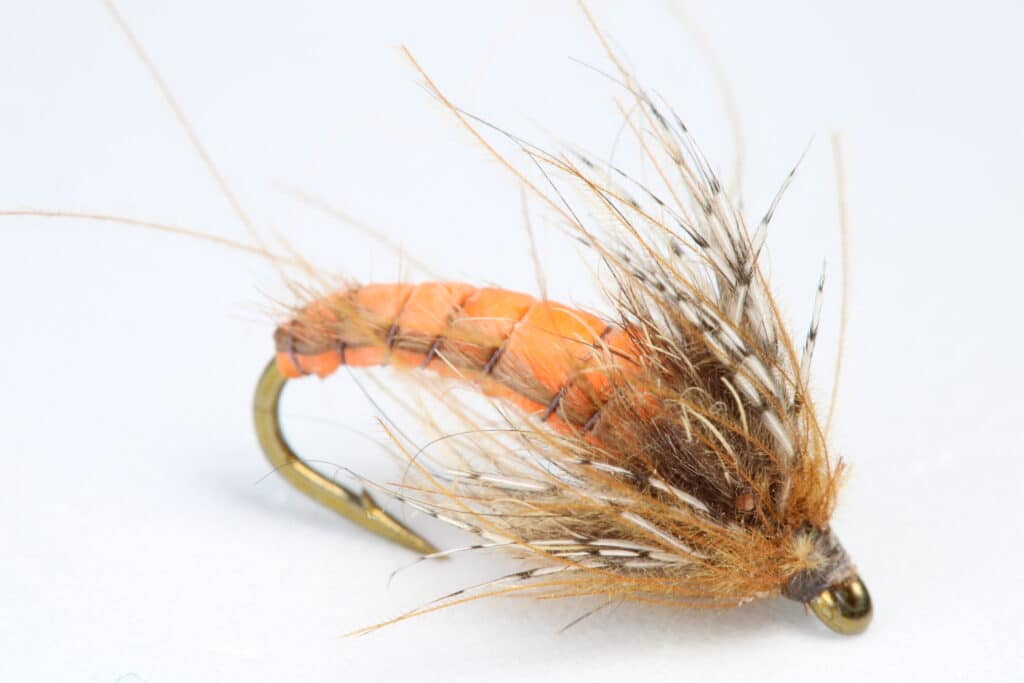
The Bee Cee Caddis Pupa showcases how CDC’s wispy movement underwater combines with the fuzzy lateral lines of pheasant tail to create texture against an otherwise smooth silicone abdomen. The collar shown in the image is brushed dubbing, palmered partridge, and CDC tied in sequentially, but it can be done as a composite loop, mixing materials for maximum chaos factor.
LEGS: MOTION AND PROPORTION
As a tyer, legs are often my best opportunity to sell life. They provide ultra movement that triggers predatory instincts, and with a couple small tricks, you can create even more irresistible flies.
Semperfli Sililegs and similar micro silicone legs come in countless colors and retain their flexibility for years—unlike rubber legs, which harden in your fly box over time. Montana FlyCo’s barred Sexi-floss (I prefer size small) offers the same longevity benefits—they’re silicone—with natural-looking segmentation and a slightly flatter profile.
It’s true that less can be more, but with legs, consider the opposite! That pattern that calls for two or three medium legs on each side? Double the count and downsize the diameter. Adding more micro legs creates a different kind of movement. The beauty of this approach is that if you get to the water and the fish aren’t responding, you can always pull some off.
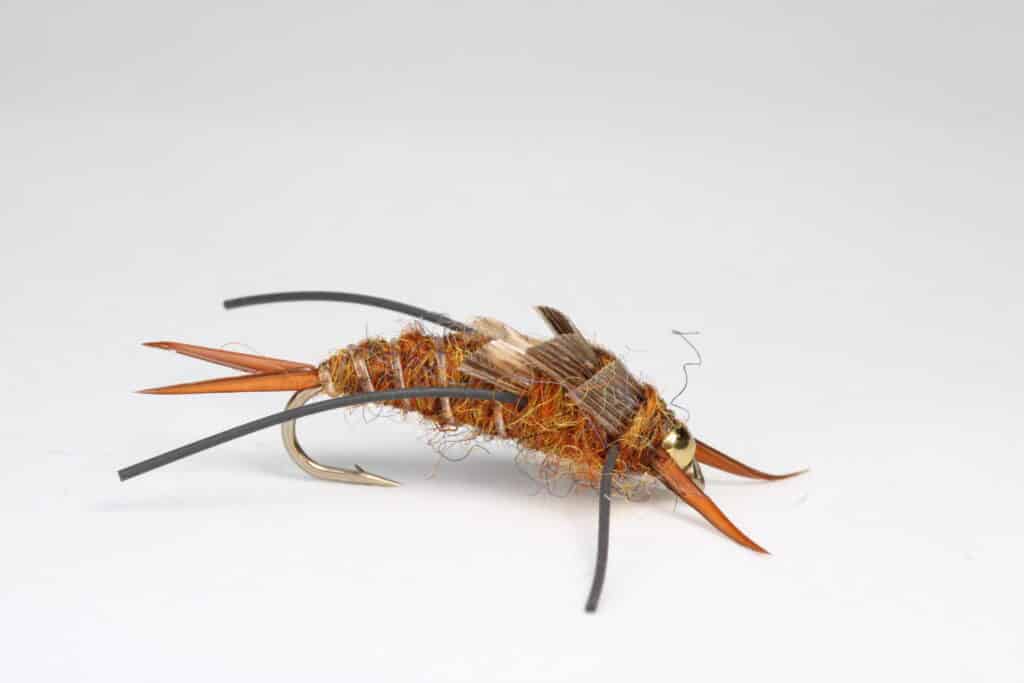
Length matters too, but not in the way you might think. While proportion is essential for things like abdomen and thorax taper, leg length offers surprising wiggle room. On your next Pheasant Tail Nymph, try tying in micro Sililegs and cutting them 2-3 times the length of your fly. The exaggerated movement can outweigh any proportion concerns.
Diameter plays a role too. While regular (most brands call them ‘medium’) diameter legs work fine, I find myself gravitating toward thinner materials because the movement looks more alive and the proportion more unique.
CONTRAST, MOTTLING, AND NATURAL PIGMENTATION
Nature rarely creates uniform coloration, and neither should your flies. Contrast triggers recognition and adds to the chaos factor that defines bugginess.
Game bird feathers—partridge, teal, and gadwall—offer unrivaled natural barring that creates instant buggy appeal. These feathers provide contrast in two ways: their natural barring and their typical contrast against other fly materials. I use partridge primarily on trout flies, reserving teal and gadwall for larger salmon and steelhead patterns where their longer fibers work better.
The Bee Cee Caddis Pupa showcases this perfectly, with the naturally barred partridge standing out against the solid-colored CDC beneath. Pheasant feather barbs add contrasting texture against the silicone body, amplifying the buggy feel.
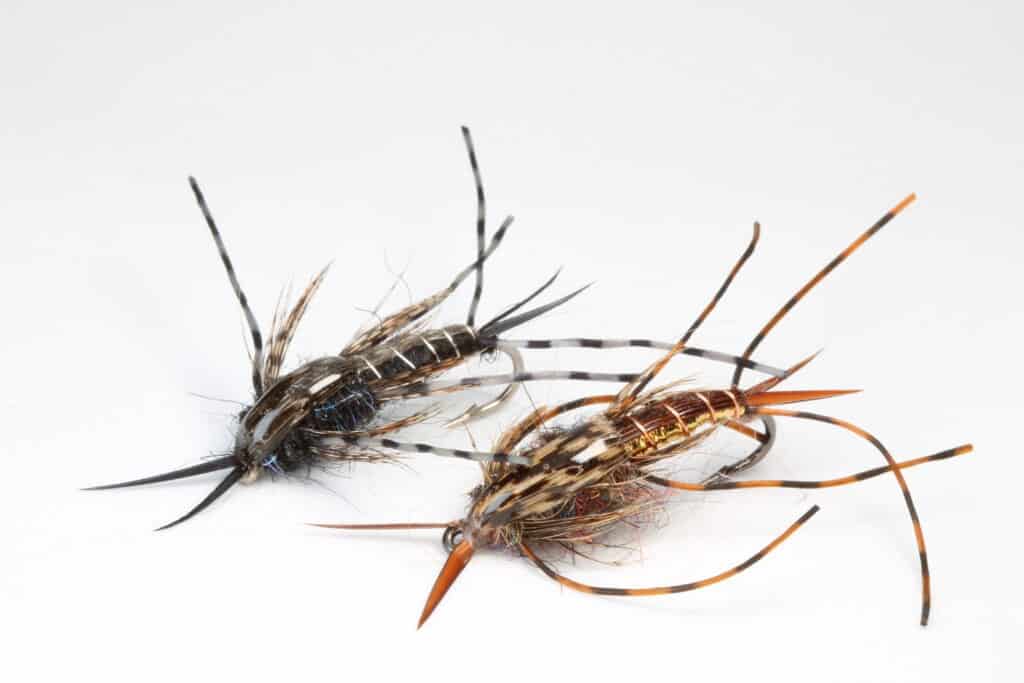
Dubbing blends offer another avenue for contrast. Materials like Euro Nymph Thorax Dubbing, Arizona Simi Seal (Australian opossum with added flash), and SLF Squirrel Dubbing share common buggy attributes: mixed natural and synthetic fibers that create a varied texture and combinations of coarse and soft materials. You can also mix different dubbings at your bench, saving money while creating infinite color possibilities.
UV resin has revolutionized fly tying since my early days, when I struggled with two-part epoxies. Today’s resins cure instantly and are the most effective way to add bugginess through carapace creation. Gulff resins cure with the least tackiness, though Raidzap, Loon, and Solarez offer solid alternatives. The key technique is using resin to accentuate natural material variation—UV resin over mottled turkey makes the carapace pop while highlighting the natural pigment variation beneath.
PUTTING IT ALL TOGETHER
Effective buggy flies succeed by stacking multiple qualities, not by relying on any single element. The most buggy patterns combine wispy materials with contrasting colors—some take advantage of legs for movement— and incorporate natural mottling for visual contrast. But here’s a tip: Pick 2-3 of these principles, not all of them. A fly that tries to incorporate every buggy element often loses the very quality it was trying to achieve.
And of course, they say the most effective fly is the one you’re fishing. Since I employ all these techniques and materials regularly, it’s possible these recommendations are simply self-fulfilling prophecies. But I don’t think so. The principles underlying bugginess—chaos, movement, contrast, and suggestion—tap into fundamental predatory triggers that have worked for generations of fly fishers. When you stack these elements effectively while maintaining the restraint not to overdo it, you create flies that fish and fishermen and women can’t ignore.
The next time you’re at the vise, resist the urge to tie that perfectly symmetrical, precisely proportioned pattern. Instead, embrace a little chaos. Add some wispy dubbing. Tie the legs a bit longer. Incorporate some natural barring. Let me know how it goes!
Marabou Reverance
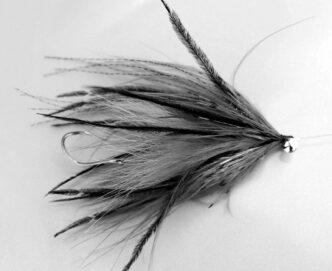
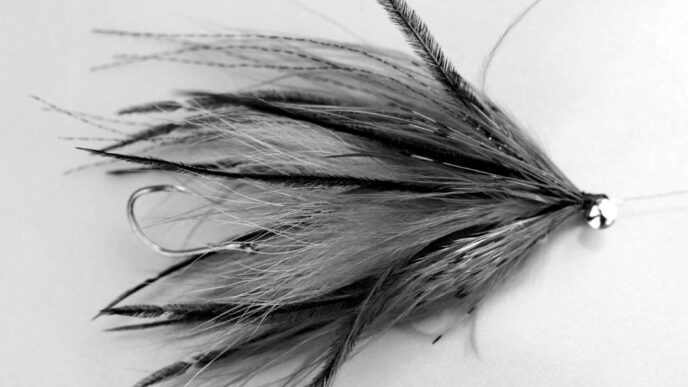
I couldn’t in good conscience end this column about bugginess without bowing to marabou. When considering the breadth of fly fishing styles and species to target, it’s nearly impossible to pick just a few buggy materials and methods. Marabou didn’t fit neatly with the flies and techniques I wanted to highlight this time, but discussing movement and suggestion without a shout-out to marabou would be criminal. Not to mention, I’d be risking my modest reputation as a tyer—and friendships—if I didn’t acknowledge marabou as probably the buggiest material in existence. It’s possible to tie a pattern with just thread and marabou and still produce something more alive than most fully dressed flies.
At its core, marabou is a down feather, most commonly sourced from turkey, with a thin central quill surrounded by impossibly soft fibers. These fibers collapse and expand constantly in water, responding to microcurrents that other materials can’t even detect. Where rubber kicks and flash pulses, marabou breathes. Even at rest, it moves, creating the illusion of life.
Different forms of marabou lend themselves to different applications. Spey-style marabou, such as Fish Hunter’s Blood Quill Spey Marabou, features long, tapered fibers and thin quills that allow multiple wraps to build flowing collars on larger flies without excessive bulk. At the other end of the spectrum, Whiting Farms Super ’Bou—technically chicken, not turkey—offers shorter, fuller feathers ideal for Woolly Bugger tails and smaller streamers.
Marabou is available in an almost endless range of colors, from naturals to fluorescents, and many are barred or grizzly-dyed for contrast.
Pro-tip: When incorporating marabou into your next pattern, add in a second color for more contrast. For example, if tying in a marabou tail, use one olive and one brown feather instead of two olive.