
Photos by Brett Wedeking
I walk up to an inauspicious Victorian home in North Oakland, duck through a side gate, and see Tony Bellaver, pulling a bundle of cane out of a long, metal oven.
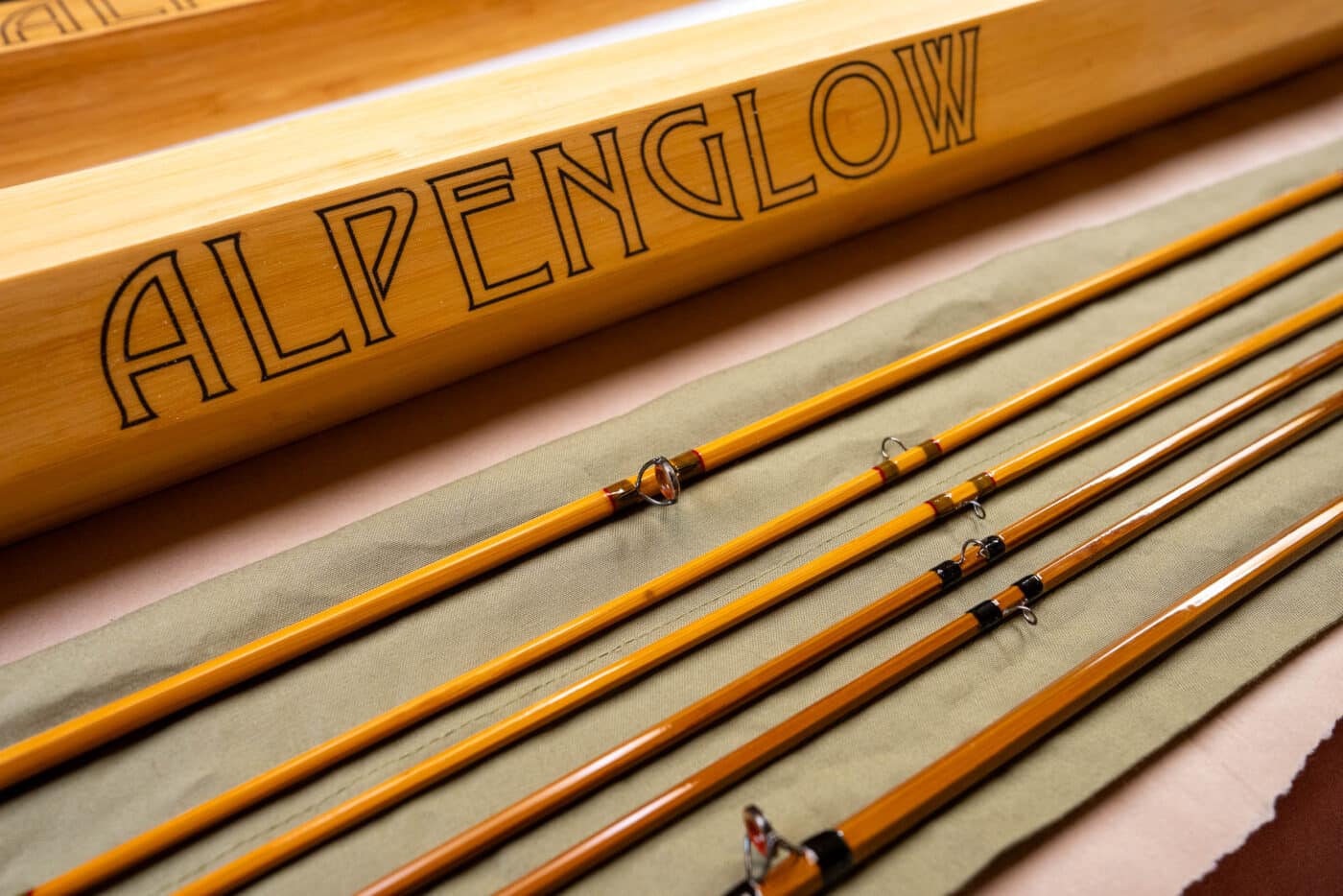
He flips it around, fits it back inside, and sets a timer. Down the block, tires screech as someone puts on a one-man sideshow in the middle of the day. You might not associate modern-day Oakland with bamboo rod building, but you’d be mistaken. Tucked into the basement of this East Bay home is a humble, yet extraordinary workshop where Tony Bellaver crafts Alpenglow Fly Rods.
Rod pieces baking comfortably, I follow Tony into his shop, crammed full of bamboo rods in various stages of completion, tools spilling out of cabinets along the walls, and secret formulas scribbled on scratch paper. I feel like I’m peering into the depths of Tony’s mind—this is truly the space of a master artist and craftsman, brimming with stories. Cane rod culture is alive and well in Oakland.
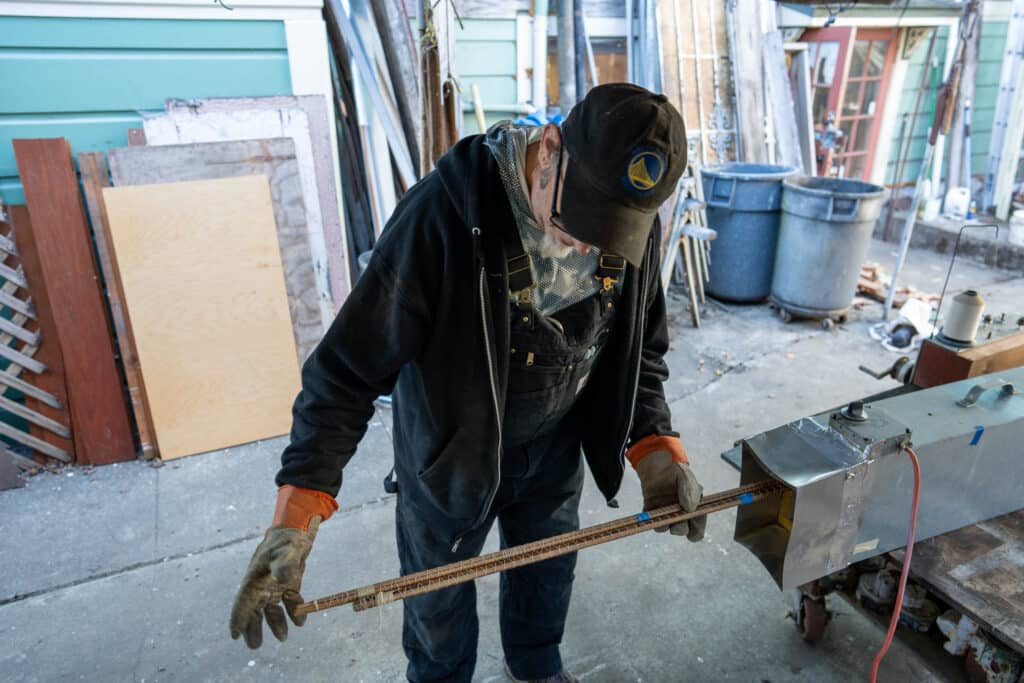
Bamboo, or cane, is the traditional material used to build fly rods, and the process is arcane, complex, and hundreds of years old. It begins with Tonkin cane, a special type of long, straight bamboo native to China.
A most analog endeavor in our digital world, a rod maker selects a prospective shoot and splits it into strips with a blade and a mallet. Most rods are built in a hexagonal shape, with six individual strips. Those strips are baked to cure them, the nodes compressed, and the strips planed and sanded to a specific taper, then glued together, sanded, and varnished. Guides are wrapped with thread, and ferrules are fitted. A cork grip and reel seat are installed onto the butt, and some 40, 50, or 60 hours later, you have a split-cane fly rod.
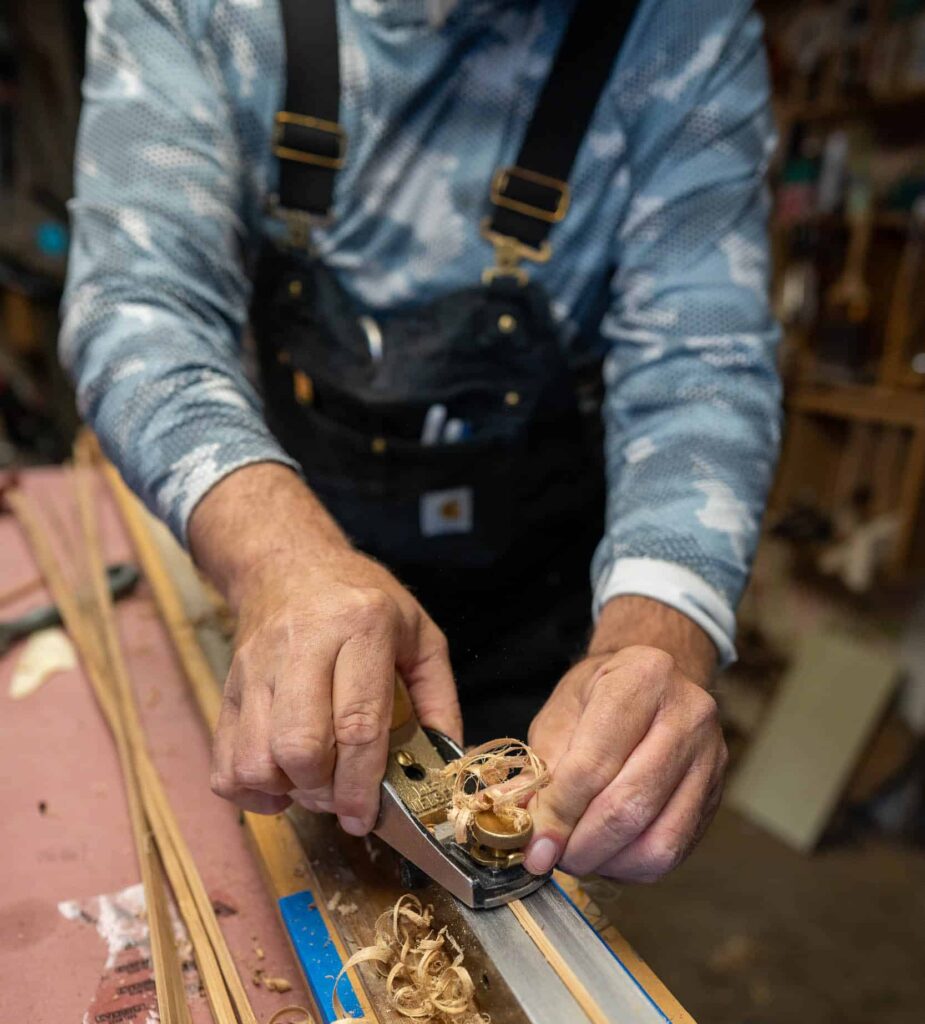
California Fly Fisher publisher Tracey Diaz joins me in the shop for a plaining demo. Tony, in overalls, already covered in sawdust, lays a strip of cane into a metal form and begins running a planer back and forth over it. Bamboo curls up and falls away, onto the bench and the floor. Soon, we’re all bathed in shavings. The form is the visual highlight of cane rod making. It’s essentially two long, metal blocks, each with a groove cut into the edges on both sides. To create a fly rod taper, a builder will adjust the two form pieces together to an exact taper from wide to narrow, from one end to the other—this is the secret story every individual rod only reveals when you put a line on it and cast. How the pieces are measured is based on historical taper designs, taper blends, and input from the rod builder. Each of the six pieces must be shaved down perfectly so they fit together properly when glued up.
For Tony, a native of San Jose, fishing, fly fishing, and cane-rod building all trace back to Gold Country, specifically the Yuba River. When Tony was a kid, his dad took him up to the Yuba to get away from the family and work. While his dad just used fishing as an escape, Tony enjoyed it and fished off and on throughout his young life, going beyond just fishing trips with dad to explore the wider array of rivers California had to offer.
In high school, he and his friends would skip school, go to Walgreens to buy a cheap pack of flies and a leader, and sneak up into the reservoirs outside San Jose, where fishing was off-limits, to catch bass and trout. Sometimes they’d get busted, and the sheriff would confiscate their gear. Then they would mow lawns, do chores, and scrape together money to buy new gear and do it all over again, as teenagers do. Tony’s favorite fishing was still the Yuba River in the summer, when he fished with big, green grasshopper imitations, a hatch, he notes, that doesn’t seem to exist today.
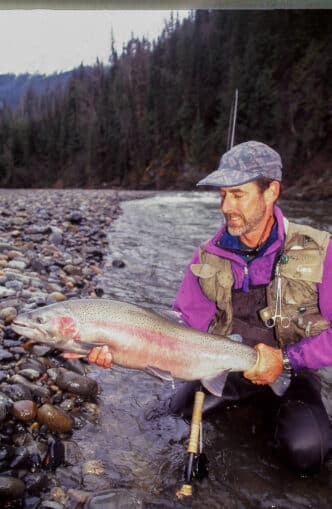
In college and afterward, Tony didn’t fish much, as carpentry and photography competed for his attention. Years later, in his early thirties, Tony was guiding a Sierra Club backpacking trip where one of the hikers brought a fly-fishing setup. Tony picked it up and made a few casts—his love immediately reignited. The first rod he bought after that was a graphite St. Croix, and he began fly fishing on backpacking trips, falling right back into fly fishing the Northern California haunts he had fished as a kid. Tony caught a steelhead on his first trip to the Yuba, and again, the river became the focal point of Tony’s fishing life, and with that one fish, his way of thinking about fishing changed. From then on, it was about process, about the singularity of the moment, like taking a photograph and then developing and printing it. “I feel like it’s about catching one fish, a certain way. I can remember a fish I caught 10 years ago on the Yuba. I can see it in my head. I can see it clearly, casting, leading that fish, seeing it coming up and taking the fly and turning. For me, that’s the whole thing. That’s all I need, and I’m done for the day.”
On one of his trips to the Yuba, Tony’s interest was piqued when he met a local old codger fishing bamboo. He managed to find an old cane fly rod among his dad’s fishing gear, took it out on the Yuba, and broke it the first day, but not until after he caught a rainbow. That rod broke several more times, and Tony managed to fix it several more times. The old man suggested Tony build a rod himself. As an artisan cabinet and furniture maker by trade, Tony already possessed a deep knowledge of wood and had many of the necessary tools. As it happened, the old man was getting out of cane rod building himself and gave Tony all his rod-building tools. Tony dove in headfirst, consuming rod-building books and attending seminars by Chris Rainey in Dunsmuir. Years of experimentation and trial and error led him to find the tapers he likes, blending and tweaking formulas to achieve the unique and exceptional fishing tools he builds now.
When asked what drew him to bamboo, he says, “What really hooked me on cane rods is how the fish feels on the rod. I can’t totally explain it, but it’s like emotional. I was just totally blown away by that.”
Still a custom cabinet maker, today, Tony spends as much time as he can building single-hand and two-handed Spey rods, producing several dozen each year for clients around the globe. Each one is unique. Unlike mass-produced graphite rods, no two cane rods are the same. Each has its own personality, its own quirks. The distinctive nature of each rod is the “why” for Tony. “I just love the craft of it. It’s everything I love about making furniture and cabinetry—it’s the same, just the intention of it is different. It’s almost a fetish object. You’re curating all the little pieces of it, and everything almost has a spiritual meaning. No computer can make that. Every single rod has a personality to it.”
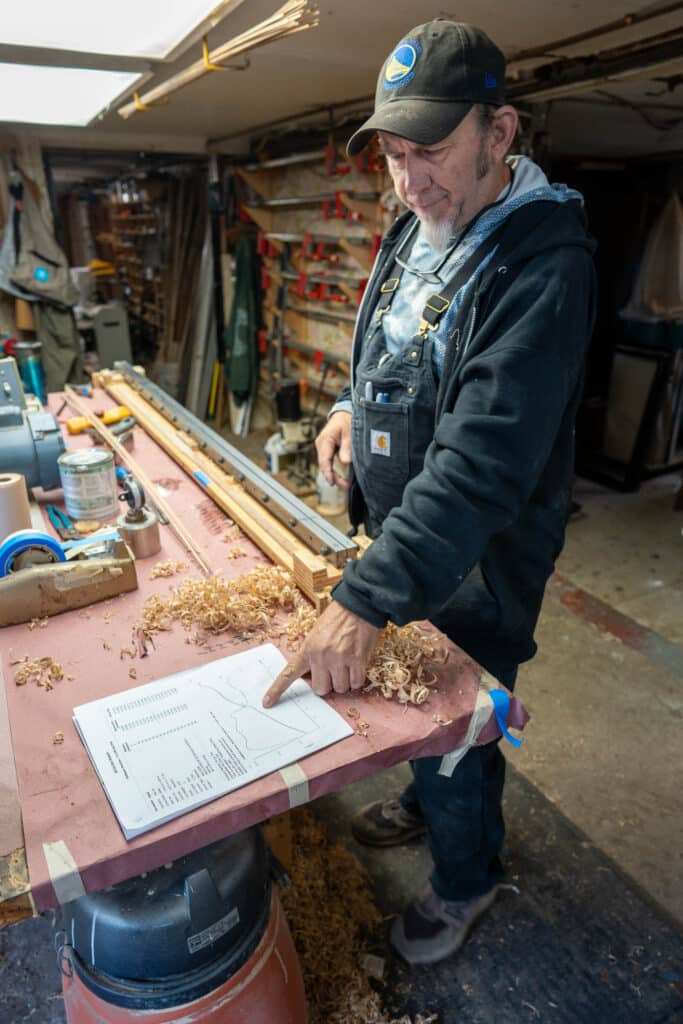
In his shop, Tony shows us the rods he’s currently working on, some waiting for guides or reel seats, others glued up and drying. He says he works on a rod about three hours a day, then moves onto another, and another, going back to each rod day after day. The niche within a niche that is cane-rod building is deep. The community is small, and most rod makers know each other. The parts suppliers are so boutique that when one person retires or sells a business, it can send ripples through the entire industry, from the availability of silk thread to hardware for reel seats. The community keeps evolving, and the hunt for high-quality componentry is getting tougher. Some rod makers even build all their own components, but that significantly increases the cost and time it takes to build a rod, sometimes prohibitively so. Tony builds many of the components himself, but also sources parts from artisans around the country, all contributing to the individual character of each rod.
While each rod is one-of-a-kind, Tony does build specific models, the most renowned being The Guru, so named after the late California Trout legend Craig Ballenger. Craig helped Tony with a photography project and let Tony stay at his house on fishing trips, so to repay Craig’s kindness, Tony built him a cane rod. That rod began as a blend of two Powell & Phillipson tapers. After a couple of years of discussion between Tony, Craig, and mutual friend and California Fly Fisher editor George Revel—and after several more prototypes—they settled on The Guru, AKA The Ballenger Special, possibly the most perfect dry fly rod ever built. That rod is now legendary in California, and Tony has made several more for other anglers and builds one each year for the CalTrout auction.
Unsurprisingly, Tony is also a poet and a photographer who creates his own prints, another labor-intensive endeavor. Platinum palladium is his preferred print medium, where every step is manual and analog. It requires attention and creativity. Every print is unique, like his rods. Rod building is like poetry for Tony, too. Finding the right agate for the right rod, the right color thread, the right reel seat is the same as finding the right word that fits into a poem. Every rod needs the right hardware that fits physically, even spiritually. The rod embodies a whole timeline of life, like poetry and photography.
Photography, poetry, and rod building are all about the craft. Taking parts and pieces and creating something new, crafting a moment that is etched into space and time. The craft is the creativity for Tony, whether tweaking a rod taper or finding the right exposure for a platinum palladium photo print. In all these avenues of art and craftsmanship, when they’re finished, you have a unique story.
We migrate upstairs to talk more. Sitting in Tony’s living room, we’re surrounded by beautiful wood. Tony has remodeled the entire kitchen, the living room ceiling, the floors and casings. All of it looks hand-done—it all has a unique personality, just like Tony, just like his rods. It’s his entire life, Tony’s stories are written in oak, redwood, paper and bamboo.