
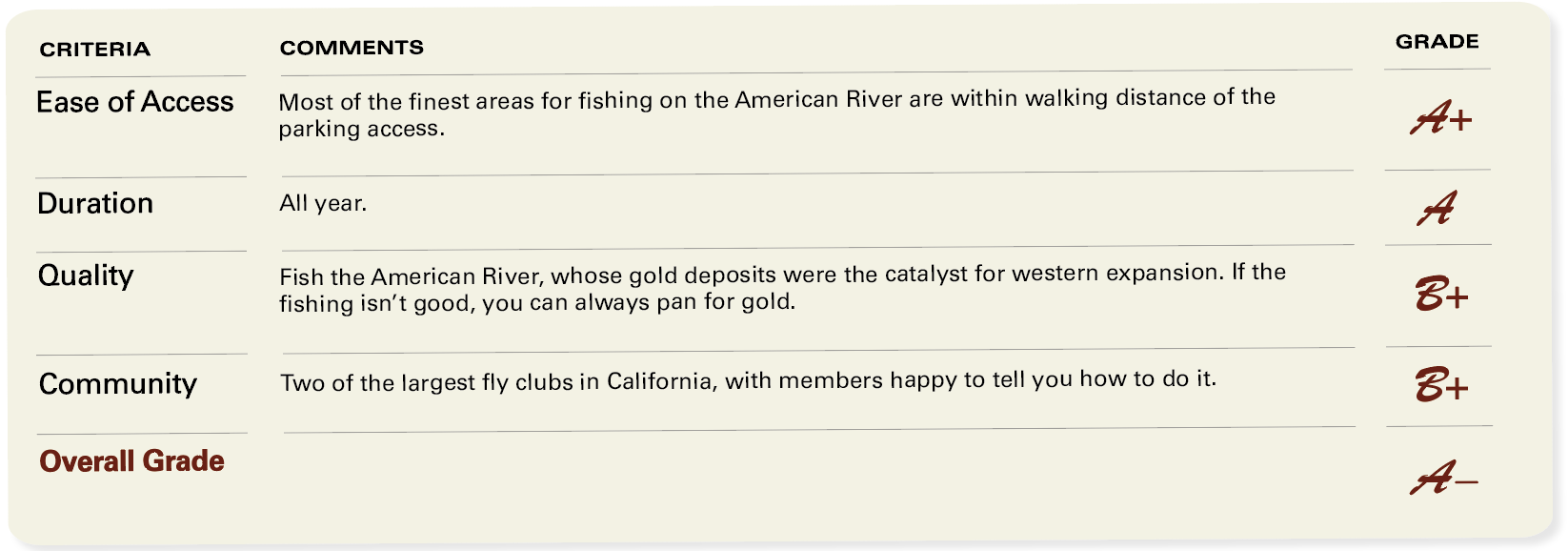
Previous contributors to the Urban Fly-Fishing column have all made the case that their city is the best urban fishery in California. Some of those claims may have seemed a little surprising—San Diego or Los Angeles, for example—but each author made a convincing argument for their hometown waters.
In my opinion, however, the trophy goes to Sacramento. Arguably the best urban fishery in America—not just California—is Sacramento’s lower American River. It’s one of the few places in the world where you can fish for the country’s four most popular recreational species: steelhead, salmon, striped bass, and American shad—all under palm trees, nonetheless.
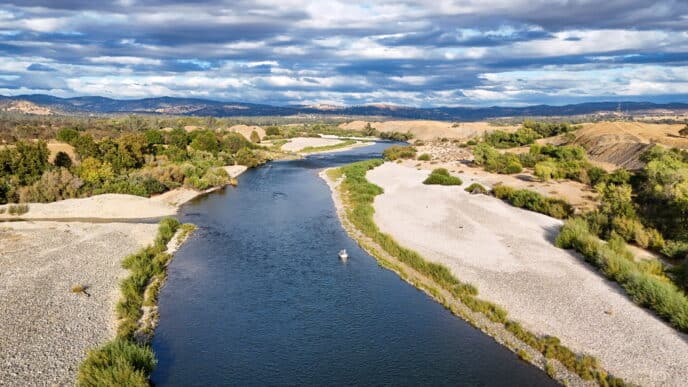
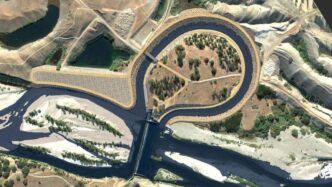
For Sacramento fly fishers, much of the action centers around the lower American River and its parkway. The lower river starts at Nimbus Dam, which impounds Lake Natoma (technically a reservoir), and flows about 25 miles to its confluence with the Sacramento River near downtown Sacramento.
Beyond the lower American itself, additional fly-fishing opportunities abound. Largemouth, smallmouth, and spotted bass can be found in Lake Natoma, Folsom Lake, and regional park ponds. There are even largemouth bass in the lower American. In short, you can fish for almost any freshwater recreational species you can think of in the Sacramento area.
THE AMERICAN RIVER
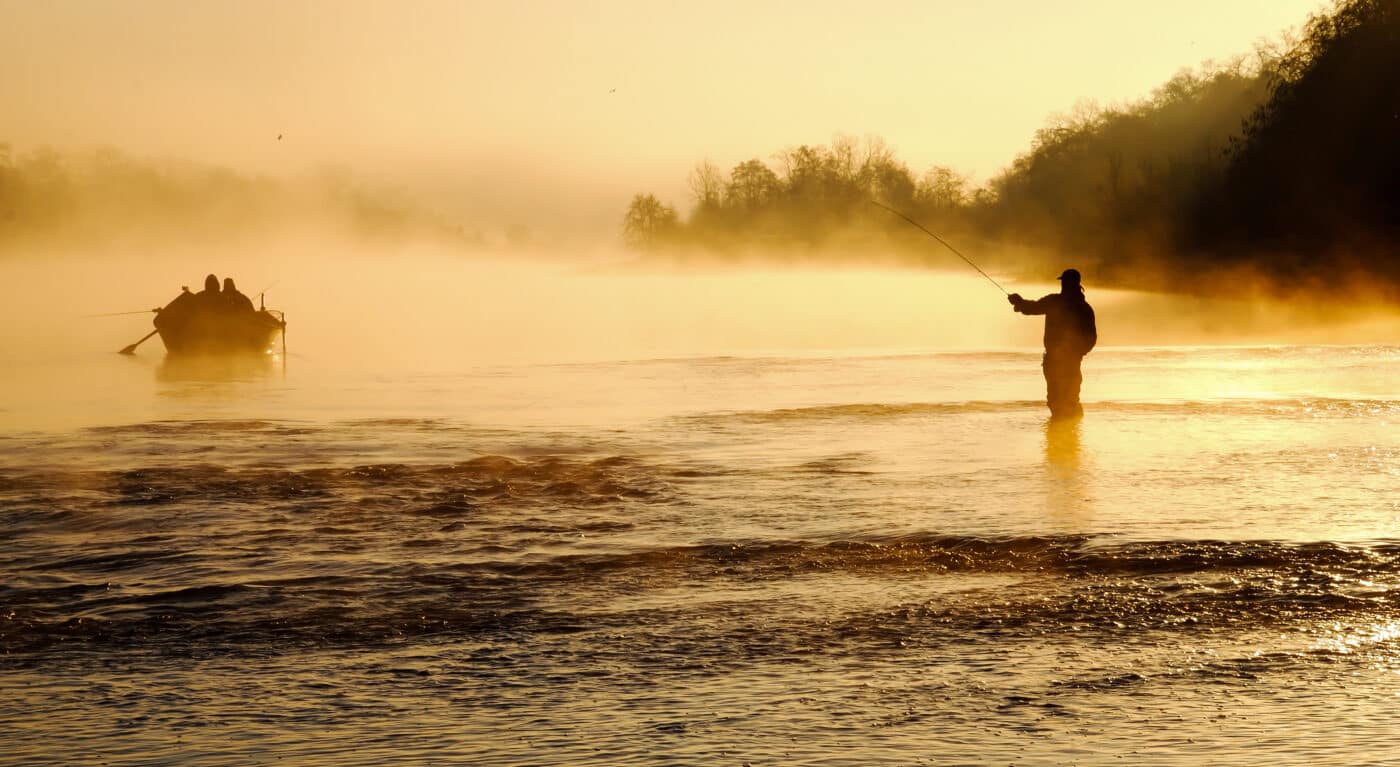
The American River and its parkway are bordered on both sides by suburban neighborhoods with numerous access points easily reached by vehicle or on foot. There are not many cities in the United States where you can leave your house and, in less than half an hour, be fishing for steelhead in a wilderness area that stretches 25 miles from the valley floor to the Sierra foothills.
It’s a year-round fishery, and each season brings different opportunities as various species enter the river to spawn. Each year, a variety of anadromous species—steelhead, salmon, striped bass, and American shad—return from the Pacific Ocean.
Of the four species, only one is native, the Chinook salmon. The others were introduced in the late nineteenth century and early twentieth century to provide both food and sport.
You might be thinking, “Wait a minute—steehead are indigenous.” Well, actually they are not in this case. The winter-run steelhead we know and love today were brought to the American River from the Eel River on the North Coast. This was done to mitigate the loss of the American River’s native steelhead after their spawning habitat was blocked by the construction of Nimbus and Folsom dams in the early 1950s.
The result is a remarkable year-round fishery. There is rarely a time of year when some anadromous species isn’t cruising up the river to spawn. And during the shoulder seasons between spawning runs, anglers can target juvenile salmon and steelhead as well.
HALF-POUNDER SEASON (SEPTEMBER–DECEMBER)
This is “half-pounder” time on the American.
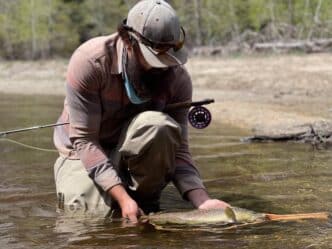
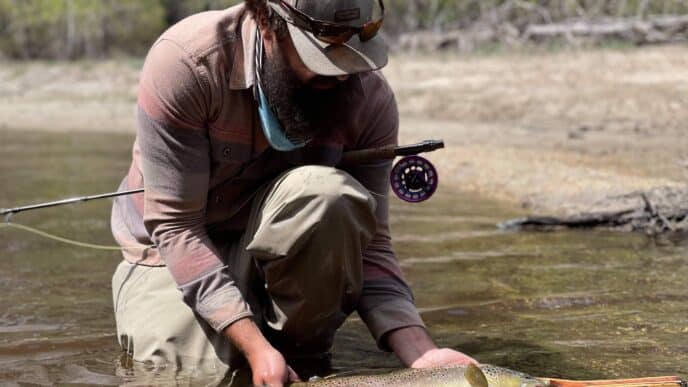
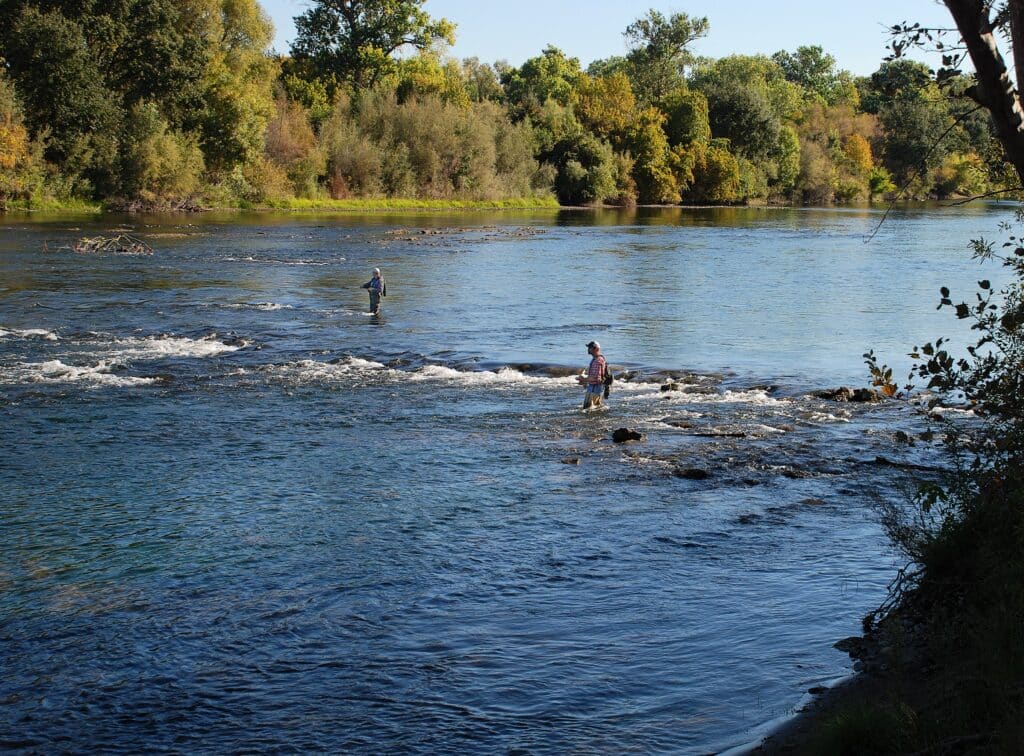
From late August through October, 18- to 20-inch rainbows trickle into the lower American. The locals call them “half-pounders,” though the term is a bit of a misnomer. These fish often weigh closer to two pounds.
The returning fish come from a variety of waters, including the Sacramento River, Feather River, the Delta, and estuaries like the San Francisco Bay. Their return likely reflects better aquatic conditions in the American at that time of the year—cooler water temperature or more abundant bait—than in the places they’ve been hanging out the rest of the year.
Because these fish aren’t focused on spawning, they aren’t wasting energy courting each other. As a result, they can provide some exciting action when hooked.
When targeting half-pounders, look for the same types of water you’d fish for trout. They tend to spread throughout the river and often hold in seams along the edges of fast runs or in riffles during the heat of the day. In the early morning or just before dark, they may be seen rising to caddis flies in the evening or tricos in the morning. Blue Wing Olives (Baetis) are also common in both fall and spring.
Good locations include Paradise Beach, Watt Avenue, River Bend Park, Sunrise Access, and Ancil Hoffman Park. It’s also during this time of the year when CDFW makes a major planting of 8- to 10-inch steelhead smolts.
Fall also brings the river’s most spectacular anadromous run—the arrival of Chinook salmon. In a good year, thousands of these massive fish move into the river’s upper reaches, which is closed to fishing from November 1 to December 31. Few anglers pursue them on fly tackle; many who try eventually switch to conventional gear.
WINTER STEELHEAD AND “BLUE BACKS” (JANUARY–MARCH)
On January 1, the upper section of the river—upstream of Ancil Hoffman Park—reopens to fishing.
During the previous December, the vanguard of winter steelhead arrived, so the first weeks of the new year can be quite rewarding. Fishing often slows in the latter half of January, but around early February, the bulk of the run typically arrives and fishing improves again.
By late February, winter-run steelhead begin to taper off, but things aren’t over yet. Out of nowhere, what locals call “Blue Backs” show up on their spring spawning run.
These “Blue Backs” are a smaller form of rainbow trout than the winter steelhead. No one is entirely sure where they spend the rest of the year, as the California Department of Fish and Wildlife hasn’t conducted any studies on them. Despite their smaller size, they fight just as hard as their larger cousins.
SHAD AND STRIPERS (APRIL–JUNE)
This period brings two of the American River’s most prolific recreational runs.
American shad leave their home in the Pacific and begin pushing into the river to spawn. Close behind them come striped bass. The shad are there strictly to spawn, while stripers are there to spawn—and to feed heavily on the shad, particularly the smaller males.
Shad move in schools, so anglers in the lower sections of the river usually encounter them first. Initial reports often come from the Paradise Beach area near California State University, Sacramento. Over the next two months, the run gradually moves about 20 miles upstream toward Sailor Bar near Nimbus Dam.
Fortunately for wading anglers, many of the productive areas are close to parking accesses along the river.
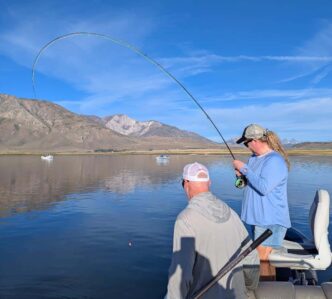
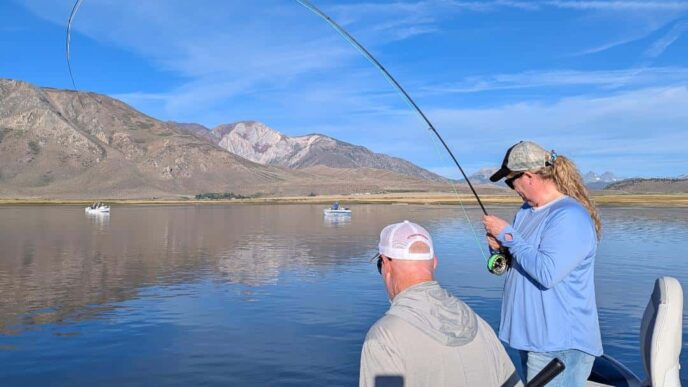
Stripers also trickle into the river, joining their brethren who reside there year-round. Most fly fishers pursue stripers from boats or other watercraft rather than wading. Access to productive structure along the steep banks is easier this way, and there are boat-launching facilities all along the river. Miles of steep shoreline with overhanging branches and submerged roots create an ideal habitat for these fish.
By July, the shad have completed their spawn and begin heading back to the ocean. Having fed on them for months, stripers are still very eager to grab a streamer pattern when presented correctly.
SUMMER SMOLTS AND STRIPERS (JULY–AUGUST)
During the dog days of summer, plenty of stripers remain in the system. It’s also a good time to target juvenile steelhead smolts that hold in smaller side channels along the river.
Good spots include upper Sunrise, the channels around River Bend and William B. Pond parks (connected by a pedestrian bridge), and a productive side channel just north of the boat ramp at Sailor Bar near Nimbus Dam.
These fish may only be a diminutive 8 to 10 inches long, but they are little rockets that will test your landing skills. They can also be quite picky about what they eat, sometimes refusing to take the same fly twice.
If you’re interested in bluegill and bass fishing, the Sacramento Bar gravel-pit lakes can be a lot of fun. You’ll need to do a little walking to reach them, but the effort is usually worth it.
LAKE NATOMA AND FOLSOM LAKE
These two reservoirs, located upstream of the lower American River, sit where salmon and steelhead historically spawned before the dams were built. In addition to providing Sacramento with critical flood control, they also help maintain adequate flows for fish during late summer and fall when the river historically drops to a trickle.
Both lakes are stocked with rainbow trout and have populations of largemouth, smallmouth, and spotted bass.
Lake Natoma’s water is quite cold, but bass can often be found along the edges and in the former gravel quarry on the north side of the lake. The Willow Creek State Park area on the south side also offers plenty of structure that attracts bass.
At Folsom Lake, largemouth bass are usually found in the warmer coves around the lake. Smallmouth are generally found in the arms fed by the two forks of the American River, while spotted bass can be found almost anywhere, though shorelines with steep drop-offs are a good place to start.
Both lakes are about a half hour from downtown Sacramento. Plenty of lodging and dining options are available in the town of Folsom, which sits along the south shore of Lake Natoma. If you decide to fish that area, it’s worth spending some time exploring Folsom’s historic district, which has many great places to eat and drink.
[Read “Sacramento Perch: California’s Heritage Sunfish”]
REGIONAL PARK PONDS
One of the most popular stillwaters in the Sacramento area is Mather Lake. The lake sits on the edge of the former Mather Air Force Base and was originally created as part of the recreational facilities serving Air Force personnel. Adjacent to it is Mather Golf Course.
Mather Lake is a shallow impoundment popular with float-tube anglers. It’s stocked with trout during the fall, winter, and spring, and it also holds a self-sustaining population of largemouth bass.
Taken together, the lower American and the surrounding lakes make Sacramento one of the most diverse urban fly-fishing destinations in the country.
While in town…
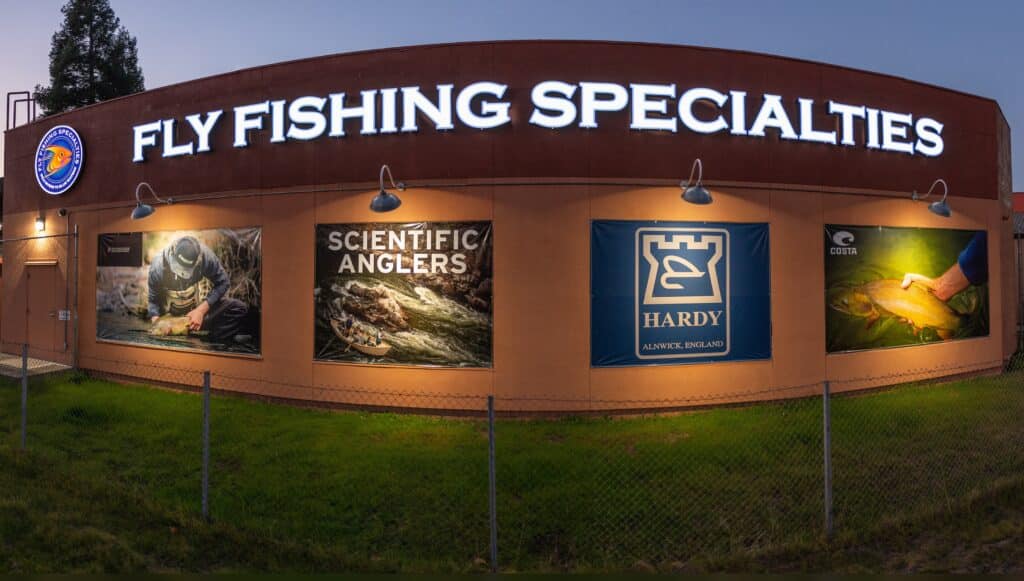
Make sure to stop by one of the largest fly shops on the West Coast, Fly Fishing Specialties, located at 6360 Tupelo Drive in Citrus Heights. Rick Anderson and the team are ready to help you gear up for your next adventure.
For additional resources on fishing in Sacramento, read the 24-hour guide.