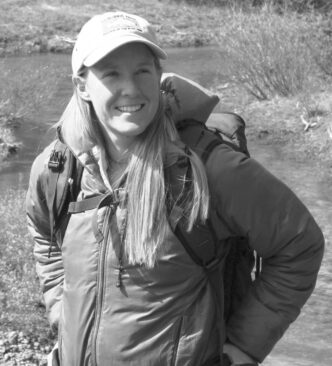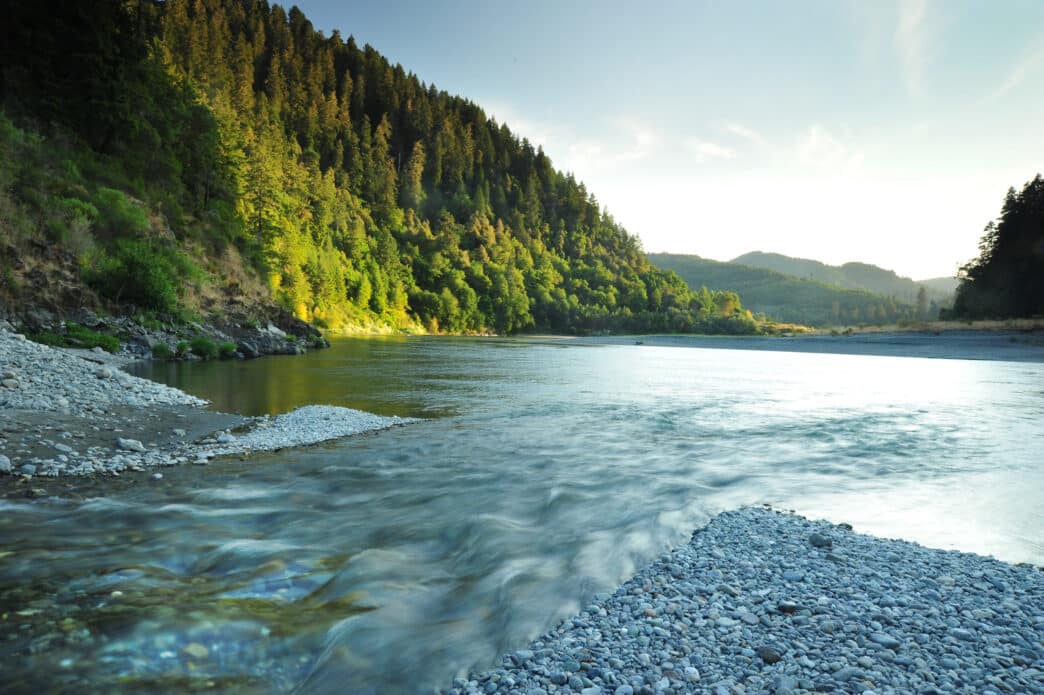
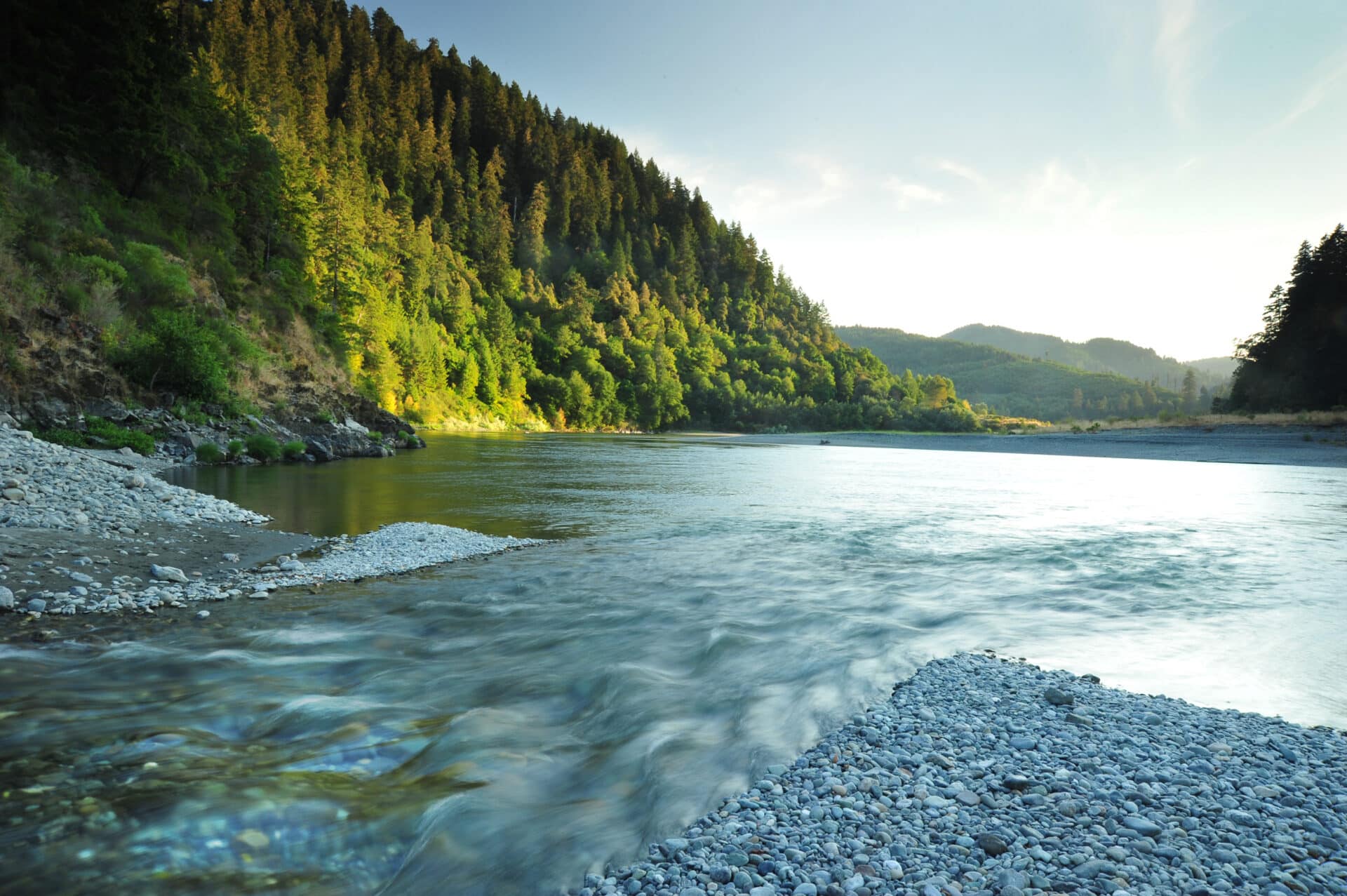

In mid-summer 2024, two people sat on the banks of Blue Creek, in northern California, discussing the future of this cold, clear stream that flows from the Siskiyou Wilderness to the Klamath River, roughly 16 miles upstream of the Pacific. One of them was Pergish Carlson, a Yurok fishing guide and prominent member of the Yurok Tribe. The other was Sue Doroff, the recently retired president of Western Rivers Conservancy. Each had a great deal invested in this creek.
For Carlson, the confluence of Blue Creek and the Klamath River is the home of his ancestors and where his father is building a traditional Yurok dwelling at a historic village site on land his family still owns. As the first significant source of cold water for salmon and steelhead migrating up the Klamath River, Blue Creek is also a refuge for fish, vital to the salmon Carlson depends on. For Doroff, Blue Creek was the centerpiece of Western Rivers Conservancy’s 20-plus-year effort to create the 73-square-mile Blue Creek Salmon Sanctuary and Yurok Tribal Community Forest in partnership with the Yurok Tribe. Her visit served as an opportunity to hand the project over to WRC’s incoming president, Nelson Mathews, who took the reins that month.
It was late July, and Carlson and Doroff reminisced about their first meeting and the course of the project, which had been underway for more than two decades. Soon, WRC would convey the final 15,000 acres of the 47,000-acre project to the Tribe, and their shared vision for Blue Creek would become reality. Then, the entire 73 square miles of temperate rainforest along the lower Klamath and Blue Creek—land at the very heart of the Yurok’s ancestral territory, which had been owned by timber companies for the last hundred years—would be in the hands of the Yurok Tribe once again.
“This right here is the lifeline of the Klamath. There are a lot of other creeks involved, but this one outdoes them all.”
Pergish Carlson about Blue Creek
It was a historic year for the Klamath River. Three of the four major mainstem dams had already been removed and, by October, the fourth—Iron Gate Dam—would come down, reopening hundreds of miles of upstream salmon habitat for the first time in over a century.
Less than a year later, WRC and the Yurok Tribe celebrated another momentous gain for the Klamath’s salmon and steelhead: In May 2025, WRC and the Tribe completed the largest tribal land-return in California history, placing the final 15,000 acres back into Yurok ownership. The effort more than doubled the Yurok’s landholdings and ensured the Blue Creek watershed was protected in its entirety. (The upstream portion is protected within the Siskiyou Wilderness.)
THE COLD-WATER LIFELINE OF THE KLAMATH
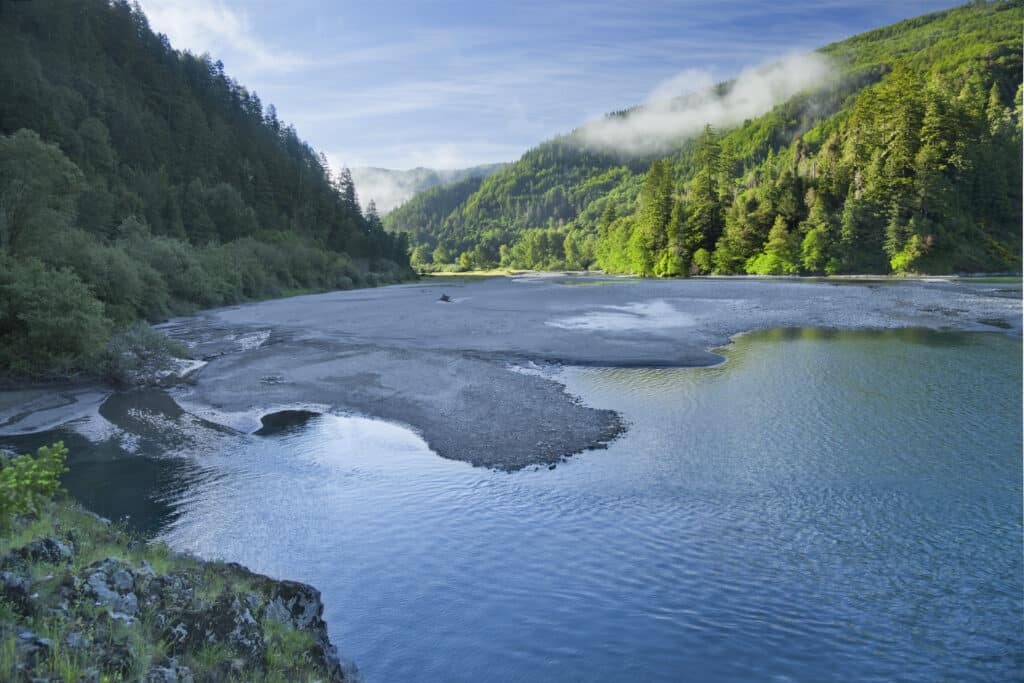
There is no easy starting point for describing the importance of Blue Creek. For the Yurok Tribe, Blue Creek is sacred, the Tribe’s nicknamed “stairway to heaven” because it provides a pathway into the high country of the Siskiyou Mountains. For fish, it is considered the most important cold-water tributary of the Klamath River, injecting the mainstem with life-giving cold water that they need during their fall migration upstream.
The cold water of Blue Creek allows returning salmon and steelhead to rest and lower their body temperatures—often by as much as eight degrees Fahrenheit—so they can continue their spawning migration upstream. The next rung in the cold-water ladder is the Trinity River, which meets the Klamath another 26 miles up from Blue Creek. For the river’s fall-run Chinook, Blue Creek is especially important. Without the refuge the creek provides, most of them would likely die before reaching the Trinity because the water in the mainstem Klamath can get lethally warm for migrating fish at that time of year. And if fish can’t reach the Trinity, they certainly won’t reach the vast upstream spawning habitat reopened by dam removal.
In addition to providing refuge for fish moving up the mainstem, Blue Creek itself provides excellent spawning and rearing habitat for Chinook, coho, and steelhead. And it’s not just what’s under the water that matters. Blue Creek flows through one of the most biologically diverse ecosystems on earth. The watershed, especially as you move upstream, is home to abundant and rare wildlife, including numerous threatened and endangered species like the marbled murrelet, northern spotted owl, and Humboldt marten. Red alders lean over glassy blue-green pools, and rhododendrons get as big as trees. There are rare plants like phantom orchids, Oregon goldthread, mahogany fawn lily, and the carnivorous California pitcher plant.
PROTECTING BLUE CREEK
Despite Blue Creek’s immense importance to the Klamath system, the basin’s focus was on timber production for more than a century. The lower watershed was crisscrossed by legacy logging roads. Ridgetop prairies, critical for elk, were disappearing. The creek itself had cut down below its normal channel height in places, largely due to road construction and bridge placement. Habitat in and out of the stream was still decent, but nothing like it once was.
The Northern California Coast receives an average of 75 inches of rainfall annually, most of it in winter. Blue Creek flows at around 35 to 40 cubic feet per second (CFS) in summer and fall, and it can rocket up to 48,000 CFS during big winter storms. With the Blue Creek watershed managed as commercial timberland with an extensive road network, the potential for big weather events further harming the creek was high. A plugged culvert could result in massive road failure, and exposed soil on steep slopes could lead to a landslide. Either would contribute dangerously high levels of sediment to Blue Creek, which, if sustained for very long, would impair spawning habitat and negatively impact salmon and steelhead populations in the Klamath. For generations, the Yurok lacked control over a place they had hunted and gathered since time immemorial, a place that was always the spiritual centerpiece of their ancestral homelands.
A change in ownership and management priorities—from timber production to conservation—was essential to protecting the stream and ensuring its long-term resilience.
THE START OF A SOLUTION
In 2002, Green Diamond, the family-owned forest products company that owned the lower Blue Creek watershed, took a first step toward redefining the future of the stream. Recognizing Blue Creek’s cultural and ecological significance, Green Diamond approached WRC to help facilitate the transfer of these lands to the Yurok Tribe—an outcome the Tribe had sought for years. Green Diamond’s desire to work with WRC was largely due to the fact that the organizations had recently worked together in the nearby Smith River basin, where WRC purchased the entire watershed of Goose Creek, a major tributary to the South Fork Smith, and conveyed it to the Six Rivers National Forest.
This relationship, along with WRC’s track record of successful conservation deals, made WRC the ideal partner to purchase and facilitate the conveyance of 47,000 acres of Green Diamond’s holdings on Blue Creek to the Tribe. This time, however, the stakes were much higher. The project’s price tag would be $55.8 million, plus more than $6 million in project costs. The fact that WRC signed the purchase and sale agreement with Green Diamond on the eve of the Great Recession raised the ante for WRC even further.

“Western Rivers Conservancy had done some big projects before, but nothing on this scale,” said Doroff. “But we knew how important Blue Creek is to the Klamath and that WRC was the only organization that could take on the project. We also knew that the Yurok, with their outstanding fisheries department and as the original caretakers of these lands, were the obvious best stewards. So, we jumped in and committed to figuring it out.”
RAISING MILLIONS AGAINST THE ODDS
Over the next two decades, WRC raised more than $60 million to acquire and facilitate conveyance of the lands to the Yurok Tribe. The first transfer occurred in 2011, when WRC negotiated a 20-year, interest-free loan from the California Water Resources Control Board to the Yurok Tribe, allowing the Tribe to purchase 22,237 acres directly from Green Diamond. This created the Yurok Tribal Community Forest, which the Tribe now manages for sustainable timber production and to generate forest carbon offsets to sell on the California carbon market. The combination of less intensive management and the new focus on carbon sequestration has significant habitat benefits for fish and wildlife while still serving as a viable source of revenue for the Tribe to repay its loan.
Once the first phase was in Yurok hands, WRC went to work on phase two, which included the project’s crown jewel: creating the Blue Creek Salmon Sanctuary. With millions still to raise, WRC embarked on a creative and complex conservation finance strategy, including further use of California’s carbon market and an obscure mechanism called New Markets Tax Credits. New Markets is a federal program designed to spur economic growth in economically distressed areas by attracting private investment through tax credits. The program has historically been used for brick-and-mortar projects and had rarely been used for conservation—and never at this scale. However, because jobs would be created through the purchase and subsequent restoration and management of the Blue Creek watershed, this project was eligible.
“It’s a brilliant combination,” said Doroff. “Finding a tool that allowed us to manage the forest back to old-growth conditions and generate revenue through carbon offsets created jobs for the Yurok. And new jobs meant we qualified for the New Markets Tax Credit program.”
In the end, it took six separate transactions over seven years to complete the purchase of the 47,000 acres. In May 2025, using the tax credit program, conservation grants from the state of California, and private foundations, WRC was finally able to convey the remaining 14,968 acres to the Yurok Tribe. Much of those lands were within the boundaries of the salmon sanctuary, including the streambank where Doroff and Carlson sat on that July afternoon and talked about the project.
YUROK OWNERSHIP AND MANAGEMENT
From the very outset of regaining the lands it once called home, the Yurok Tribe began managing the forest in partnership with WRC and according to their shared goals. WRC and the Tribe worked with multiple agencies to develop a restoration-focused management plan for the salmon sanctuary, and the Tribe developed a sustainable forest management plan for the community forest. Additionally, the return of 47,000 acres to Yurok management enabled the Tribe to hire new staff, creating new jobs in the community and resulting in a multi-departmental team of natural resource management professionals.
The Blue Creek Management Plan, formally adopted by the Yurok Tribal Council in 2020, protects the lower Blue Creek lands permanently. The plan ensures the Blue Creek Salmon Sanctuary is managed as a preserve, consistent with the highest standards for both salmonid recovery and recovery of threatened and endangered species. Under Yurok management, the watershed’s forests will mature, eventually achieving old-growth habitat. In the end, the Blue Creek Salmon Sanctuary and Yurok Tribal Community Forest will ensure the long-term health of 73 square miles of temperate forests, including the entire lower Blue Creek watershed, its diverse wildlife and the invaluable runs of wild salmon and steelhead that return each year to Blue Creek and the Klamath River.
In 2015, Peter Moyle, California’s legendary fish biologist and preeminent expert on cold-water fish, said of the effort, “This project really has just all the right elements. It’s saving fish, it’s saving forests, and it’s helping the Yurok people regain some of their natural heritage.”
THE FUTURE OF BLUE CREEK AND THE KLAMATH
On that warm July afternoon when Carlson and Doroff sat beside Blue Creek, the two chatted about the first time they’d met, about the fish holding at the mouth of Blue Creek that day, and about the future of the stream, which would soon be back in Yurok ownership. They reminisced about the day they brought funders upriver to a former Yurok village site, where Carlson cooked salmon on redwood stakes in the traditional Yurok way. It was the first time Yurok had cooked salmon on their ancestral banks at Blue Creek in over a century, he said.
“When I was a kid, we weren’t allowed back here,” said Carlson. “I came here one time as a kid and thought I was in this far-off place, and here I am only a mile from my grandma’s house. Now, to be able to get back in here and gather and get other things, basket materials, that’s what the land needs, that Yurok presence.”
That Yurok presence, along with WRC and the Tribe’s two-decade effort to conserve Blue Creek, will keep the Klamath River’s lifeline healthy for the long run—and help ensure salmon and steelhead can always reach the upper river and its tributaries to spawn.
With the four main dams now removed from the Klamath River, and 73 square miles of temperate rainforest along Blue Creek and the lower Klamath back in the hands of their original stewards, this is more than just a new era for the Klamath. It’s a moment of momentum for the Yurok Tribe—and, for many, a hopeful turning point for the future of the Klamath River’s salmon and steelhead.
More Cold Water for the Scott River, California’s Coho Haven
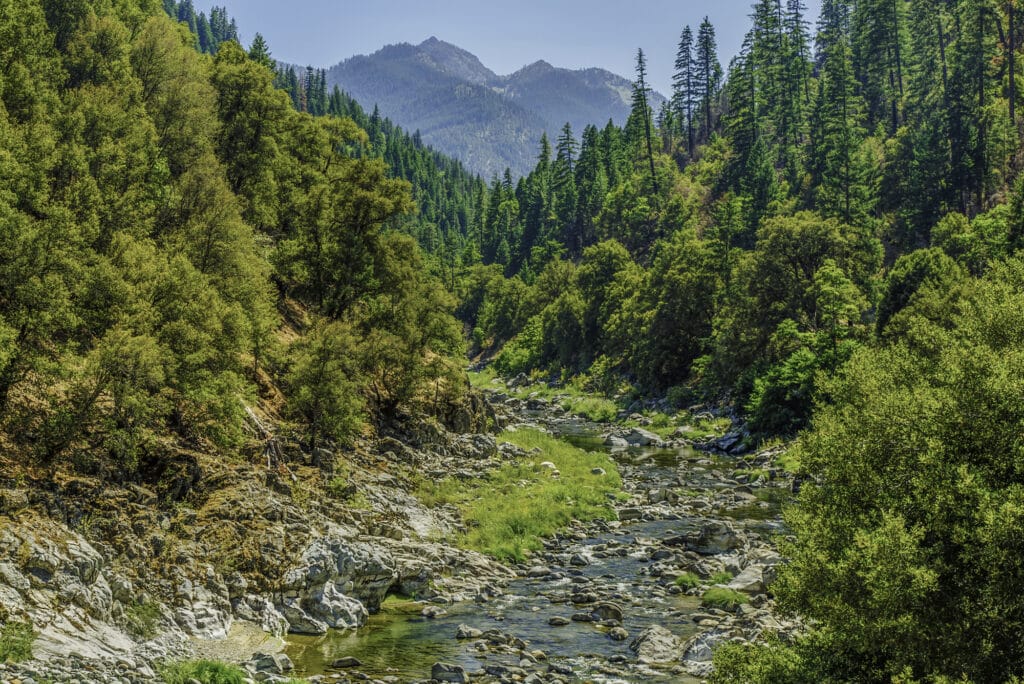
When it comes to the survival of coho salmon in the Klamath River, tributaries like the Scott River are paramount. Native coho, which are endangered throughout most of their range and threatened in northern California, depend on the cold, clean water and abundant spawning beds in the Scott River basin. In fact, the Scott River produces over half of California’s wild coho. Yet, the state’s coho numbers are so low many fear the species could become extinct barring meaningful recovery work. Keeping water in the Scott and its tributaries is key to sustaining healthy populations of holding, spawning, and rearing fish.
So, when Western Rivers Conservancy recognized an opportunity to bolster flows to a major Scott River tributary, it moved quickly to buy and conserve a property with senior water rights. In 2021, the organization set out to conserve the 1,596-acre Bouvier Ranch on the South Fork Scott River—the largest, cleanest, and coldest tributary to the Scott. The ranch includes 2.6 cubic feet per second of water rights, which WRC acquired and then conveyed to the Siskiyou Land Trust in 2023, along with a conservation easement on the ranch itself. Keeping those critical flows in-stream increases summer flows by up to 20 percent, exactly when the river and its fish need it most. By conserving the ranch, WRC also protected 2.5 miles of designated Critical Habitat for coho. Then, CalTrout conducted extensive restoration along this stretch of the river—work that has greatly improved spawning and rearing conditions for coho.
Improving flows and habitat also increases the odds of the species’ successful recovery throughout the Klamath basin. With the removal of the Klamath’s four dams, fish are poised to have new access to hundreds of miles of upstream habitat. Cold water tributaries like the Scott are the stepping stones that fish need as they migrate upstream. Putting as much cold water as possible back into those tributaries, and in turn, the Klamath, will help salmon, steelhead, and other native fish species return to their historic range.
– By Elise Herron