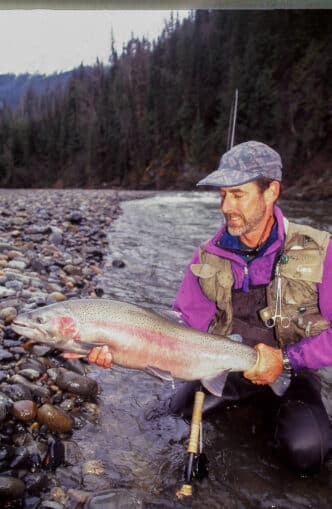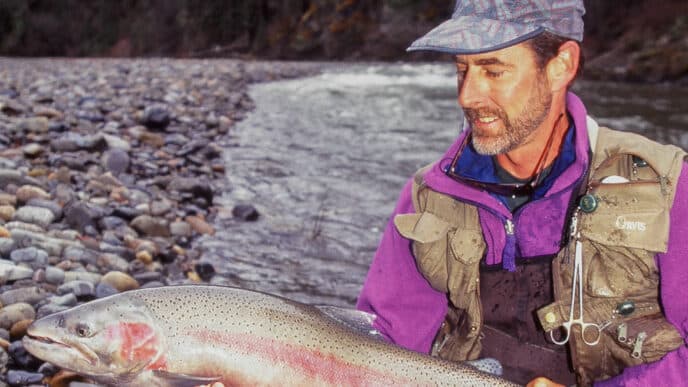
I first met Hal Janssen in the 1980s, when I was working at Powell Fly Shop & Rod Company in Chico, where we sold many of Hal’s flies and other items.
When a product of Hal’s was sold, if we called the order in to him by one o’clock, it would be delivered the next working day. I was impressed and, over the years, came to understand that’s the type of person Hal is—the ultimate champion and steward of fly fishing, ready to share his knowledge and experience at the drop of a hat.
Hal started fly fishing as a young boy—he was fascinated by water. When he was about five years old, while exploring the creek across the street from his home, he found a heavy piece of monofilament, wrapped around a twig, with a fly attached. He made himself a fly rod from a willow tree shoot, choosing one with a taper. Hal took his homemade fly rod and fly to kindergarten, and his mother wrote a note giving him permission to leave school during breaks to go fishing at a nearby creek. During the elementary school years, he took a bus from Fremont to San Jose to attend Catholic school. In San Jose, the bus stop was in front of Cope and MacPheters Sporting Goods store. Every day, Hal would browse the store while waiting for the afternoon bus. Eventually, he talked the owner, Mac, into letting him sweep the floors to pay for fly-tying materials, lines, and flies. His journey had begun.
Hal is widely recognized not only in Northern California but also nationally and internationally for his fly tying, art, and fly-fishing product development. His work has influenced fly fishers around the globe. Hal’s thirst for knowledge propelled him to fame in the world of fly fishing. He is an inductee into the Federation of Fly Fishers and the California Outdoor Hall of Fame. He has shared his expertise through numerous articles in fly-fishing magazines, in-person presentations, and a series of home self-help videos called Fly-Fishing Secrets. Hal has designed or helped develop products that are the cornerstone of what fly fishers use today, including collaborations with Scientific Anglers, Sunset Line Company, Cortland, and RIO products. My favorite items were Hal’s signature fly-tying hooks, produced by Hal and Partridge Hook Company. He was among the first signature tyers for Umpqua Feather Merchants when the Black brothers founded the company.
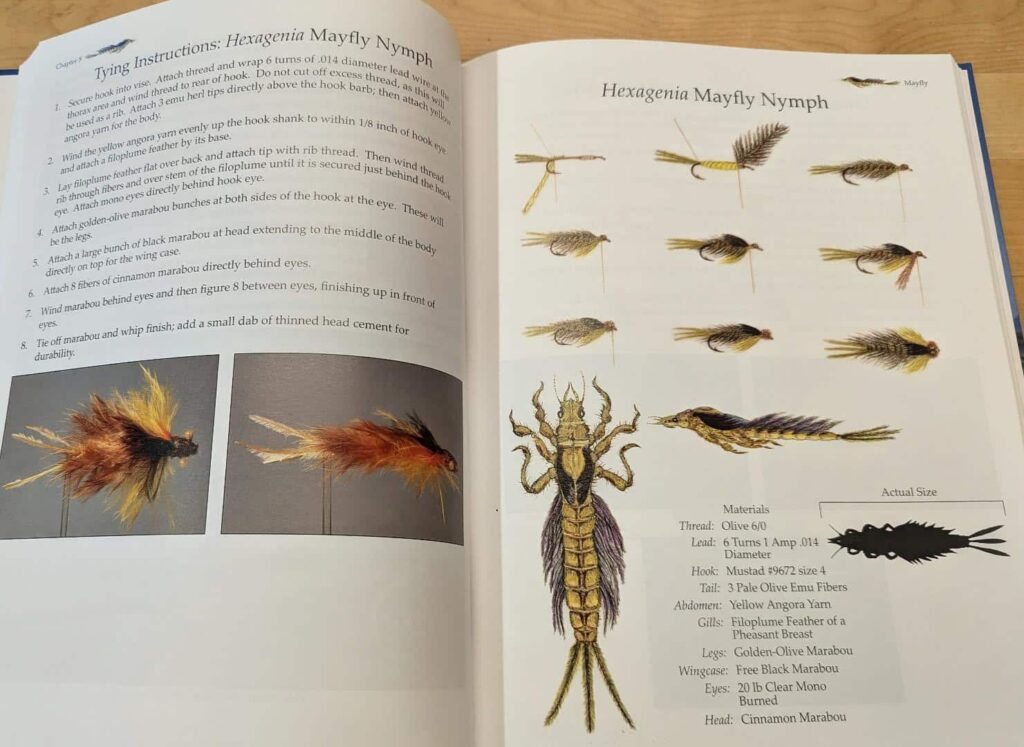
For decades, Hal took notes, kept a log, developed fly patterns, and honed his artistic skills to compile and publish his book, Stillwater Fly-Fishing Secrets. The book is a true masterpiece. All the illustrations are by Hal. The fly patterns, leader diagrams, the hows, whens, and whys are laid out clearly. It’s a book I have read and re-read many times. It’s a culmination of Hal’s fly-fishing knowledge, insights, and beliefs about the world he helped shape—fly fishing.
I had the pleasure of interviewing Hal in January 2026.
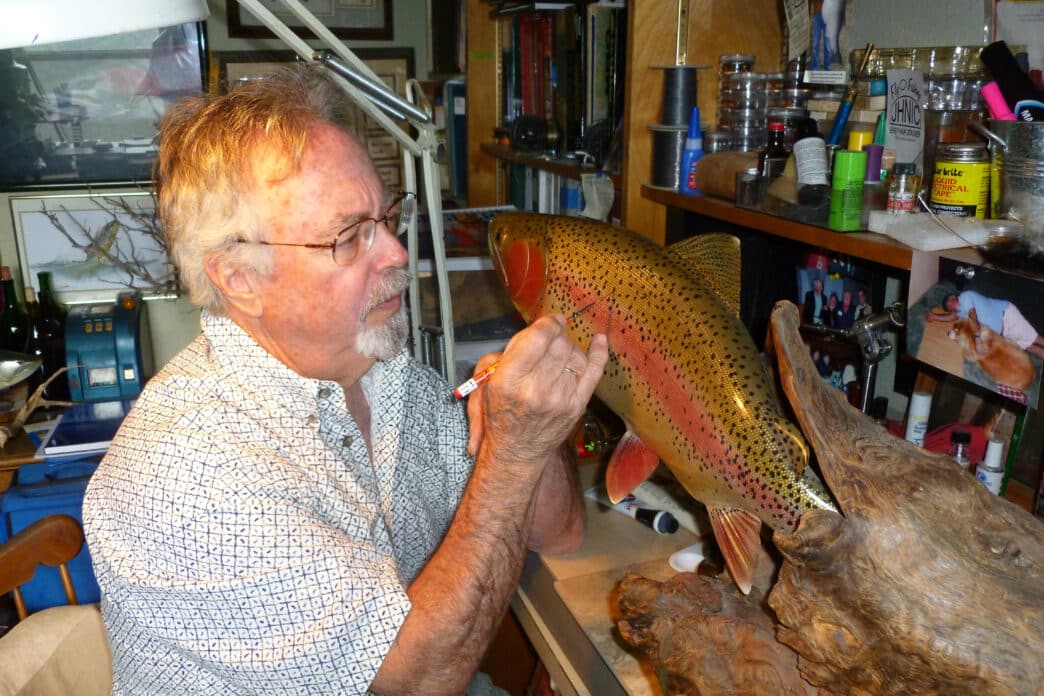
Your last interview with Art Dollosso was in 2011 for California Fly Fisher. What has changed for you since then? I published my Stillwater Fly Fishing Secrets book in 2013. I’ve slowed down, but I’m still carving fish and painting with watercolors.
My first dealings with you were when I worked at Powell’s Fly Shop, and Alan Clemens told me you were my go-to guy. That’s great to hear. I structured my business to be a go-to business. Orders were shipped the same day we received them. Shipping was cheap, and delivery was fast. No one had to buy more than one of any product. This way, you could purchase only what you needed to get by for a week and keep inventory moving. I always kept key items in stock, popular reels, leaders, fly lines, floatant, etc. We sold to dealers all over the USA and to international dealers as well. Back then, all orders were via phone and fax.
When did you start your distribution business? What products did you sell? How long did you have that business? I started Hal Janssen Company in 1978 and closed it up around 2008, so about 30 years.
We sold reels, fly lines, floatant, fly boxes, hooks, fly-tying tools, boots, waders, and float tubes, just about anything a fly fisher would need to go fishing.
My mentors included Alan Clemens, Press Powell, Jay Fair, Milt Jensen, but my greatest was Denton Hill. Tell me who yours was, and why? I gather information from other fishermen. I observed other fly fishermen my whole life. Everyone I sit and talk to gives me new information; it’s no accident.
What is the greatest lesson you have learned from fly fishing? Patience with life and everything I do.
What do you think is your greatest accomplishment in the world of fly fishing? My passion for fly fishing is the driving force behind everything I develop. I designed fly lines to reach the fish, and flies to lure them to my leader.
It is my own personal gratification when I catch a fish. I figure out where the fish are, what they eat, the weather, the equipment, and how to present the fly.
I enjoy people and am happy to share my secrets so they can be successful too.
I gave many lectures over the years, providing as much information as I could, but an hour or two was never enough. Many fly fishers asked me to write a book, and I finally did it. Writing my book was a huge accomplishment. Organizing my notes, journals, observations, and techniques from a lifetime of fishing for the book was huge for me.
For stillwater fly fishing, what is your favorite rod, and why? Fiberglass, 8 feet 4 inches for a 2-weight line. It has soft action, and even with a 3-weight line, it does not break a light tippet. Any rod larger will break a light tippet.
Your book is fantastic. I am amazed by all the information packed into it. If you could pick one of the flies highlighted in the book as your favorite, what would it be? It would probably be a Marabou Leech. Leeches can be effectively used in freshwater or saltwater anywhere in the world. They are easy to tie on any fly-tying vise and easy to dye. They can be tied in any size you need. The leech will not break off a 7X tippet.
What is your all-time steelhead fly, and why? A Scud, a freshwater shrimp. It’s tied with marabou on a size 16 or smaller hook. I love marabou because it is life-like in the water. As the fly stops, it breathes, moves slightly, and looks alive in the water. These are irresistible movements to a fish, very effective.
You use many natural materials in your fly tying. Have you found that natural materials are better than synthetic materials? Yes, natural materials are more life-like in the water. They are easier to tie and also easier to dye than synthetics.
You mentioned your stillwater leader. If you don’t mind sharing, what is it, and how did you build it? I build my leaders 20 feet or longer. The length absorbs the shock of the take; even 7X will not break on the take. My leader system is built with blood knots. The butt section is 36 inches; the next section is 24 inches; all sections thereafter are 12 inches. The last section you tie the fly onto can be 36 inches, depending on the clarity and depth of the water.
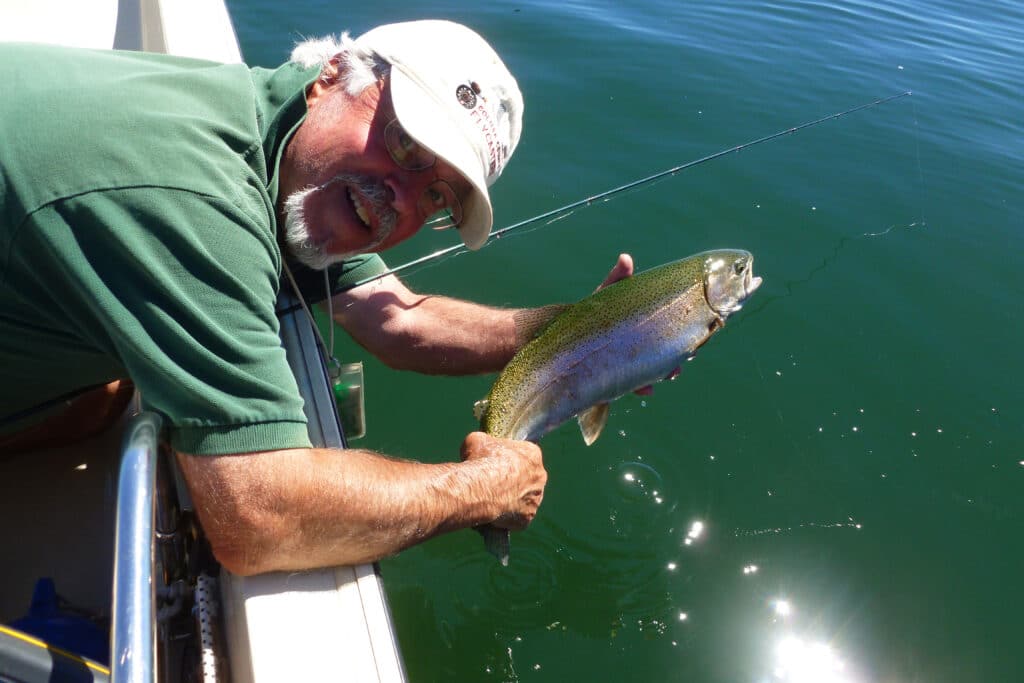
If you only had one fish to catch, what would it be, and why? A brown trout. They are smart, have the most incredible eyesight of any fish I have ever seen, and therefore are hard to catch. You will need long leaders with incredible stretch capabilities and small tippets. With a soft rod, it is difficult to break a 7X or 2-pound test. The brown trout take is subtle, then suddenly a burst of power and speed. I am never surprised by the take; I anticipate it on every pull of my line.
Hal is one of the pioneers who helped put the spokes in the fly-fishing wheel. His book is a true masterpiece for anyone who wants to learn. Just like Hal, I always learned by watching, talking, watching videos, reading, and above all, listening to folks with knowledge. Hal has knowledge.
Hal Janssen
You can find Hal’s artwork at Art Etc. in Chico, CA; Blue Goose Gallery in Chester, CA; and Blue Moose Gallery in Fort Collins, CO.
Fly-tying instructions for the Marabou Leech can be found on page 173 of Stillwater Fly-Fishing Secrets and details of his leader system on page 239.