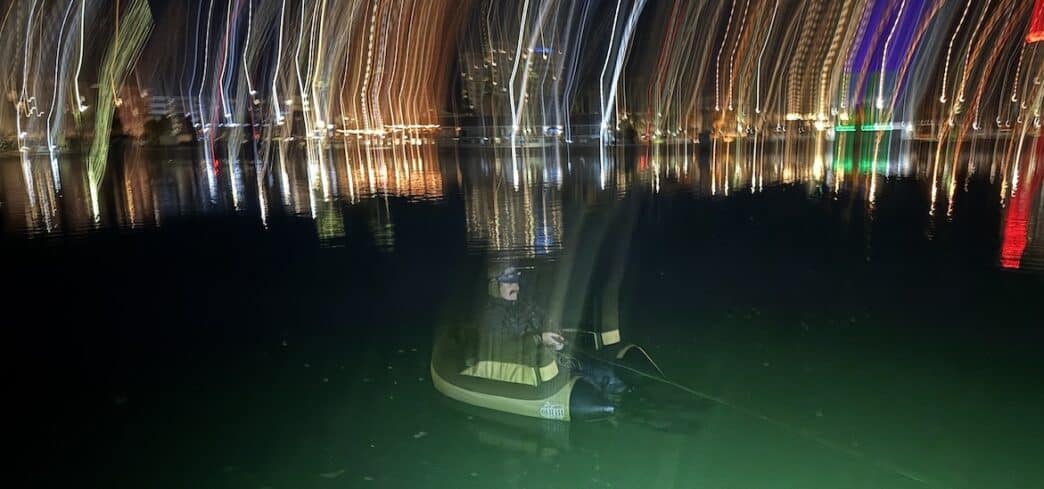
Southern California’s coast features several easily accessible bays that offer an entertaining saltwater twist on urban angling. Set against the backdrop of docks, boats, bridges, airports, and more, you can hook up with some feisty inshore species all year long. These environments are custom-made for float tubing, and this fly-fishing sub-genre is going strong with a 10 out of 10 fun factor.
THE WHAT
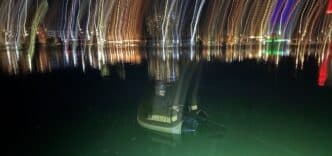
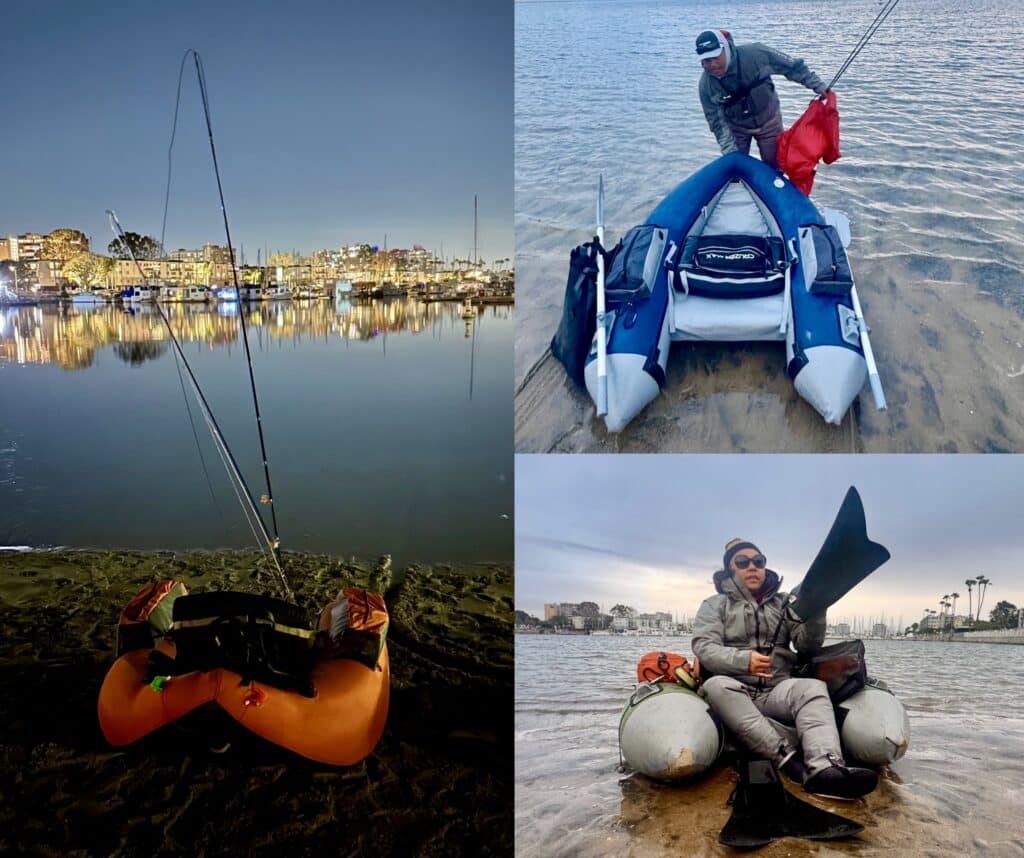
Float tubes are more fun and practical than ever, and so are other inflatables such as stand-up paddleboards, pontoon boats, and kayaks. Portable, lightweight, and easy to store, they offer great convenience. There’s a giddy feeling when launching into the water, which makes you feel like a kid again, as cliché as that might sound.
THE WHERE
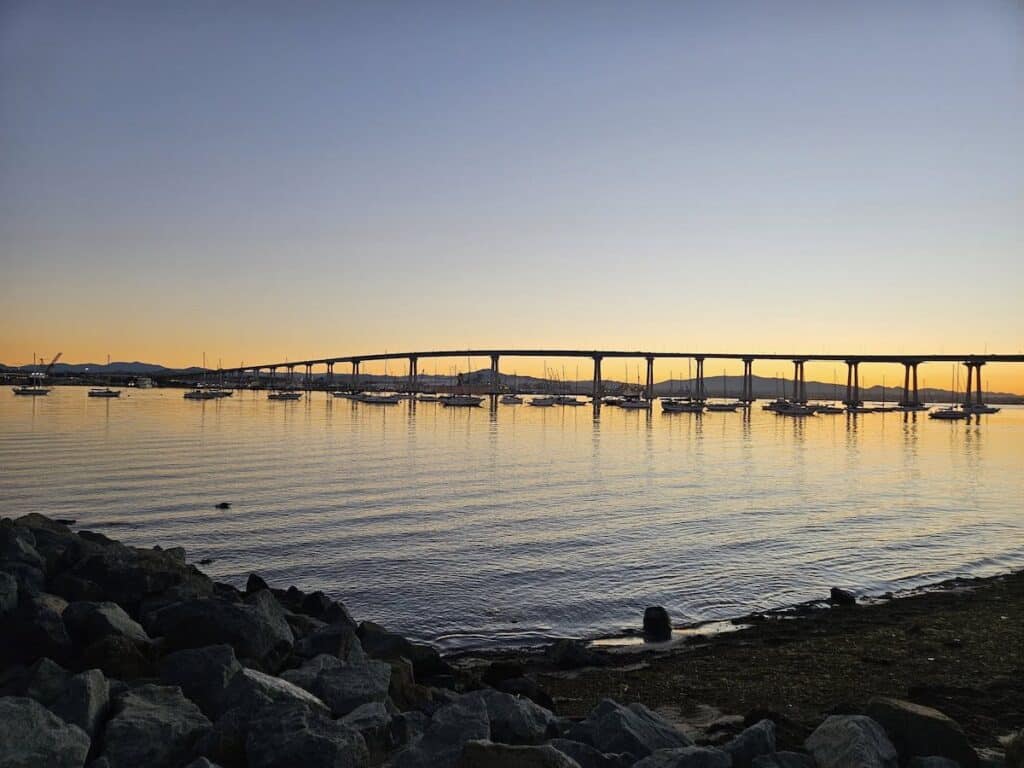
Santa Barbara, Ventura Harbor, Port Hueneme, Marina Del Rey, Alamitos Bay, Huntington Harbor, Newport Bay, Agua Hedionda Lagoon, Mission Bay, and San Diego Bay are the main ones, each offering ample public access.
THE CATCH
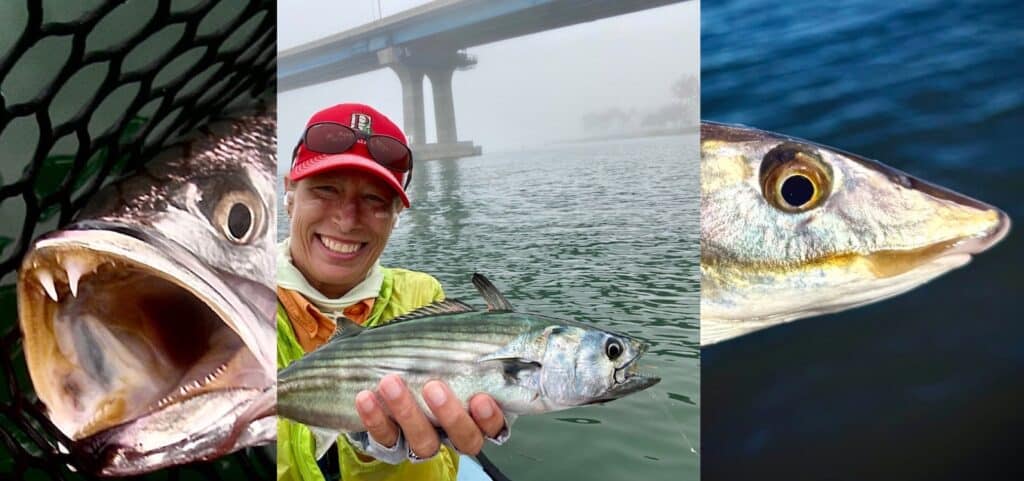
Common catches include spotted bay bass, barred sand bass, California halibut, barracuda, various croakers, corvina, and bonus treats like calico bass, bonito, white seabass (often undersized), striped bass, and even a bonefish now and then in San Diego Bay. Implicit is the variety of techniques you can use depending on which species you aim to target, but it all begins with just getting out there, right? I should also add that there’s a community out there, and it can be surprising how willing they are to share. I’m trying hard not to name names, but you’ll find members in fly clubs with spare gear who often organize informal outings. You can get a taste that way.
THE GEAR BASICS
In addition to the tube itself, bring waders and fins. Float-tubing fins that fit comfortably over wading boots also provide good propulsion. Remember, you’re sitting down, so the angle differs from swimming or scuba diving. A PFD (personal flotation device) is wise and legally required. Keep it accessible, and for those under 13, it must be worn. Also consider managing your temperature and sun exposure. These bays are much warmer than mountain lakes, so a base layer may be all you need under your waders. Be sure to keep your wader belt snug. Grab a layer or shell to block the wind and add warmth, a hat or beanie, sun gloves, sunglasses, a headlamp if fishing at night, and you just might be ready to go. I admit, it sounds like a lot. I have caved to the temptation of an electric pump but always keep a traditional one handy. Most modern float tube models have pockets for accessories, gear, snacks, and more.
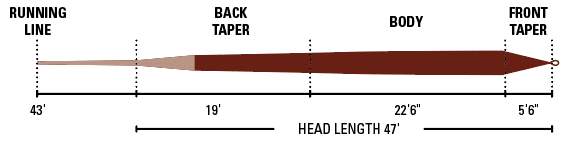
Fly tackle that can handle saltwater is essential. Reels with sealed drags and lines made for salt are smart choices. I contacted several float-tube anglers in Los Angeles and San Diego, and brands like Orvis, Galvan, Lamson, Abel, Sage, and Hatch were frequently recommended. Most rod makers have models that will work fine, and many anglers use 6- to 8-weight combos. A floating or intermediate line works well, as does a line designed for depth. Dredging deeper water or letting the fly follow you at depth while changing location (and no, we won’t call it trolling!) should not be ruled out. Having two setups ready is also a good idea. You won’t hook a striped marlin here, but it’s smart not to go out with your trout setup. Casting distance is rarely a concern because, while tubing, you can usually get close to any structure you need to fish, and it’s common to get a bite almost directly below you. Leader formulas and lengths depend on the situation and technique, but straight fluorocarbon will serve you well. I’ll leave the pound test choice up to you, but I usually go with 12#. And did I mention rinsing your gear after each trip?
THE FISHING
Consensus is to, whenever possible, capitalize on the incoming and outgoing tides before or near the peak. Kesley Gallagher simply states, choose a tide “that is moving.” With tides come currents, so use common sense. If you are far from your launch and fatigued, you are rarely more than a few feet from a structure, boat slip, or shore and can rest or simply get out. Staying near structures can be key to catching fish anyway. That said, don’t rule out having a partner with you. Also, watch out for other boat traffic or simply ornery boat owners. Staying in No Wake zones and close to slips and coves can add a safety buffer.
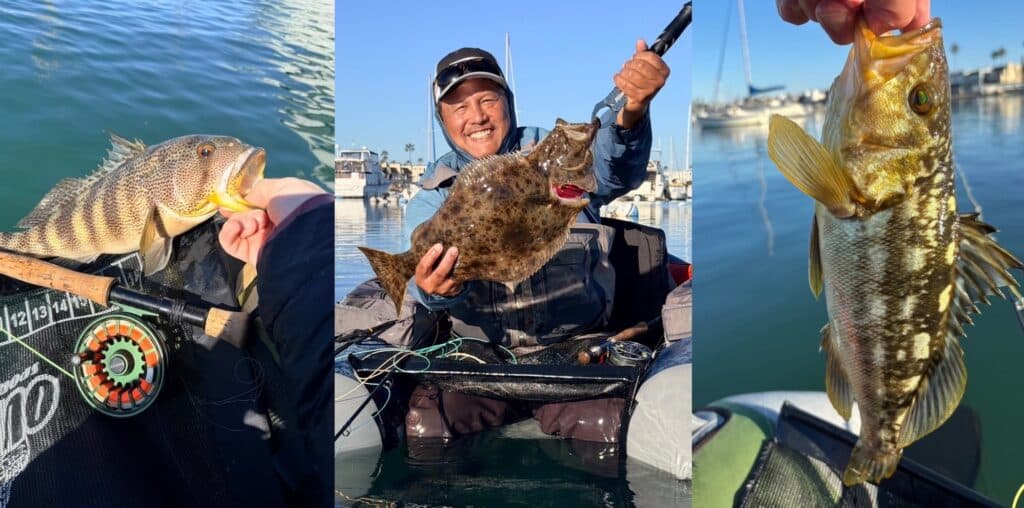
I am always entertained when there’s a solid take on the initial sink or with very minimal retrieve. In fact, it’s not uncommon to use a suspended and balanced streamer with a floating line or even an indicator to control the fly’s descent and depth. It seems like everyone highlights the value of slow retrieves. That said, San Diego’s Richard Hayashi emphasized that unweighted flies can play an important role, especially when fishing just below the surface, combined with a fast strip that can attract different fish. It was a #6 crease fly riding just below the surface that landed me my first inshore bonito. It was a whopping 14-inch fish, but no one needs to be told how hard they pull. I had cast into a small school of them tearing into baitfish in Marina Del Rey. But who is going to stop you from fast stripping on a fast-sinking line at depth? Isn’t experimentation part of the game?
Richard also pointed out an approach involving managing a “drift” (and even mending) in moving water. The goal is to time it right and work the sink into likely fish-holding zones. He credits Peter Piconi for that tip. Speaking of depth, if you want an accurate read, you can tie something heavy to your line and just drop it below you. One certainly can join the ranks of anglers who load their watercraft with fish finders, cup holders, psychedelic LEDs, and pirate flags. These bays are great places to find plenty of space for casting practice, and you can skip the watercraft, find a spot to wade, and go crazy that way.
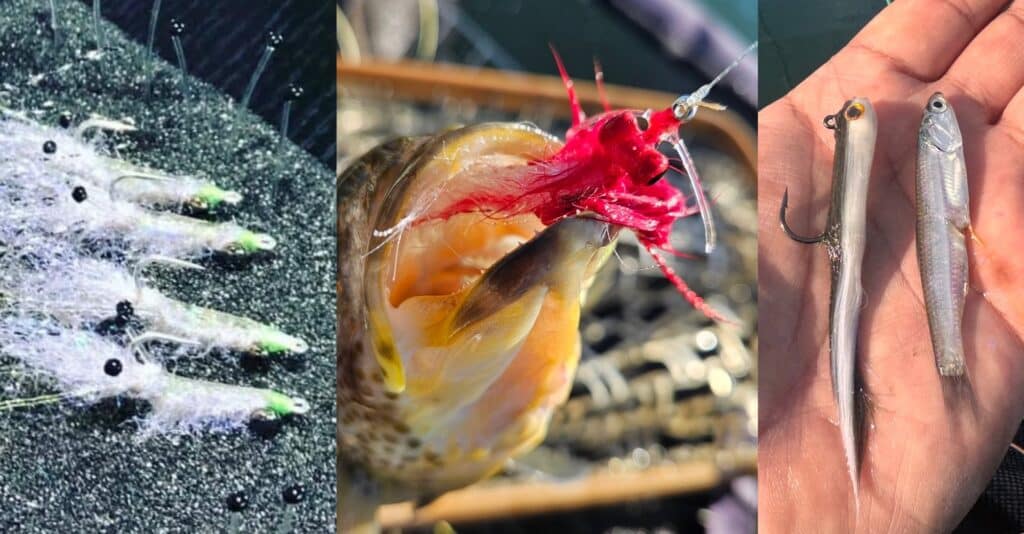
Beyond the Clouser, flies that mimic shrimp and various other streamers in different color variations and sizes are wise to carry. Most bay fish have a diverse diet, and I once had a spotted bay bass cough up actual crabs (still wiggling) as I unhooked it. In areas with eelgrass or some kelp, a weed guard can also be helpful. I once met a young angler whose mission was constant experimentation, and he proudly showed me a shrimp pattern that looked more like a lake midge pattern than what one normally associates with the salt—sparse and minimalist to an extreme. Of course, it had eyes made from burnt monofilament ends.
THE GOAL
Hopefully, this inspires you to try out this fun game, and thanks to the many anglers who shared their wisdom with me to improve this blog post. Comprehensive? Not exactly! With so many gear brands, fishing styles, locations, species, and more, my focus is on getting you stoked about this approach. It feels like it’s going to be a warm year, so tubing in your local bay might be just what the doctor ordered. I focused on Southern California because I live and fish here, but float tubing knows no borders!