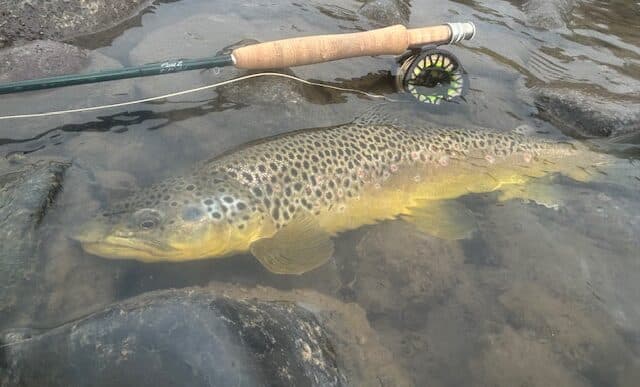
Steelhead fishing, much like gambling, draws individuals into a cycle of winning, losing, desperation, and sometimes hopelessness. I have witnessed all four stages firsthand among
steelhead anglers.
While the consequences may not include losing your house, I have seen several relationships crumble, and a job or two lost because of an intense passion for winter chrome.
As with gambling, stories of success are recounted most often, obscuring the frequent reality of fishless trips. Other times, you will drive north, envisioning fish rolling in the morning light and be rewarded with explosive runs and unrivaled acrobatics. Yet, it is precisely this unpredictability that reveals the central lesson of steelhead fishing: Its actual value lies not in the straightforward pursuit of success, but in appreciating the process and embracing the uncertainty of the outcome.
Much like gambling, if you are seeking a guaranteed formula for consistently winning at this pursuit, you will not find it.
However, I can offer guidance that may improve your odds. Ultimately, I have never felt defeated by steelheading; I have always believed that it will happen on the next cast.
There are many ways to catch steelhead, but here I will talk about swinging flies for them. My preference for swinging comes not only from the sporting challenge they present, but also from a conscious ethical choice. This technique, which requires the angler to actively present the fly, demands greater skill and intentionality compared to methods such as drifting plastic beads. Wild steelhead are too precious. My rationale was solidified many years ago in Oregon, when a wild steelhead, wounded by a seal, took my egg pattern. Landing that fish, with its belly eaten out, convinced me that egg imitations were a cheat code, and I have not used them since. Instead, swinging flies invites the most aggressive fish to strike, creating an unforgettable encounter that feels earned. This self-imposed selectivity enhances my experience: I can recall every steelhead I have caught in California on the swing, which aligns with my belief that a true sporting life is grounded in respect for these rare fish. By intentionally choosing a method that prioritizes experience over mere efficiency, I not only deepen my engagement with the environment but also aim to contribute to the preservation and legacy of steelhead for future generations.
TIMING AND FLEXIBILITY
As a dedicated steelhead angler and someone who is often asked for steelheading advice, I can tell you that they are not hard to catch, they are just hard to find.
A meteorologist or geologist may have as good a chance of catching a winter steelhead as an ‘expert angler’ does. The first-time gambler can win big betting on black and the seasoned Vegas veteran can lose it all betting red. The unpredictable nature of California winters is like a roulette wheel, making it nearly impossible to plan a trip north in advance. When the desired weather pattern develops, you may need to drop everything and go. Sometimes we want rain; other times we want high pressure to push the storms away for a bit. In this sense, success in steelheading boils down to understanding weather, microclimates, and local geology—that’s 70 percent of the equation. The remaining 30 percent depends on having a flexible job and an understanding partner, and the best to play the game have neither. Ultimately, the key to good winter steelheading is relatively simple: Be on the river when the fish are there and the water conditions are right. Ideally, you will find yourself on the river the moment it transitions from brown to green. Conditions are primarily related to water clarity, not being blown out, and having enough water for the river to open for fishing rather than being under low-flow closure.
While the exact moment when fish will be present is impossible to predict and would remove the seductiveness of the whole pursuit, conditions are where we focus most of our speculative efforts. Just like at the horse track, every angler thinks they have the inside edge on which forecast to bet on. Low-flow closure can be pretty easy to navigate via wildlife.ca.gov. The “blown-out” aspect is far trickier to wrap your head around. So, what is blown out? If you don’t know, I would say you want at least four feet of visibility for typical winter conditions. I measure this by wading into the water and noting when I can no longer see the tip of my boot. I know a few experienced steelhead anglers who will fish a foot of visibility and catch fish by swinging their flies right into the banks in shallow water and stepping down six inches after every cast. That’s how ‘Hang Down Jenkins’ got his nickname, now famous in every steelhead lodge and camp from here to Russia. If you know where they live and how to get your fly precisely there, you can fish with less visibility. The amount of rain needed to cause a blowout varies from river to river. Some rivers have more logging; others have unstable geology and landslides to contend with. Even when you think you have it figured out, you drive hours north only to find brown water. The answer to blown conditions is to double down, and drive further in search of clean water in hopes of hitting the jackpot. ‘Maybe the storm dumped more water on this side of the ridge than into another nearby drainage?’
We ask questions and look for answers. This process unfolds thousands of times in our fishing lives and that unpredictability is one of the many joys of fly fishing.
My weather bookmarks tab in my web browser drops to the bottom of my monitor and becomes mission control for my winter enjoyment. Windy, The National Weather Discussion, NOAA, and several other sources are meticulously studied and compared. No single application has proven supremely reliable; it’s in comparing many predictions that I have found the most reliable answers. I count cards and place my bets accordingly.
THE RIVER HIGHWAY
Beyond choosing the right time to go, we need to understand our quarry. The winter steelhead, unlike its summer and fall cousins, spends little time in the river system and comes in long after the acrid smell of the salmon run has dissipated. The fish enter the river system when they are sexually mature and water conditions allow it. Many coastal streams’ mouths are closed with sand until the first storm or a good ol’ boy with a tractor comes and opens it. The latter is considered to be in bad form. The fish shoot upriver to their preferred spawning zone—be it main river or tributaries—to procreate and die, or promptly head back to the ocean. These fish are moving through the system. So, we fish for them in traveling lanes, pinch points, and resting spots. The rivers become highways, and winter steelhead are nosing upriver following the path of least resistance. The steelheader seeks soft water that looks like a pleasant place to rest for a steelhead on a long journey. Think of this as fishing at a highway rest stop. Another great place to find migrating fish is where four lanes converge into one, usually at the head of a run—a pinch point. I find there are two types of steelhead anglers. Those who stand in one spot swinging their fly through a pinch point, and those who cover water. I believe the former to be incredibly effective; however, my ADHD won’t allow for it, so I fall into the latter category. A steelheader needs to place a bet on one method or the other.
THE SUCCESSFUL STEELHEADER APPROACH
On Timing
Avoid making firm time commitments during steelhead season. The winter steelhead season typically begins with the onset of rains in November and, for me, concludes in March. Birthdays, anniversaries and visiting in-laws during this critical time frame can result in lost fishing time. I recommend responding to invitations and requests during this period with measured flexibility—such as replying with “maybe”—because fishing opportunities depend heavily on unpredictable weather conditions. If the rivers are in shape, it is important to be ready to go fishing at a moment’s notice. A flexible approach maximizes your chances of success by allowing you to capitalize on the narrow windows when river conditions are ideal.
Look at the weather every day. I check the three-day and extended forecasts and speculate on the river’s condition every day through the winter steelhead season. Again, it’s the ADHD.
Check NOAA’s River forecast models. They provide predictive analysis of stream flow for the next five days and can help gauge the river’s future condition. These forecasts are just that: not guaranteed, but another piece of data to inform you of where and when to place your bets.
On Conservation & Etiquette
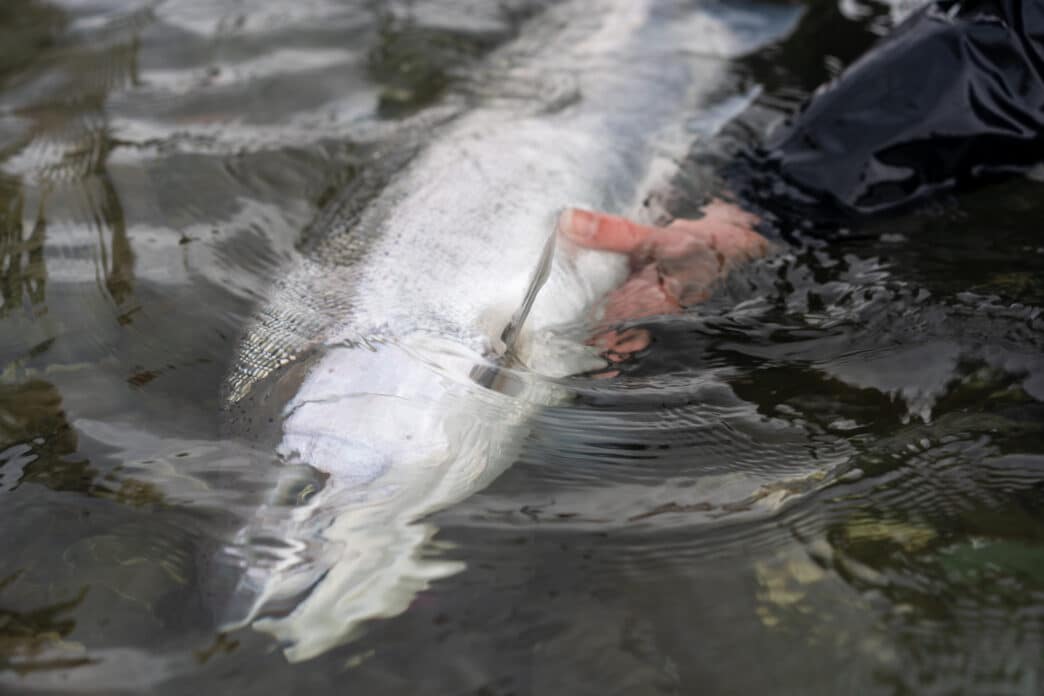
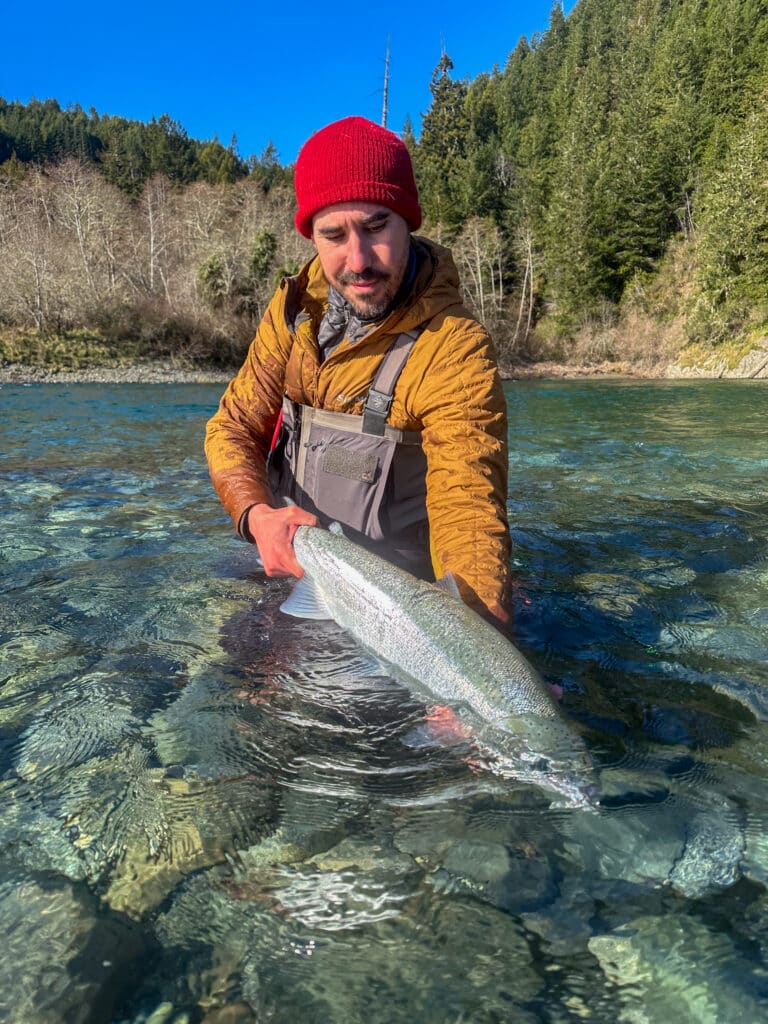
Keep fish wet. These fish are extremely rare, and we should do everything in our power to ensure their survival, first by just keeping them in the water. I am always baffled by guides posting photos of clients holding wild steelhead out of the water, holding a fish over an aluminum drift boat, while wearing gloves. It’s irresponsible behavior and should be discouraged. We all must recognize the paradox of what we do to these fish by hooking them and use best practices when we do encounter these precious creatures. Use a net when landing steelhead. If you don’t have a net, fight ’em hard and tail ’em in knee-deep water. Do not drag them up on the rocks. A hero photo of a fish is not worth killing a fish for your ego. Remove your gloves and wet your hands before handling fish. Take a quick photo with the fish in the water and make sure the fish actively swims out of your hands.
Support dam removals and habitat restoration. Get involved with efforts to remove dams in California so steelhead have access to critical spawning habitat.
On Techniques
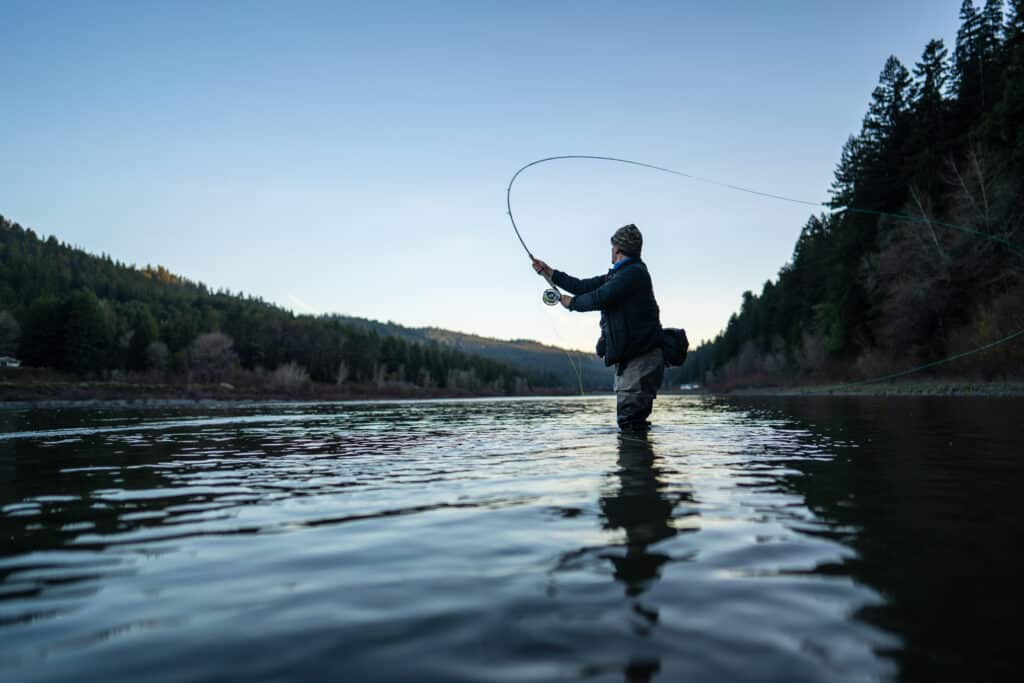
Fish, don’t just cast. The best steelhead anglers approach each run methodically. Begin by thoroughly fishing the inside edge of the run, where steelhead often hold in shallow water, often less than knee-deep—a tendency heightened by increased seal predation. For this first pass, use a lighter sink tip, such as a combination of a 5-foot floating and a 5-foot sinking tip to ensure your fly remains at the appropriate depth. After completing this initial pass, make a second pass through the head and main section (‘gut’) of the run using a heavier sink tip, such as 10 feet of T-14, to reach deeper holding fish.
The two-step. How much you step down between each cast isn’t always the same. It depends on the clarity of the water or the juiciness of the section you are fishing. If you have two and a half feet of visibility, you may only want to step a foot and a half between each cast. Similarly, if a 10-foot stretch looks like prime holding water, slow down, cut your step-down distance in half, and cover this water more thoroughly.
The angle of the dangle. Hard to explain, but the angle is so important in swinging and can only be learned from experience. For this reason, every cast should be evaluated. I ask myself: Did my fly swing through the right spot at the desired depth and speed? If not, I will adjust my angle to achieve the desired results. Fish confidently. It’s important to realize that 99.999 percent of the time, you are not fishing to fish, which is where steelhead earned the moniker of “fish of a thousand casts.” Despite these odds, believe it will happen every time you cast your fly out—just like the gambler, always believing the next spin of the wheel will be a jackpot.
On Gear
Keep it simple. This varies from river to river, but, 85 percent of the time, your gear setup for winter steelhead works from here to Washington. You will find beauty in distilling your gear down to the bare minimum.
Rain Jacket: One that keeps you dry.
Rod: Spey rod at a length between 12.5 and 13.5 feet that can cast a 525 grain shooting head.
Reel: I prefer something with a drag, and that is silent. If you can land a fish without the anglers upstream hearing about it, all the better. Current favorites are the Sage Spey II and Galvan Swing.
Lines: Skagit Head 500-575 grains. Five hundred-grain heads will cast lighter tips while you will want something that casts at least 525 grain for heavier T-14 tips.
Sink Tips: 5-foot floating and 5-foot sinking MOW Heavy for tailouts and 10 feet of T-11 or T-14 for head and guts of run.
Tippet: I use 16-pound Rio Salmon Steelhead Tippet. I don’t understand people’s obsession with Maxima. The spools suck and find the telltale broken rubber band on rivers all the time.
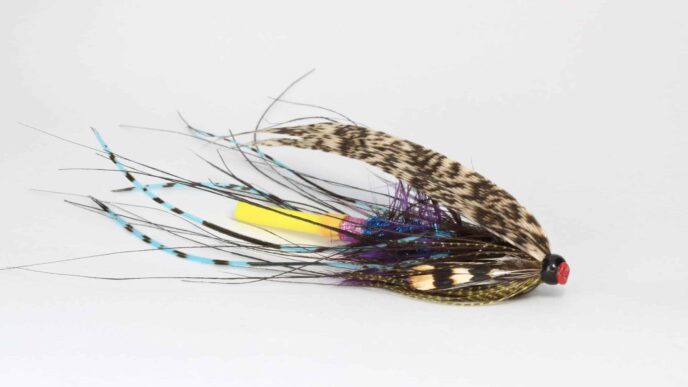
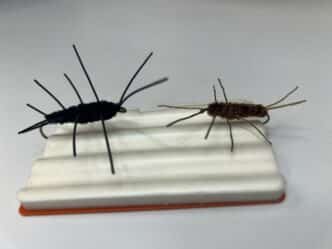
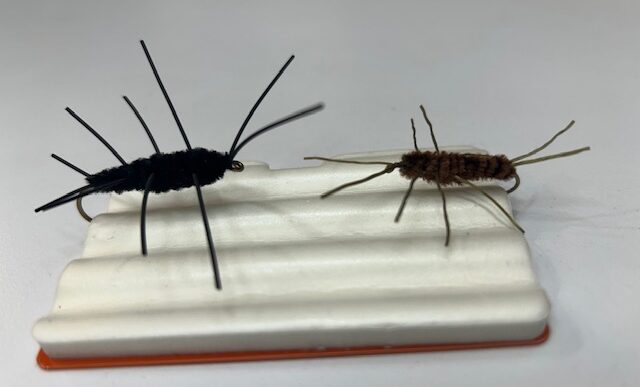
Flies: I prefer marabou flies in bright pink (for clearer water) and black (for better visibility in colored water), some with weight and some without, so I can adjust the depth. I keep it simple.
Ultimately, you will find that steelheading remains a gamble without serious consequences, as the journey offers opportunities to learn and deepen your connection to rivers and nature at large. Much like the cycle of anticipation and uncertainty that initially draws anglers to the sport, every outing becomes a chance to appreciate both its unpredictability and its rewards. I have always said, “The difference between a good day of steelheading and a great day of steelheading is one fish.” Simply being present on California’s lush green coast in the heart of winter, while much of the country lies dormant beneath brown fields or snow, exemplifies the unique satisfaction found in the process rather than in the outcome alone. When your line tightens to a silvery unicorn, you experience not just success, but fulfillment that arises from embracing the mystery, uncertainty, and perseverance that define winter steelhead fishing. May you find a steelhead on the end of your line.