
Bonefishing Through Life Stages
As I write this, I’m soaring toward Hawaii with my wife and daughter—currently glued to Frozen for the umpteenth time—celebrating our upcoming addition, another daughter due in February 2026.
This marks our 10th year visiting the islands together. Over the years, our trips have spanned weddings, birthdays, honeymoons, extended layovers, and easy getaways from California to recharge. But no matter the occasion or who I’m going with, one constant has remained: My saltwater fly rod always comes along.
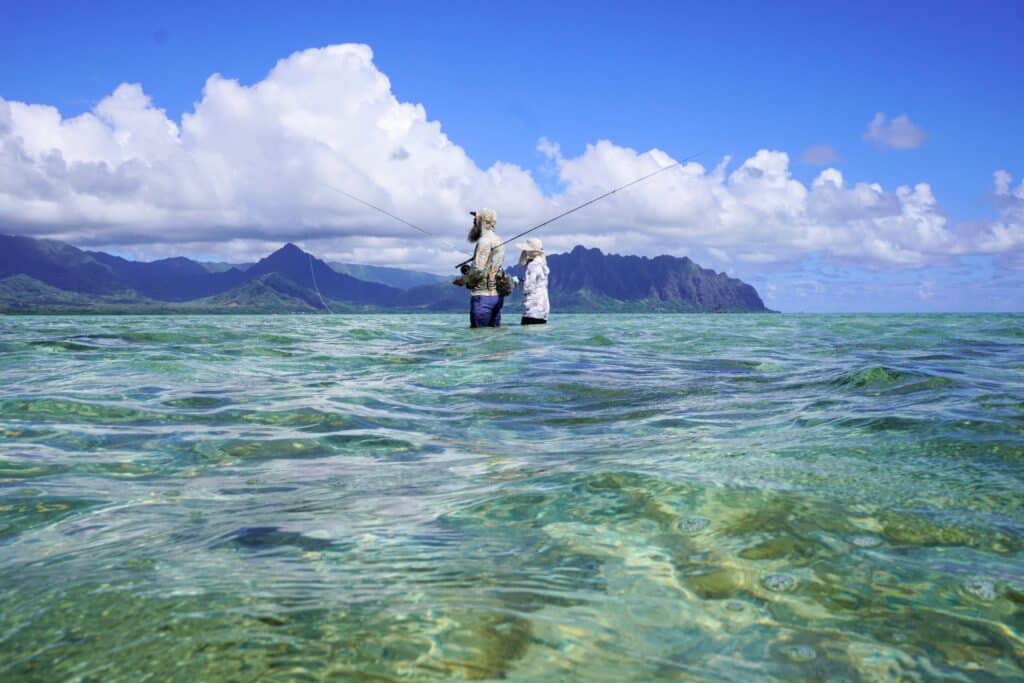
While fishing may not be the primary reason we head to Hawaii, there’s something special about sneaking away for a few hours to chase the elusive bonefish in the island’s crystal-clear waters. Hawaii’s not just a paradise for its beaches, volcanoes, and sunsets—it’s also home to some of the biggest bonefish on the planet.
COLLEGE STAGE: YOU WON’T CATCH A FISH
My first trip to Hawaii was back in 2007, during college, when I visited O‘ahu with my mom and sister. At the time, I was working at a fly shop in San Francisco and had high hopes of connecting with the only fly shop on the island. I walked in, full of confidence—industry peer, fresh Sage gear, and all the enthusiasm of a twenty-something trout bum ready to make something happen.
The guy behind the counter asked me a few simple questions about my flats experience—of which I had absolutely none. After a short pause, he looked me dead in the eye and said, “You won’t catch a bonefish.”
It stung. I still bought a handful of flies, probably out of pride more than anything, but deep down, I knew he was right. I didn’t catch a bonefish that trip. But that shop visit lit a fire. It marked the start of what’s become a long, obsessive journey to understand and (occasionally) outwit these ghostly fish of the Hawaiian flats.
GIRLFRIEND STAGE: YOU’LL NEVER FORGET YOUR FIRST
Nearly a decade later, in 2016, I planned a romantic getaway with my girlfriend (now wife—surprise!). We settled on O‘ahu, but this was more than a vacation. This was a redemption mission. Armed with a little flats experience from Mexico, I had one quiet goal: finally land a Hawaiian bonefish.
Between beach days, jungle hikes, and Mai Tais, I dragged her onto the flats every evening. Using Google Maps, stubborn optimism, and a bit of luck, I started locating promising water—and bonefish. We found fish daily, but getting them to eat was a whole different story.
On the final evening, just as the sun started to sink, I ran into a local angler. We talked about our close encounters, and to my surprise, he offered to walk the flat with me. After taking one look at my fly selection, he shook his head, clipped off his fly, and handed it to me. “This one’s magic.”
We waded together. I cast to a fish only he could see. The fish ate. And as if the bonefish god weren’t done humbling me, my backing crossed mid-run and locked—the fish was gone.
My girlfriend, who had already endured hours of sunset missions and my disgruntled muttering, looked at me and said, “Let’s come back at sunrise before the airport—you still have the magic fly.”
That night, I stripped and rewound all 200 yards of backing in dim Airbnb lighting.
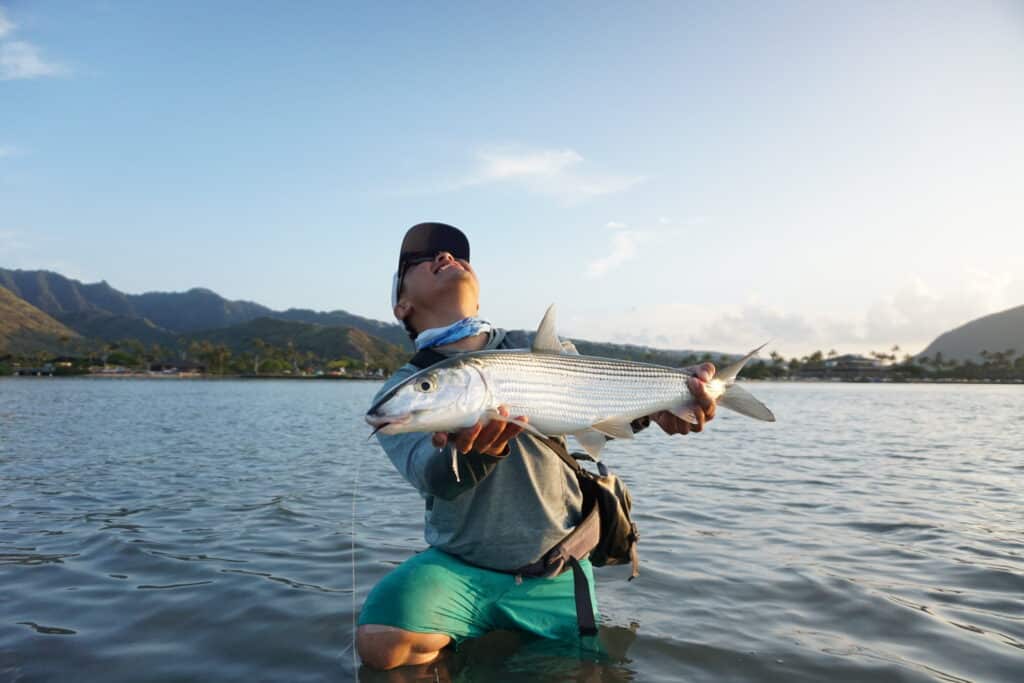
The next morning, we stepped onto the flat at first light. Tails rose like small sails in the shallows. I made a cast, got the eat, and everything held. My first Hawaiian bonefish—sight-casted on foot with my future wife cheering from behind the camera.
PARTNER STAGE: SHARING THE EXPERIENCE
As the years went on, Hawaii shifted from a quick escape to our annual trip—an easy hop from California with just enough familiarity to feel comfortable and just enough new water to keep things interesting. We started bouncing between islands, meeting other anglers, and getting mistaken for locals more times than I can count.
Somewhere along the way, my wife developed a steady curiosity about what I was actually doing out on the flats. Not a full-blown obsession—just a willingness to try, learn, and be part of it. That alone made the whole experience more fun. I found myself getting way too into helping her gear up: comparing sun hoodies, sun gloves, and lightweight UPF layers like I was reviewing them for a catalog. One time, we even scored a pair of high-top Vans at Marshalls—perfect for a single flats session and cheap enough that we didn’t feel bad tossing them before flying home. Little moments like that helped turn a solo pursuit into something we got to share.
On one anniversary trip, we booked a day with a guide, and it instantly changed the rhythm. Instead of me trying to spot fish, read tides, and call plays like a DIY quarterback, the guide handled everything—fly selection, spotting fish, and pacing the retrieve. It let both of us relax and actually enjoy being out there.
Late in the session, he spotted a fish cruising the flat and set things up for her. A few quick instructions, a small reposition, and suddenly she was tight to something serious. The reel lit up instantly, the line cutting across the flat with that unmistakable “this is a good one” energy. She stayed focused and calm while the fish took run after run deep into the backing.
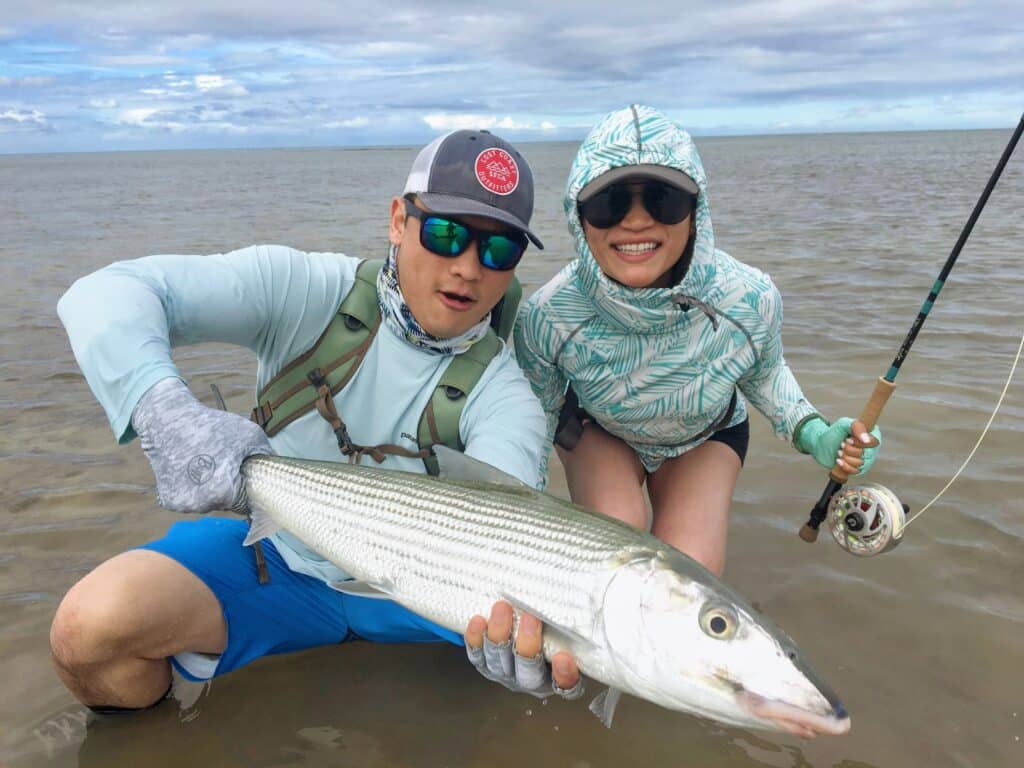
When it finally came in, it was a true Hawaiian slab—an honest 10-pound bonefish, the kind you can spend years chasing. She looked stunned for a second before breaking into a grin. After the release, I checked the fly and it practically crumbled—the hook shank had broken clean through (likely from rust from a previous trip). It held just long enough.
No big cinematic moment, no dramatic music. Just one of those days that stays with you. Proof that fishing, and life, gets a whole lot better when someone’s willing to step into the water with you.
DAD STAGE: WHERE THERE’S A WILL, THERE’S A WAY
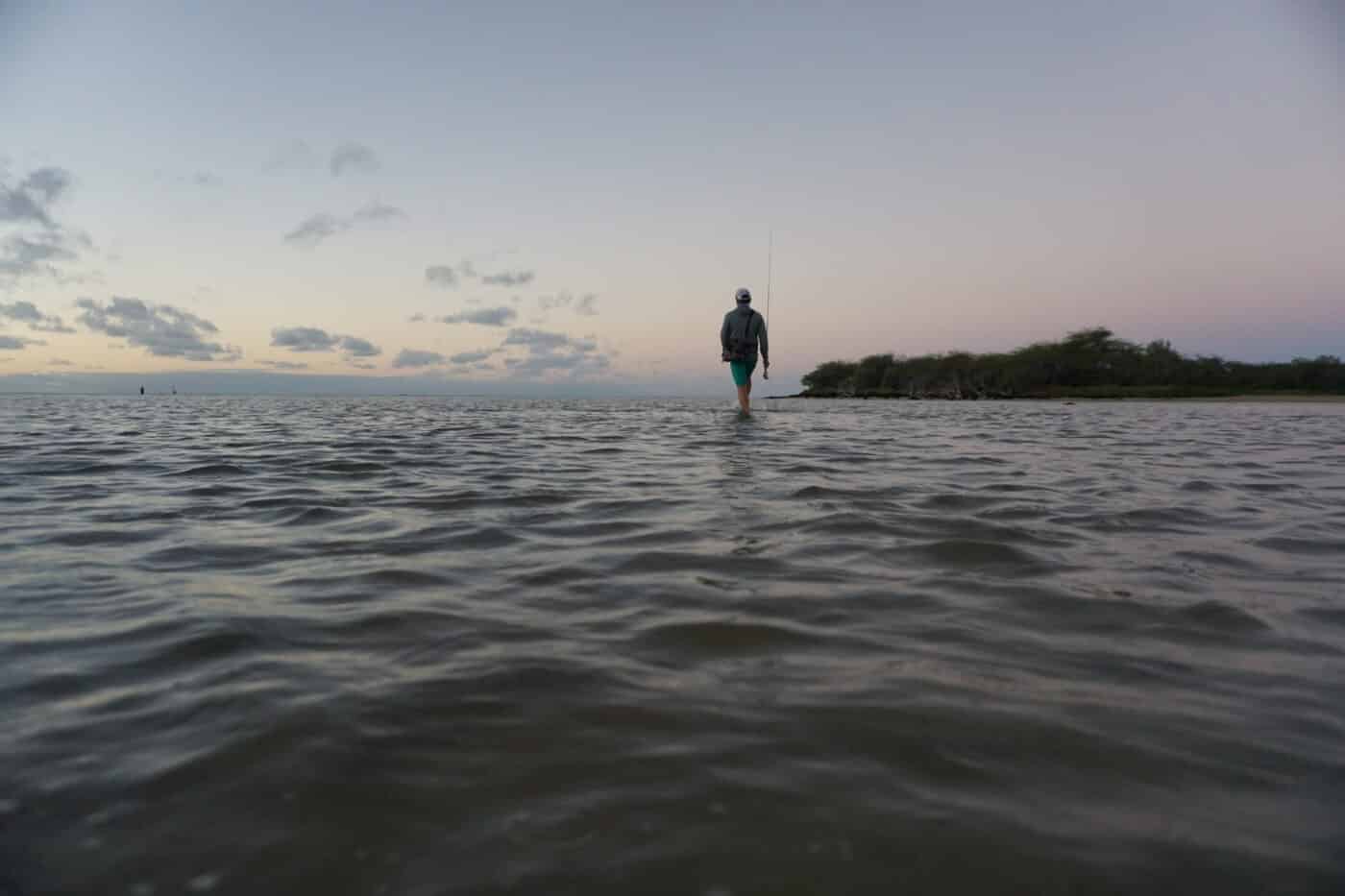
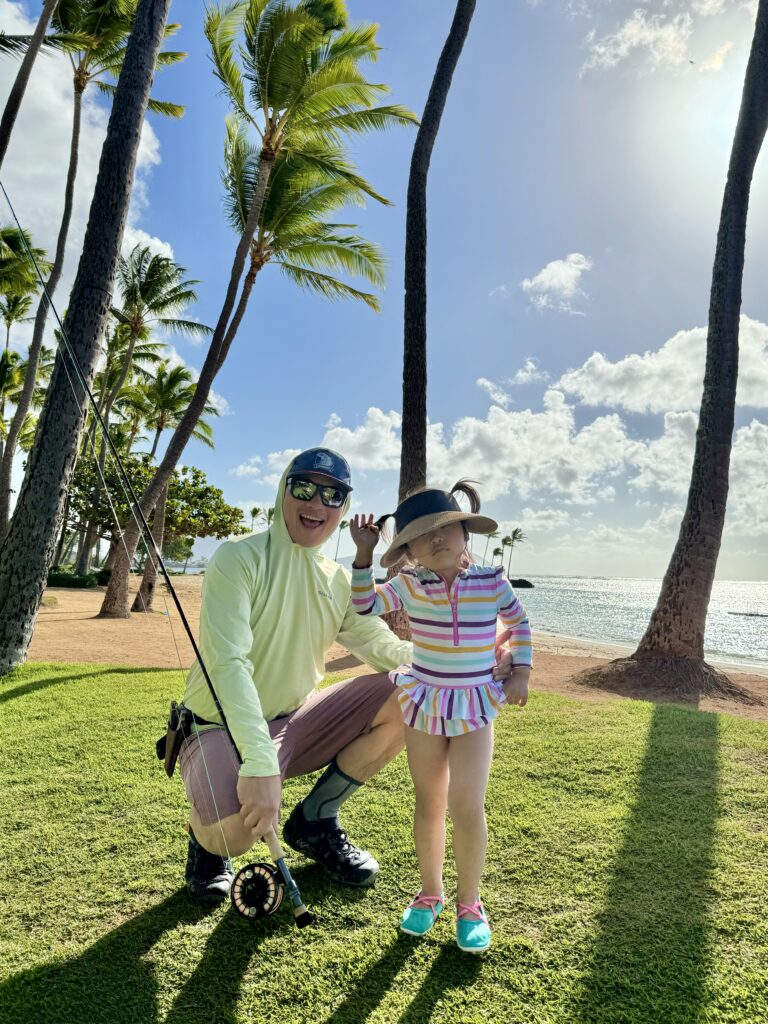
These days, traveling to Hawaii looks a little different. Between the car seat, stroller, travel crib, diaper bag, and what feels like half our house packed into eight overloaded bags, it’s a small miracle that my fly rod still makes the cut. Somehow, it always does. And when we’re lucky, the grandparents join—opening a precious window or two to sneak away to the flats.
My time on the water is more limited now, but the rhythm has just shifted. Hotel selection now revolves around being steps from fishable flats and close to comforts for the family. Beach time and nap time get strategically aligned with low tide. I’ll rig up while my daughter digs in the sand, then wade just far enough to make a few quiet casts before she calls me back to help find seashells.
The days of fishing whenever the tide is right are long gone, but I don’t miss them “that” much. There’s something grounding about watching my daughter splash in the shallows while I scan for the green glow of a bonefish. Proof that with a little planning (and a lot of bags), there’s always a way to keep fishing—no matter what stage of life you’re in.
SHARE THE KNOWLEDGE STAGE: MAYBE YOU’LL GO?
A decade wiser, with multiple flats trips to the Florida Keys and Ascension Bay under my belt, I can confidently say Hawaiian bonefishing is in a league of its own. It’s closer to permit fishing than traditional bonefishing—humbling, technical, and deeply rewarding when everything finally comes tight.
Set your expectations low, stay patient, and remember: Every shot counts. You won’t see schools mudding. Most days, you’re sight-fishing singles or doubles that appear and vanish like ghosts. The wind is often up, the light constantly shifts, and the fish feed along edges of the flat and channels. The best approach? Slow down—tiptoe almost. Pick a zone and wait. More walking usually hurts more than it helps.
Keep the sun and wind at your back. When clouds roll through, pause and wait for the next sunny window before moving. Most shots are within 10–40 feet, so forget hero casts—unless you’re blind casting, which works surprisingly well around sandy pockets, deeper cuts, and reefs. Keep in mind these bonefish use small channels as natural onramps onto the flat—it’s all about reading the subtle highways of the water.
Unlike the fly shop owner on my first trip, here’s my advice: You will catch a Hawaiian bonefish eventually—if you stay positive, keep at it, and ask for help. And don’t forget, there’s more than just bones in the water: Trumpetfish, travally, and goatfish often swim higher in the water column and can be easier to tempt, though milkfish remain steps above the bones. Speed up your retrieval on these species, and you might be surprised what bites on a blind cast.
One of the most rewarding parts of returning over the years has been becoming friends with the angler who first handed me that “magic” fly. He’s taught me tides, locations, fly selection, and, most importantly, how much presentation matters. But the lesson that has stuck far beyond the flats is this:
“We’ve all got to help each other.”
That holds true on the flats, in family life, friendship, and everywhere else.
GUIDES VS. DIY
DIY is my preferred method, but it can be challenging if you’re new to flats fishing. If you can, book a guide. One good day can shorten the learning curve by years and nearly guarantee shots. These fish have a routine.
Whether you go guided or DIY, chasing bones on the Hawaiian flats can be unforgettable if you see them—and absolutely worth packing a rod for next time you make the easy jump from California.