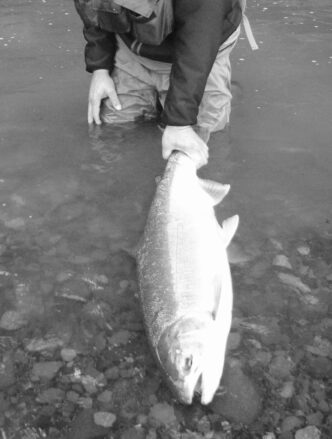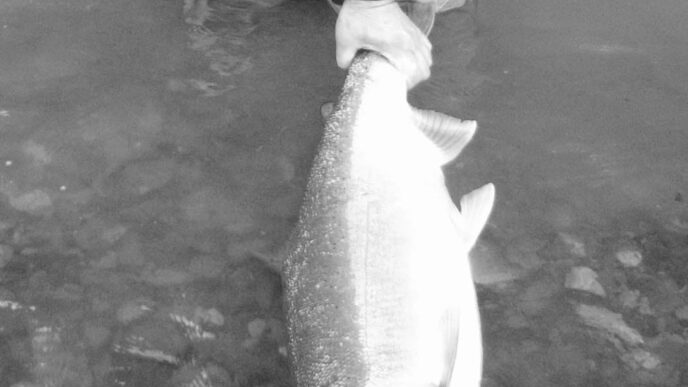
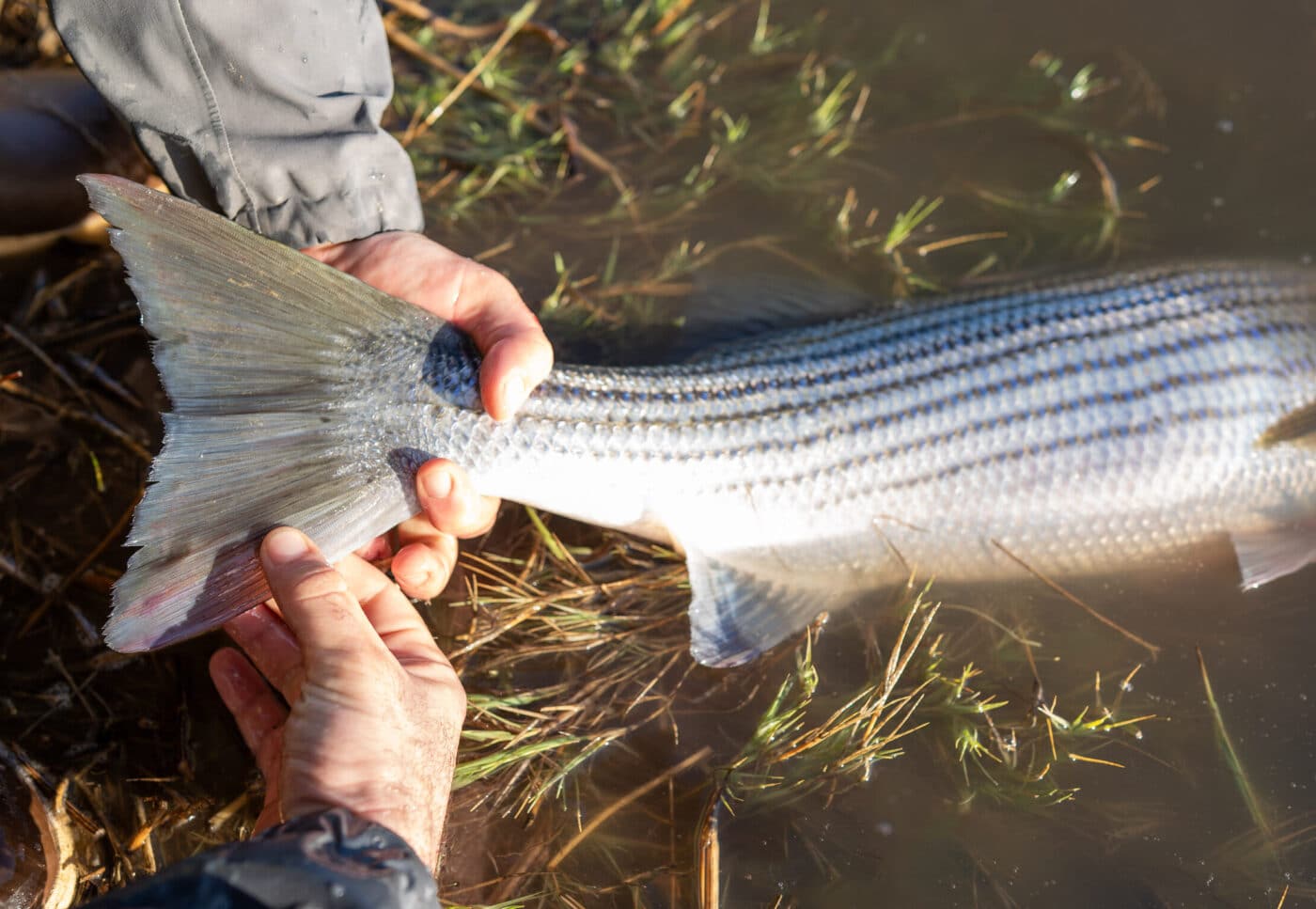

The sun rose just beyond the far side of the Bay, lighting up the small silver fish bursting from the tranquil water, fleeing in a panic that could only mean life or death. The tide had just started to move, water draining and pushing toward the point where I stood. Behind me, one of the largest economies in the world was waking up, the sounds of commuters beginning to drown out the birds. “Suckers,” I thought, as I slung a cast just in front of where I had seen the terrified baitfish and the pursuing V wake. Now, just some nervous water, no doubt the baitfish being devoured. On my second strip, the V wake reappeared and was tracking right toward my fly. I continued to strip my fly in my best terrified bait fish imitation, when the striper demolished my fly like a heat-seeking missile. A strong fish. No surprise since even a little striper will bend a 9-weight. I released a stout 8-pound fish that was apparently well-fed, reeled up my line, and tossed my rod in my truck. Time to join the commute filled with appreciation to live in one of the coolest places in the world, the City by the Bay.
The San Francisco Bay is the largest body of water in California by area, excluding the Pacific Ocean, with roughly 1,000 miles of shoreline and spanning about 1,600 square miles. It is a tidal estuary that drains nearly 60,000 square miles of land through a gap just one mile wide, which John C. Frémont named the Golden Gate. Geologically, this system is relatively young, having only taken its current form in the last 6,000 years. Before the last ice age ended, the California coastline sat 20 to 30 miles west of its present position, out near the Farallon Islands. What we now call the Bay would have been a broad river valley.
Today, nearly 20 percent of California’s population lives in one of the nine counties bordering the San Francisco Bay, and every anadromous fish traveling up the Sacramento River and San Joaquin River systems passes through it. So why isn’t the Bay more widely fished? It’s not a lack of access; nearly 40 percent of the shoreline is open to the public on foot. The answer, I think, lies in its sheer scale and variability, in the way fish movement and tidal influence constantly shift the game. If you’re anything like me, that challenge is exactly the appeal. The Bay is a critical step on the path to becoming a surf angler; a place to learn tides and fish behavior without the added chaos of waves. The San Francisco Bay isn’t hard to fish; it’s just different. And once you understand how tides, structure, and bait intersect, it becomes one of the most consistent fisheries in California.
So, pull on your mud boots, and let’s break down the factors that Bay anglers consider.
It all starts with access.
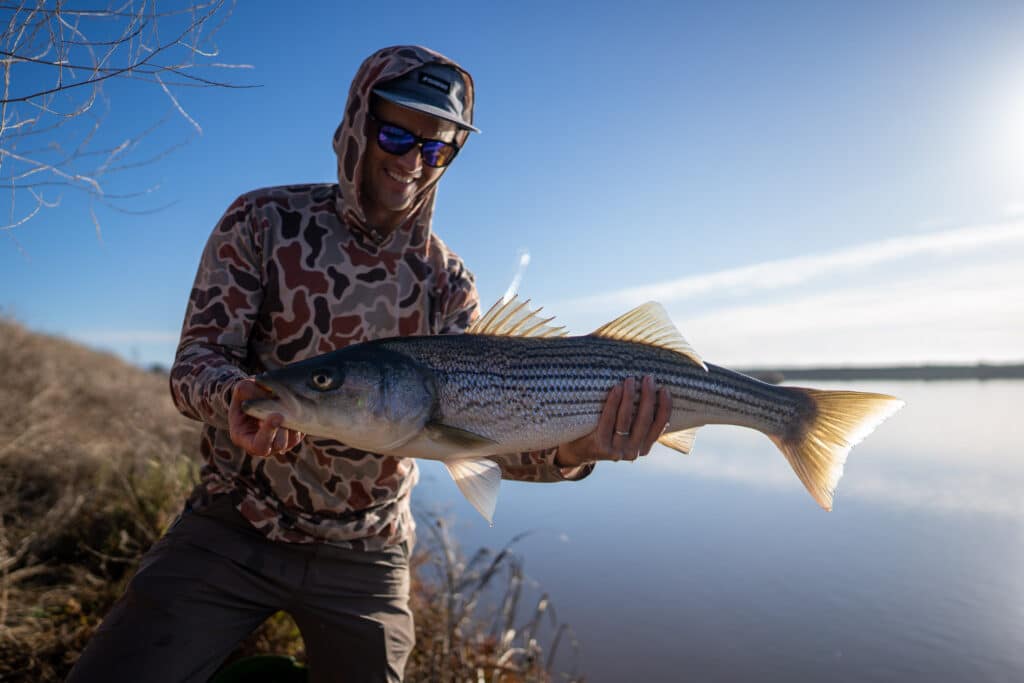
This is where I started when I was figuring out how to fish the Bay: I found a spot convenient for my commute and close to home and began observing it through different tides. Admittedly, fishing the Bay without a boat can seem daunting, but when you consider the Latin name for striper, Morone saxatilis, which roughly translates to “unwise rock dweller,” you realize you are in the right place, right on shore. Stripers use the shoreline to hunt, corralling baitfish against structure, and you will often see boats casting tight to the bank for that exact reason. When scouting, I looked for points, marshes that flood and drain, bait, birds, natural beauty, convenience, pinch points, shelves, and channels close to shore—and most importantly, fish. You need to observe a location across a range of tidal scenarios, including incoming, high, outgoing, and low, and over time, especially through spring and fall, before you can call it a good spot. Not catching a fish the first few times is hardly a reason to write it off. That said, certain features can quickly rule out a spot, like a giant mud hole or no room to backcast. Bay mud is among the most putrid substances known to humankind. Even then, if there are fish there, I will fish for them. I have shown up to work more than once covered in it, so a change of clothes or, better yet, a pair of mud boots, is a good idea. The Bay rarely gives you obvious signs. You have to look for small things. A slight push of water, a subtle seam, a shift in color. The more time you spend watching before you cast, the more fish you will find.
Learning what tide turns a spot on is more important than finding the spot itself.
TIDES
The Bay breathes, inhaling water from the ocean and expelling it twice a day. While daunting at first, the tides bring order and familiarity to what might otherwise seem an endless expanse of water, creating a recognizable current that organizes fish into predictable locations. A striper angler will know the upcoming weeks’ tides off the top of their head because tides are everything. It is not a matter of the incoming tide being best or the outgoing tide being best. It is about choosing your spot based on the tide. In the spring, fish are moving out of the delta, so an outgoing tide may pull more fish into the Bay. In the fall, they are coming from the ocean, so an incoming tide might bring more in. Fish and bait move with the current, and you need to think about where that current will push or concentrate them so they are accessible to you. If we live by the tides, we die by the winds. I’ve never looked at a tide and thought, “This is not a good tide to fish.” I have, however, looked at the wind forecast and decided I’d rather go to work. In a perfect world, the right tide for your favorite spot lines up with early morning or evening, and those are the dates you circle on the calendar. Stripers are largely nocturnal feeders, and some anglers lean into that and fish at night. For me, the night is for two things. Sleeping is one of them, and fishing is not the other.
TIDE NOTES
- Not all tides are created equal. Large tidal swings create stronger currents, which can be good, but they can also make the water too fast or too dirty to fish effectively. Smaller tides often produce more manageable conditions, especially from shore.
- If the water is moving and you are near structure, you are in
the game. - As the tide moves, it creates seams where fast and slow water meet. Just as in trout fishing, these edges are where fish position themselves, letting the current bring food to them.
- Look for where the current pushes into banks and points.
- Culverts and outlets concentrate current and food supply, making excellent targets.
TIMING
Low light is one factor of timing, but plenty of stripers are caught in the middle of the day. While you can catch fish in the Bay year-round, most move through during two major migration periods, spring and fall. The spring migration typically begins in March and runs through June. These fish are coming off the spawn, where they require freshwater, moving out of the rivers and creeks that feed into the Bay, most of which enter from the north and ultimately flow toward the ocean. The fall season generally runs from August through Thanksgiving. These fish are coming in from the ocean through the Golden Gate, pushing back toward the Delta and other freshwater systems for the winter. Understanding which direction the fish are moving changes how you approach the entire system.
GEAR
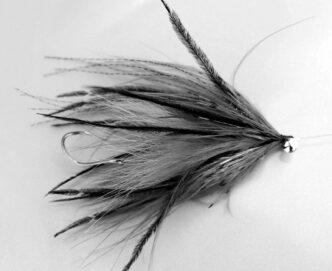
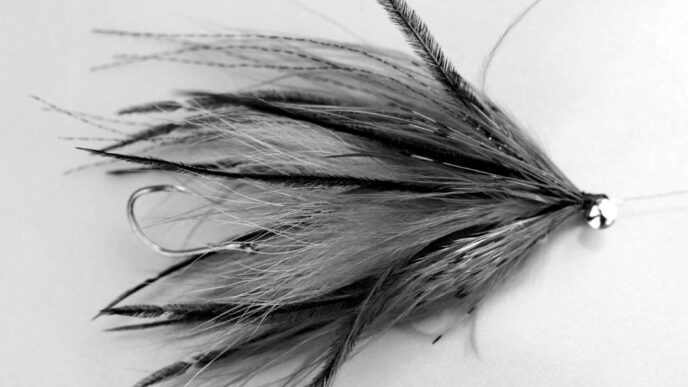
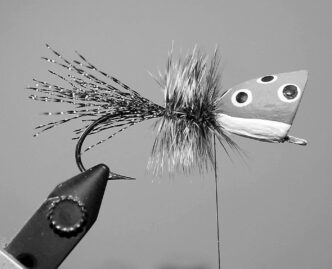
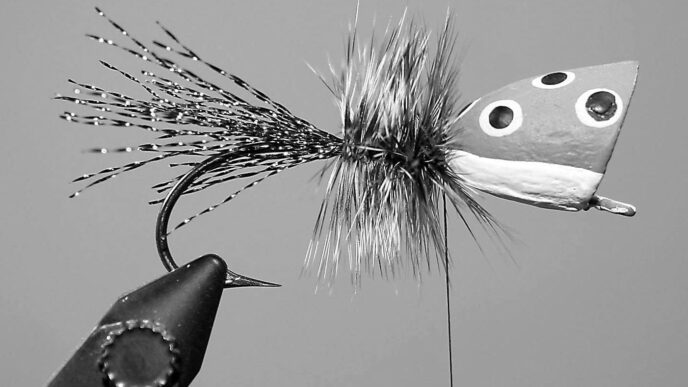
One of the appealing aspects of striper fishing in the Bay is its simplicity. A 7- to 9-weight rod will cover most situations, paired with a reel and an intermediate line capable of turning over larger flies in the wind. A 20-pound leader, a stripping basket, and a small selection of flies round out the system. Sparsely tied Clousers and Deceivers in both light and dark color profiles are consistently effective, with a 1/0 surf brown Adachi Clouser serving as a reliable standard. While it is easy to let the pursuit expand into boats, multiple rods, and specialized gear, none of that is necessary to fish the Bay effectively. From shore, a stripping basket and appropriate footwear, such as mud boots, are often the most important pieces of equipment. Keeping the system simple allows anglers to focus on what matters most: reading water, understanding tides, and presenting the fly effectively.
TECHNIQUES
Driving near water as an angler can be a challenge. I often feel like I need a sticker on the back of my truck that says, “Caution: may stop abruptly near water,” because I am constantly scanning the shoreline for birds, diving birds, surface boils, or simply the stage of the tide. Observation is the first and most important tool for finding fish in the Bay.
Once you find them, stripers are generally willing to eat. The technique becomes simple, but it has to be intentional. The strip is everything. It is what brings the fly to life. An aggressive, short strip with pauses can be extremely effective, especially when fishing Clousers or imitating a fleeing baitfish. Faster, more consistent strips with fewer pauses tend to work better with Deceiver-style patterns. Pay attention to how fish are reacting. At times, stripers will try to stun bait with their spiny fins, and you will feel a bump rather than a full eat. When that happens, it often helps to change from a fleeing retrieve to a wounded baitfish presentation, slowing things down and adding more pause.
There is no need to overcomplicate it. Focus on making your fly look alive, adjust based on feedback, and spend your energy finding fish.
A system this big, this dynamic, sitting in plain sight, and yet overlooked. Taking the time to figure out my home water has been the most rewarding and enriching fishing experience of my life. Having grown up fishing trout rivers, I found it daunting to step into something so different. But the reward is real. A better life, less stress, and the ability to do what you love on a regular basis, not just on long weekends.
If you are reading this from somewhere far from the San Francisco Bay, take it as a reminder to invest in your own home water. This is less about one place and more about a way of thinking. Learn how your water moves. Pay attention to how fish use it. The same principles apply whether it is here or anywhere: Tides influence the game.