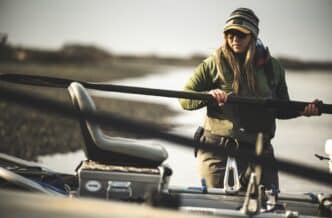
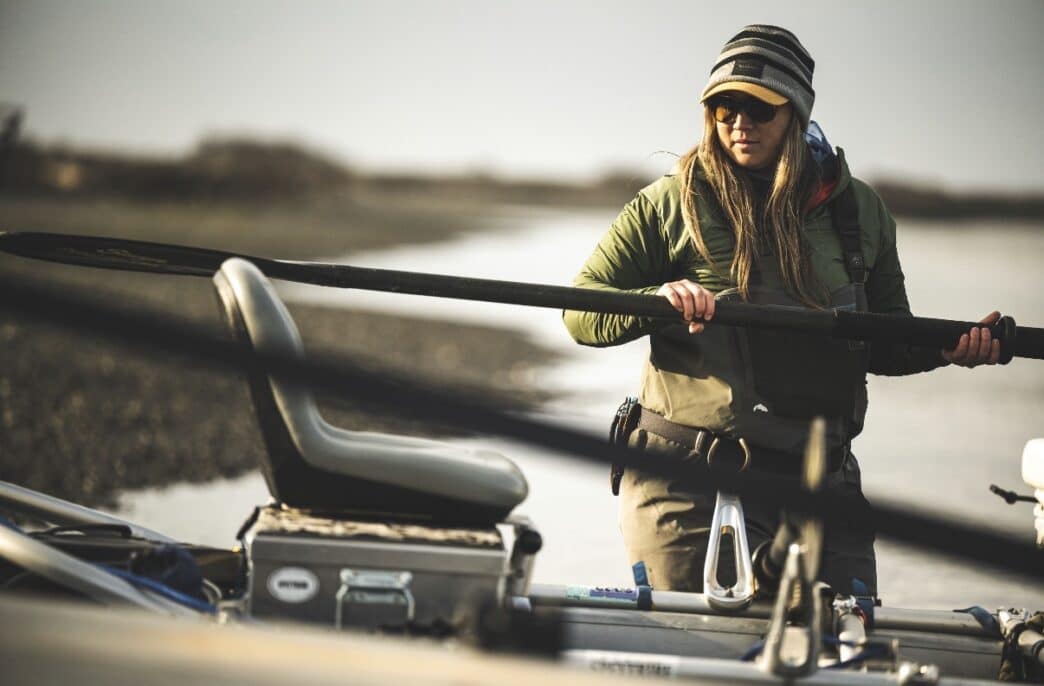
California has built its reputation on progress and inclusivity, yet its fly-fishing industry tells a different story. The near absence of female guides isn’t just outdated; it’s a glaring opportunity waiting to be claimed – a stark contrast to states like Montana, Alaska, Idaho, and Wyoming, where women routinely guide, run, and own lodges, and make a difference in conservation for their waters.
The issue isn’t a lack of talent; many women have the skills to guide but worry about having the strength to handle two full-sized humans in a boat, especially on a windy day, along with continued sexism in the industry, and even the daily responsibilities of motherhood. These are not real limitations, but they have had real influence. Women still remain largely absent from the guide roster, and if we want to talk honestly about the future of female fly-fishing guides, we have to start by asking why.
I’m here to share our stories—the stories of women who guide, teach, row, wade, and work these rivers in California and Oregon. Women who have carved out space in a culture that wasn’t built with us in mind. I hope to give you a clear picture of what it takes to be a fly-fishing guide in California and Oregon, in hopes that you will consider guiding in the future. I have personally made the most amazing connections and friendships that have enriched my life. I admire so many women in this industry—the seasoned and the new women on the guiding scene—who bring their grit, skills, humor, and resilience to work every single day.
To explain why I care so deeply about this, I need to start with where I came from. I’ve been a fly-casting instructor, fly-fishing travel specialist, trip host, directed kids’ fly-fishing camps, worked retail, and been a fly-fishing guide. My own path into the fly-fishing industry began in 1996 at a small shop in Scottsdale, Arizona, called Compleat Flyfishing. I walked in one afternoon simply wanting to find out where I could go fishing. That’s all. I had no idea I was stepping into a world that would shape the next decades of my life.
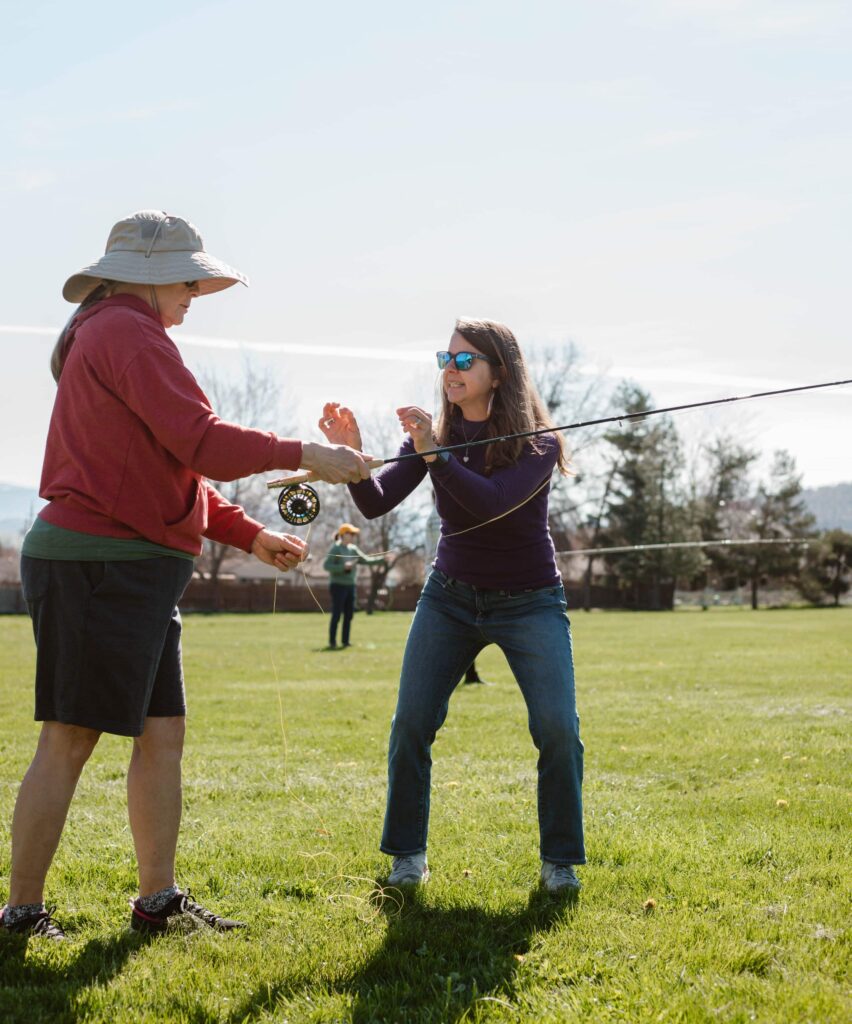
I can still picture that shop: rods on circular racks, reels displayed like jewelry, bins of flies I’d never seen before. I was mesmerized. A few days later, I returned for one of their evening presentations. I sat there taking notes as if I were studying for an exam—what flies to buy, what season to fish, where to stay. Afterwards, I lingered, asking questions and soaking up every scrap of information I could get. Soon, I was stopping in constantly. One day, one of the owners asked if I wanted to work there. “We’re trying to attract more women into the sport,” he said. All I could think about was the shop discount. I was thrilled.
Every weekend, I drove to Lees Ferry to fish the walk-in. That’s where I met Wendy Gunn, the legendary force behind Lees Ferry Anglers. Wendy was the boss. She ran the shop, booked the guides, ordered inventory, told us what flies were working, and could cast an entire fly line across the parking lot. Seeing her in that role cracked something open in me. It made the path ahead feel possible.
Eventually, I moved to California and started working at The Fly Shop in Redding. I ran the Mel Krieger Schools and kids’ camps and helped clients choose flies and plan their fly-fishing adventures.
Something began to shift. Women started coming in—wives, sisters, grandmas, daughters, curious beginners—and they shared their fish tales with me. I was learning alongside them, and the energy was contagious. Today, Kianna Chao, who works retail at The Fly Shop, shares, “Clients tell me all the time how great it is to see a woman in the shop. Dads say how they want to get their daughters involved.”
When I started reaching out to women guides across California and Oregon for this piece, I wasn’t sure what stories I would hear. Grit was expected—guiding in the West demands it—but what stood out was how familiar many of their experiences felt.
Despite years of progress in the broader fly-fishing community, some things haven’t changed as much as hoped. Women still remain underrepresented in the guiding ranks across both states.
Leslie Ajari Messett, who guides for steelhead on the Rogue, the North Umpqua, and along the Oregon Coast, has spent over a decade building her career on the water. “Finding a client base for swinging for steelhead takes some time,” she said. “I’m pretty easygoing and focus on process-based instruction and creating a good experience for my clients.” She has gained confidence and a steady clientele by explaining the why behind each fly, cast, presentation, and why it’s a good run, while hyping up her clients. She works hard to curate a memorable day for everyone she guides.
Leslie emphasized that guiding is ultimately a merit-based profession. Regardless of gender, guides must prove themselves through skill, consistency, and the ability to deliver for clients. The fisheries of Northern California and Oregon demand it—their trout waters are often technical and, at times, unforgiving, a proving ground for anyone hoping to build a reputation on the river.
Plus, guiding is difficult for anyone starting a new business. Building a clientele to fill your calendar is hard. Being the new guide on a stretch of river is hard. Guiding is not always the most welcoming environment. Fishing itself can be hard enough, and seeing a new guide boat can be frustrating. Especially in steelhead fishing, the more pressure there is, the tougher the fishing becomes and the less experience you can provide your client. However, even with this pushback, there’s always room to grow. There is space for everyone. Offering specialty trips and clinics can be a way to stand out in the guide pool.
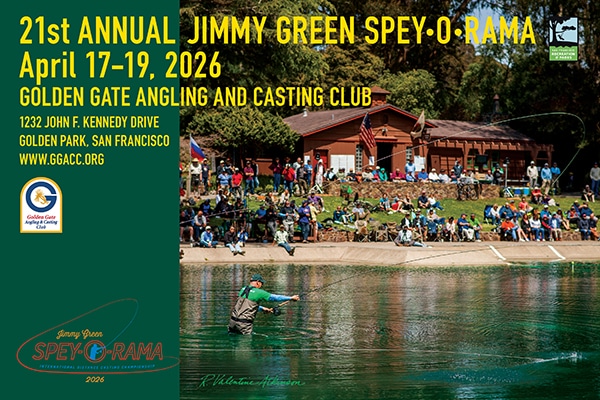
So, what the frank? Why aren’t there more women guiding in California and Oregon? We are the fastest-growing demographic in fly fishing. We’re curious, capable, strong. We sign up for schools and guide trips. We push manufacturers to take women’s gear seriously. Women’s clubs form and grow every year. And we keep showing up. There’s a special camaraderie in spotting another woman on the water and sharing a simple smile.
Another thing people rarely understand is just how physically demanding this work is. They see the photos—the smiling clients, the bent rods, the perfect loops—but they don’t see the hours of rowing against wind, clients weighing 150+ pounds each, and the miles of wading through uneven riverbeds. Rowing is a full-body sport and can be challenging for some women. But there are plenty of badass women who row boats every single day across the country. Wade guiding is also an option, depending on the fishery. “Walk and wade trips can offer more flexibility with fewer logistics than guiding out of a boat. I’m the one who handles the school drop-offs and pick-ups, and needs to be available for things,” says Southern Oregon guide Sha Orton.
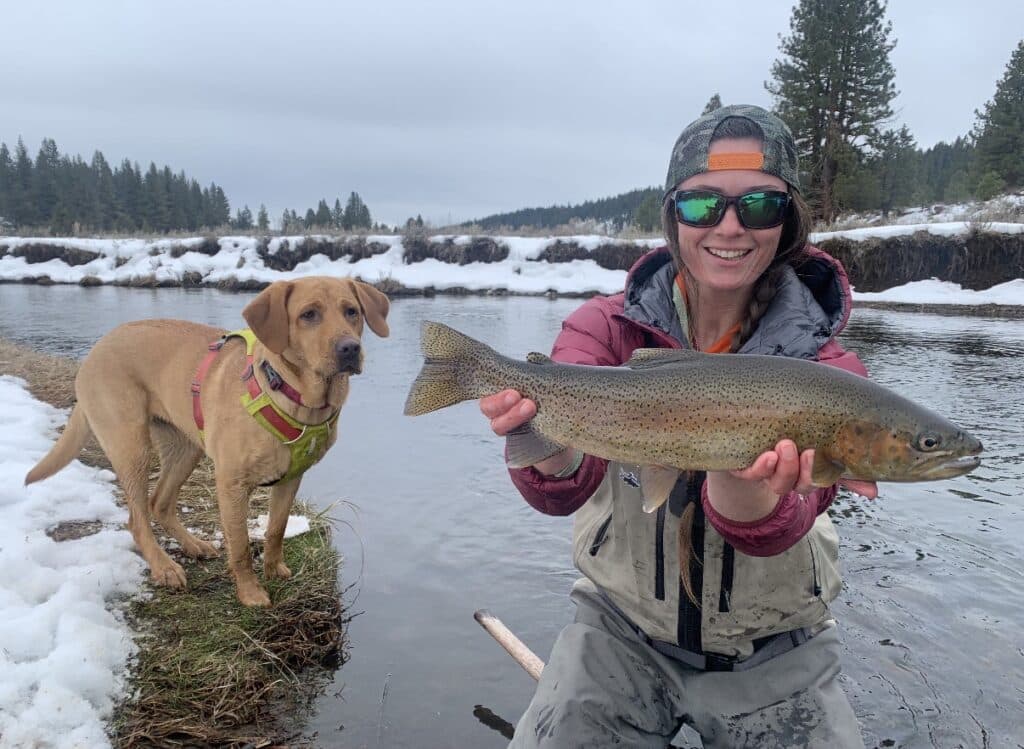
Guide Alyssa Evart learned to fish from her mom and developed a lifelong passion for being outdoors. Alyssa had a friend suggest she consider becoming a fishing guide. “You don’t have to be great at everything to start guiding. Food, happiness, and laughter are all you need. Being one of only a handful of female guides in California is something I want to change. I think some women believe they have to be all-in with guiding. It doesn’t have to be that way. They can have kids, work another job, or just guide part-time.” Sometimes we just need to be that voice for someone else to step into guiding. As they say, “Shining on others won’t dim your own light,” and I hope we all, men and women, will do this more. Not feel threatened by each other. I promise it will make the world a better place.
Female fly-fishing guides work with everyone—men, women, and children, all excited to be on the water. I don’t want this article to discourage anyone from becoming a guide but rather paint a clear picture of what you might face along the way. Honestly, the way my brain works is that I see an incredible opportunity for a woman who wants to build a guide business.
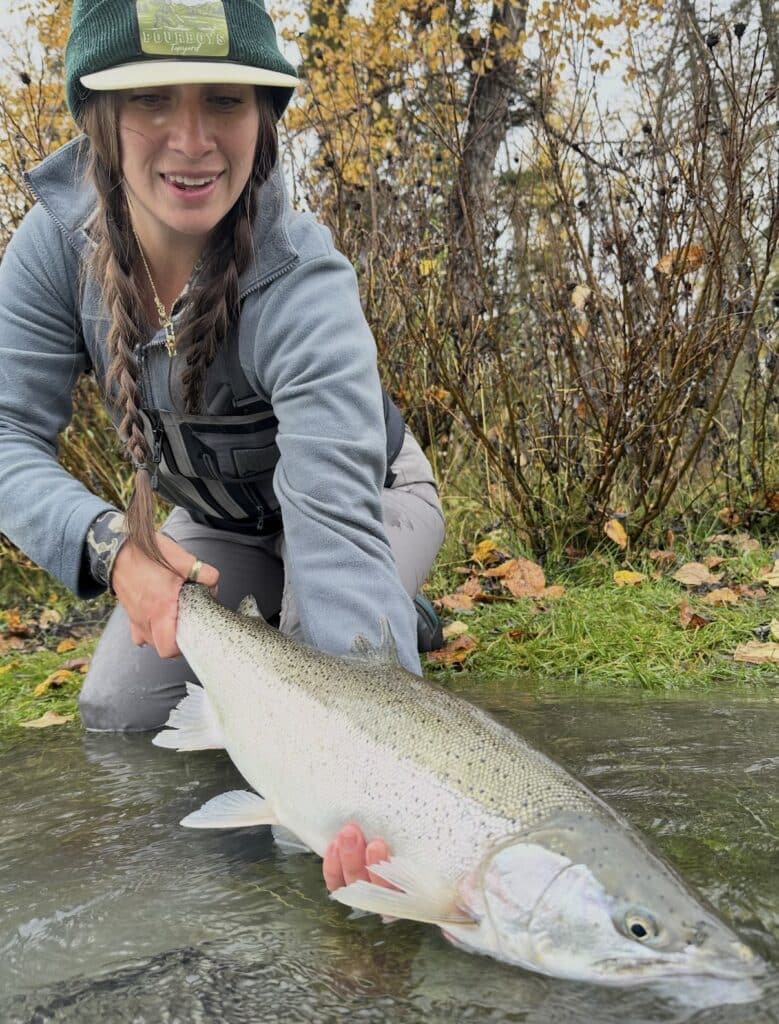
“I’m so excited to say yes when people call and ask for a female guide,” says Lower Sacramento guide Maiya Kyncy. New to the guiding scene, her love for the outdoors is instantly contagious. “There’s nothing like imitating a bug’s life cycle and attracting wildlife in such a natural way.”
A stay-at-home mom turned fly-fishing guide, Maiya is passionate about creating welcoming guide days and retreats for women across Northern California. She understands that finding balance takes time, and she’s grateful for every opportunity along the way.
One of the questions I asked my interviewees was what tips they would give to a new guide starting their own business.
The truth is, the rivers of California and Oregon aren’t waiting for permission to change—and neither should the women who feel called to guide them. The barriers that once kept women out of the industry are challenged every day, but when you surround yourself with people who are your advocates and encouraging voices, the path becomes not only possible but also deeply rewarding. Guiding is demanding work, yes, but it’s also meaningful. It builds confidence, community, and a connection to a place that’s hard to replicate anywhere else.
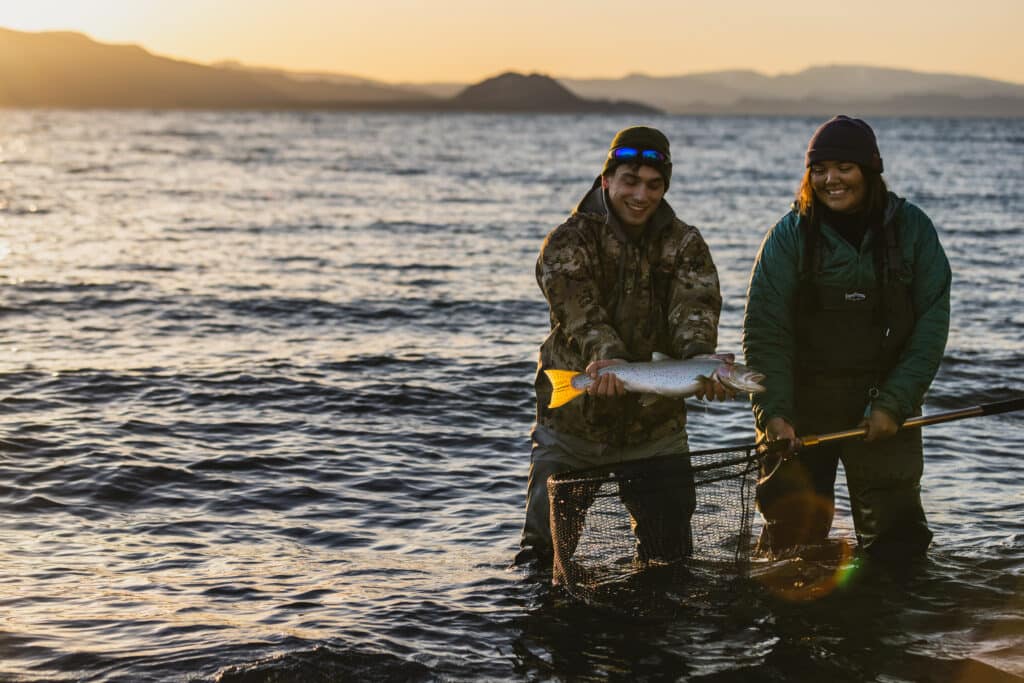
What I hope you take from these voices—Leslie, Sha, Maiya, Alyssa, and so many others—is that there is no single mold you must fit to become a guide. You don’t need to be the strongest rower on the river. You don’t need decades of experience. You don’t have to guide full-time or sacrifice the rest of your life to do it. You simply need to love people, enjoy sharing nature with others, have a willingness to learn, and the courage to take up space in a world that hasn’t always made room for you.
Clients are ready. Women anglers are showing up in record numbers. And the rivers themselves are calling for more diverse stewards—people who care deeply, teach generously, and bring new energy to the water.
If you’ve ever felt maybe I could do this—my hope is that this article nudges you one step closer. The world needs more women guiding its waters. More voices. More perspectives. More leaders who understand that shining a light on others only makes the whole river brighter.
There is room for you here. And the river is wide open.
Pro Tips for Starting Your Guide Business
- Build a community by networking and volunteering your expertise to local clubs. Let others get to know you and share about what you do.
- Be efficient in your rigging. Be proficient.
- Have a system. Your truck and boat are your office.
- Know your water intimately. Have plenty of Plan B’s.
- Bring a good lunch. You can’t control the conditions or fishing, but you have control over lunch.
- Pay attention to your client’s energy levels throughout the day. Keep them hydrated and have snacks on hand to keep them safe, positive, and energetic. Low blood sugar and fatigue can create issues.
- Be early. Be a professional.
- Social media is free advertising. Offer value to the fishing world while sharing who you are as a person and what you care about.
CA & OR Female Guides
California Guides
- Alyssa Evart, @onthefly_lyss
- Jennie Felkins, @cool_momma_j
- Autumn Harry, KooyooepaaGuides.com
- Maiya Kyncy, @maiyaaonthefly
- Beryl Rea, TheTroutScout.com
Oregon Guides
- Alysia Aguilar Littleleaf, @mrslittleleaf
- Leslie Ajari Messett, @galgonefishing
- Kate Crump, @k8crump
- Mary Ann Dozier, FlyFishingPursuits.org
- Amy Hazel, @amyhazelflyfish
- Jennifer La Follette, @reelhussy
- Sha Orton, @shajuniper
- Kait Sampsel, HumbleHeronFlyFishing.com
- Mia Sheppard, @littlecreekoutfitters
A wonderful resource to find a female fly-fishing guide is UnitedWomenOnTheFly.com