To Read
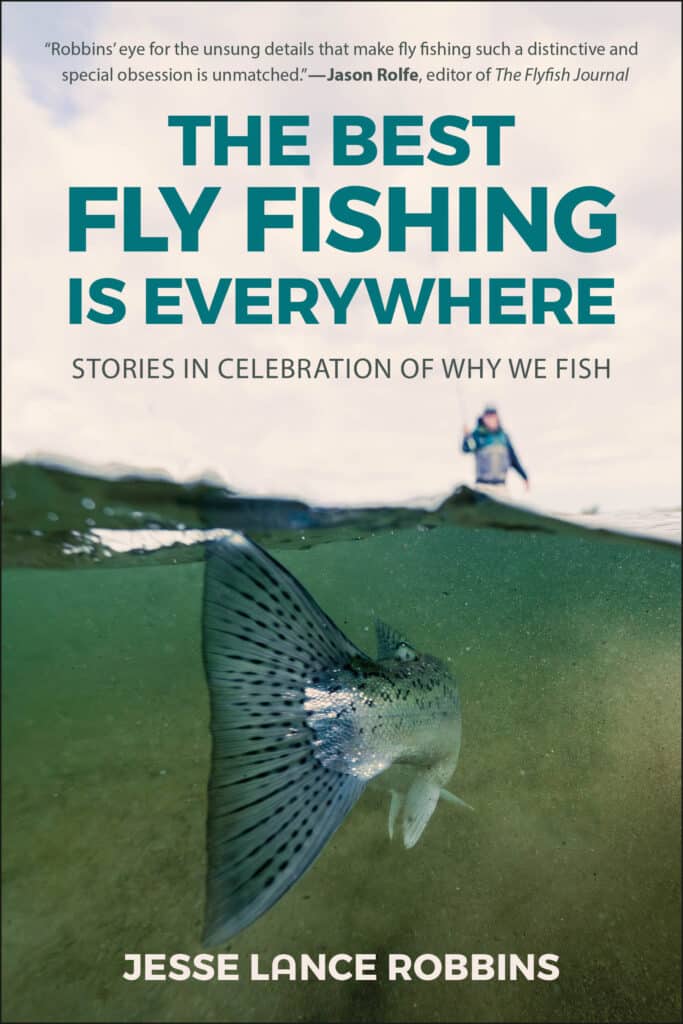
THE BEST FLY FISHING IS EVERYWHERE
By Jesse Lance Robbins
$18, Hatherleigh Press
2026
Fly fishing is serious business. Except, of course, when it’s not. When it’s not, that’s when the bona fide stories begin. The marshmallows in wading boots, fishing in Maine with Wilkie (a perfect New Englander name), Playboy in a float plane, New Zealand with Chappie Chapman (again, perfect name), browns the weight of a small dog, and beers, lots of beers. Warm beers, ice-cold beers, in the hut, in the boat, as soon as your rod is secured at the truck beers.
Jesse Lance Robbins gives us this hoot of a campfire program in his book, The Best Fly Fishing is Everywhere. His are light and airy episodes of angling, angling gone wrong, and angling personalities whose, well, whose cheese has slipped just a bit off their cracker.
Such as his new friend Barry. Camping neighbor turned river guide, Barry pilots his boat over to every beer can he spots. No, not to clean up the landscape, but in hopes that it slipped unopened from another angler’s pack (unlikely as it seems, I’ve heard of this happening on multiple occasions), and he’s got himself a gloriously warm beer on the house. The fishing can wait, for Coors Light piracy beckons.
Robbins probes where these curiosities for fish and rivers and adventures begin. In childhood? As a teenager? When another angler proffers a wink and a smile, and a head nod towards a riffle holding trout?
“My father put a fishing rod in my hands for the first time when I was four years old. Five years later, I started learning to fly fish, and since then, I’ve spent much less time with other types of fishing rods. I’m competent with a fly rod, but I’m definitely uncomfortable with a spinning or casting rod in my hand.”
Awfully damn relatable. Hell, the entire concept of a spinning rod escapes me as well. Some have bails, some have knobs, some have goddamn buttons.
But fly fishing, as Robbins so often finds, is chock-full of folly. Especially on the drive to the river, the gas station burritos, the ramen noodle dinners with a headlamp on, the tangled lines, the removal of contact lenses with grubby fish fingers (relatable for us contact wearers), and the slicker-than-hell rocks in the stream that lead to water-logged waders and bruised knee caps. Besides all of that, fly fishing is of course the most austere of pursuits, only suited for the most genteel among us (who can pull off a tweed vest).
To that end, Robbins peels back a bit of the stoic fly-fishing veneer in each of the book’s anecdotes. He illustrates that the best fly fishing doesn’t have to be in Scotland’s River-this or River-that, or the higher than high-end lodges of Patagonia (helicopters delivering new anglers each morning, tweed vests starched and pressed).
The best fly fishing can be in a park pond. Or a drainage near the train tracks. It doesn’t require several thousand dollars and a full day’s drive (though, as we well know, it often does … but it doesn’t have to). It’s ambling over to your campground neighbor and asking “How’s the fishing?” Which then gets you an invite onto his drift boat the next day in search of unopened beer cans.
Or, in Robbins’s case, taking a new (fly-fishing corporate) job a ferry ride away from Seattle (Bainbridge Island), to realize a small pond (Secret Trout Pond, STP) just across the yard from your new digs holds small cutthroats. “The first rule of Secret Trout Pond is that you do not ask to fish Secret Trout Pond.”
One thing I figure about the author after reading his book: He’s gregarious as hell, making new friends at every bend. I, being rather well, persnickety, found myself a tad envious of the ease with which he makes fishing plans for the very next day with someone he just met. Then sharing a beer with them at dusk near the take-out after the fishing is complete and a new friendship is consummated.
Robbins explores the beginnings and middles of his fly-fishing pilgrimage with each recount of fish caught, and the compatriots who joined him. Which is better, though, a fish on the line or a cold beer with your fishing buddy? The answer, according to Robbins, is not so obvious. bestows upon us. Glimpse a river as a fellow creature, rather than a means to an end.
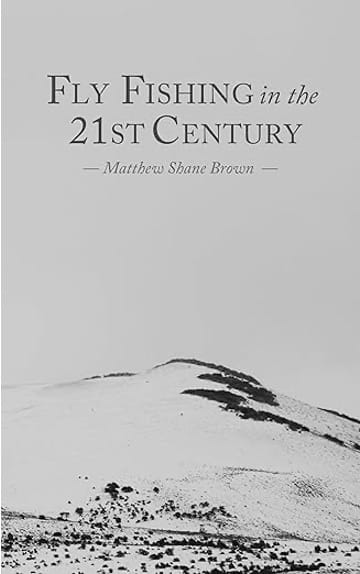
FLY FISHING IN THE 21ST CENTURY
By Matthew Shane Brown
$30, The Upland Soul
2026
Before the first chapter of Fly Fishing in the 21st Century, author Matthew Shane Brown begins with a dedication to the Coors Brewing Company for “the assistance in completing this book.”
I’m sold. Makes me want to crack a cold yellowjacket, take a deep sip, and start in on the first chapter. Don’t tempt me. Or do.
Self-published by Brown under his own imprint, The Upland Soul (he also shoots a few birds each Fall), Fly Fishing in the 21st Century is matter-of-fact tales of one man’s search for fine trout and a little meaning in this world, crossed with solid writing to boot. Gierach would be damn proud.
He captures the delicious lonesomeness of being outdoors (mostly in his home state of Nevada), alone, with one task at hand—hooking a trout (or dropping a bird), and a cold Coors back at the truck.
Alone might be a bit strong, for the trout are company enough. “You pull up on the rod just a little and send him your message, and he pulls back against you and responds with something you can only tell in the strain on the line.”
Big publishing houses have grown fat off the yarns of writers from every corner of the earth. Tales of angling are no exception. Books about fishing, casting, guiding, world travel, mythical fish, fishing with bamboo, guidebooks for far-off places, diatribes about rivers, dos and don’ts of fly tying, hijinks on the water, and just plain old good anecdotes about days spent tempting a trout make up entire catalogues at such houses.
But these literary profiteers often can’t see past balance sheets and marketability. They’ll overlook titles that don’t blatantly present fly fishing as some sexy, pastoral, affluent pastime. And Brown’s book, slightly esoteric, didn’t meet their cubicle clichés. No matter. Their loss.
He later has a chapter on what we all have a chapter on— our first trout. “The trout were biting, or at least they bit once. And we fooled ‘em. Nothing more and nothing less.” He reminds us that the first trout on a fly rod is special, but so is the hundredth. The only difference is that it’s your first time. Same for other things in life. First time driving a car, first time with a girl. First time cracking a can and tasting that cold barley in the back of your throat.
Brown also gets philosophical at times. A lot of times. At intervals (between casts), he’ll ponder nihilism and self-discovery and Cormac McCarthy. “Go without a warm shower because maybe a dip in that frigid meltwater will do what you need.”
And, “Go out and float your favorite fork for a week like you’ve always wanted. Don’t see the inside of some sad cube farm for at least the same.” Days spent in cubicles are so hellish to him that he seems to be searching with reckless abandon to find some redemption. He’s found it in fly fishing.
So give Fly Fishing in the 21st Century (and a Coors Banquet) a crack and see where you find yourself. By the very last page, in the epilogue, Brown even gives you the meaning of fly fishing in this unsettled day and age. It’s one word, and something we can all heed.
DIRTBAG BILLIONAIRE
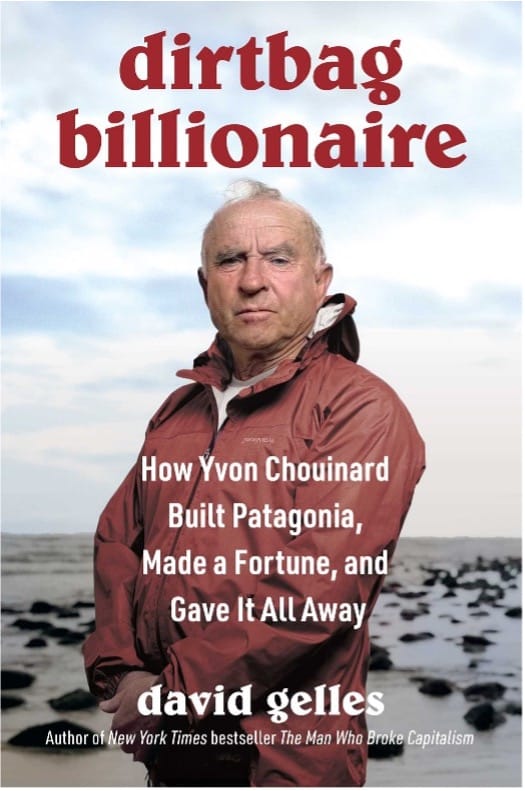
By David Gelles
$30, Simon & Schuster
2025
Yvon Chouinard is an enigma; his life a page-turner. Climber, alpinist, fly-fisher, Patagonia founder, explorer, entrepreneur, the list can go on and on, and it does. But that’s all well known. How much tread is left on his biography? Well, a lot actually.
David Gelles, New York Times correspondent, is the latest to tempt a bio out of the most well-known of billionaire dirtbags (the outdoor kind of dirtbag, as opposed to just the regular kind of rich dirtbag). The outdoor sage himself, ole Yvon, warts and all, is Gelles’ primary focus. His book, Dirtbag Billionaire, is a bit of everything, though, which makes it all the more engrossing.
Yes, Yvon has adventures. Yes, Yvon climbs high peaks and catches large fish. But how did a guy forging climbing hardware (literally at a forge) become one of the leading environmentalists and businessmen of his time?
Well, smart decisions mostly. Decisions rooted in Yvon’s intuition and his peak-smarts. He didn’t just draw up a pair of pants and send the design off to a manufacturer. He wore the pants first. In blizzard conditions. Tried different fabrics. Looked into how the fabric was made. Were the workers treated humanely, paid a livable wage? Yes, costs would have to be passed along to us, the consumer. But wasn’t it better to wear a pair of pants made with decency and integrity than the alternative?
Further, every decision he’s made, every product he’s produced, has two tenets. One, is it a quality product? And two, will its production harm the environment in a way that Yvon can’t abide? That’s it.
Other billionaires sit in their Jackson Hole mansions with floor-to-ceiling windows for the Tetons. Yvon also sits near Jackson Hole. It’s just that his is a modest clapboard home with Goodwill furniture and hand-me-down dishes. How much does a comfy sofa actually cost, versus how much just says “look at my chichi sofa”? Yvon will take the comfy one.
Gelles does a good job capturing the internal battle Yvon tussles with. That is, how much good can possibly be done when he still has to use an ocean of oil to import the shirts, ship the pants, hell, even make rain jackets from oil-based textiles.
That’s the battle he wages throughout the book, throughout his life, and does so with a mix of acceptance and rage. At the very least, he can make those jackets with recycled fabrics, synthetic-free dyes, and zippers made from plastic bottles diverted from the landfill. That’s how he can accept it and live with himself.
These details are where Gelles’ book really takes off. The minutia of how a large corporation runs, and runs as environmentally-friendly as any corporation has ever run, is fascinating.
And so is Yvon. He can be persnickety and rude, aloof and misguided. As can we all. But the north star for all his decision-making, for all his dollar-making, is the earth and sustaining it. Hell, he started climbing at age 14 to save Peregrine falcon eggs when the harm of DDT was first discovered.
Dirtbagger through and through, it’s no act—never was, never will be, until he’s no longer a living legend, just a legend. Neither is offering all Patagonia workers exceedingly generous benefits like on-site childcare, paid parental leave, and paid time for environmental volunteering.
I wear Patagonia shirts and hats with their Fitz Roy logo because it’s cool. And I want to be cool. Now, after considering all the contributions to the wild places we hold dear, I wear them out of deference for Yvon..
CAST, CATCH, RELEASE
By Marina Gibson
$18, Scribner
2024
“‘Did your dad get you into fishing?’”
“It’s a question I have been asked more times than I can remember, at fishing lakes and on riverbanks. But it wasn’t my dad who first took me fishing, showing me how to attach a fly and cast a line. For me, fishing has always been with my mum; she was my first teacher, my greatest inspiration, and she is still my ideal fishing partner.”
The institute of fly fishing is mostly male. However, that is changing and has been for some time. Men have traditionally dominated the streams, the fly shops, even the literary world of angling stories, short tales, and field guides of far-off streams.
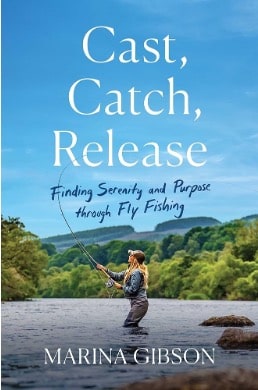
Author, guide, angling school owner, and world traveler with her rod as a carry-on, Marina Gibson gives us fly fishing from her perspective in Cast, Catch, Release. In each of the three sections, she describes her beginnings as an eager young fly fisher (Cast), her evolution into a professional angler and instructor (Catch), and finally, her confidence as an experienced fly fisher and the comfort she’s found in the journey it’s taken to get there (Release).
Gibson even parallels her own journey with that of the Atlantic salmon. She learns to Spey cast on Britain’s famed rivers (she’s a Brit after all) as a fry. Keeps progressing as a parr. Begins to perfect her craft as a smolt. Gets Orvis-sponsored as an adult Salmonidae. And returns to her roots (and stream) to open a fly-fishing school in northern England.
An apt metaphor indeed. She’s oft to reminisce about her very first salmon (who doesn’t?), and “was reminded of how far this fish had come to reach this point … while I was only just setting out on a long and uncertain journey of my own.”
Her journey takes her across continents after such brutes as bumphead parrotfish, permit, tarpon, and silvers (steelhead). In tow at different intervals are three brutes of the human male kind, of which she falls in and out of love with two. There are also the foibles of young adulthood, feeling lost at times and wonder at others, and the decision to pursue what she loves most as a profession. All very relatable, save for the constant stream of salmon she hooks along the way.
Gibson’s way of writing the streams and their fish is also on point. “When a golden dorado is on the hook and trying to run, the water does not just ripple, it boils.” And on the River Test in the south of England for browns (and a tryout for that Orvis sponsorship), she notes: “I could almost have counted the spots that ran leopard-like along the full width of its flanks, giving way to champagne shades of its lower body.”
Her gut leads her each way, even if it takes some time to discern what it’s telling her. Like catching a permit. Or unhooking from a relationship. But it also tells her to start a fly-fishing school. And to return to her mother’s guidance when needed. And to have a travel bag for your fishing gear by the door.
And Gibson’s story of chilly British streams and muscle-bound salmon is becoming slightly more common. Near the end, she notes,
“Women have always been a part of fishing’s story, but the future of the sport should and will be more female than ever.”
Marina Gibson