GEOLOGY
By Jeff Ludlow
Illustrations by Obi Kaufmann
“The mountains are calling and I must go…” John Muir wrote in 1873 from Yosemite Valley in a letter to his sister—reflecting on his studies observing the wilderness to advocate for preserving the natural environment. Though not a formally trained geologist, John Muir first proposed the theory of glaciation as the driving force behind creating the dramatic landscape of Yosemite.
In the early 1800s, Muir’s predecessor and mentor, the great scientist Alexander Von Humboldt, pioneered the concepts of interspecies relationships to a greater ecosystem. Von Humboldt, a Prussian polymath, drew upon multiple scientific disciplines to lay the foundation for modern ecology and biogeography, and was the first to recognize human-caused environmental impacts. Like Von Humboldt, Muir drew on his knowledge of various scientific fields to see the bigger picture of nature and used his storytelling skills to promote environmental preservation.
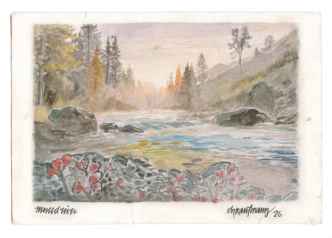
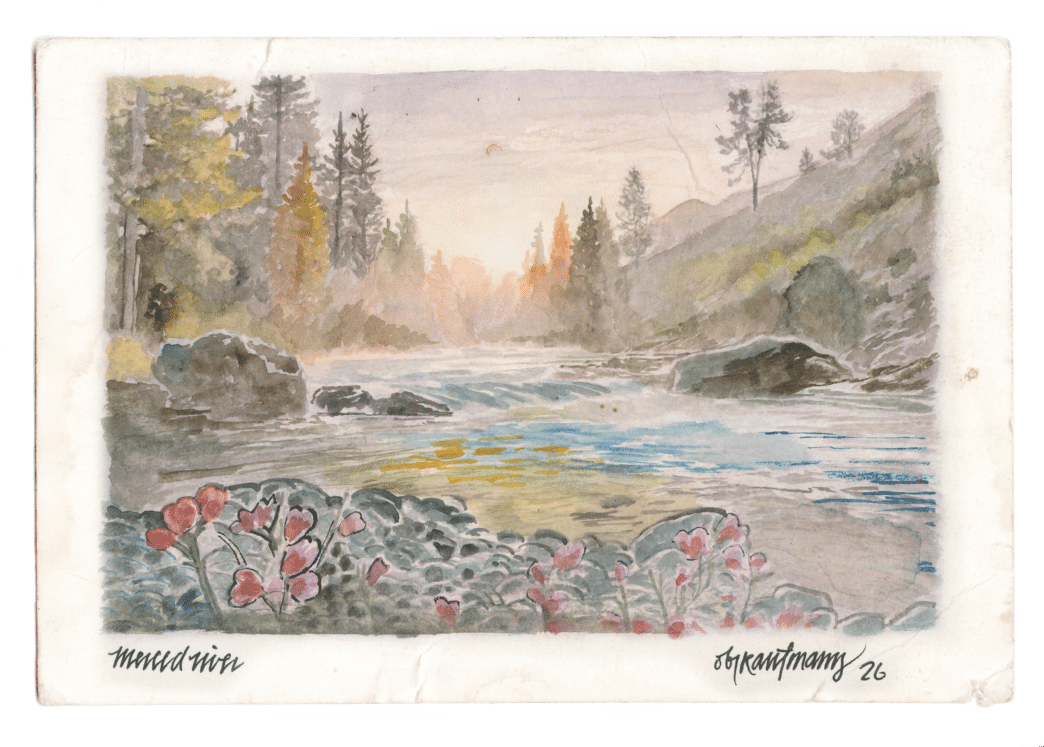
The original theory of Yosemite Valley’s formation was established by the renowned California geologist Professor J.D. Whitney. He wrote in 1865 that the steep topography and vertical cliffs resulted from violent convulsions of the earth, causing “the bottom to drop out” and leaving sheer walls standing. In the summer of 1869, Muir was hired to herd sheep, which he called “hoofed locusts,” from the Merced foothills to Tuolumne Meadows. During this time, Muir recognized large boulders as glacial erratics resting on “ice-planned granite scored and striated in a rigidly parallel way.” Further observations that summer—such as “shining glacier pavement … ice burnished pavement and ridges … great smooth domes and brushy glacial moraines”—supported his theory of alpine glaciation in Yosemite. In 1874 and 1875, Muir documented his observations in seven articles published in the Overland Monthly, which eventually caught the attention of Professor Whitney. In the controversy that ensued, Muir’s theory was initially ridiculed and belittled by the scientific community as the wild fantasies and ramblings of an ignorant shepherd. Decades later, in a 1930 U.S. Geological Survey professional paper on Yosemite geology, the internationally recognized authority on glaciers Francois E. Matthes wrote of John Muir’s remarkable acumen in discerning the great importance of glacial action in shaping Yosemite and other great canyons of the Sierra.
Before alpine glaciation carved Yosemite, millions of years of geologic history unfolded to set the stage. The oldest rocks in Yosemite, formed in a shallow ocean environment at the edge of a continent, consisted of limestone, sandstone, shale, and submarine volcanic rocks. These rock formations were subsequently metamorphosed (altered by heat and pressure) and served as the host rock for the formation of the famous Yosemite granitic rocks.
Granite, a type of igneous intrusive rock, forms as molten rock slowly cools in the Earth’s crust. Starting about 215 million years ago, the Farallon Plate (oceanic crust) subducted below the North American Plate (continental crust). As the rocks from the Farallon Plate melted in the subduction zone, magma ascended through the crust in multiple pulses over about 100 million years. Some of the molten rock erupted as volcanic rocks. Much of this molten rock, however, cooled slowly underground, creating granitic plutons. Once subduction ended, the older metamorphic and volcanic rocks eroded away between 85 and 15 million years ago, exposing the granitic rocks below.
Geologic uplift in the Yosemite region began about 10 million years ago, resulting from extensional forces in the Basin and Range Province east of the Sierra that pull on the Earth’s crust. This uplift further exposed the granitic rocks that had formed deep beneath the ground. As the confining pressure of the older overlying rocks was removed, the granite plutons exfoliated (removal of sheets of rock from weathering) to create the rounded domes seen today in Yosemite.
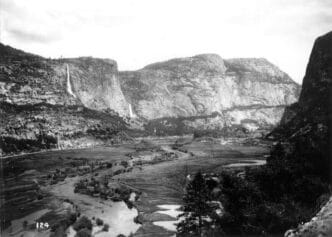
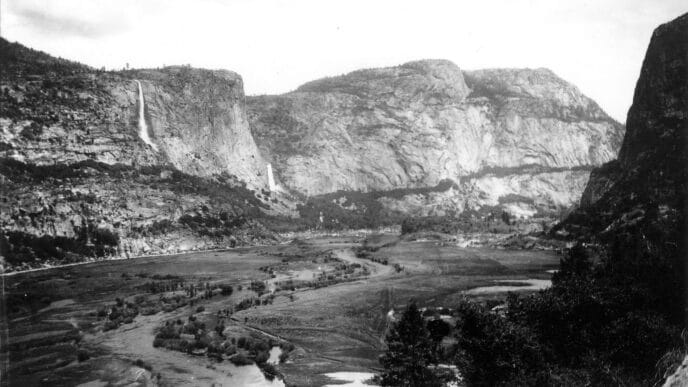
Glaciation in Yosemite began about two to three million years ago. Since then, about 40 cycles of glacial (cold) and interglacial (warm) periods have shaped the Yosemite landscape. Evidence of glaciation is seen in the U-shaped valleys of Yosemite Valley and Lyell Canyon, carved by ice, contrasted with V-shaped valleys carved by rivers. In the granite rock, glacial striations, long parallel scratches or grooves carved into bedrock from rocks embedded at the base of a flowing glacier, show the east-to-west direction of glacial flow through Yosemite. Glacial polish, the smooth, lustrous surface of the granite bedrock, is commonly observed in Yosemite. Like striations, glacial polish is thought to be created by the abrasive action of fine-grained sediments (rock flour) and sand trapped at the base of a moving glacier, acting like sandpaper on the rock and leaving a polished surface as the glacier flows. However, recent geological studies suggest that the polished surface results from a micrometer-thick coating layer accreted onto the abraded rock surface and smeared over it during ice sliding, forming a smooth surface.
When he died in 1914, John Muir’s death certificate listed his occupation as geologist, reflecting his significant contributions to the science. Muir’s legacy as an advocate for environmental preservation and his poetic writing style were enhanced by the scientific rigor of his work. Muir understood the interconnectedness of all living species and believed that every organism played a role in maintaining ecological balance. He wrote extensively on preservation versus exploitation, critiquing industrialization and deforestation, and instead advocated for sustainable coexistence with nature. Finally, Muir viewed nature as a teacher, one that could guide humanity toward a better way of living.
- Matthes, Francois, 1938. John Muir and The Glacial Theory of Yosemite. Sierra Club Bulletin. April 17th.
- Muir, John, 1874 and 1875. Studies in the Sierra, Published by The Sierra Club. 1950.
- Siman-Tov, Shalev, et al., 2017. The Coating Layer of Glacial Polish. GeoScience World. August 23rd.
- U.S. Geological Survey. Geology of Yosemite National Park. Geology of Yosemite National Park | U.S. Geological Survey
- Wurtz, Michael, 2016. How John Muir’s incessant study saved Yosemite. The Conversation. April 21st.
DENDROLOGY: THE YOSEMITE CONIFER FOREST ECOSYSTEM
By Tracey Diaz

Yosemite National Park’s conifer forests are some of the most ecologically diverse in North America. The park stretches along the western slope of the Sierra Nevada, where the land rises quickly from about 2,000 feet to over 13,000 feet. As temperature, snowfall, and moisture shift with elevation, different conifers take over at different heights. Each elevation band has its own mix of trees, animals, and plants, creating a layered forest. This variety forms the classic Sierra Nevada mixed-conifer forest, which is one of the richest forest ecosystems in North America.
Yosemite’s conifer forests stand out because they grow some of the world’s largest trees. This happens thanks to several natural factors. Winter storms leave behind a deep snowpack, which melts slowly and gives the trees a steady water supply in spring and early summer. The granite bedrock breaks down into well-drained soil, letting roots spread wide and support huge trunks. Fire also plays a key role. In the past, regular low-intensity fires cleared thick undergrowth, returned nutrients to the soil, and let sunlight reach the forest floor.
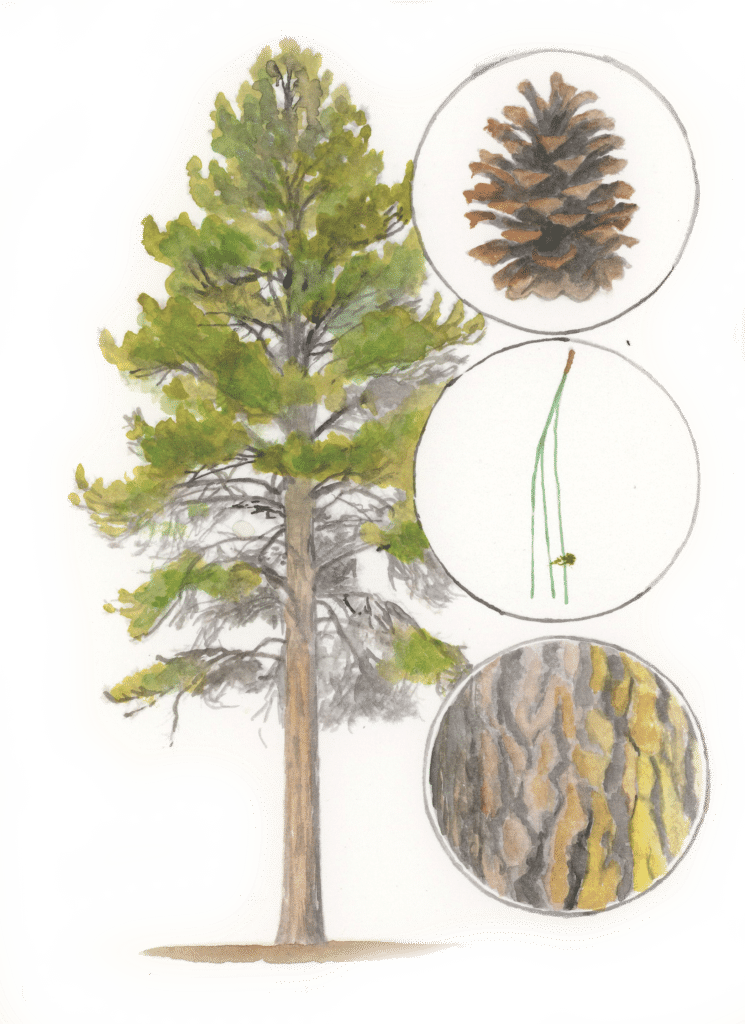
All these factors—plenty of snowmelt, good soils, a Mediterranean climate, and forests shaped by fire—combine to create the perfect setting for giants like the sugar pine and the famous giant sequoia, which are the largest trees on earth by volume.
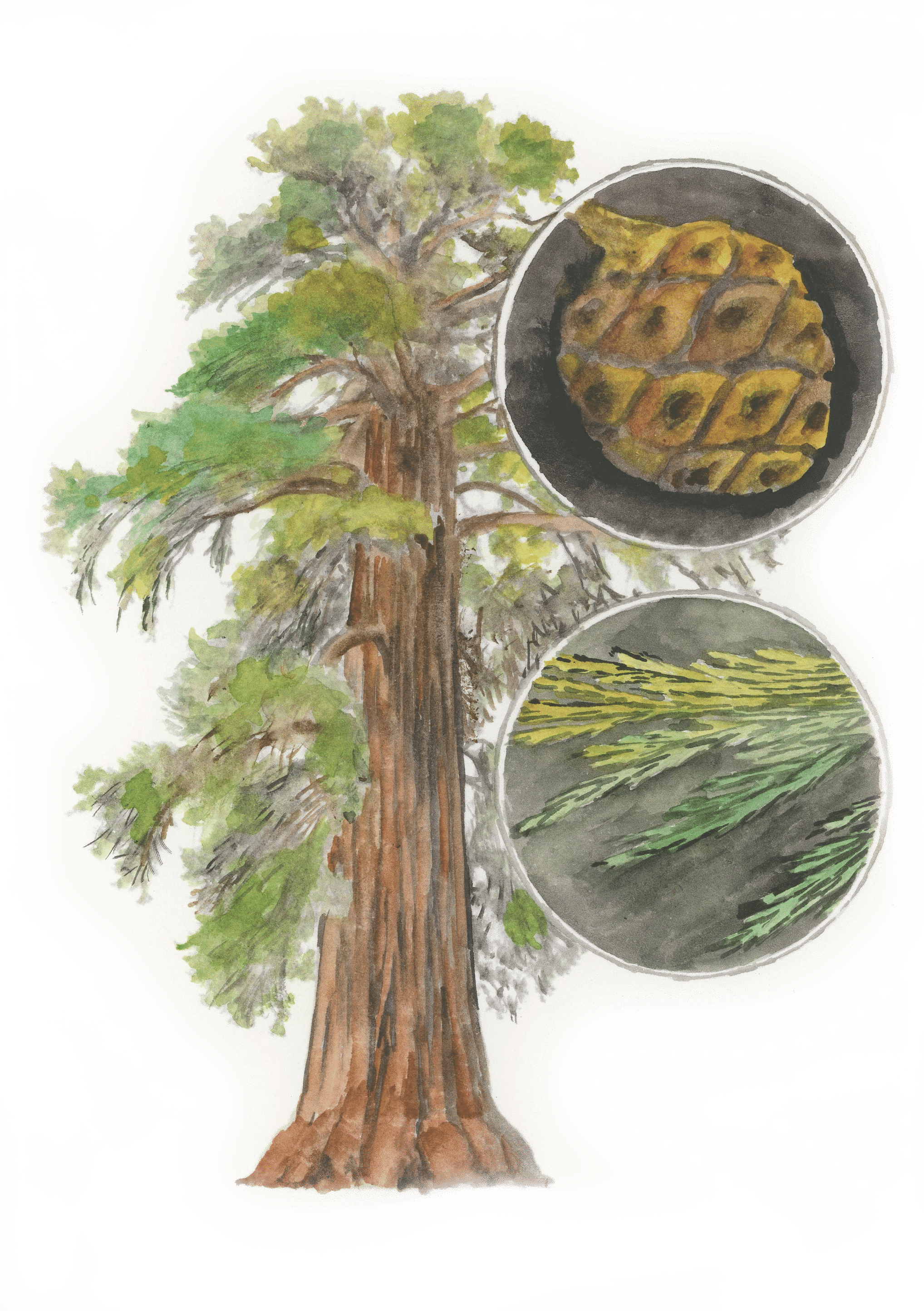
These illustrations will help you identify the conifers on your next outing to
Yosemite.
LOWER MONTANE FOREST (2,000–4,000 ft)
Warmer and drier forests dominated by:
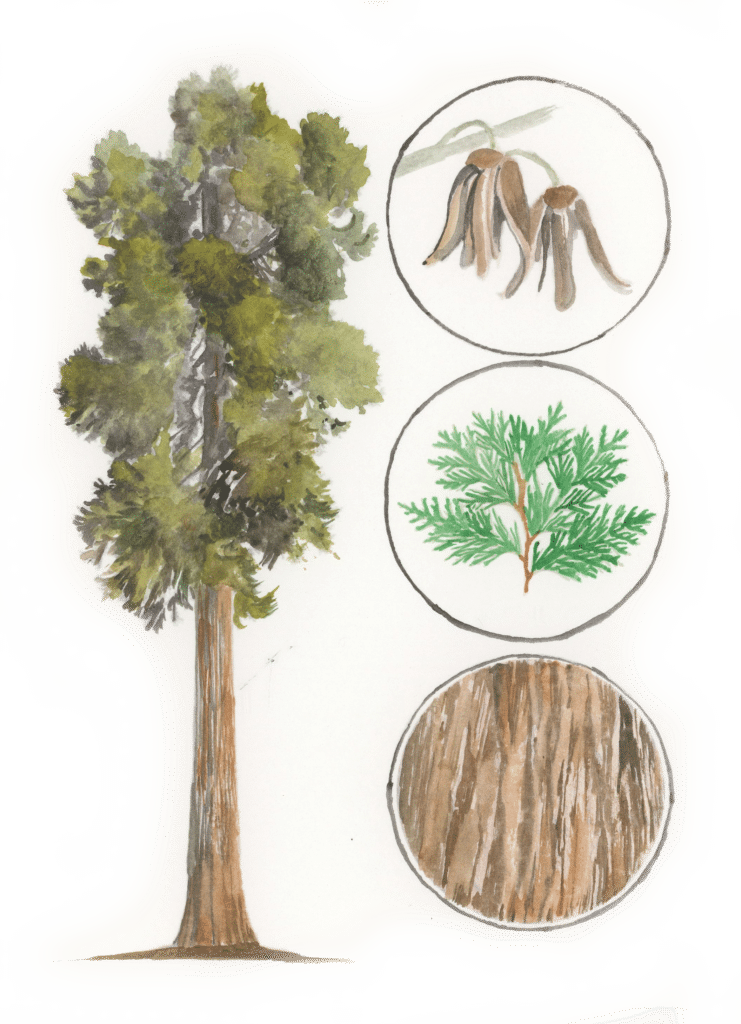
Incense Cedar
MID-ELEVATION MIXED CONIFER FOREST (4,000–7,000 ft)
Yosemite’s classic forest, with high diversity. Yosemite Valley sits in this zone. Trees include:
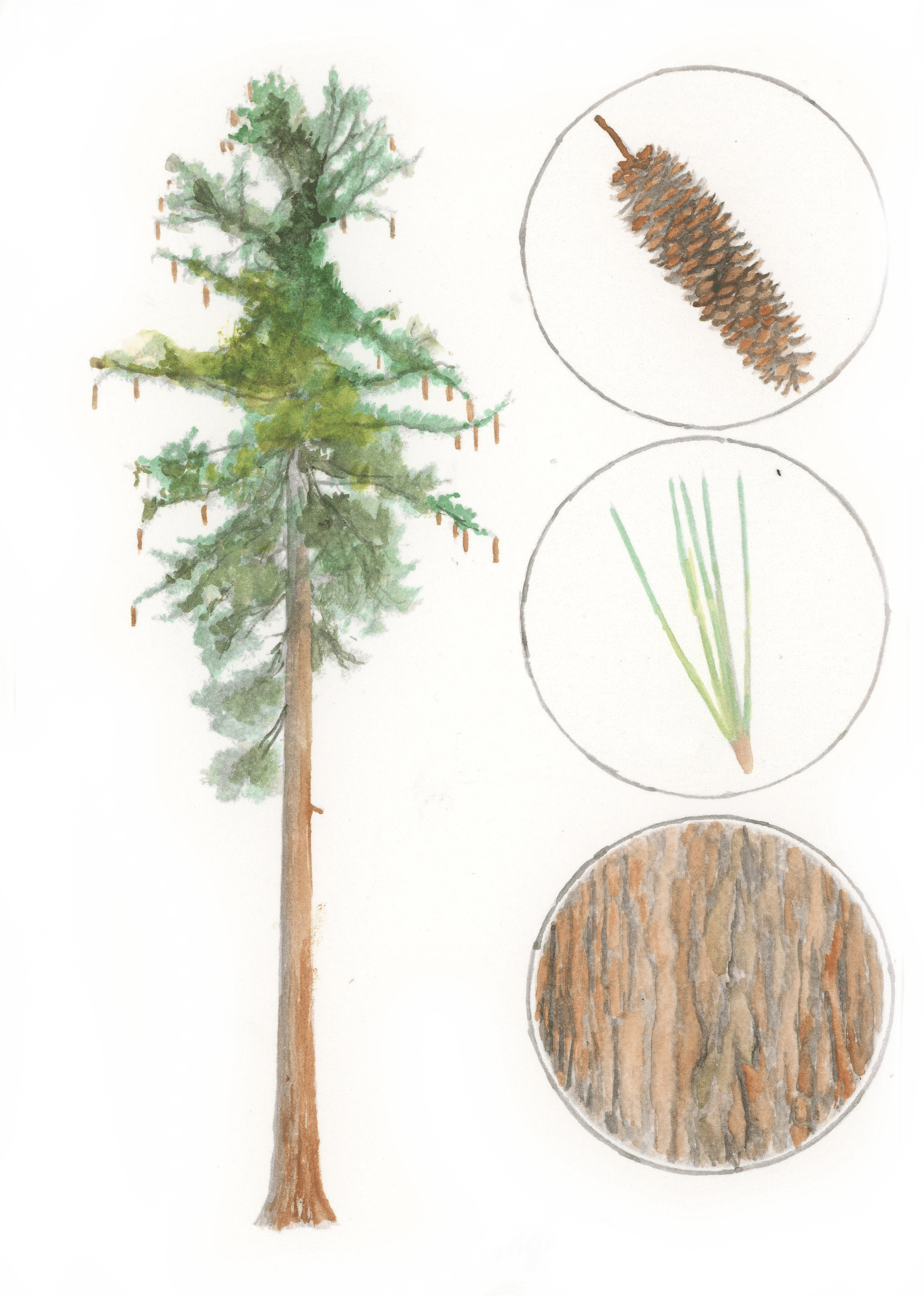
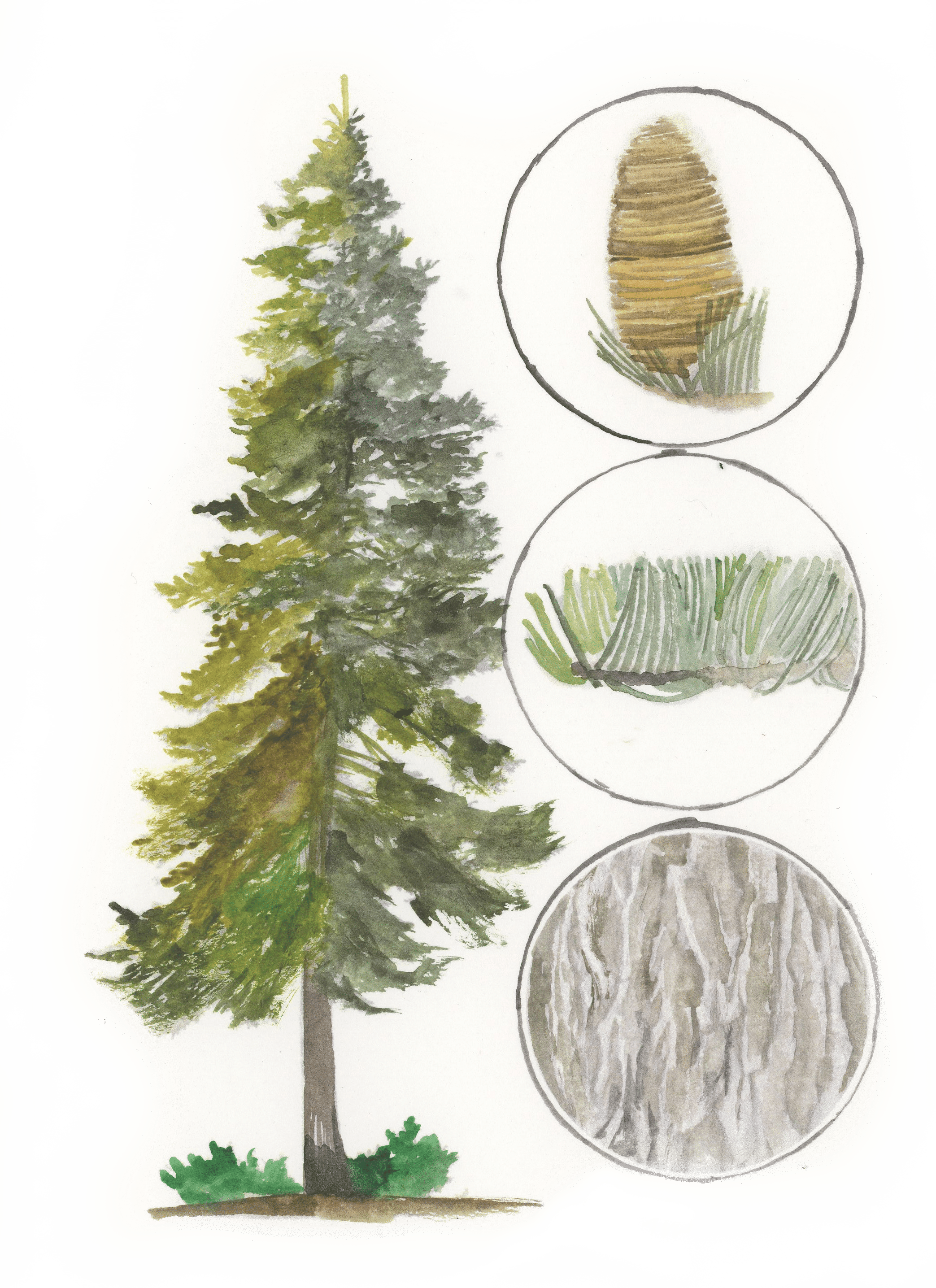
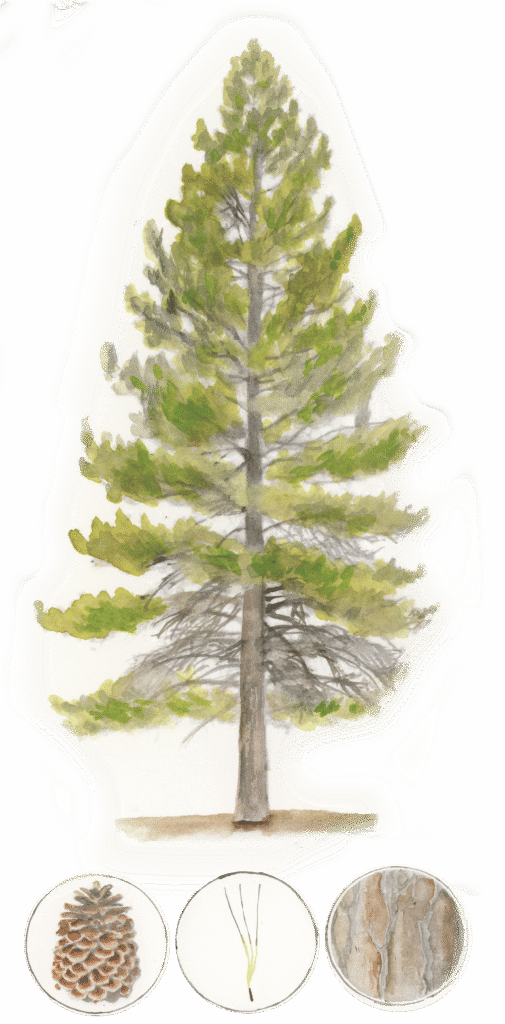
UPPER MONTANE FOREST (7,000–9,000 ft)
These areas, like Tuolumne Meadows, have trees that like colder and snowier conditions:
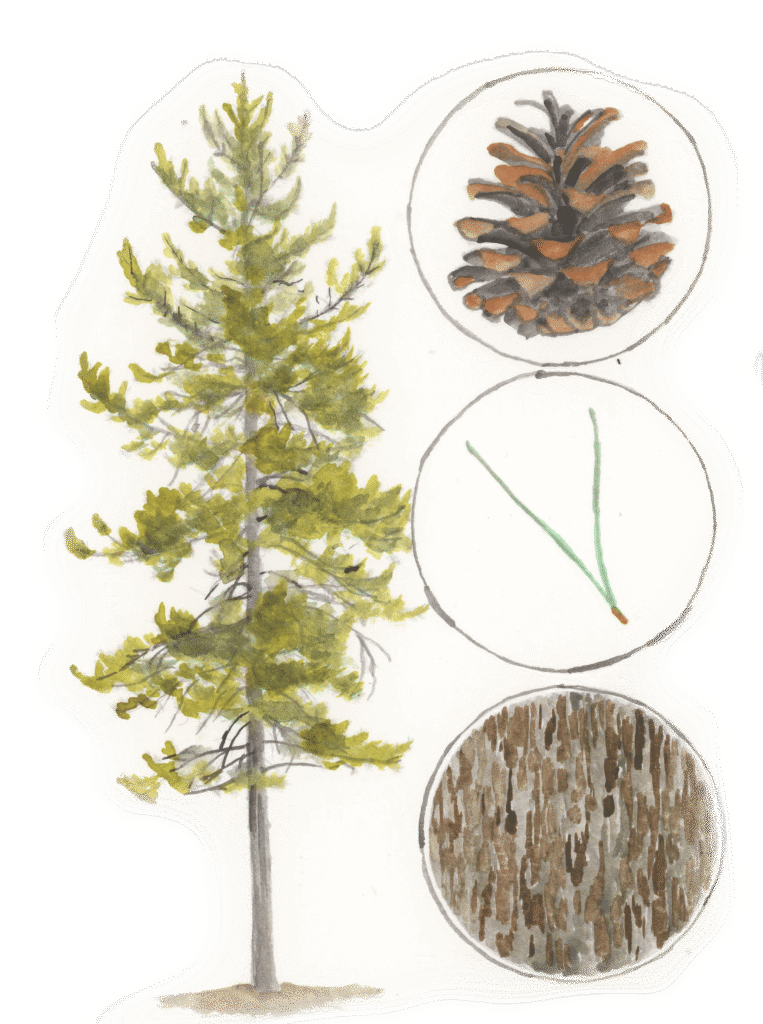
- Brockman, Frank, 1968. Trees of North America, Western Publishing Company, Inc., Golden Press, NY.

About Obi
Illustrator Obi Kaufmann is an award-winning author of many best-selling books on California’s ecology, biodiversity, and geography. His 2017 book The California Field Atlas, currently in its seventh printing, recontextualized popular ideas about California’s more-than-human world. His next books, The State of Water; Understanding California’s Most Precious Resource, and the California Lands Trilogy: The Forests of California, The Coasts of California, and The Deserts of California present a comprehensive survey of California’s physiography and its biogeography in terms of its evolutionary past and its unfolding future. The last in the series, The State of Fire; Why California Burns was released in September 2024.