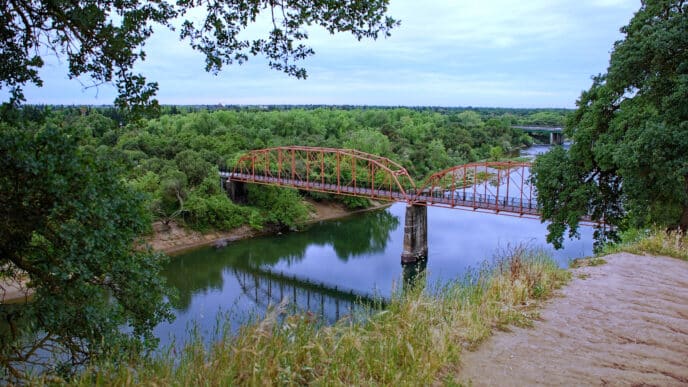
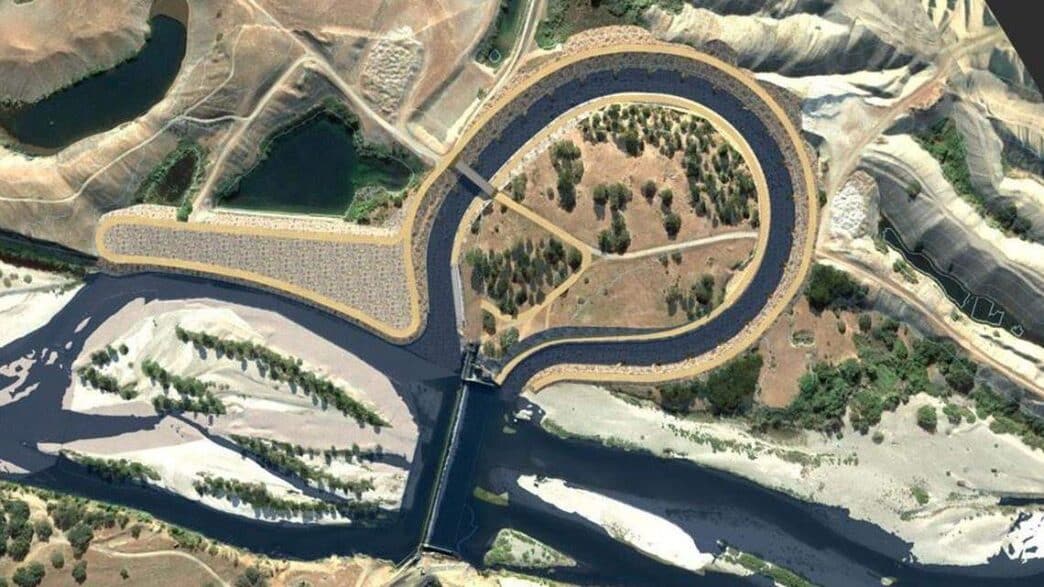
Big changes are coming to the Lower Yuba River. A new bypass channel around Daguerre Point Dam—called the Nature-like Fishway (NLF)—is now moving from proposal to reality. On March 17, 2026, Yuba Water Agency announced that Teichert Construction has been awarded the contract to build the fishway, marking a major milestone in one of Northern California’s most consequential fish passage projects.
The Lower Yuba is home to three ESA-listed species Central Valley steelhead, spring-run Chinook salmon, and green sturgeon—and the agencies backing this project have given protection of these species as reason to act. The existing Daguerre Point Dam sits at river mile 12, splitting a 24-mile corridor of accessible salmon and steelhead habitat in half. Federal and state recovery plans going back to 2014 have identified the dam as a barrier to both adult upstream migration and juvenile downstream outmigration. The NLF—a $60 million joint project funded by CDFW and Yuba Water Agency—is designed to give salmon, steelhead, sturgeon, and lamprey a natural-looking bypass channel around the dam, while also modernizing the adjacent irrigation diversion to protect fish and maintain water deliveries to Yuba County farms.
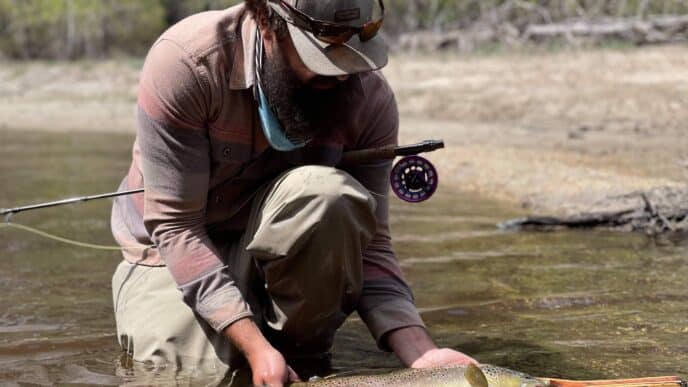
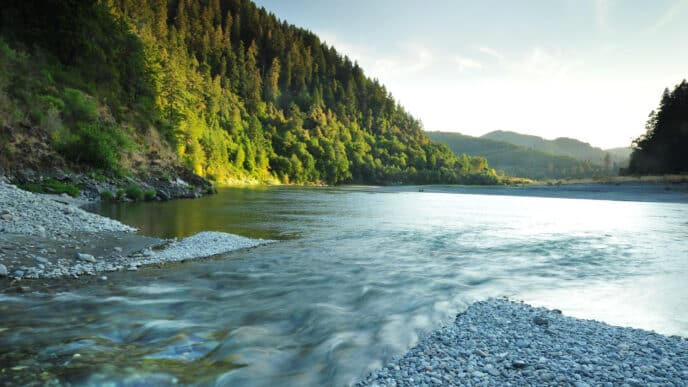
But the project has a serious consequence that has the angling community concerned. Above the dam today, the lower Yuba is one of the last truly wild trout sanctuaries in California’s Central Valley—a Heritage and Wild Trout fishery known for hard-fighting wild trout and steelhead that are willing to rise to dry flies. This catch-and-release fishery has evolved a culture around it and supports a local eco-tourism economy. It currently supports three private fishing clubs with hundreds of members and several guides, and is a beloved resource for fly fishers far and wide. The fishery exists in large part because the existing fish ladders at Daguerre Point Dam act as a selective barrier: Salmon and steelhead can navigate them, but striped bass and American shad—abundant below the dam—cannot. The NLF will be open to all species, including those predators.
Once striped bass gain access above the dam, there is no practical way to remove them. Striped bass are voracious predators of juvenile salmon and steelhead smolts. The Gold Country Fly Fishers have been at the forefront of raising this concern, pushing for a written predation management plan as part of the project. Some progress has been made—anglers and conservationists are now part of the project’s technical monitoring team. But as of early 2026, no formal mitigation plan exists.
Construction is expected to begin in summer 2026. What happens to the Yuba above the dam will be one of the most closely watched fisheries stories in California in the years ahead. Anglers can stay informed and make their voices heard through the Gold Country Fly Fishers.