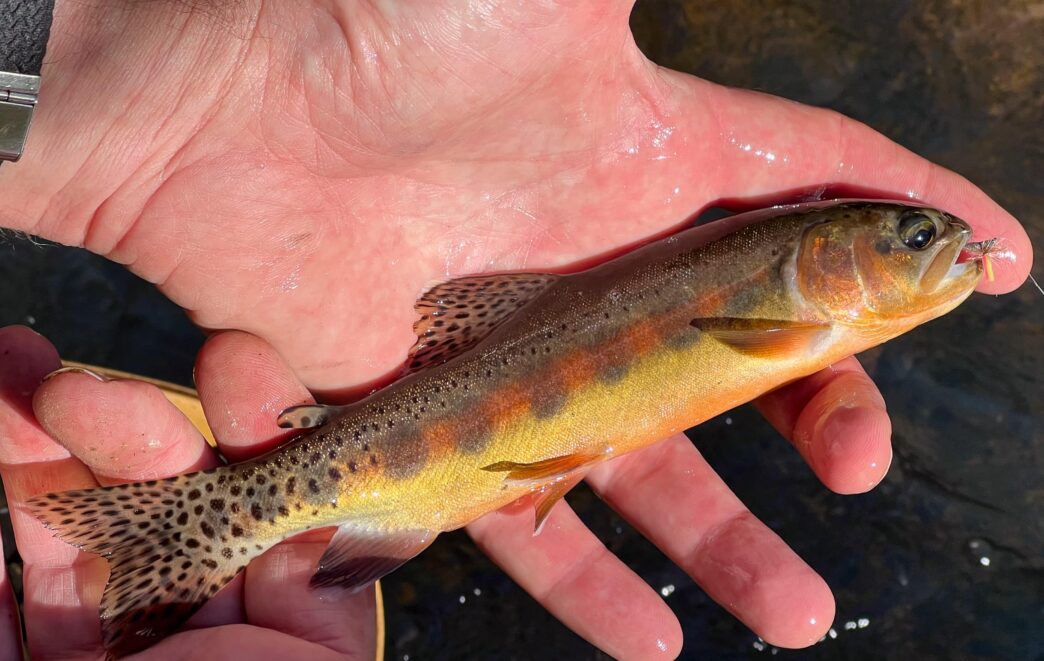
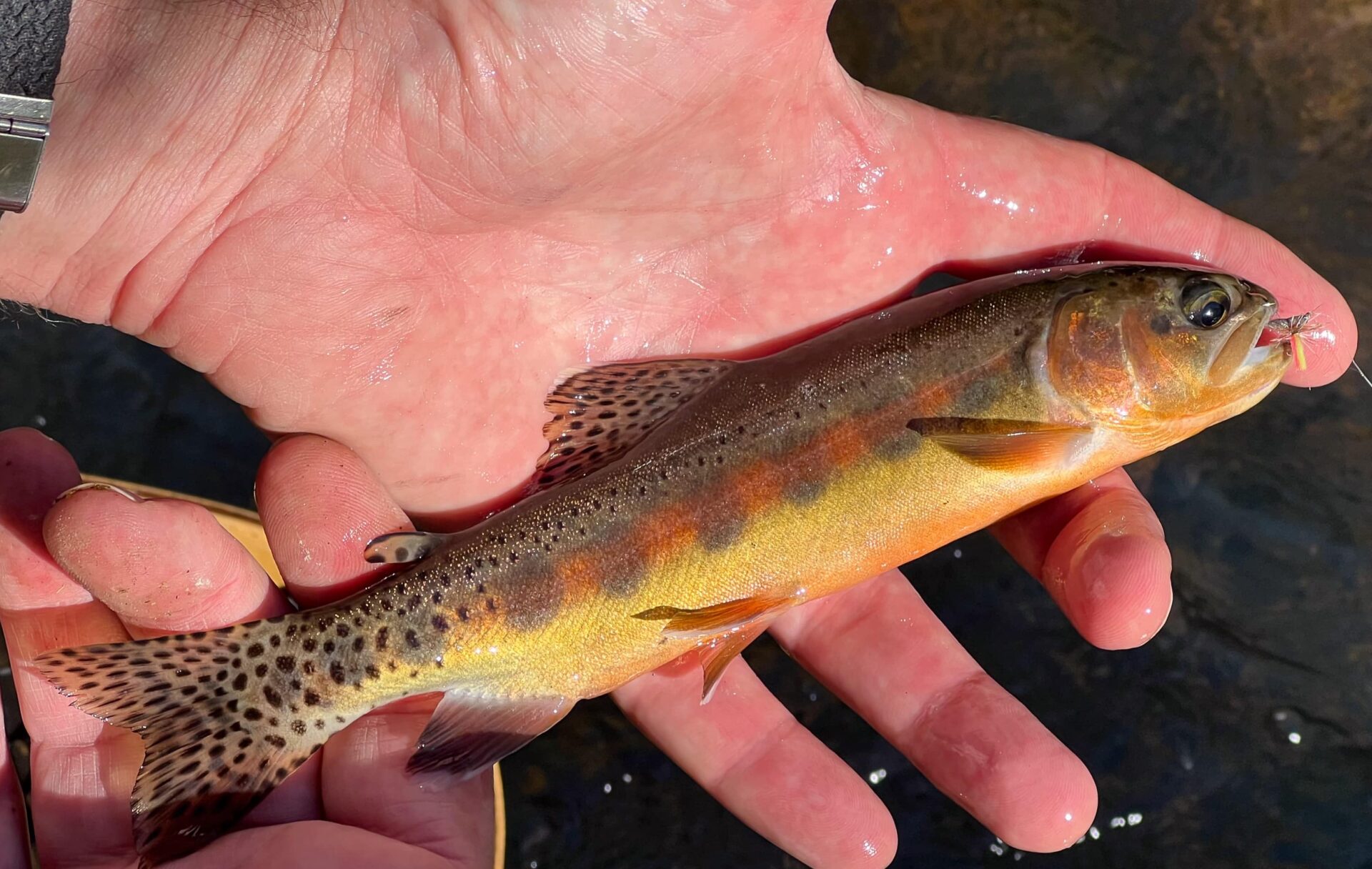


July 2024 found me dodging thunderstorms and lightning on a quest to find and catch one of California’s hidden trout forms in its native range. My target was the Little Kern golden trout—a lesser-known relative of the celebrated state fish, the California golden trout.
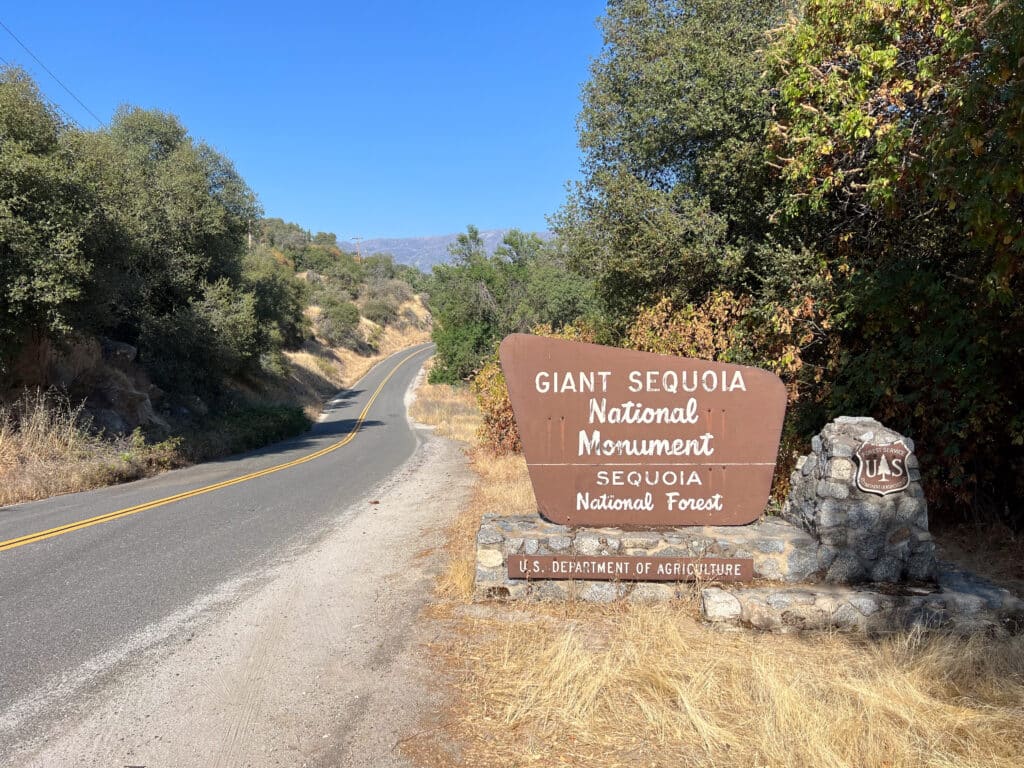
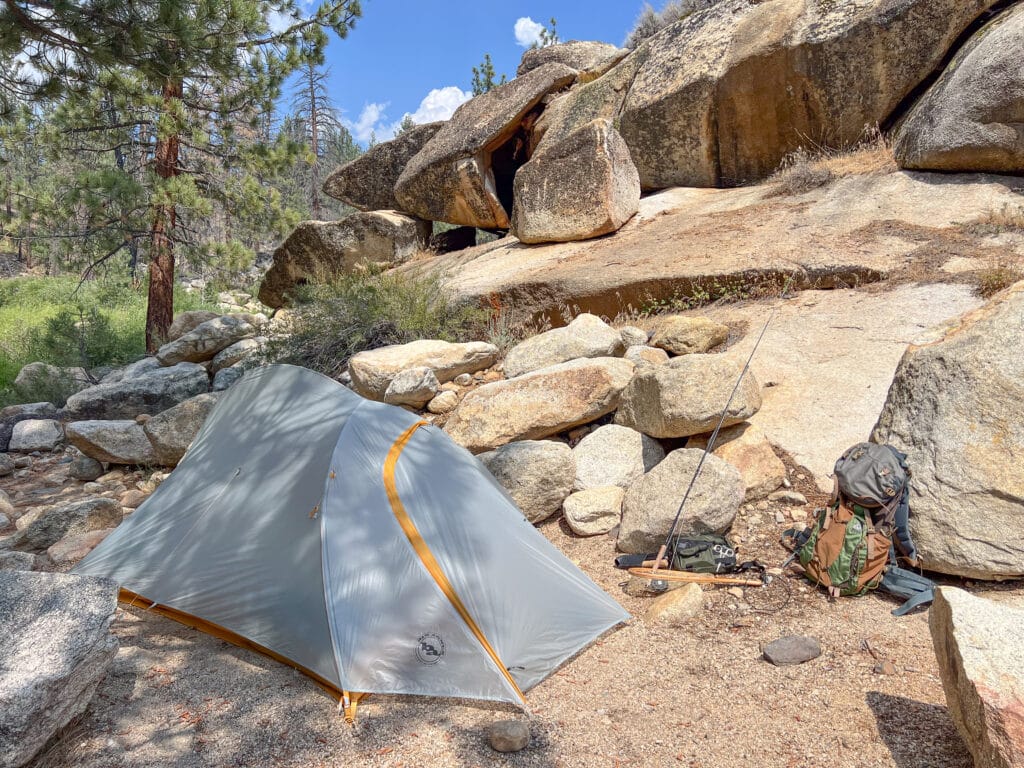
Little Kern goldens are native only to the Little Kern River watershed in the Southern Sierra Nevada’s Golden Trout Wilderness, miles from the nearest road and accessible only by foot or horseback. My trip started with a multi-hour drive across California and up into the Sierra. I drove the last 40 miles to the trailhead on a winding road along the Kern River Canyon, under a mix of clouds and sun, with threatening skies I hoped would clear. The trail I planned to take led over a ridge I didn’t want to cross under a thunderhead spitting lightning. After shouldering my pack and getting pelted with rain for a couple of 15-minute stretches along the trail, the skies cleared, and I made it over the ridge without problems. Seven miles of hiking later, I came to the Little Kern River, found a campsite, and did a little fishing. After catching and releasing a few trout that were clearly rainbow-Little Kern golden hybrids, I set up camp and relaxed with a backpacker dinner, a book, and a little scotch. The skies had cleared earlier, and the moon was up as I headed into my tent for the night. Since some clouds were scudding in front of the moon, I decided to pull things under the tent vestibule just in case. Good thing I did. About half an hour later, the heavens opened up, and I rode out the most intense thunderstorm I have experienced in the Sierra. It was an utter downpour with constant lightning so bright it hurt my closed eyes and filled my ears with continuous booming thunder. My little ultralight tent came through like a champ, however, and I stayed dry through the night.
I awoke to a clear, dry morning, grabbed some breakfast, then headed up a tributary of the Little Kern for a couple of miles in search of pure Little Kern goldens. I dropped into the tributary and found a mix of steep-stepped granite pools and runs, protected by dense overhanging brush—typical Sierra creek fishing, made challenging by limited access. I was able to sneak soft-hackle wet flies around corners and into pour-overs, hooking some of the most beautiful little trout I have ever seen. I got tons of grabs and netted a half dozen pure native Little Kern golden trout in a couple of hours. I returned to my campsite with the glow of success and a hankering to head over to another watershed a few dozen miles away in search of California golden trout. I packed up, cranked out the hike over the ridge and down to my car, then set a course for the South Fork Kern River watershed. Unfortunately, the same thunderstorm system that whacked me the night before had started a lightning fire complex above the South Fork of the Kern. As I drove, I could see pyrocumulus clouds looming southeast of me over what would be named the 2024 Trout Fire. The roads weren’t closed yet, but I knew they would be soon, so I reluctantly headed home.
The catalyst for my adventure was my participation in the California Heritage Trout Challenge, a program created by the California Department of Fish and Wildlife to educate the angling public about the rich diversity of trout species native to the state. California hosts distinct mountain ranges, including the Klamath Mountains in the northwest, the Warner Range in the northeast, the southernmost volcanoes of the Cascade Range in the north, coastal mountains stretching from above San Diego to the Oregon border, and the mighty Sierra Nevada, which forms a 400-mile backbone along the eastern side of the state. These mountains catch rain and snow and funnel cold, clean water into watersheds, creating the perfect habitat for trout to thrive.
At different times in the distant past, many of these watersheds were connected to one another and to the Pacific Ocean through massive inland lakes that harbored the common ancestors of today’s trout subspecies. Events such as ice ages, multi-century droughts, volcanic activity, and tectonic shifts isolated some of these watersheds behind lava flows, within newly formed mountains, or above cliff-sized barriers to fish migration. The trout in each isolated watershed adapted to its unique conditions, and their genetic makeups gradually diverged, forming the distinct forms we recognize today.
Our scientific understanding of these forms is, of course, much more recent. One of the most prolific species in California, the rainbow trout, was first identified in the state by W.P. Gibbons, founder of the California Academy of Sciences, in 1855, based on specimens caught in San Leandro Creek in the San Francisco Bay Area. Gibbons named the species Salmo iridia, but it was later recognized as the same species observed on the Kamchatka Peninsula in Siberia and named in 1792 by German naturalist and taxonomist Johann Julius Walbaum. The earlier name takes precedence, so we now call the rainbow trout Oncorhynchus mykiss, Walbaum’s name.
The California golden trout, the official state fish, was originally described in 1892 by David Starr Jordan, Stanford University’s first president, as a subspecies of rainbow trout he named Salmo mykiss aguabonita. By 1904, scientists were already concerned about overfishing and the potential extinction of the golden trout. After hearing concerns from his friend Stewart Edward White, President Theodore Roosevelt directed U.S. Fish Commissioner George M. Bowers to address the situation. Bowers assigned Barton Warren Evermann of the U.S. Bureau of Fisheries to study the issue. Evermann’s efforts culminated in the 1906 report The Golden Trout of the Southern High Sierras, which identified multiple distinct forms of Oncorhynchus mykiss. Three of these forms are now recognized as O. m. aguabonita, the California golden trout; O. m. whitei, the Little Kern golden trout; and O. m. gilbertii, the Kern River rainbow trout.
In addition to attention from national authorities, the state of California developed and matured into what is arguably the country’s most sophisticated and comprehensive fisheries agency, now known as the California Department of Fish and Wildlife (CDFW). The CDFW and its predecessors have long had to balance maintaining sport fishing opportunities with conserving California native species. As fisheries science has continued to evolve, the balance has shifted toward protecting unique species through regulations such as requiring the use of artificial lures and barbless hooks, imposing zero-fish limits (catch-and-release), and, in extreme cases, completely closing key waters to sport fishing. These efforts have long been informed by CDFW’s collaboration with agencies in other states, such as Oregon and Nevada; federal agencies; academic programs, such as the UC Davis Center for Watershed Sciences; and non-governmental organizations, such as Trout Unlimited and California Trout.
In the 1960s, the CDFW operated the Committee on Threatened Trout to coordinate studies and protection efforts for native fish. In 1971, the California Fish and Game Commission created the CDFW’s Wild Trout Program to protect and enhance California’s wild trout fisheries and maintain public fishing opportunities. In addition to designating streams and lakes as Wild Trout Waters, the program coordinates efforts to maintain genetic integrity by avoiding the stocking of hatchery trout into designated waters, fosters a catch-and-release ethic that helps sustain self-sustaining wild trout fisheries, drives monitoring and formal management plans, and raises public awareness and appreciation of California’s native trout species. The CDFW renamed the program the Heritage and Wild Trout Program to formally recognize the importance of native (heritage) trout in the state. A key CDFW goal is to prevent California’s surviving native species from succumbing to the fate of the bull trout (Salvelinus confluentus), which disappeared from its last refuge in California, the McCloud River, in the 1970s.
In the mid and late 1990s, Roger Bloom, a CDFW Wild Trout Biologist assigned to Southern California, traveled to regional fishing shows and visited local fly-fishing clubs to conduct outreach and raise awareness among anglers about Heritage species in California. I recently sat down with Bloom to learn more about what he discovered and how it led to the creation of the Heritage Trout Challenge.
“As I was trying to promote native trout conservation in California, I realized that most anglers did not understand or have a clue about the diversity, the uniqueness, and the challenges facing native trout in the state.”
– Roger Bloom, former CDFW Wild Trout Biologist
Bloom had seen the Wyoming Cutt-Slam, created in 1996 by fisheries biologist Ron Remmick to encourage anglers to learn about and appreciate Wyoming’s four native cutthroat subspecies. The initial success of the Cutt-Slam, which rewards anglers who catch all four native subspecies with a certificate, medallion, and sticker, inspired Bloom to consider what a similar program for California could look like, and he began laying out a concept.
Bloom was one of those folks who viewed protecting fish as a calling. He first entered the field as a high school student in Sacramento in the early 1980s, when he wrote a paper on fish and contacted state fishery biologist Eric Gerstung for information. Gerstung, head of the Committee on Threatened Trout, was instrumental in inspiring Bloom to study the field in college. They later became colleagues at the CDFW, where Gerstung mentored Bloom until retiring in the late 1990s. During his career, Bloom held a variety of roles, including a several-year stint in Southern California. After he moved back to the Sacramento area, he connected with Fisheries Branch chief Ed Pert, who recognized Bloom’s value and brought him on as a full-time staff member.
When Bloom outlined the Wyoming Cutt-Slam and his nascent idea for a California program, Pert immediately recognized that the concept aligned with the Fisheries Branch’s educational and conservation missions. Pert described the potential program as a “no-brainer.” When Bloom asked for authorization to develop it, Pert told him to “get after it.”
As Bloom developed the concept for a California program, he consulted with Remmick in Wyoming and engaged colleagues, including Gerstung and Dennis Lee, to help shape it. Compared to Wyoming, California has several key differences. First, it has many more distinct native trout forms (11 compared to Wyoming’s four). California is also a larger state with more geographically distinct regions and ecosystems. Watersheds with native trout range from sea level to over 10,000 feet in elevation and include volcanic plains, Pacific coastal streams, valley rivers, and headwaters tucked into every major mountain range of a state that is 770 miles long from north to south. Bloom told me, “We didn’t want it to be easily done in one weekend. But more importantly, we wanted to spread it out across the different geographic areas of the state and different watersheds to highlight the uniqueness and diversity of the fish.” When he looked at native watershed maps, Bloom saw several geographic regions where three or four forms, in fairly close proximity, could be caught in a couple of days. “We ran with multiple versions and different numbers and settled on six because it seemed reasonable, yet a challenge for anglers that would require them to get outside of their normal home ranges in California and visit other areas.” He also included a Master level that would require catching all eleven forms for exceptionally dedicated anglers.
With enough structure to make a coherent pitch, Bloom first presented the concept in 2000 to his Heritage and Wild Trout Program leadership, then to the Fisheries Management Commission for their consideration. The FMC was interested in the concept but wanted leadership of the CDFW regions across the state to weigh in before making a final decision on approval. In 2001, the regions came back with their input, including significant opposition from some regional staff. Bloom found that “A lot of the initial reactions of the biologists within the department were protective in nature. They didn’t want to highlight some of these relatively rare or small populations of native trout throughout California.” Their concern was that publicizing the existence of some of the heritage species could pose an existential threat from angling pressure and overfishing, potentially leading to excessive take and the loss of entire populations.
Bloom recognized that protecting local populations of native fish was the point, but did not agree that publicizing them would be to their detriment. On the contrary, he felt that educating the angling public about their existence and raising interest would create and deepen a constituency committed to their preservation. Per Bloom, “If anglers in the public weren’t aware of these unique, diverse trout populations, then no one would really care about protecting them.” He also felt that protections such as zero-fish limits (i.e., catch-and-release) and the use of artificial lures and barbless hooks in these native ranges would help ensure the viability of the populations. Bloom made his case to the FMC in 2001 and succeeded in allaying concerns raised by regional staff. After weighing the educational merits against the concerns, the FMC decided to move forward with the program. When he reflected many years later on the process, Pert credited Bloom with engaging stakeholders and doing the legwork that paved the way for program approval by the FMC. “It took a process and time to impart that type of approach with the biologists and the department.”
Program approval was the start, not the finish. Bloom had long advocated for six forms—after traveling to Wyoming and completing the Cutt-Slam in a weekend, he felt four was too easy. He informally called his California concept a ‘Six Pack,’ a nod to the Wyoming Cutt-Slam name (‘Slam’ referencing the four forms as a ‘grand slam’). The FMC deliberated on program elements from 2001 to 2002, landing on six forms. The ‘Six Pack’ name didn’t survive—its association with beer was disfavored—and the program was named the Heritage Trout Challenge.
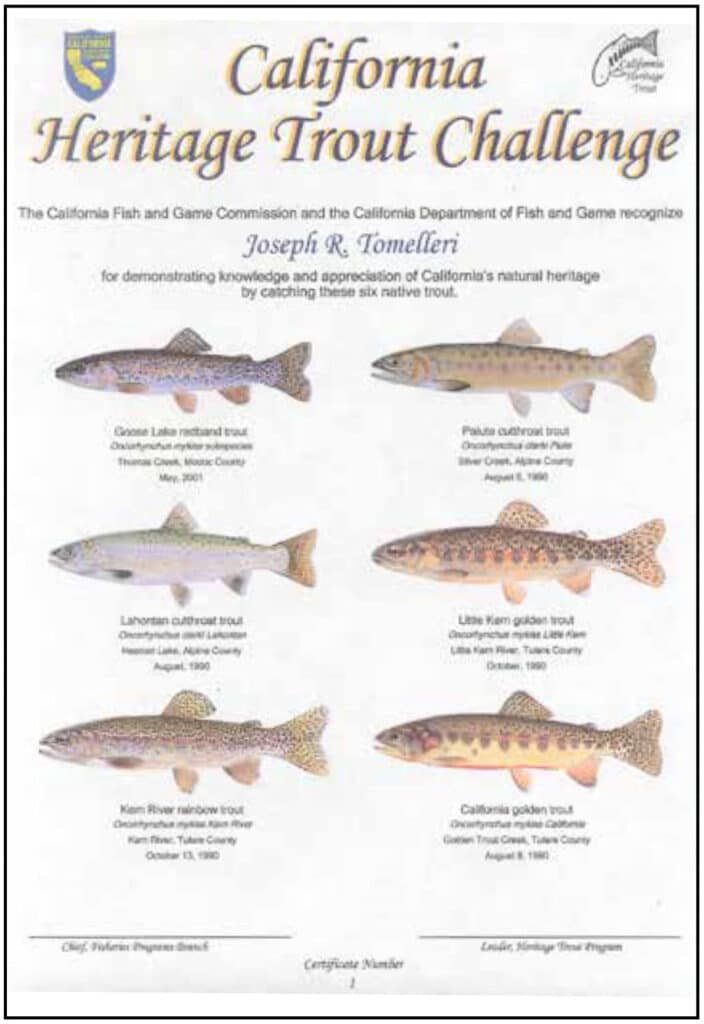
Other key elements of the Heritage Trout Challenge were also finalized during this period. In 2001, Bloom enlisted celebrated fish artist Joseph Tomelleri to provide images of the species for a certificate to be issued to anglers who completed the challenge. The certificate was designed to be customized for each recipient, featuring images of the species caught, the date caught, the stream location, and signatures from the head of the Heritage and Wild Trout Program and the head of the Fisheries Branch. A high-quality fishing ballcap with a custom California Heritage Trout logo would be delivered to each recipient along with the certificate. For a program with no entry fee (other than the already-required California State fishing license), it was a pretty nifty package.
The CDFW formally kicked off the California Heritage Trout Challenge in 2004 with a press release and additional outreach. After the Challenge was covered in national fly-fishing magazines, it gained momentum, and applications began to roll in. Over the years, the Challenge has consistently attracted interest and applications. In early 2024, Northern California angler Scott Lyons received the 500th certificate, and the total number of awards passed 600 in late 2025. To qualify for the Challenge, anglers submit the locations, dates, and photos of the trout forms caught. CDFW staff scrutinize the photos and locations to verify the trout species and watersheds. Most applications are approved, but a few dozen have been rejected over the years. Typical reasons for rejection include misidentifying the type of trout or specifying a location outside the species’ native range. In addition to the regular Challenge, the Master Challenge requires catching all 11 currently recognized species. Only a few Master certificates have been awarded because the native range of one of the 11 trout, the Paiute cutthroat, is closed to fishing to protect its survival in its native watershed. Over the years, a few anglers have caught Paiute cutthroat that went over the barrier falls at the bottom of the closed area and were found downstream in waters open to fishing, but the odds are long for those seeking a Master certificate.
After the pioneering Wyoming Cutt-Slam, California’s Heritage Trout Challenge was the second modern Challenge/Slam established in the United States. In the two decades since the CDFW began awarding certificates, the concept has spread across the western United States. Nevada established its Native Fish Slam in 2012, requiring anglers to catch six native subspecies; Utah’s Cutthroat Slam, established in 2016, requires four native cutthroat trout; and New Mexico launched its Trout Challenge in 2020. As interest in protecting native trout species accelerated, the Western Native Trout Initiative—formed in 2006 under the Western Association of Fish and Wildlife Agencies—established its multi-state Western Native Trout Challenge in 2019, offering several levels of recognition, with the highest requiring 18 subspecies across 12 participating states.
A key impact of these programs is that interest in native trout subspecies is now woven into the fly-fishing community. The total number of certificates awarded across the West is well into the thousands (Wyoming alone had awarded 2,766 certificates by the end of 2025), and the various slams and challenges are widely discussed on online angling forums and social media. This proliferation of knowledge and interest can be credited to a handful of dedicated and visionary fisheries biologists, such as Ron Remmick in Wyoming and Roger Bloom in California, along with their supportive and equally dedicated colleagues and superiors in their respective government agencies. This success demonstrates that even individuals buried in bureaucracies can make a material difference. As he looked back on the program, Bloom reflected, “In many ways the Challenge exceeded our hopes. When I go to shows or clubs, they not only understand the uniqueness and diversity of native trout but have also become advocates for them. It expanded the understanding and appreciation of these fish way beyond what we thought was possible in the beginning.”
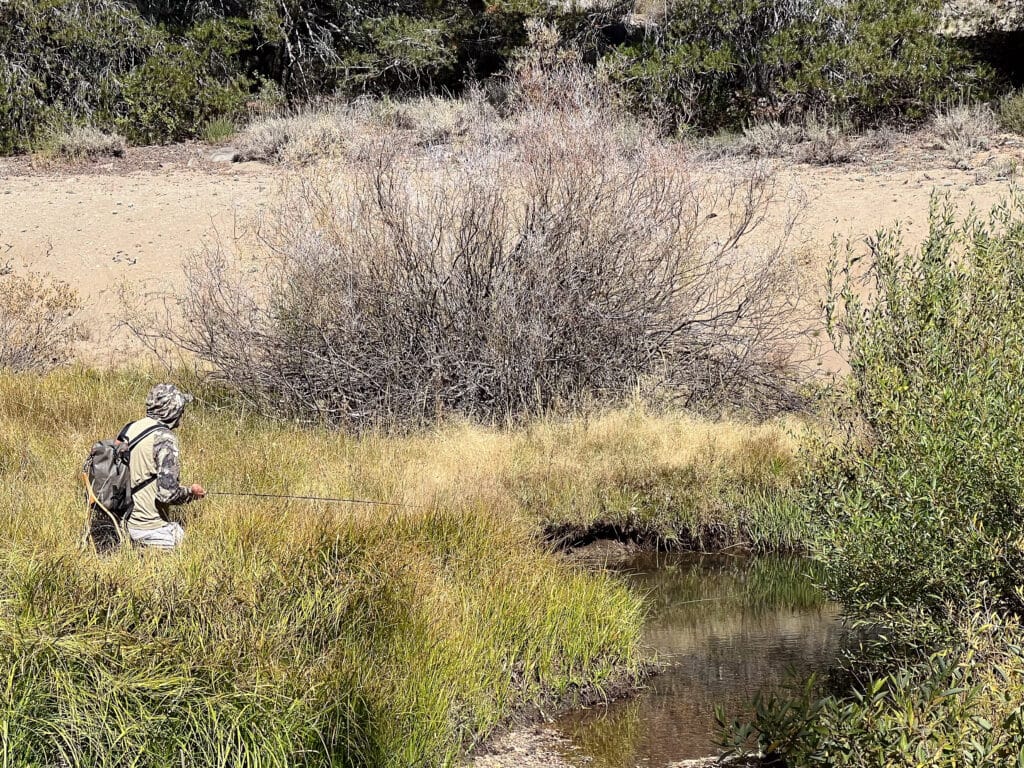
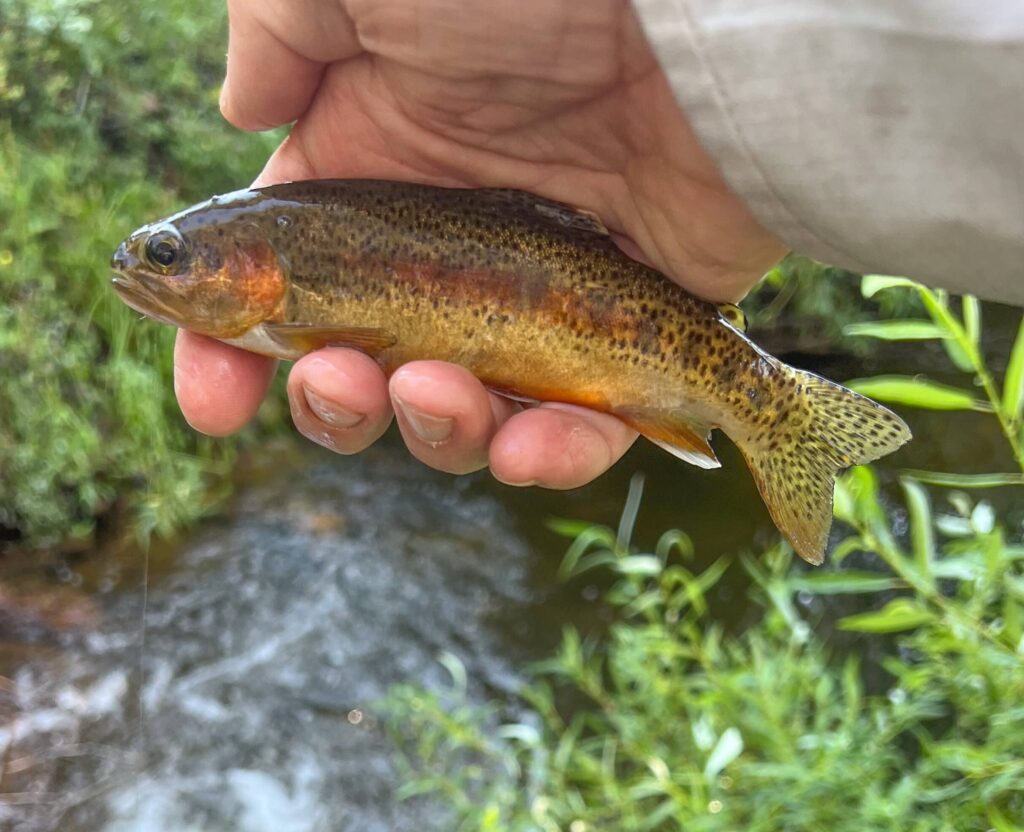
These programs certainly worked their magic on me. I have completed the California Heritage Trout Challenge twice, first in 2020 and again in 2024, catching all 10 legal trout subspecies in their native watersheds. This multi-year effort has taken me all over the state and sparked an enduring interest in native trout and remote watersheds. I’m keeping a close eye on regulations for the native watershed of the 11th subspecies in California, the Paiute cutthroat. If the CDFW opens that watershed to angling, I’ll be there.
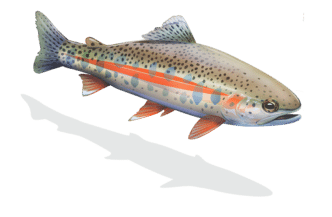
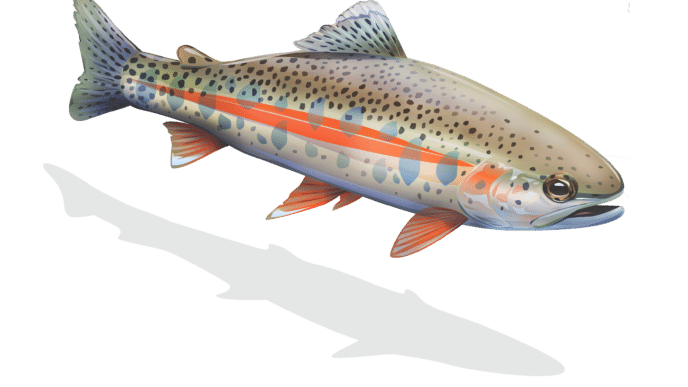
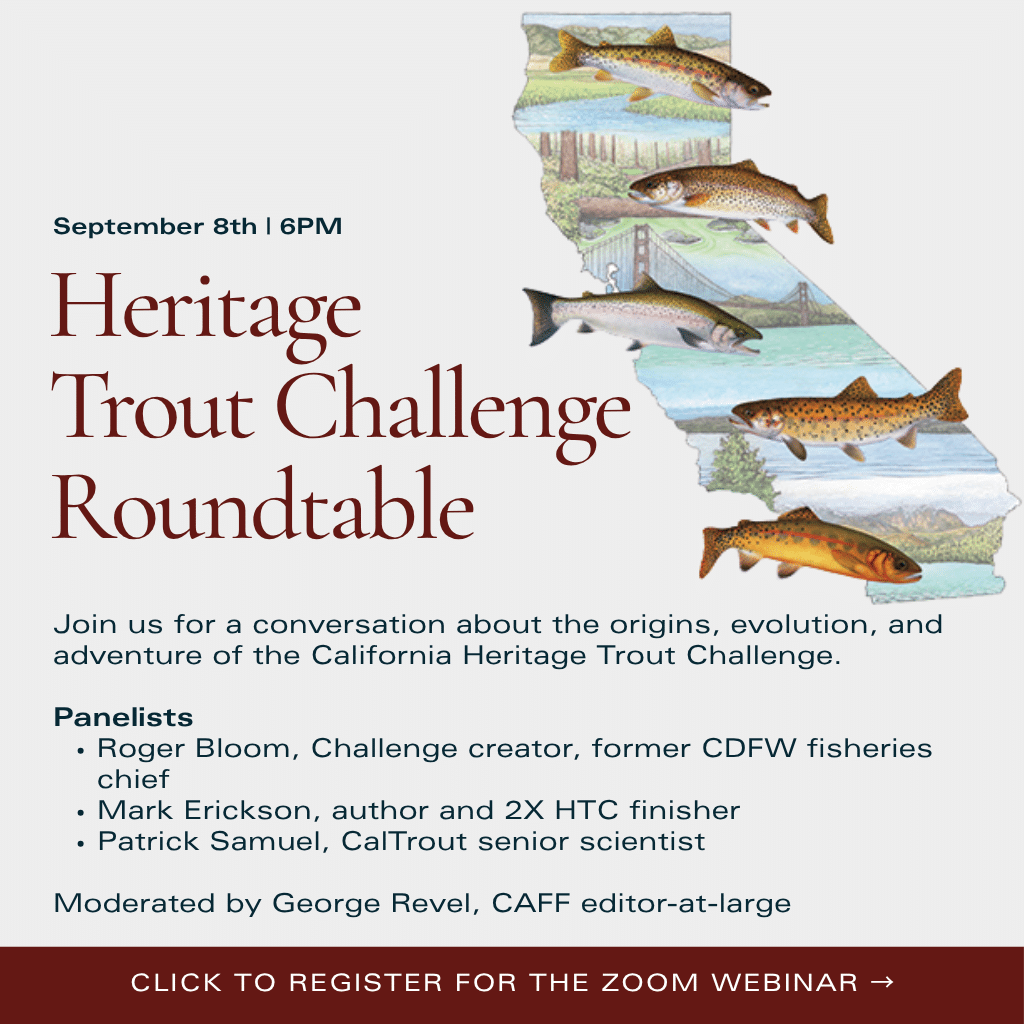
The California Heritage Trout Challenge includes three subspecies of cutthroat trout and eight subspecies of rainbow trout. The three subspecies of cutthroat trout (Oncorhynchus clarkii) are the Coastal cutthroat trout, Lahontan cutthroat trout, and Paiute cutthroat trout. The eight subspecies of rainbow trout (Oncorhynchus mykiss) are the coastal rainbow trout, Warner Lakes redband trout, Goose Lake redband trout, McCloud River redband trout, Eagle Lake rainbow trout, Kern River rainbow trout, Little Kern golden trout, and California golden trout.
The CDFW maintains an informative website that describes these trout forms, their historic and current ranges, and California Heritage Trout Challenge rules and policies at wildlife.ca.gov.
Editor’s Note: Have you completed or are you in the process of completing the California Heritage Trout Challenge? We’d love to hear about it. Share your story with us at edit@calflyfisher.com.