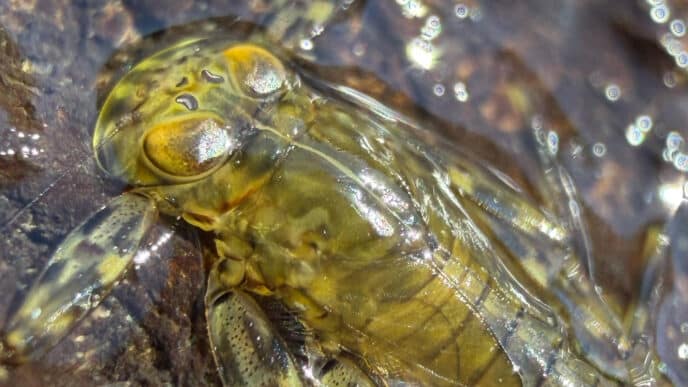
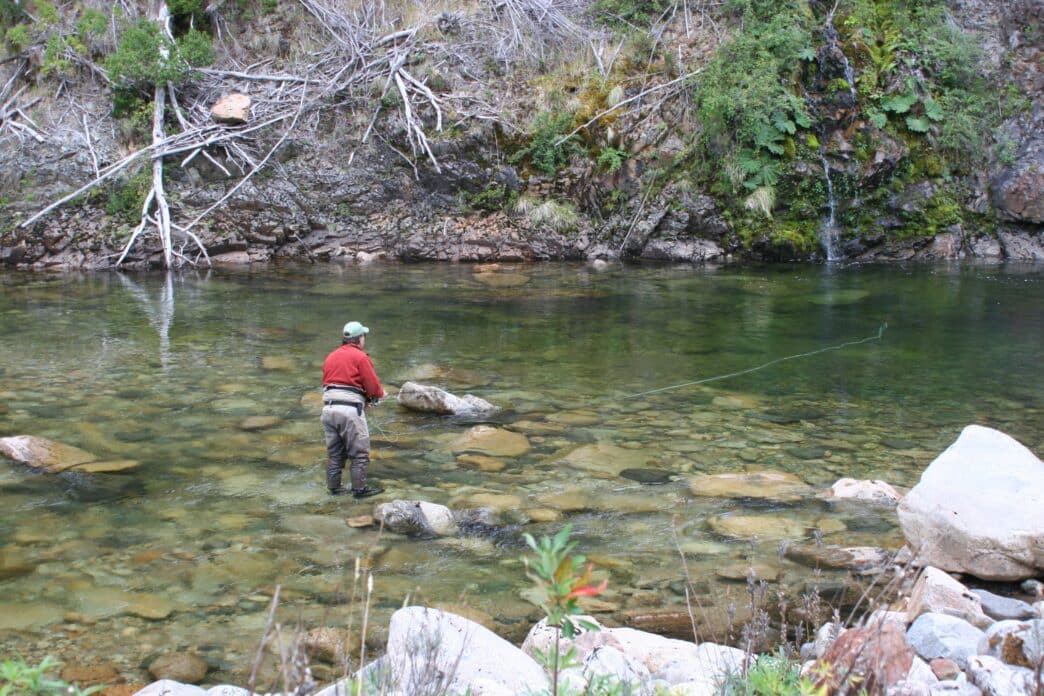
The fish was driving me nuts. Tucked into the slower flows against the far grassy bank, it was rising steadily, locked onto the parade of freshly hatched mayfly duns floating jauntily over its haunt. Across and slightly upstream from the fish, only 30 feet away, it should have been an easy mark, yet 20 casts later I had yet to get so much as a look. The problem, I knew, was micro drag. The current was swift between me and the trout, and no matter how dramatic my reach cast and subsequent mends, I would get only about eight inches of drift before the faster current would subtly compromise the presentation. The fish wasn’t spooked—there were too many bugs for that—but it clearly sensed something was amiss with the drift of my fly. I knew what I had to do.
Slowly backing away from the fish, I waded back to shallow water and slipped upstream about 30 feet. I then waded back out, this time a bit deeper and closer to the far bank. From this vantage point, I made an exaggerated reach cast nearly straight downstream, so that virtually all of my fly line and leader were in the slower bankside flows and the fly was about two feet above the fish. I kicked a quick, small, downstream stack mend into the presentation, fed a few feet of slack, and watched as my dry floated drag-free, ahead of the tippet, into the trout’s lane. This time, there was no hesitation—the big brown rose confidently and inhaled my fly! In my enthusiasm, I promptly “tarpon struck” and popped the fish off…
The next time you come upon a trout rising in a stream, holding and feeding in a consistent lane, take a moment before wading out. If the flow is slow and fairly consistent between you and the fish, the classic “across and slightly above” casting position is likely ideal. Even casting up at an angle from downstream can be effective, though there’s a higher chance of lining the fish and spooking it … you simply have to be a better caster to make this work. If the fish is holding in slower water on the far bank, with a strong current between it and you, the abovementioned presentation will be the way to go. I’ve found there are almost no situations in which the downstream cast-and-feed technique is not more effective than others, both because it presents the fly first—before the leader—and because it more easily facilitates an extended drag-free drift.
There are typically three steps to this presentation. First, the reach cast has to be dramatic enough to position all or most of the fly line nearly directly above the leader and fly. If necessary, you can cast and then slowly raise the rod tip to straighten the leader, dragging the fly into position well above the fish. Then, when you drop the tip and feed line, it floats directly into the desired lane. Second, especially if you initially drag the fly into position, there may be too much tension in the leader, causing the fly to drag slightly despite the slack you are feeding. To overcome this, I like to flip a quick, understated, downstream stack mend into the system, introducing the desired slack into the presentation. Third, if the fish is some distance from where you are able to wade, do not be afraid to feed line downstream as far as necessary to reach the fish. I routinely feed 40 to 60 feet (and more) into the presentation where the current allows. Anglers sometimes mistakenly believe there is no way you’ll be able to set the hook at these distances, but in fact, it is quite possible—you just need to strike a bit more aggressively while lifting the rod somewhat parallel to the water. If you throw the rod tip back over your shoulder on the strike, you will leave a lot of flies in fish’s mouths, just as I did with that big brown.
Importantly, this is an essential technique to have in your nymphing quiver when you are fishing indicators or dry-dropper rigs. It’s not so much about the initial reach-cast part of the method, as you often aren’t concerned with the nymph or indicator landing lightly and downstream of the fly line. But once the rig hits the water, I still like to pop a quick stack mend directly at the indicator or dry fly to introduce a small pile of slack. Without this, feeding line to achieve an extended drift may fall victim to subtle drag, ruining your odds of getting fish to eat. It’s much better to stack mend to begin with, and then feed the line at a slightly faster pace than you feel necessary, even if you feel there is too much slack in the system. Better to err on that side of things, as at least the achieved dead drift will get you the strike…then you just have to be quicker on the uptake to drive the hook home before the fish spits it out. And just like when fishing dries, do not be afraid of long, extended drifts. Especially on large rivers like the Lower Sacramento, I routinely feed 50-70 feet of line into the drift … and hook a large percentage of the pull-downs.
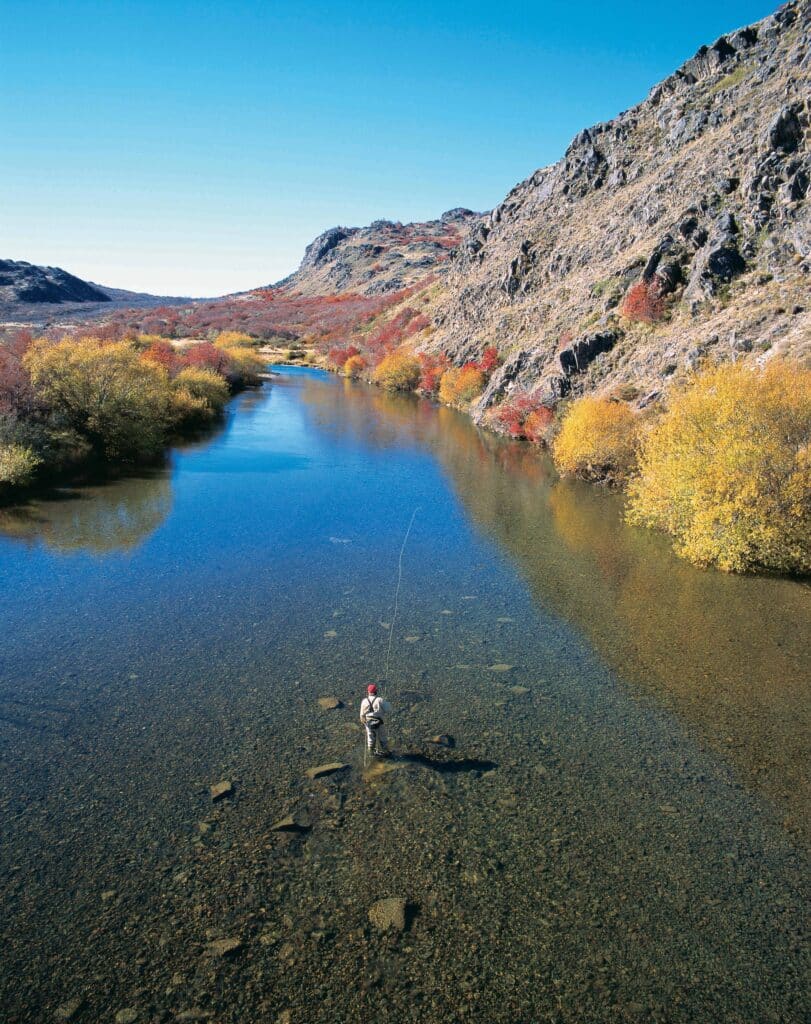
Finally, a word on feeding line. This can be challenging if you’ve never tried it, but once you lock in the muscle memory, you’ll find it hard not to do it—it is just so effective. Start by stripping in as much loose line as you plan to feed out, letting it hang below your legs. Hold the rod tip low, near the water’s surface, with the line captured between the index finger of your casting hand and the cork grip. Run the thumb and forefinger of your non-casting hand down the loose line for a couple of feet, pinch it there, and bring that point of the line near your casting hand, forming a loop. Immediately release the pinched line in your casting hand (but not the non-casting hand pinch) and flip the tip of the rod briskly upward to feed that loop out of the rod guides. It is important to use only your wrist to powerfully flick only the tip of the rod … if you raise your whole arm or the whole rod, it ruins the effect, and the line won’t feed out smoothly. Then feed another loop up, flick it out, and keep repeating until you’ve completed the drift. If you’re new to this, I find it helpful to start with just an indicator or a large dry, no nymphs, and practice feeding into a moderate current in a place where you won’t be spooking fish during the learning process. Once you have the hang of it, wade out there and give it a go where the fish live! I should mention that a high-quality fly line makes feeding line nearly effortless once you’ve mastered the technique. I really like the Scientific Anglers Amplitude series of floating lines, but there are a number of great products out there.