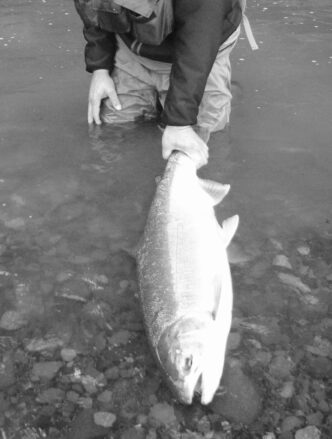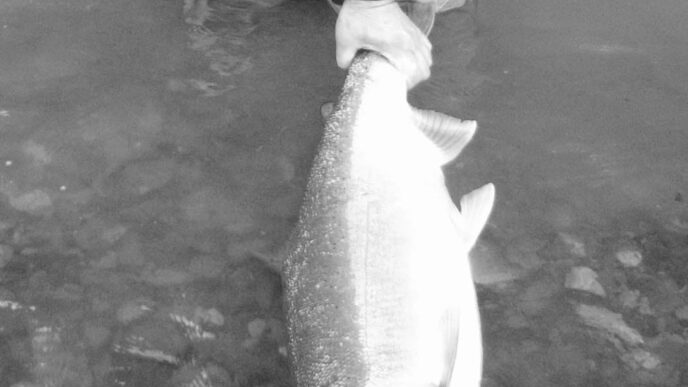
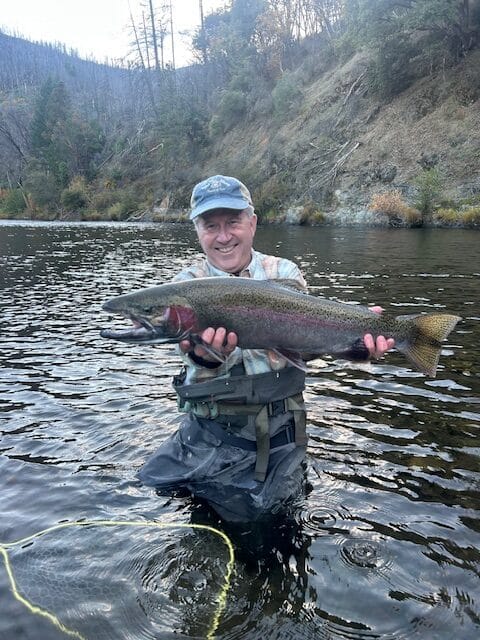
I recently fished a favorite run on the Trinity River near Junction City, a deep, heavy piece of water replete with jagged bedrock shelves and enormous boulders. The good news about this run is that all that structure attracts and holds steelhead like nobody’s business. The challenge… well, the challenge is not so much hooking fish here as wrangling them out of all that tippet-destroying substrate. With the banner run of fish we’re experiencing this season, I knew as I waded in that I would, without a doubt, be putting my pair of nymphs in front of fish, and if the past few weeks were any indication, most likely a really large fish or two. So, when on the first cast, my dry fly indicator suddenly vanished near the end of the long drift, I was fully prepared and set the hook quickly. What I was not prepared for was the heavy weight of the fish; it felt and moved completely unlike the standard three- to six-pound steelhead I was used to. Despite leaning into the fish as hard as I dared, it seemed unaffected, bulldogging at will through the nightmarish boulder garden, finding every available hard, abrasive surface on which to punish my tippet. Yet long minutes later, I confidently wrestled the beast into the waiting net, never relenting on the pressure, even as I knew the abuse my leader was taking. The source of my confidence? Fluorocarbon.
Many see the pulse-quickening price tag on top-of-the-line fluorocarbon tippet spools and imagine there is no way it could be worth it … it’s just tippet, and standard nylon monofilament has always worked just fine, right? Well, yes and no. Nylon mono has worked very well for decades, true, yet remember that we never had anything significantly different from it to compare it to. Until fluorocarbon found its way onto fly shop shelves from the saltwater conventional market, where savvy big game anglers had been enjoying its advantages for years, there had never really been any viable alternatives to nylon.
So what could possibly make this new option worth two to three times more than the old reliable? A good, but misleading question. In my opinion, fluoro in no way fully replaces nylon. Case in point, for most die-hard dry fly enthusiasts, fluoro can be just short of a waste of money. It sinks on contact with water, and while this can, on rare occasions, be an advantage when the shadow of a floating tippet on flat water can spook ultra-selective trout scrutinizing your in-the-film emerger, in most cases it is simply an annoyance, as it constantly works to pull even high-floating dries beneath the surface. I still use nylon tippet for the majority of my dry fly fishing and find it perfectly suited for the job.
Where fluoro really shines is in the down-and-dirty world of nymphing. In these watery recesses, a tippet that sinks is a good thing, though in truth the sinking rate of fluoro is barely appreciable and has little effect on the sink rate of your average beadhead nymph. It is still the nymph’s weight that determines how quickly it sinks, not a fluoro tippet. What can be an advantage—and my own years of anecdotal experience seem to bear out—is the long-heralded, almost mystical ability of fluoro to become nearly invisible beneath the water’s surface. When fluoro first hit the fly-fishing market, this was the major selling point to try to lure skeptical anglers past the price barrier.

It was a tough sell. I mean, the stuff looks and feels virtually identical to nylon, and to my eyes, both products are tough to see underwater. Could it really be a game-changer worth the significant extra money? This wasn’t a question with a universal answer. It took years of on-water testing by serious anglers, and I think it’s telling that today some of the most experienced, opinionated, skeptical, and frugal purchasers of tippet I know—the exceptional guides working at The Fly Shop—largely pay the higher price for fluoro to tie to their clients’ nymphs. If they didn’t believe in it, they most certainly would not pay the substantially higher price tag. Yet it can be argued that mono leaders have been used successfully for years by nymph fishers, so while it may seem clear to many that they get more grabs with fluoro, for others, the price difference just isn’t worth it.
My preference for fluoro undoubtedly stems largely from another feature. It’s one valued by the conventional big-game market that initially developed this product and is described in the opening paragraph here—the material is incredibly resistant to weakening when abraded. I have landed more big fish than I can count on fluoro simply because it can take the abuse of being dragged around and over big rocks, under tension, for extended periods in some pretty epic battles. There is simply no way those fish would have been landed had I been using nylon. Examining the tippet following these experiences revealed tippets that were dramatically compromised, abraded, and chafed, sometimes even with curls of material peeling off. Yet even trying to break it deliberately between my hands after the fact proved very difficult. In my experience, top-quality fluoro seems almost freakishly resistant to breaking when abraded compared to top-quality nylon. For me, all those big fish landed because of this feature, which makes it worth the extra money.
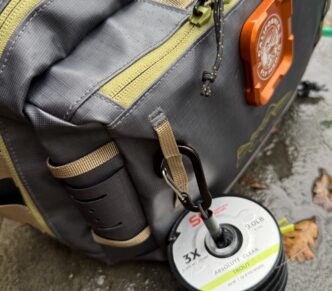
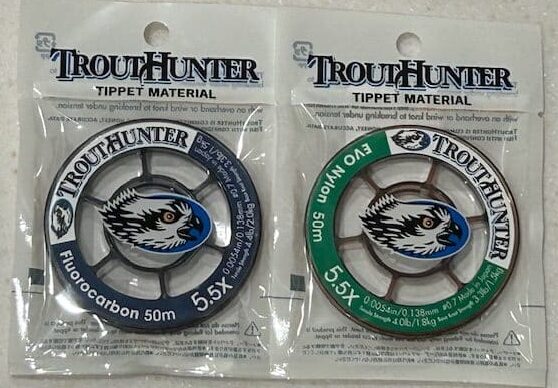
It’s worth noting that not all fluorocarbons are created equal, just as with nylon. While I have a clear favorite, I think it’s best to decide for yourself which brand best suits your needs. Watch for how easily knots slide into place (possibly the number one feature for me in my choice); how relatively supple the material is (fluoro can tend to be fairly stiff, which I don’t care for); and how well it holds up to the impact of hard strikes (I am routinely accused of “tarpon-striking” while trout fishing, so this feature may be more important to me than to you). Finally, for those who enjoy dry/dropper fishing, I recommend using a tapered nylon leader from the fly line to the dry fly—it is less expensive, turns over as well as a pricier fluoro leader, and is better at keeping the dry fly floating. Then use fluoro from there down to your nymph(s).arger nymphs and fish, and 4X for smaller bugs and more traditional trout sizes.