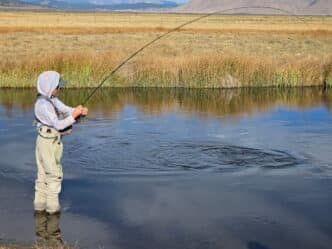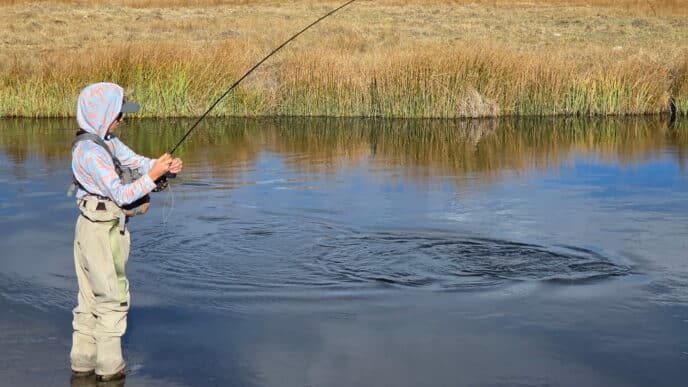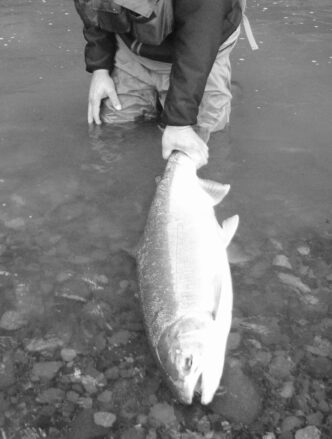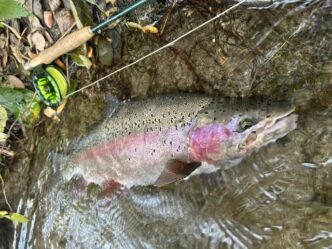
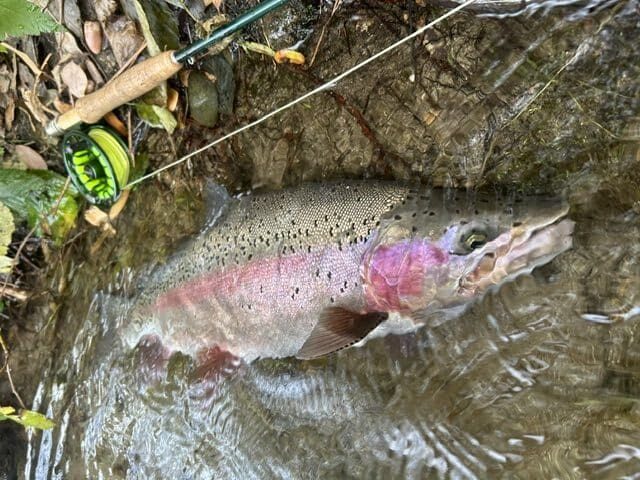
The Lower Sac side channel was 60 feet wide, a heavy riffle at the top gradually softened into a slick tailout. It was a warm September evening, the sun nearly down, and the water’s surface was alive with rising fish. Well, to be clear, they weren’t rising to dries; they were aggressively targeting emerging caddis pupa just beneath the surface. Fifteen minutes of fruitless dry-fly fishing finally made me look closer, and that’s when I noticed I’d never actually seen a fish’s mouth break the surface. Violent boils, yes. Small geysers of spray, absolutely. Occasionally, a fish would even vault clear of the water… but never a head rising to a floating dry. Time to swing!
I think our fly-fishing culture has so indoctrinated us into believing we must dredge our sinking flies to entice fish that we’ve forgotten what the world of the trout is like. They are finely tuned to the daily nuances of their watery world. To survive, they must take advantage of all available food sources. Sometimes this means hunkering on the bottom, picking off nymphs as they drift deep in the water column. Other times it means suspending just below the surface, tipping up to inhale small dry flies as they drift helplessly along. Another equally important feeding opportunity arises during intense emergences, typically of caddis or mayflies. As these small insects swim to the surface to emerge, they are extremely vulnerable to feeding trout. I have observed fish early in the process staying deep, calmly moving side to side to intercept the bugs as they leave the bottom substrate to begin their journey. Yet as the hatch intensifies, especially with erratic, fast-moving caddis pupae, the fish move up in the water column and become a bit more frenzied in their feeding. They seem to understand that if they don’t catch these insects before they reach the surface, it’s a missed opportunity. This, in turn, creates an opportunity for the angler, as the fish lose some of their normal caution.
So how do we take advantage of this phenomenon? First, learn to observe and recognize when it’s happening. Typically, you will notice surface disturbances from feeding trout, yet rarely see their heads break the surface. This is a clue that they are keying on a food source just beneath the surface. During this time, fishing deep with a heavy nymph is rarely effective, nor is dead-drifting a dry fly on top. A dry-dropper setup with a nymph suspended mere inches below the dry can be effective, as can swinging a soft hackle pattern on a tight line. The grab is often both tactile and visual. It’s fun!
Swinging a nymph is usually straightforward. Position yourself above the feeding trout and cast down and across, slightly above and beyond where the fish is showing itself, so the current swings your fly into the fish’s field of vision on a tight line. Do not feed line as you would with a dead-drift presentation—make the cast, then capture the line, pinning it to the cork grip with your forefinger. Immediately after the cast, make a significant upstream mend to position your line upstream of the fly—this helps you better control the pace of the swing. After the initial mend, bring your rod tip down almost to the water’s surface—this eliminates a sagging belly of line between your rod tip and the water that can make detecting strikes difficult. If the water is particularly swift, you may need to make more mends to slow the swing, but keep in mind that each mend introduces momentary slack into the drift, which is an opportunity to miss feeling strikes. Follow the swinging line with your rod tip—this keeps you in the best possible contact with your fly. I like to make several “mini mends” as the fly swings, moving the rod tip only about a foot each time, more to impart motion to the fly than to reposition the line. Don’t give up on the swing too early; just as steelhead will often follow the arc of a swung fly and finally grab on the hang-down, trout will sometimes do the same. More commonly, though, they will take earlier in the swing.
There is a fundamental difference between how you should react to a fish taking a swung fly and how you should react to a fish that has taken your deeply drifted nymph. With the latter, fast and hard is usually the best tactic—the moment you see your indicator twitch or disappear, you need to quickly raise the rod tip to take up the slack and set the hook. With a tight-line swing, this reaction almost guarantees failure—either you will rip the fly away from the fish or, because the line is already under tension, you will break the fish off. The correct response is to quickly raise the rod, horizontal to the water. This gentle maneuver tightens the line just enough to set the hook without succumbing to the issues mentioned above. Easier said than done—lifting the tip over one’s shoulder is so ingrained in most of our muscle memory that it takes a while to override the reaction. But it is necessary!
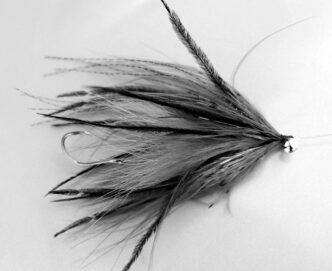
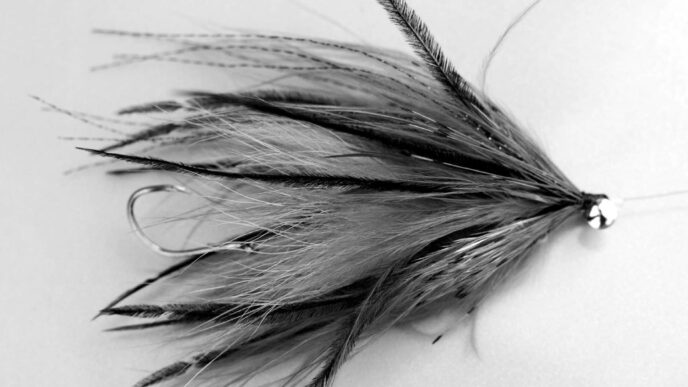
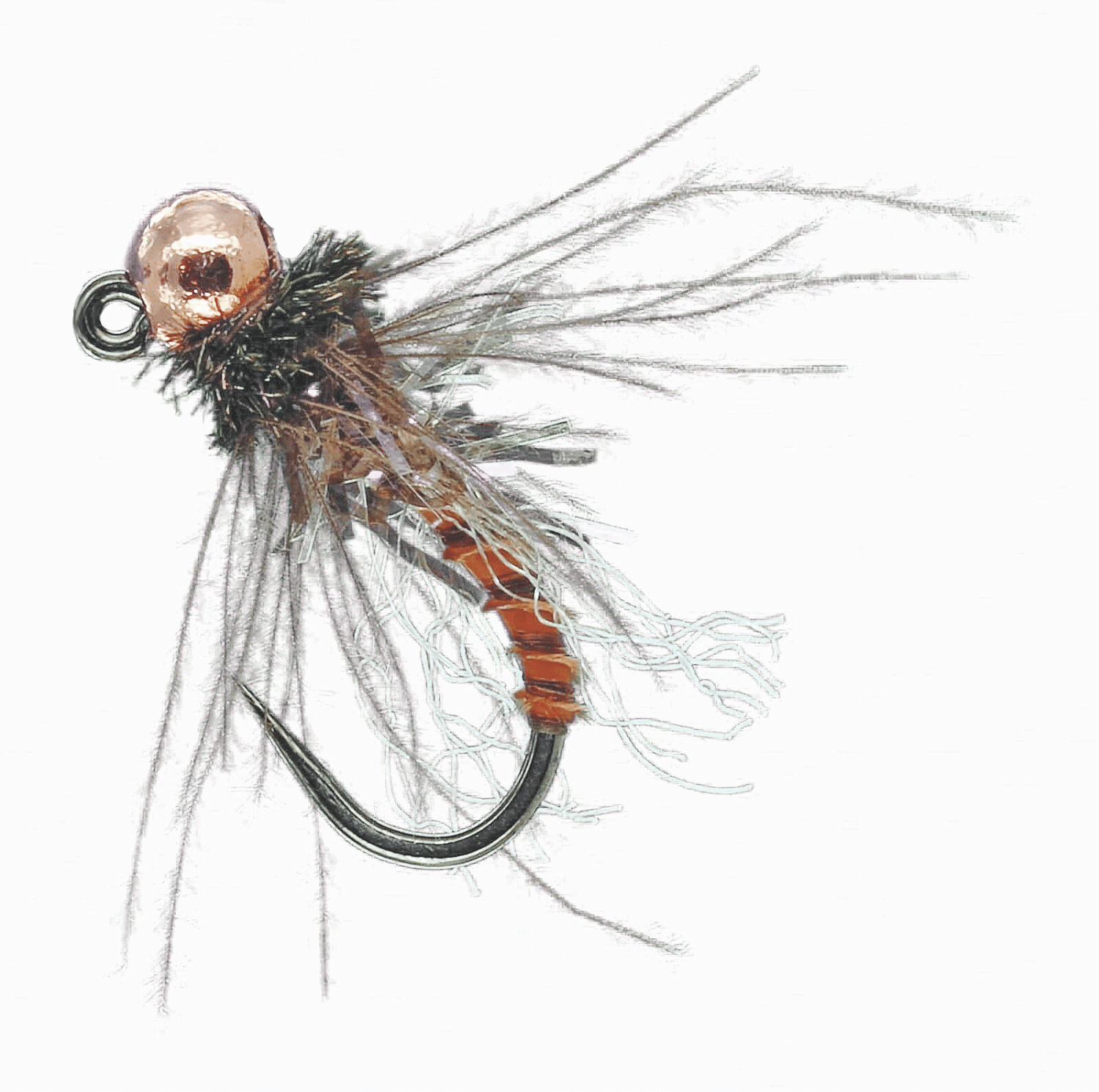
While I generally swing nymphs on a floating line, some prefer an intermediate sinking line. Both work well, though in very shallow or slow-moving water, the sinking line may annoyingly drag on the bottom. Most often, I use an 8- to 10-foot leader, tapered to 4X. Using a lighter tippet can lead to breaking off fish on the strike. Flies should resemble the emerging insect you’re emulating. I use my Swim Caddis almost exclusively when fish are keying on caddis, though many flies will work. For mayflies, I prefer small soft hackles. Either way, I like to incorporate a bead in the fly to keep it anchored a few inches to a foot beneath the surface. If a fly is too light, line tension as it swings can cause it to skim the water’s surface, which is rarely desirable. I have found that jig hooks give me a better hookup-to-strike ratio when swinging, though they are by no means necessary.
Swinging nymphs, wets, and soft hackles can be effective in many situations, not just when fish are feeding near the surface. Yet that scenario often brings the best results. If you have never tried this tactic, you owe it to yourself to give it a shot. The highly tactile grab can become addictive, and once you realize trout don’t always need a fly to be dead-drifted to be attractive, it opens up a whole new horizon in your fly fishing.