



For many fly anglers, a river is a river. Whether it’s a rising trout, the mystery of a fish in a deep run, or quality time spent fishing, they’re just happy to be on the water.
The more time they spend on the water, though, the more they realize that not all rivers are alike. Some swell with snowmelt and tumble through boulder-strewn canyons. Others run cold and steady beneath massive dams. Then there are the rivers that glide clear and weed-lined through meadows, where trout inspect every morsel.
Understanding the difference between freestones, tailwaters, and spring creeks is more than a terminology exercise. It is a foundation for becoming a more thoughtful and adaptable angler. Water source shapes everything: temperature, flow, insect life, habitat, seasonal behavior, and ultimately how trout feed. If you learn to recognize the type of water in front of you, you’ll begin to understand not only where fish live but also how that water type influences their behavior.
At the most basic level, the distinctions are simple: Freestones are fed by precipitation—rain and snowmelt. Tailwaters are controlled by a dam. Spring creeks are sustained by groundwater rising from underground aquifers. In practice, however, the lines can blur. A river below a dam may still behave like a freestone. A tailwater may fish more like a spring creek. Some streams can display traits of more than one category at once.
For anglers, then, the most useful approach is not to get stuck on labels, but to focus on how each water type behaves.
Freestones: Dynamic. Seasonal. Full of opportunity.
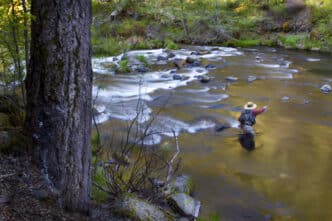
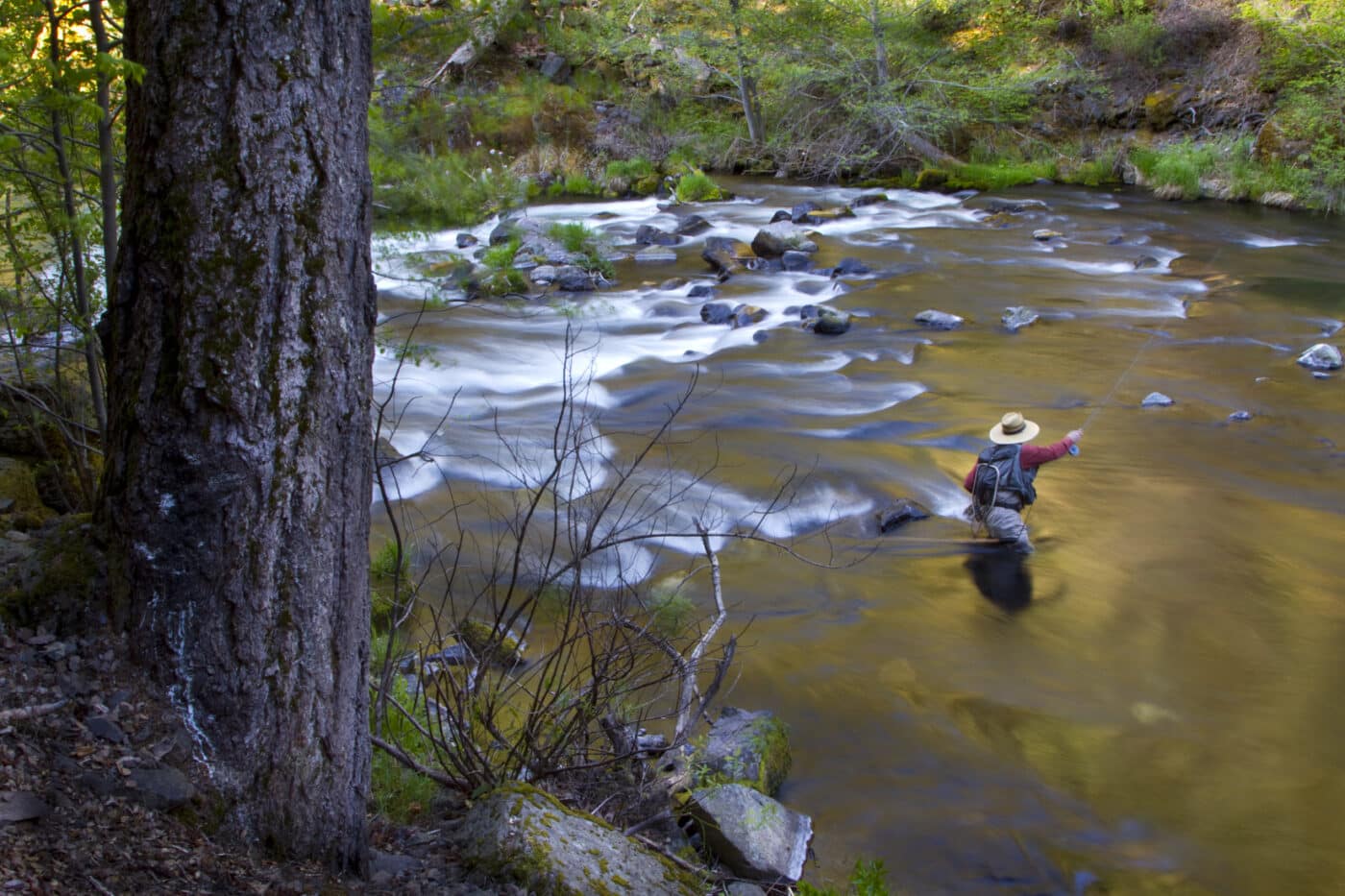
Freestones are often what many of us picture when we imagine classic trout streams. They typically feature pocket water, riffles, runs, and broken currents, and they often have steeper gradients—especially in their headwaters. Because they depend on precipitation, freestones are shaped more dramatically by weather and season than the other river types.
The advent of spring can help define a freestone, as rising air temperatures trigger runoff. Snowmelt pushes flows higher and colors the water, while water temperatures run cold. Freestones may be difficult or even unfishable for stretches, but when they finally drop into shape in late spring or early summer, they can offer some of the most rewarding fishing of the year.
However, dependence on snowpack and rainfall makes freestones vulnerable. As summer progresses and temperatures climb, cold-water inputs diminish and flows shrink. The last several decades have made this increasingly apparent. Low water and elevated water temperatures in late summer and early fall are no longer occasional concerns; in many places, they are now part of the annual reality.
This has practical implications for anglers. When fishing freestones, timing matters. Conditions change quickly, and ethical considerations matter just as much as tactics. Anglers practicing catch-and-release should stop fishing when water temperatures reach 65 degrees Fahrenheit or higher. Fighting fish in such warm water can cause chemical reactions in a trout’s physiology that can prevent recovery from a prolonged battle. In such cases, the fish may swim away in seemingly good shape, only to float belly up moments later from lactic acid buildup and delayed mortality.
In winter, freestones often run lower and colder because much of their source water is locked up as snow and ice. Despite these fluctuations, freestones are often highly oxygenated, diverse, and capable of supporting healthy populations of stoneflies, mayflies, caddisflies, and midges.
The good news for anglers is that trout in freestone systems are often opportunistic. They generally do not feed as selectively as in more stable, fertile waters. A fly does not always need to be an exact match; it just needs to look enough like food to trigger a strike. That makes freestones wonderfully forgiving in the right conditions. In fact, freestone streams often have a more diverse aquatic insect fauna than the fertile spring creeks.
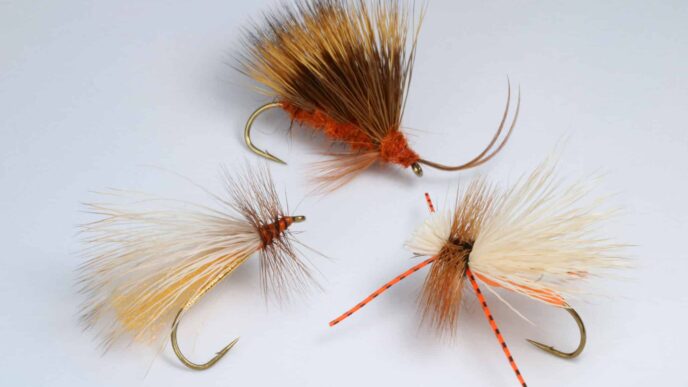
Strong choices for freestone fishing include attractor-type and impressionistic patterns. When trout are accustomed to fast currents and fleeting feeding windows, they often respond well to a fly that quickly captures their attention.
Classic examples of freestone rivers in California include the Truckee, Upper Sacramento, McCloud, and Pit Rivers. Technically, some of these rivers also extend below dams and can overlap with tailwater classifications, a good reminder that river types are not always neatly defined.
Tailwaters: Controlled. Reliable. Prolific trout habitats.
Tailwaters are rivers and streams whose flow is supplied and regulated by dams. That regulation can create some of the most productive trout fisheries, especially when water is released from the bottom of a reservoir.
Bottom-release tailwaters tend to remain cold and relatively stable in temperature year-round. Although flows can fluctuate significantly depending on dam operations, these rivers are often insulated from the most extreme seasonal temperature swings. For trout, that stability is ideal. For anglers, it means more predictable conditions and, often, more consistent fishing.
Stable temperatures and reliable water supplies foster robust aquatic ecosystems. In many tailwaters, rich insect populations and healthy aquatic vegetation create conditions that begin to resemble those of a spring creek. The result is often a river known for dense trout populations, prolific hatches, and extended feeding windows.
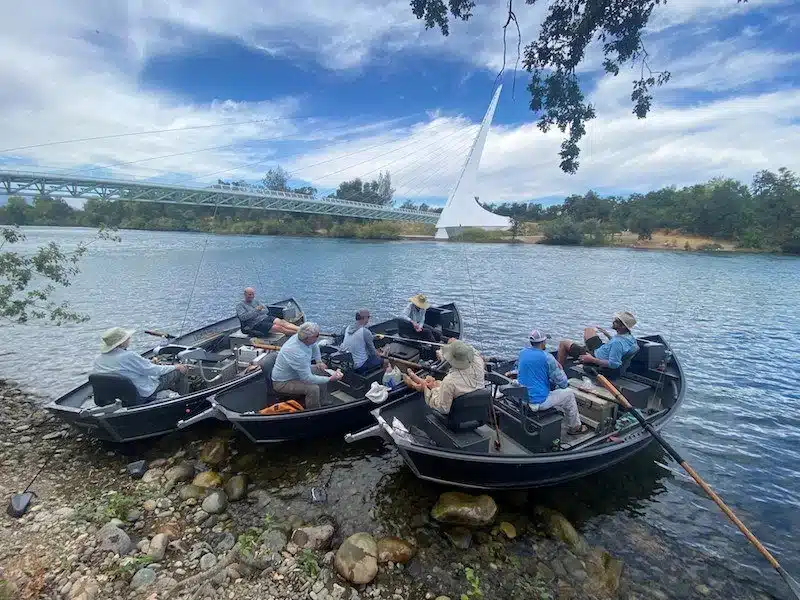
The Lower Sacramento is a prime example. From Redding downstream well past Red Bluff, temperature-controlled water from Shasta Dam and Keswick Dam sustains a remarkable trout fishery, supported by abundant insect life and a thriving population of wild rainbows. Other famous tailwaters include the Bighorn and Missouri Rivers in Montana, the lower Henry’s Fork and Snake Rivers in Idaho, the Green River in Utah, and the San Juan River in New Mexico.
Not all tailwaters behave the same way. Some dams release water from the surface or through spillways rather than from deep within the reservoir. These top-release systems are more susceptible to seasonal warming because surface water warms faster than deeper water. As a result, they often behave more like freestones than cold, bottom-release tailwaters.
The Truckee River is a great example. Lake Tahoe provides a cold-water source much of the time; however, because it is a top-release system, the Truckee can still experience warm-water issues later in the summer. In recent years, voluntary “hoot owl” closures have reflected those temperature concerns. By contrast, the Little Truckee between Stampede and Boca Reservoirs is a bottom-release tailwater and stays cold even during the hottest periods of summer, despite carrying much less water.
For anglers, that distinction matters. When you hear the word tailwater, it is worth checking not only whether a river is dam-controlled but also how the dam releases water. That detail can tell you a great deal about the river’s temperature profile, hatch consistency, and seasonal reliability.
Flies for tailwaters will likely need to be more specific imitations. Often, tailwater and spring creek selections will be similar. Anglers will need to match the hatch more precisely than they would on freestones.
Spring creeks: Stable. Fertile. Unforgiving technicality.
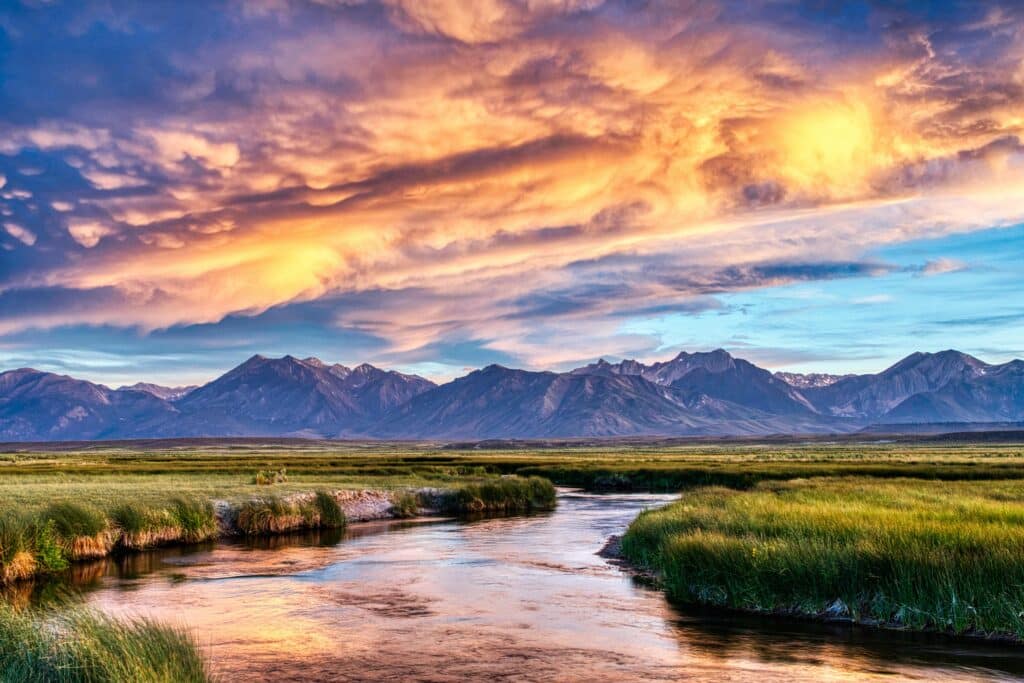
If freestones are dynamic and tailwaters are dependable, spring creeks are refined. These are generally low-gradient streams with stable temperatures, sustained by a steady influx of groundwater from underground aquifers. Because the water is filtered through the earth, spring creeks often run crystal clear and carry abundant nutrients.
Those nutrients support lush weed beds and rich insect populations, which, in turn, support healthy trout populations. On paper, spring creeks sound almost perfect. However, the hard reality is that they can be among the most technically demanding trout waters an angler will ever fish.
That is because the same conditions that make spring creeks fertile also make trout cautious. Clear water gives fish ample time to inspect a fly. Consistent hatches mean trout become accustomed to seeing the real thing in endless supply. With so much natural food available, they do not need to make mistakes. As a result, spring-creek trout are known for being selective, deliberate, and difficult. Success often requires fine tippet, careful observation, precise presentation, and flies tied with greater attention to size, profile, and color. Where a freestone trout might eat on instinct, a spring-creek trout often eats only after close inspection.
That challenge is exactly what makes spring creeks so compelling. They ask more of the angler: more patience, more discipline, and more thought. And when everything finally comes together—the approach, the cast, the drift, the take! Few experiences in fly fishing feel more earned.
Unfortunately, spring creeks are not as abundant as freestone and tailwater fisheries.
Prime examples of spring creeks in California include the Upper Owens River and Hot Creek in the Eastern Sierra, as well as Northern California’s Fall River and nearby Hat Creek.
Why river type matters
Knowing whether you are heading to a freestone, a tailwater, or a spring creek helps you make better decisions before you even tie on a fly. It influences when you fish, what you expect the water to be like, how trout are likely to feed, and the level of precision the situation may demand.
On a freestone, you may first consider runoff, summer heat, and opportunistic fish in broken current. On a tailwater, you may focus on hatch cycles, release schedules, and stable, cold water. On a spring creek, you may prepare for technical presentations, clear water, and trout that refuse anything less than a perfect drift.
These distinctions are not just academic. They are practical, on-the-water knowledge. They shape your tactics and your expectations.
Conclusion: Read the water. Understand the fish.
The best anglers are not simply those who cast the farthest or own the most fly boxes. They are the ones who understand that trout live within systems and that each system has its own rules.
Freestones teach flexibility. Tailwaters reward consistency. Spring creeks demand precision. Each offers its own beauty, challenges, and lessons. The clearer you understand the kind of river you are fishing, the more clearly the river begins to explain itself.
And that, in the end, is one of the great pleasures of fly fishing: not just catching fish, but learning how water works, why trout live where they do, and how each river type asks you to become a better angler.

Good read Pat! Thank you for sharing.