
Techniques for success on the water
Photos by Peter Butler
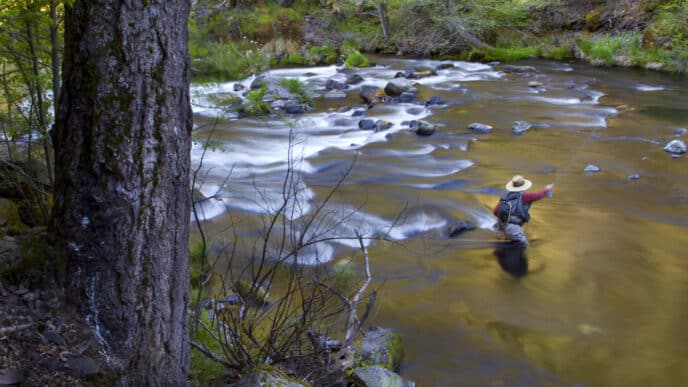
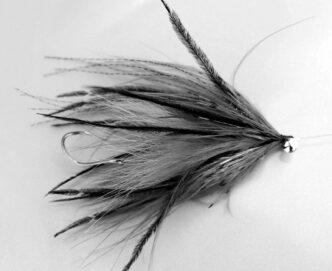
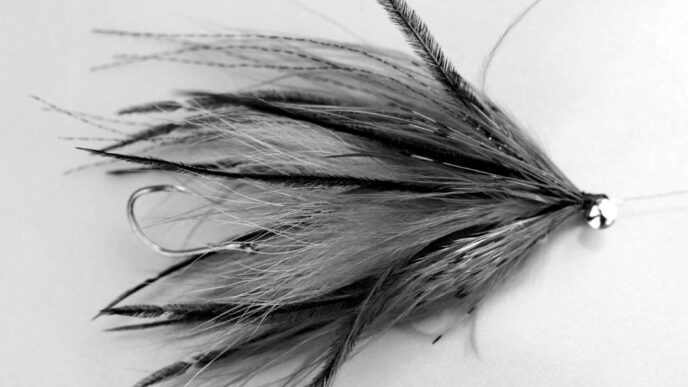
I’d covered the top of the run twice with a black-and-pink leech on a sink tip, swinging it through the bucket. On the second pass, he came for it—I saw him clearly, saw him nip at the fly, and then nothing. I couldn’t get him to come back. Did he feel the sting of the hook? I let things rest for five minutes, then did something out of character when fishing for steelhead: I clipped off the ostentatious leech (I’m admittedly addicted to tying and fishing flies reminiscent of an ’80s disco—think neon and sparkle) and tied on a small brown Muddler Minnow.
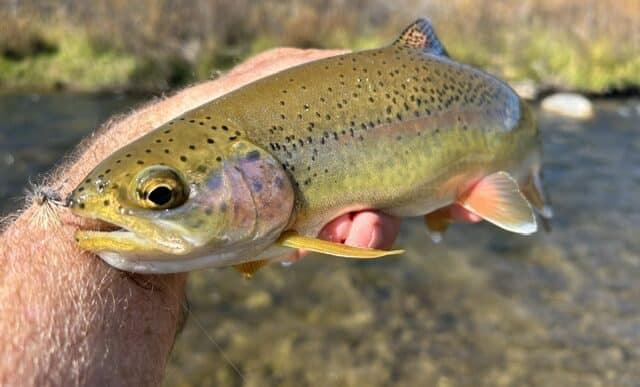
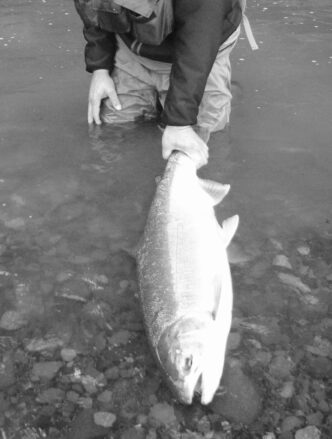
First cast, I watched him rise from the bottom like he’d been waiting for it. Fish on!
I’ve thought about that fish a lot since. Not because it was a particularly large steelhead—it was small—but because of what it said about the fly. A Muddler Minnow. A pattern that’s been around since 1937, that your grandfather probably fished, and that you can find forgotten in the back corner of most fly shop bins. It worked when the flashy thing didn’t, on the first cast. From a tyer’s perspective, it also reminded me that there are some pretty cool bugs out there that take advantage of the qualities of a spun deer-hair head.
With summer on the horizon—and most western states already running hot enough to make you wonder if spring ever happened—it feels like the right moment to double-click on spun heads. Specifically, three flies that use them, why those heads are built differently from one another, and what that means for how you fish them this summer.
Before we get to the flies, though, a quick note on the material and the variables that determine how a spun deer-hair head actually behaves on the water. Spinning hair can seem daunting, but it really just boils down to three decisions: which hair you choose, how tightly you pack it onto the shank, and how much tension you apply to the wraps.
Thread tensioning is something you develop through repetition, not instruction, so I’ll skip it here. There are plenty of great tutorials online, but trust me when I say: Just feel it out. After some trial and error, you’ll figure out how loose or tight to wrap deer hair to get it to spin or hold in place. Hair selection matters just as much and is worth spending a minute on. Longer fibers with fewer guard hairs are more forgiving to work with. If you’re tying big flies, size 2 or larger, deer belly hair is a great place to start and is widely available. For your average summer steelhead or trout fly, I advocate going straight to the good stuff: Varner’s mid and late season Big Bug Hair is as good as it gets. Most deer patches will do the trick, especially if you look for roe deer or anything marketed as “spinning” hair. Lastly, packing density—how tightly you compress each bunch before adding the next—determines permeability, which determines buoyancy. Pack it tight, and you’ve got more hollow fibers holding air and shedding water. Leave it loose, and the head saturates and moves. For dries, you want the former. For streamers, the latter.
Those three variables, applied differently, are what distinguish the three flies we’re about to discuss.
The Muddler Minnow
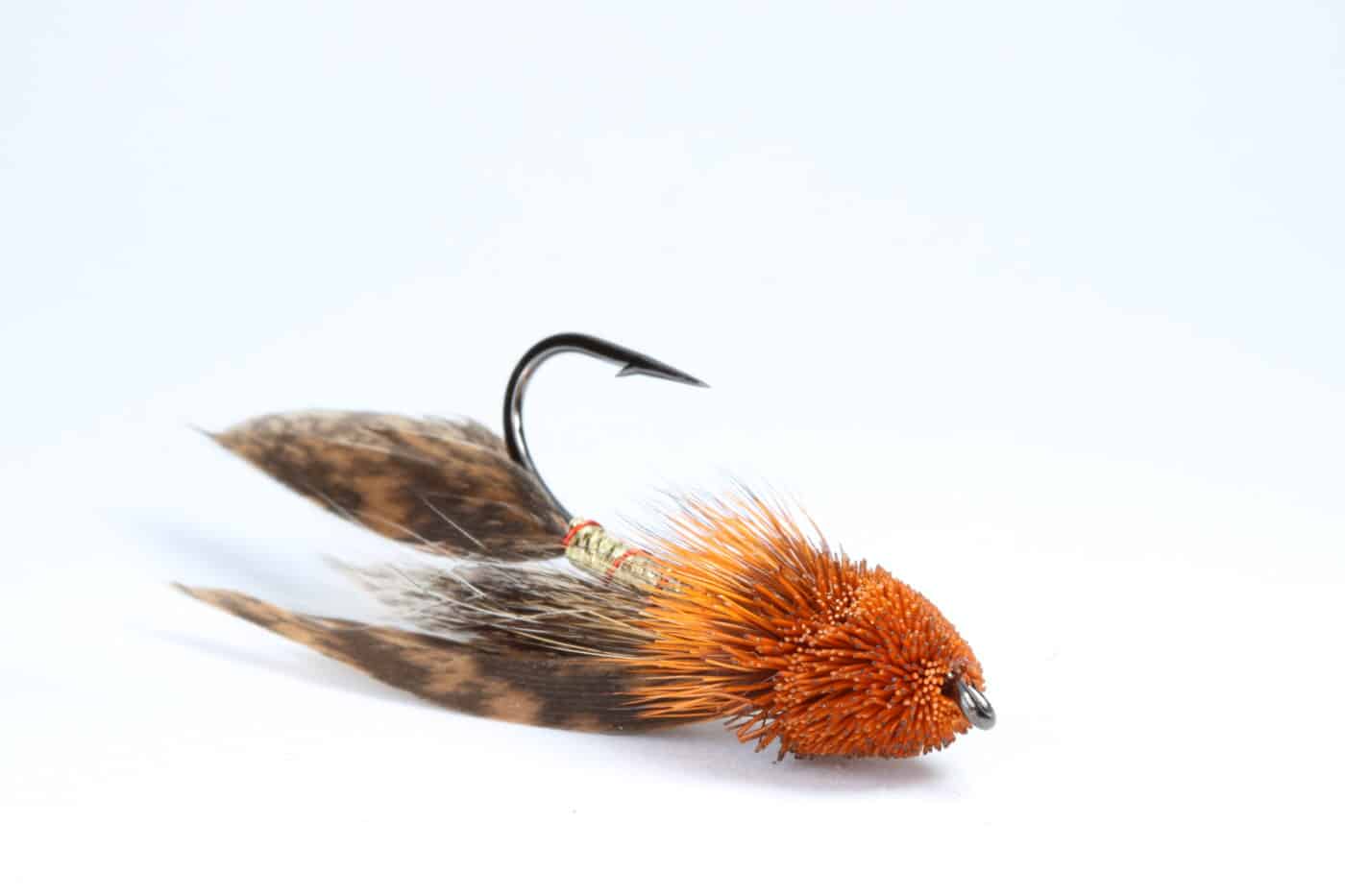
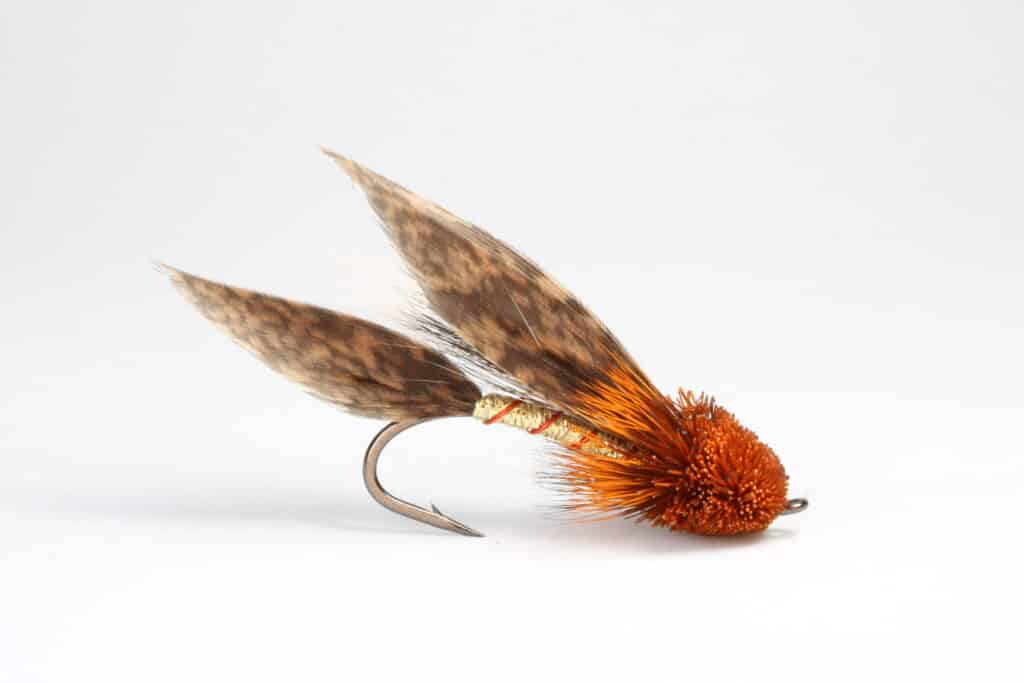
Don Gapen tied the first Muddler Minnow in 1937 on Ontario’s Nipigon River, originally to imitate sculpins and other bottom-hugging baitfish that big brook trout were keying on. In my opinion, you don’t see nearly enough Muddlers on the water anymore. That’s a mistake—it’s a versatile, satisfying fly to fish with and an even more satisfying one to tie.
However, be warned, it’s not the easiest fly to whip together. Getting the stacked quill wings right takes a lot of practice, so don’t be discouraged if your first few attempts are rough. I’d never say this out loud, but using other materials, like a squirrel tail combined with a couple of hackle tips, shortens the learning curve (shhhh, you didn’t hear it from me). The good news is that spinning the head is easier than matching the wings.
The head on a Muddler is deliberately tied loose. While dries need a head packed tight enough to trap air and resist water, the Muddler wants to do the opposite—it wants to soak. Loose wraps with moderate packing density allow water to move through the head and collar, which means you can get some pulsing action rather than pushing through water rigidly. That saturated movement helps make it look alive. Achieve this by taking your time tying in two bunches of deer hair. The first, with the hair tips left in, will form the collar as you let it spin around the hook. The second needs to take you to the eye of the hook and will be what you shape the head with. For this bunch, trimming off the tips makes it easier to deal with. If you come up a little short, rather than tying in a third bunch, don’t be afraid to “stretch” the distance your deer hair covers by winding thread wraps forward through the hair, trapping fibers as you go.
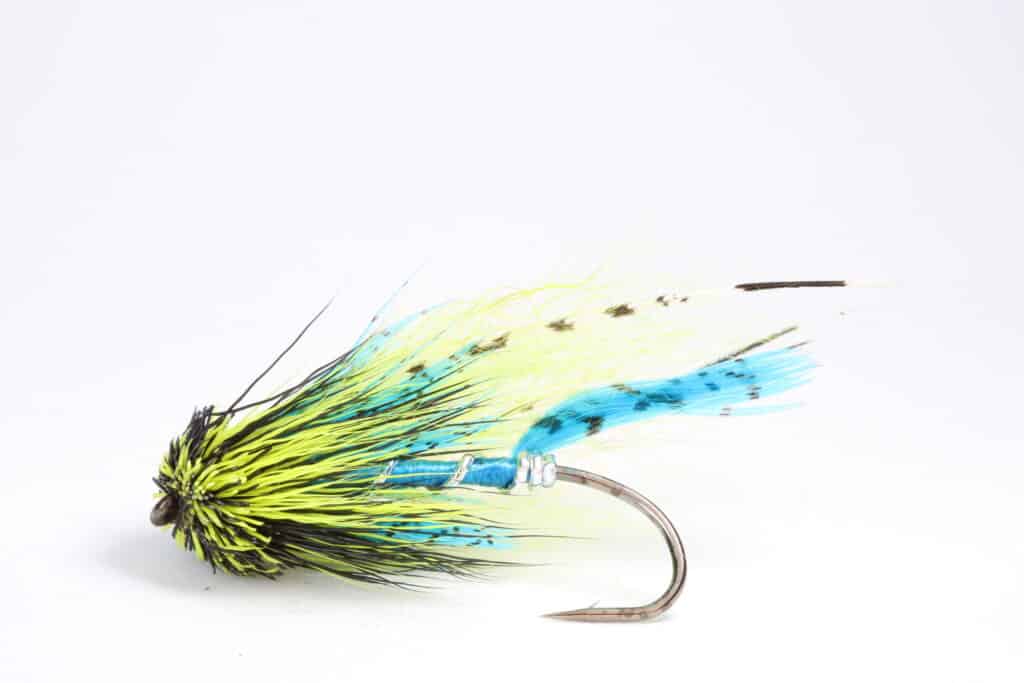
I like to fish unweighted Muddlers stripped or swung down and across on a sink tip, and weighted versions on a dry line. Sizes 4–8 in olives, browns, and blacks cover most trout and summer steelhead situations. For winter fish, have some fun—bigger hooks, brighter colors—don’t be shy about it.
One practical note: If you want to add weight, wrap the shank with lead-free wire before building the body, or swap in a tungsten or brass cone up front. Just know that once you do, you’ve committed it to streamer duty. A weighted Muddler won’t skate, and skating—as we’re about to get into—can be a lot of fun.
Muddlers On The Skate
There are two ways to get a Muddler skating across the surface. The first is to gink the head generously and the second is to hitch it—a half hitch or two thrown behind the head of the fly. The hitch cants the fly slightly and pulls it across the surface. Both work. Both could draw a summer steelhead from water you’d swear was empty.
The loose, open head that makes the Muddler such a good streamer is an asset for skating too but if tying strictly for skating, packing the head more densely doesn’t hurt. You can also use fatter, more buoyant quills from lower down the turkey feather for the tail and wing. But eventually, all natural materials saturate so healthy use of floatant between runs will help keep the v-wakes going.
Dave’s Hopper
Dave Whitlock introduced his Hopper in the 1970s, and it’s been fooling trout in late summer ever since. It’s another iconic pattern that deserves more space in fly boxes across the West.
Though the concept is simple enough, I find spinning the head a little trickier than on a Muddler, mostly because there’s less real estate. By the time you’ve built the body, laid in the turkey wing, and tied down the legs, you’re looking at a size 8 or 10 hook shank with almost nothing left to work with—and unlike the Muddler, where a generous collar and head are part of the fly’s appeal, a hopper head needs to be compact.
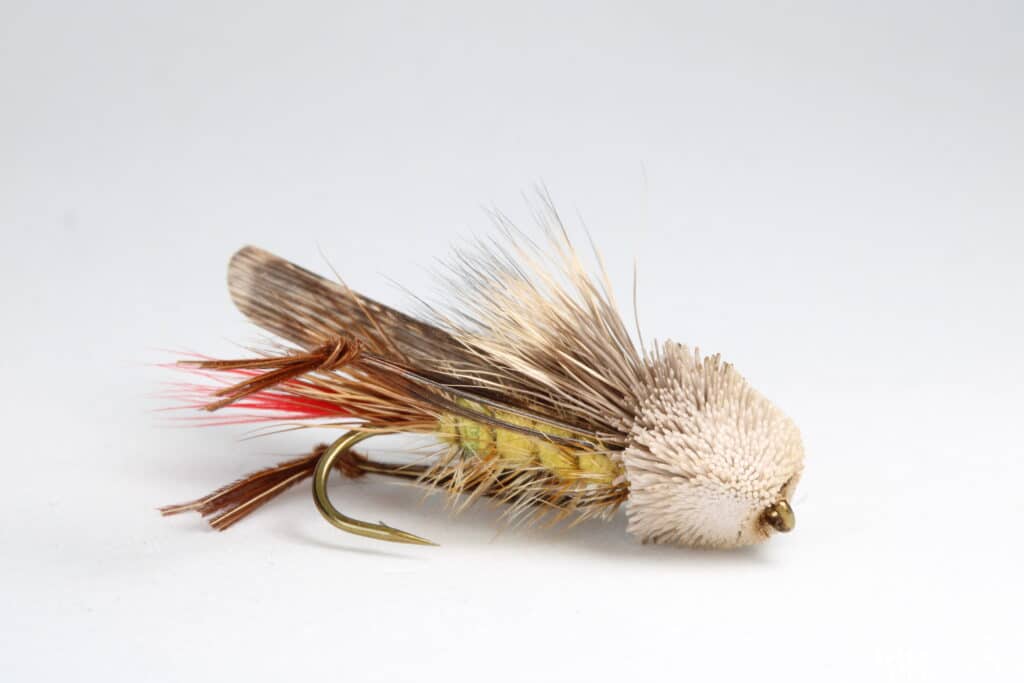
But that density is the point. Where the Muddler head is loose and permeable by design, the hopper head is packed more tightly for maximum buoyancy and structural support, giving you something firm enough to trim against in tight quarters. The first bunch of deer is tied down with tight wraps on top of the body, tips in. Don’t allow it to spin. The second bunch, with tips removed, is allowed to spin and forms the head as you work the thread forward toward the hookeye. Compact the hair firmly backward, away from the eye, to create a dense, buoyant head.
Fish it tight to undercut banks on a dead drift, with an occasional twitch to draw a response from a fish that’s already seen it go by. It works in stillwater too, particularly in late summer when hoppers are blown onto lakes from surrounding meadows. One last thing worth mentioning is that you can vary the tail and body color to match your local water.
The Streaking Caddis
The Streaking Caddis has Scandinavian roots—it was designed to skate and does so remarkably well. But it’s also a favorite of mine for dead drifting. Thanks to its densely packed head, it floats like it’s made of foam, so there’s the added benefit of being able to drop a nymph off the back if the situation calls for it.
It’s also the most approachable of the three patterns in this column—a good entry point if spun deer-hair heads are new to you.
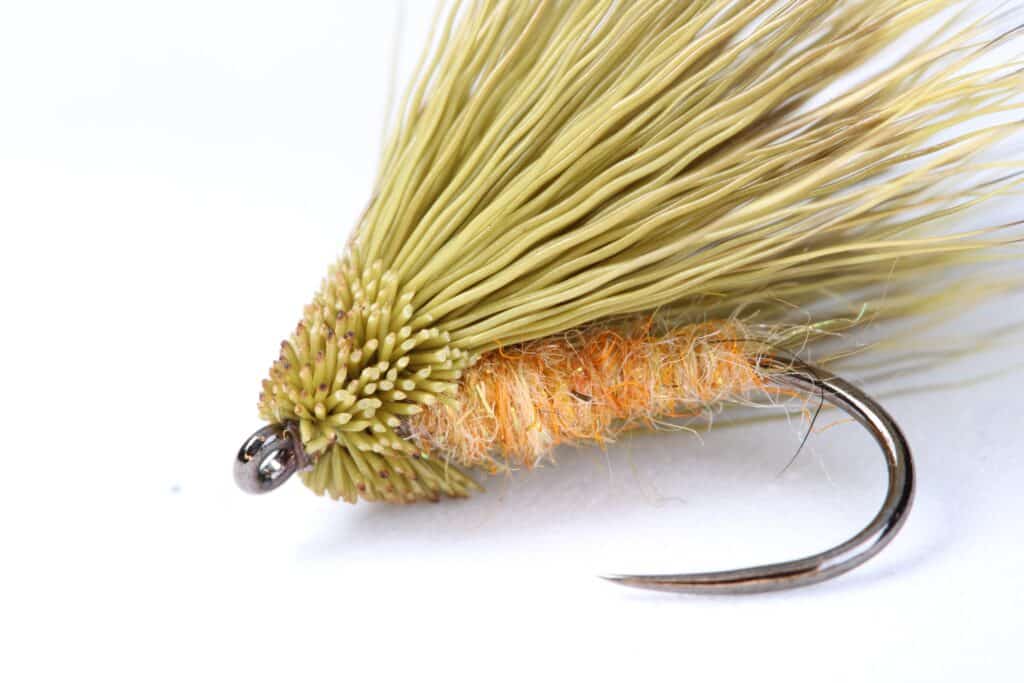
The technique here differs from the other two in one important way: You’re not spinning hair in the conventional sense. On the Muddler and the Hopper, you tie in the wing, then spin successive bunches of hair forward until you reach the eye and trim to shape. On the Streaking Caddis, the wing and the head come from the same clump of hair. Take a larger bunch than you’d use for the wing alone, post it on top of the shank with a single wrap of thread between the hair and the shank—this seats and centers the wing without letting it rotate—and a second wrap over both the hair and hook, pulled tightly toward you. Then wrap forward, letting the deer hair spin from there. The thread pressure builds the head naturally as it goes, spinning the forward portion of the hair toward the eye while the wing stays on top where it belongs. It sounds complicated, but check out some of the videos online—it will click.
After shaping quickly with scissors, carefully run a lighter over the head. A quick, controlled singe tidies the fibers, gives the head symmetry, and achieves a cleaner head than you’d get with scissors alone.
Hair selection matters more here than on the other two flies. For smaller patterns, reach for something finer and more prone to flare—Varner’s mid-season Big Bug Hair, Short-Fine for smaller hook sizes, or any Nature’s Spirit spinning deer will do the job well.
I skate this one during the October Caddis season, but outside of a hatch I’ll dead drift it more often than not. You can trim the sides of the wing higher to get a lower hang in the film, or leave the wing full for a higher, drier ride. Like skating a Muddler, it rewards the angler who understands why it was constructed the way it was, so hopefully this breakdown helps.
Is Your Head Spinning?
Three flies, one material, and a handful of decisions made at the vise long before you’re standing in the river. Does spinning hair sound overly complicated? Probably, but that’s the reason we got into fly tying in the first place—to overcomplicate presentations to critters whose brains are often smaller than the flies we’re fishing. Or did we start tying to save money? I can’t remember. …
What I can say is that a Muddler fishes year-round. The caddis are hatching, and with summer heat already here, the hoppers aren’t far behind. Time to get tying.