It was nearing dark on Hat Creek when it began. The small mayflies seemed to appear magically on the water’s surface, their tiny sailboat wings fluttering as they struggled to gain flight. Water that had only minutes before been flat and undisturbed was now suddenly alive with fish. The angler had been waiting patiently in the streamside grass for this event and was prepared. He knew the hatch would be PMDs, that they would be in the size 18 range, and that they would be pale yellowish olive.
Though new to the stream, he was a skilled caster who knew the tricks to achieving a drag-free drift in challenging surface currents. He was experienced enough not to “flock shoot”—blindly casting his fly repeatedly into the area with the most rising trout—and instead picked a specific fish to target. With great anticipation, he timed the trout’s rising rhythm, made his reach cast, and immediately fed loose line into the extended drift. Perfect presentation—exactly in the fish’s feeding lane, fly first, no drag from the tippet. He was confident in the take…
…that never came.
Puzzled, he stripped in his line and inspected the terminal end. Everything was in order. The tippet was long, with no kinks that might alert the fish to anything unnatural, and his mayfly dry was floating perfectly, the parachute hackle and hackle-fiber tail suspending the fly realistically on the water. “Well,” he muttered to himself, “remember that these are tough fish!”
Seeing his target still rising methodically, he made another picture-perfect cast, and this time was encouraged by a swirl beneath his fly. Close, he thought. Another cast, and nothing. Frustrated, he picked a different fish, made his presentation…and was rewarded with another swirling boil, this one violent enough that he almost struck, even though he saw the fly had never disappeared. What is going on, he wondered?
Getting on his knees, he bent down and squinted at the eddy beneath him, then extended his hand and plucked a natural from the gentle flows. Holding it near his face in the fading light, he nervously realized darkness would soon put an end to the fishing; he confirmed it was an exact match to the fly at the end of his leader. Not knowing what else to do, he arose and began casting again, picking first one fish, and then another. Always with the same results. Just as dusk turned to night and the feeding of the trout became sporadic, as another unproductive drift reached its end and was pulled by drag beneath the surface, there was a surge, and he came tight to a fish! Playing it skillfully, he was thrilled with the fish’s strength, taking several minutes to coax it into his waiting net. The large rainbow thrashed briefly and then lay still in the meshes, its heavy shoulders and long body causing the angler to catch his breath. This was the fish he had been hoping for…and while it was undeniably a great way to end the evening, he felt a vague dissatisfaction. Hooking the fish had been an accident, requiring no skill on his part. Releasing the trout, he wondered silently, what had he been doing wrong?
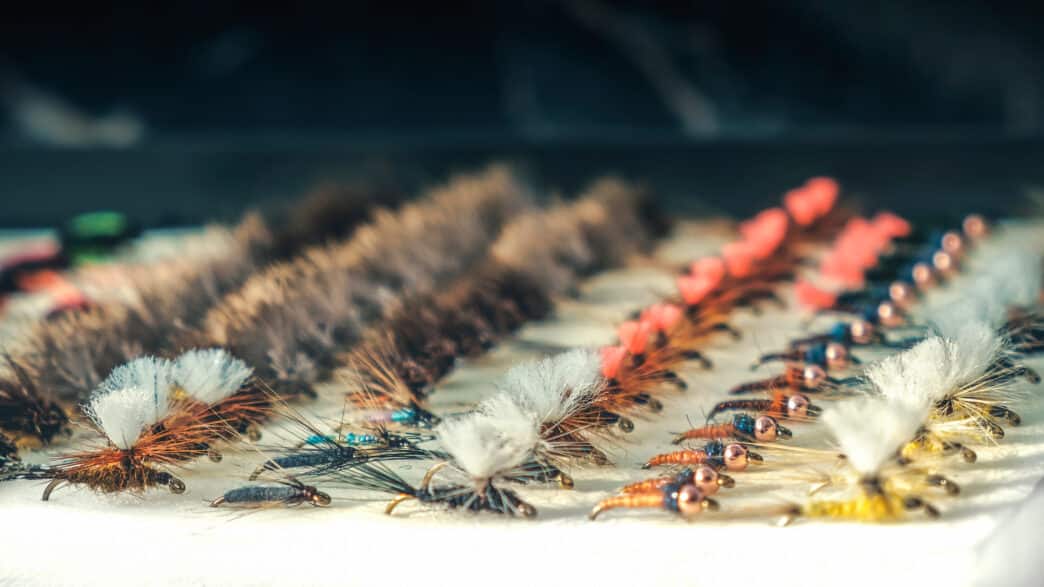
I have been this angler, frustrated by fish that were actively feeding yet refused all my offerings. Sometimes my answer has been to keep changing flies, hoping to discover the secret by chance. While this has occasionally produced results, it is not a game plan I would recommend. Instead, it is more helpful to know not only about the fish you are after but also about the food they eat. Understanding insects’ life cycles often provides insight that turns a frustrating experience into a satisfying one. In the example above, the angler had all the right tools and skills, except he didn’t know that fish rising gluttonously in the middle of a heavy hatch are often keyed on the helpless emergers stuck in the surface film, all but ignoring the high-floating duns that could fly away at any moment. His fly was a perfect imitation of the mayfly’s life cycle he could see, but the fish were locked on the nearly invisible prior life cycle stage. Trout are all about getting the best bang for their buck when it comes to food. They will take the easy marks, the sure things, every time. If the angler had exchanged his traditional PMD parachute for an emerger that sits partially below the surface film—say, a Film Critic or Missing Link—he would have experienced immediate success. It is likely the one fish he did hook mistook his sunken dry fly for an emerger.
There is much more to learn about choosing the right pattern for any given situation, but hopefully this example will help you in the future. Other little tricks that sometimes work for me in challenging hatch-matching situations include starting with a fly that is a full size smaller than what my eyes tell me I should be using, and extending my tippet by a couple of extra feet. When fishing over tough trout, I never tie my dry directly to the end of a tapered leader. Instead, I add a few feet of tippet to give me a better chance at a drag-free float. If the fish refuse all of the above, sometimes I’ll achieve success by dropping a small flashback nymph a foot beneath the dry I’m using. Not as satisfying as inducing a surface grab, but still often an exciting, visible take. And sometimes it is simply the correct choice.